The short route

Saturday morning. 6.40 am.

Birds are chirruping, the sun has got his hat on, the sky’s forget-me-not blue. Try as I might, I can’t pretend I’m sleeping.

I give up, get up and prepare for a weekend jaunt.

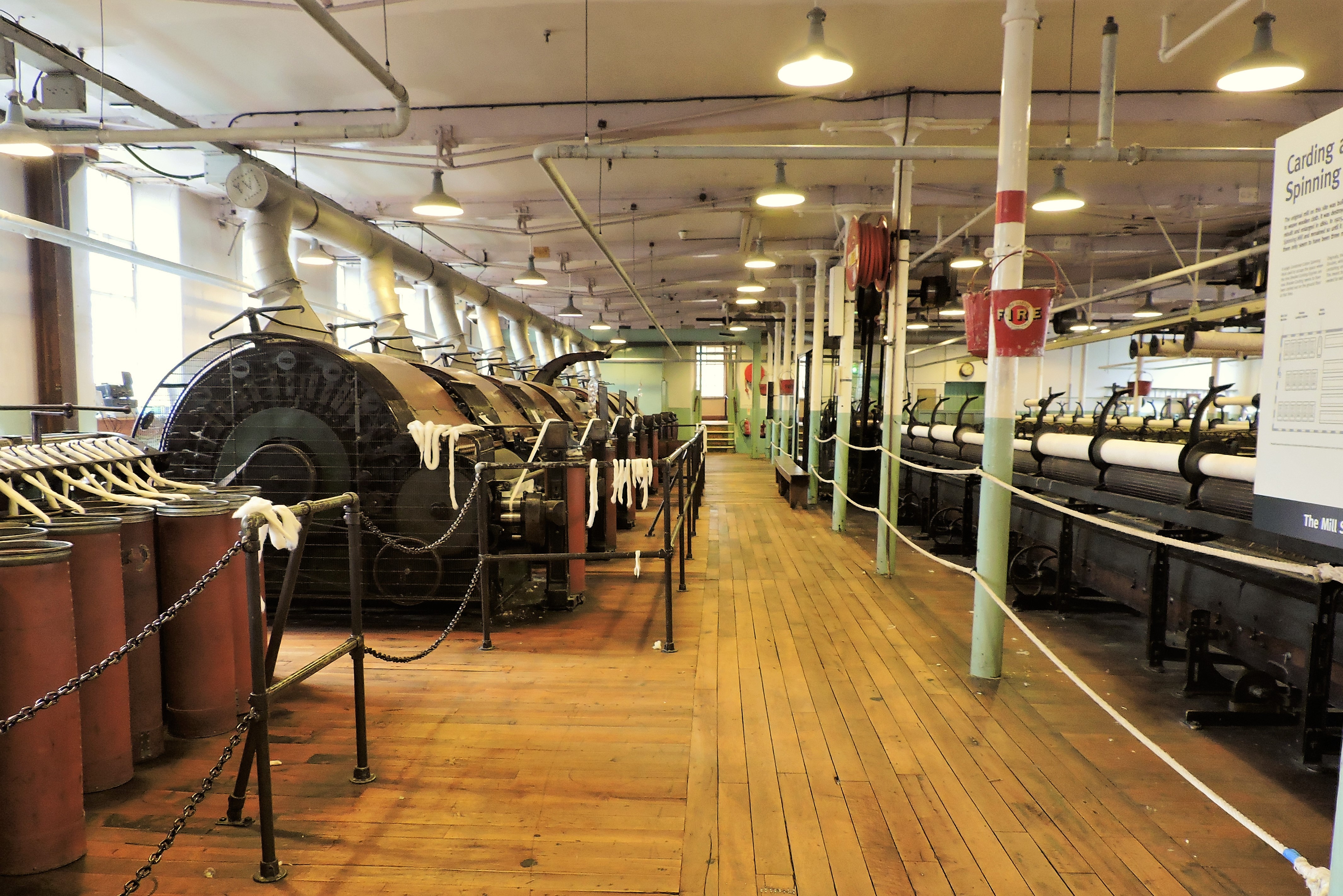
Queen Street Mill, the last 19th century mill in the world still weaving cotton on looms powered by steam, is working today. It’s in Burnley, Lancashire – and it opens at noon.

I print out a map, fire-up Ms SatNav.

‘Fast, short or ecological?’ she asks, all innocence.

In no hurry, we opt for short.
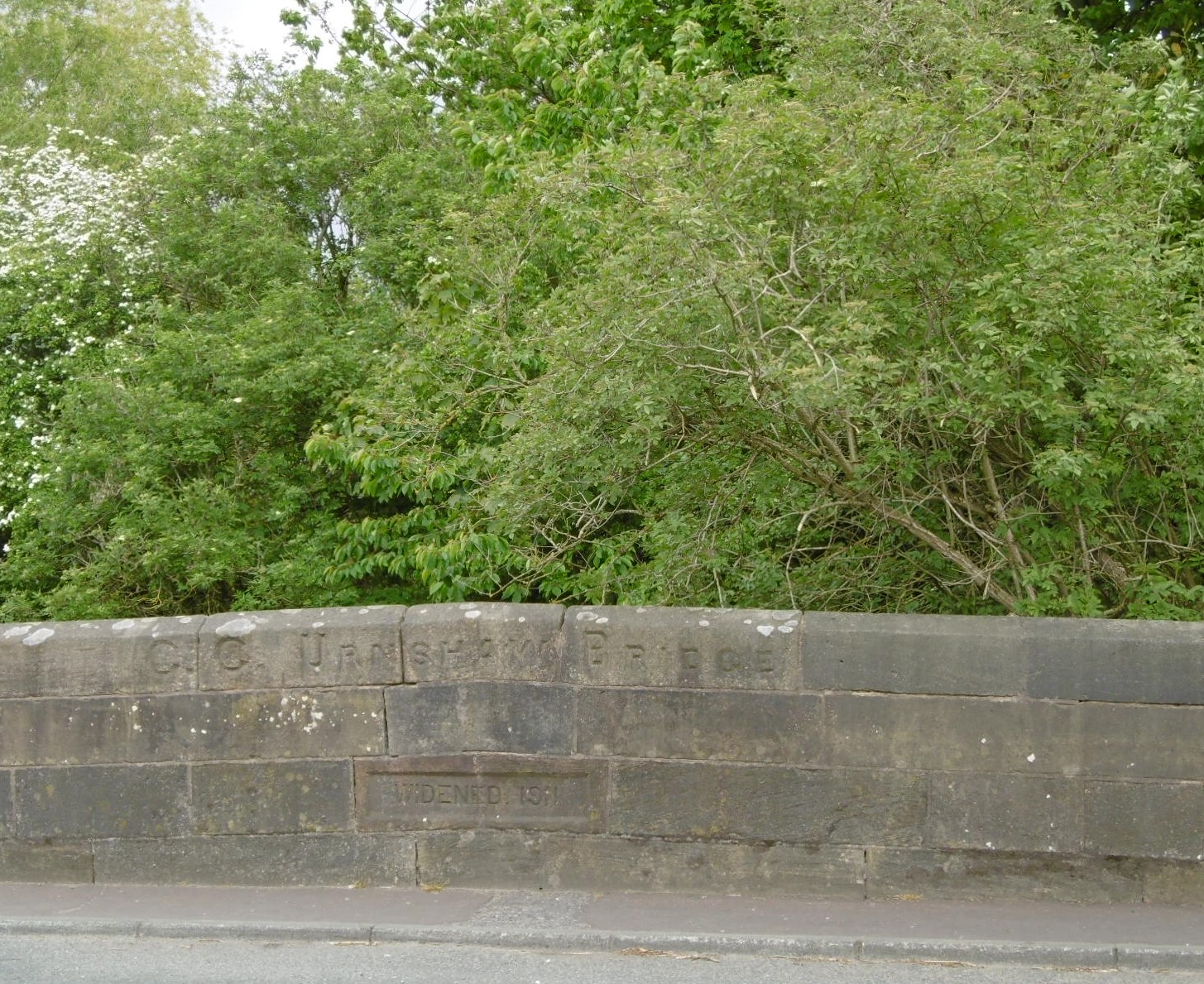
This is the bridge after which the district is named – it’s chiselled into the stone but, horrors, they spelt it Urnshaw

I soon begin to wonder if I accidentally selected ‘Tardis’, Dr Who’s time-travelling machine. Because not far into our journey we start heading for Earnshaw Bridge.

Earnshaw Bridge is a something-and-nothing kind of place. But if your family name happens to be Earnshaw, it becomes a point of honour to hunt it down. We did, some time ago. Don’t need to do that again.
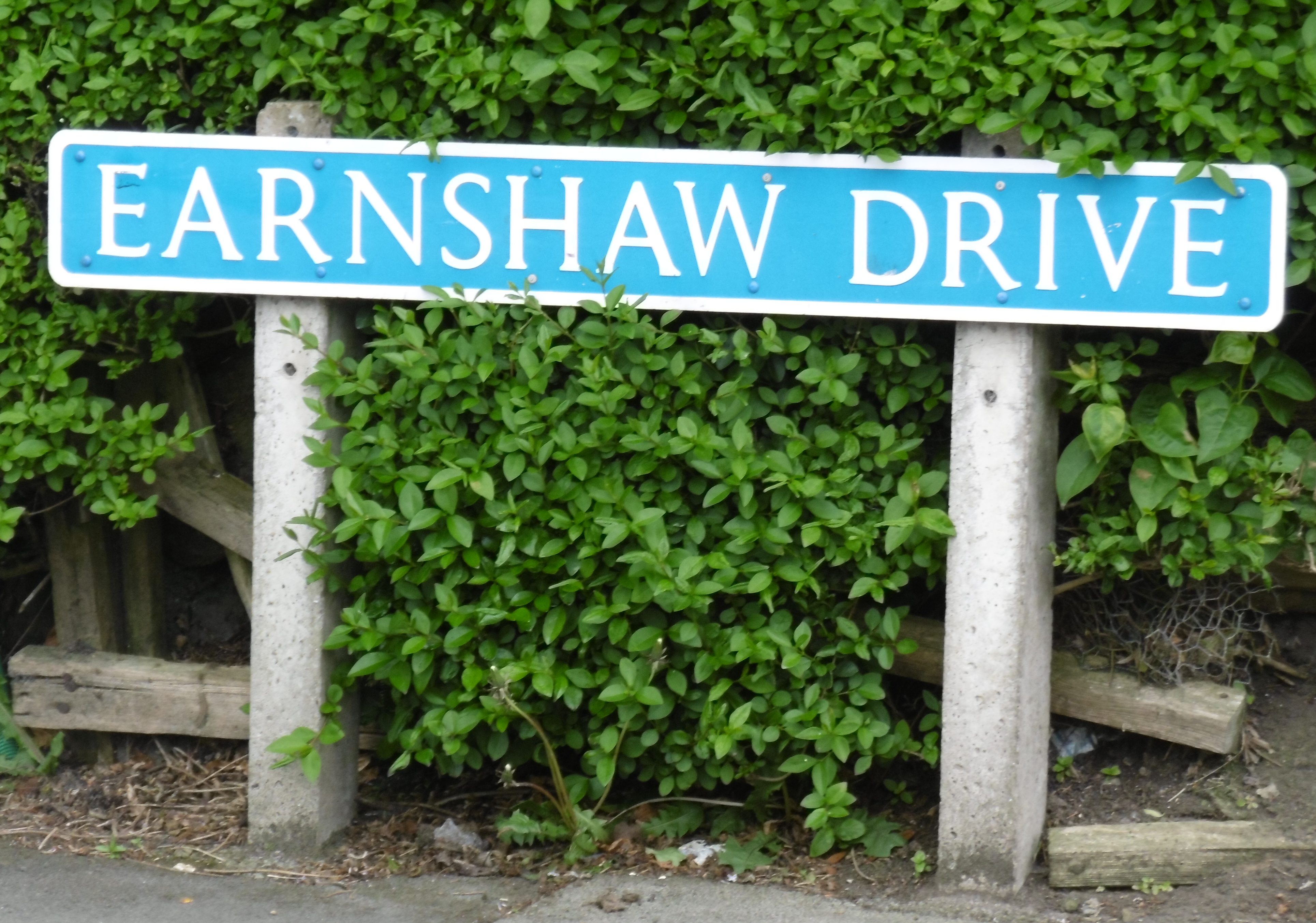
The street signs get it right!

The street signs get it right!


We motor on by.

Find ourselves in the town made famous by Leyland motors. There I spy, with my little eye, a Commercial Vehicle Museum (don’t worry we’re not stopping).

In the yard stands a shiny, old-fashioned fire engine – from Blackburn.

I feel a tremor of nervous excitement. I lived in Blackburn till I was seven. Looks like we’re heading that way.

There’s a sign for Pleasington Priory – we used to go to Mass there, sometimes. I liked to play in the graves filled with green glass pebbles – and was threatened with a smack, when I got home.

Now we’re passing a sign to the cemetery where my mother buried my father’s ashes. In the wrong grave. (He didn’t want to be cremated, which puts that error into perspective.)

Oh no – here comes Cherry Tree.

Sounds harmless, I know. Pleasant even. But it’s a place I revisit in the dark hours of the night, feeling pangs of guilt after more than 20 years. I brought my mother here to view some sheltered accommodation the day before she went on holiday with a friend. It depressed her – ruined her holiday. Sigh.

On into Blackburn.

It’s changed hugely since we left. I’ve been back, but only to see our old house, avoiding the rest.

But little Ms SatNav doesn’t care a fig for my sensitivities. She takes us right through the centre.

As we roll along Barbara Castle Way (MP for Blackburn from 1945-1979) a small sign points left, uphill.

To St Mary’s College.WP_20160514_13_02_46_Pro
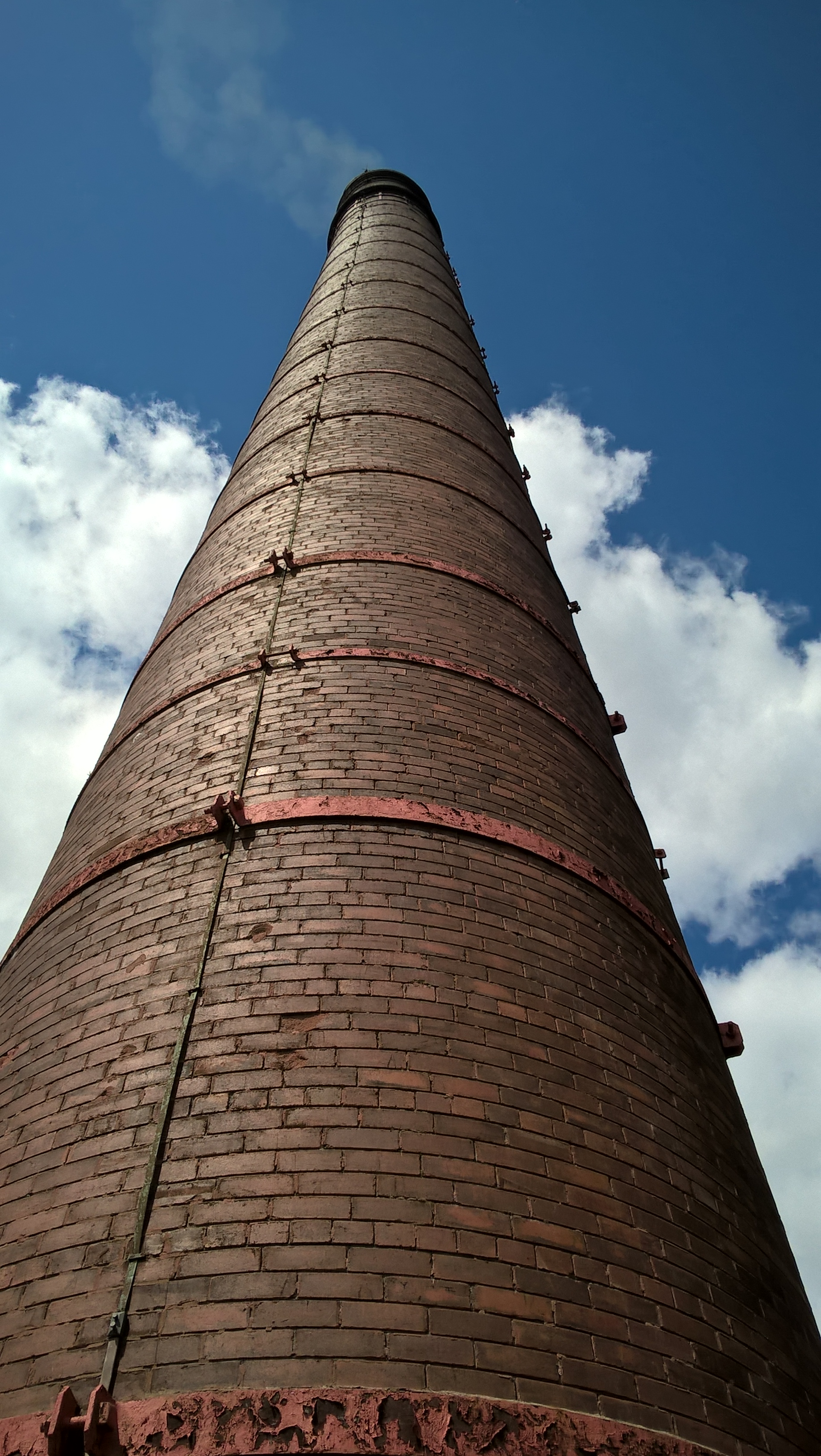
The school gave my father a life-changing scholarship – and a job as history master to compound it.

At last we pull up beside a fine stone building. A little steam seeps from a red brick chimney, joining puffy, scudding white clouds.

Tea and cake set us up for a long visit.

A siren wails –  the steam engine’s powered up. The looms in the main weaving shed clack and clatter into life. Deafening.
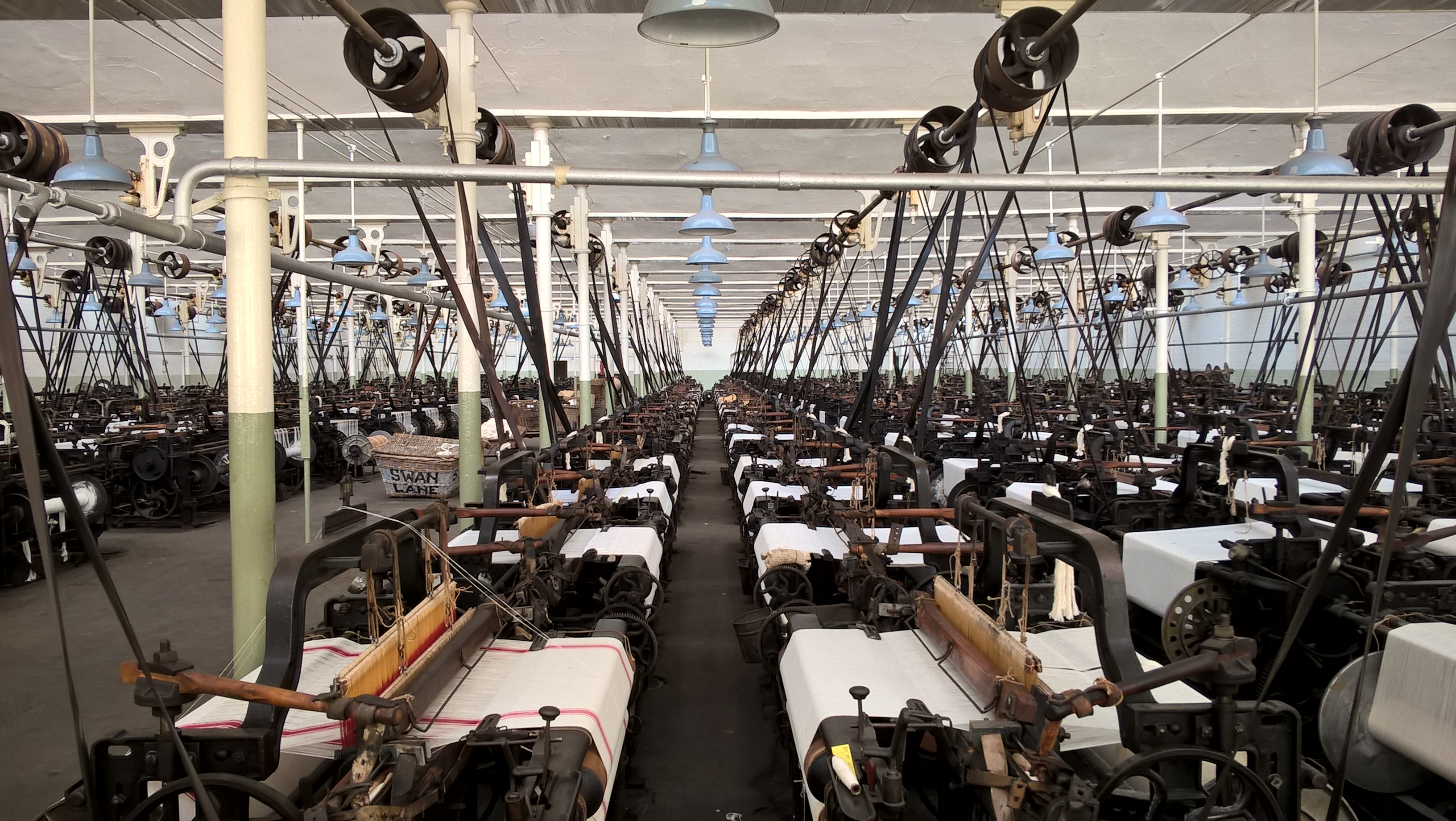
The weaving shed - now only one third its original size - still operates as it did in 1894 when the mill first opened. It now has 300 Lancashire looms where once there were 1000. The looms are powered by the 'Peace' steam engine via the overhead line shafting

The weaving shed – now only one third its original size – still operates as it did in 1894 when the mill first opened. It now has 300 Lancashire looms where once there were 1000. The looms are powered by the ‘Peace’ steam engine via the overhead line shafting

Two things strike me as we read, watch and listen.

One, the massive interdependency of industries that made a mill work.
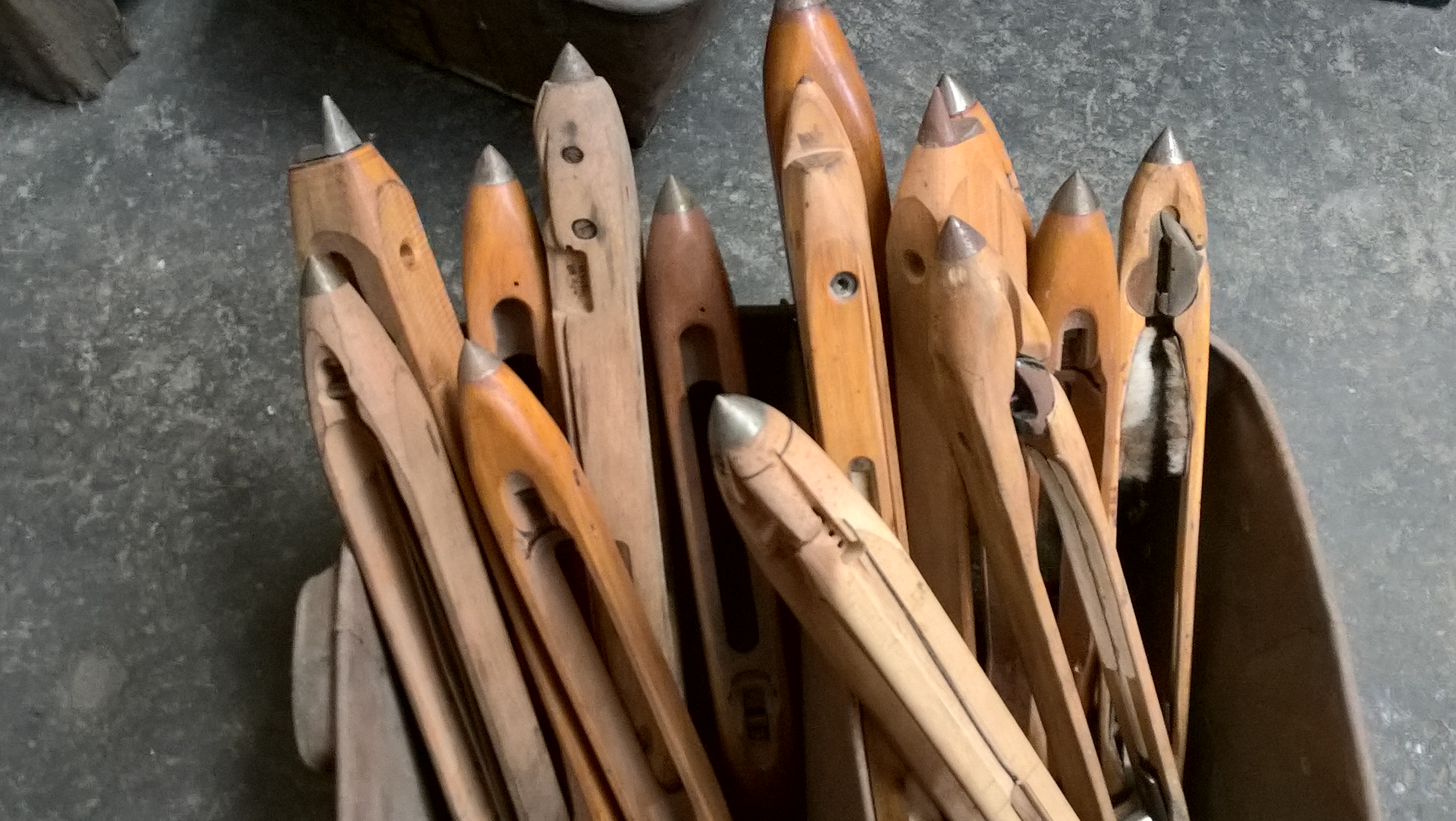
Bobbins were made of boxwood and later other hard woods, each designed for a specific type of loom

Shuttles were made of boxwood & other hard woods & tailor made for specific types of loom

In my native Blackburn, for example, as well as cotton mills, there were shuttle makers and manufacturers of machinery.

Wood, metal, coal were essential – as was water.

This mill’s atop a hill with no water source and relies on rain and run-off. Outside, the  ‘lodge’, or reservoir, is today doing an impression of an impressionist painting.
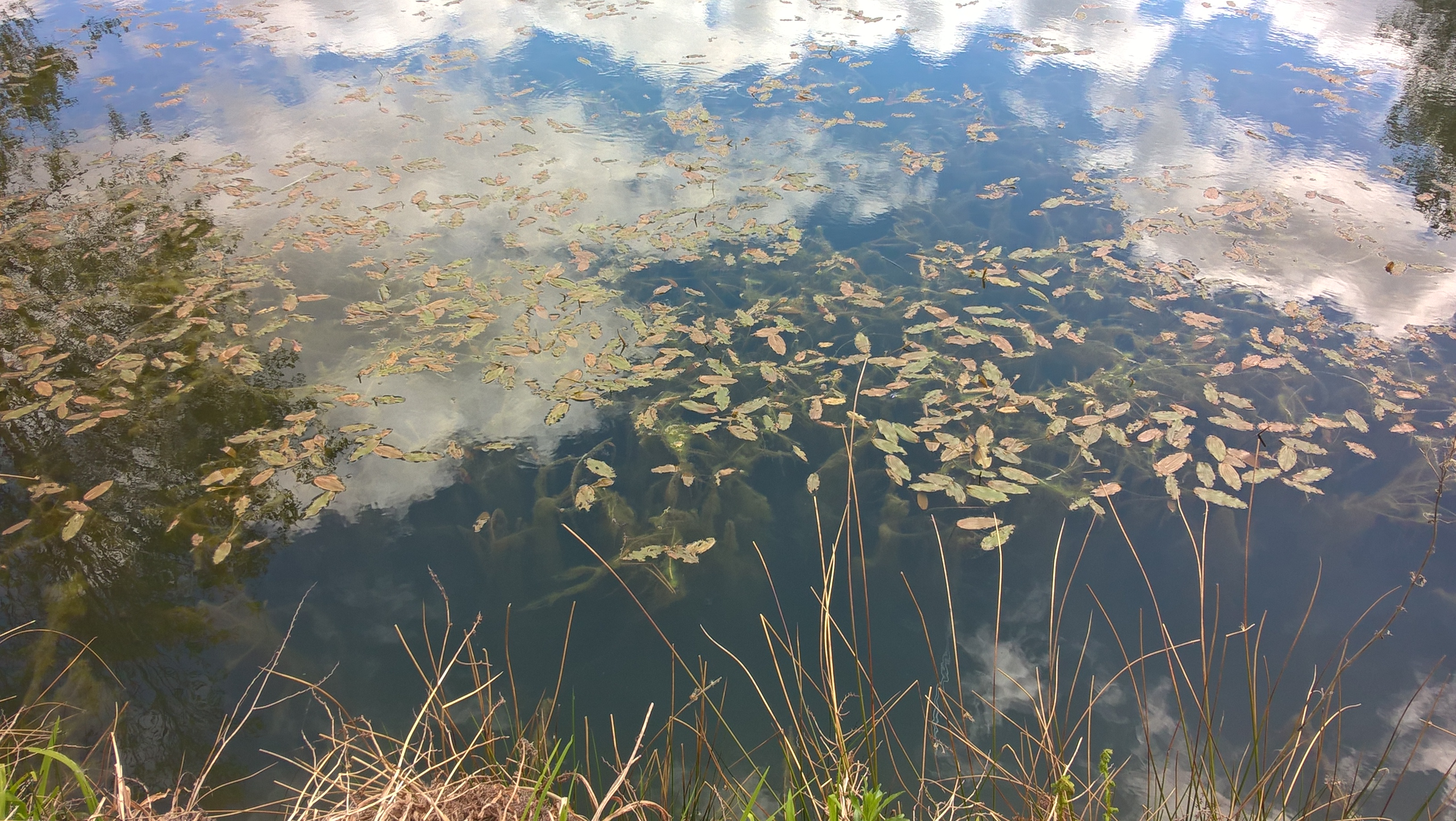
WP_20160514_13_53_26_Pro

Without water the engine can’t run, the weavers can’t weave, the master won’t pay.

John Ward, a Lancashire weaver, wrote in his diary on 28 August 1864: “There were 30 mills stopped this last week in Blackburn for want of water”.

Just imagine the hardship.

Which brings me to the second striking thing: these working people’s livelihoods hung by a thread as slender as the cotton they wove.
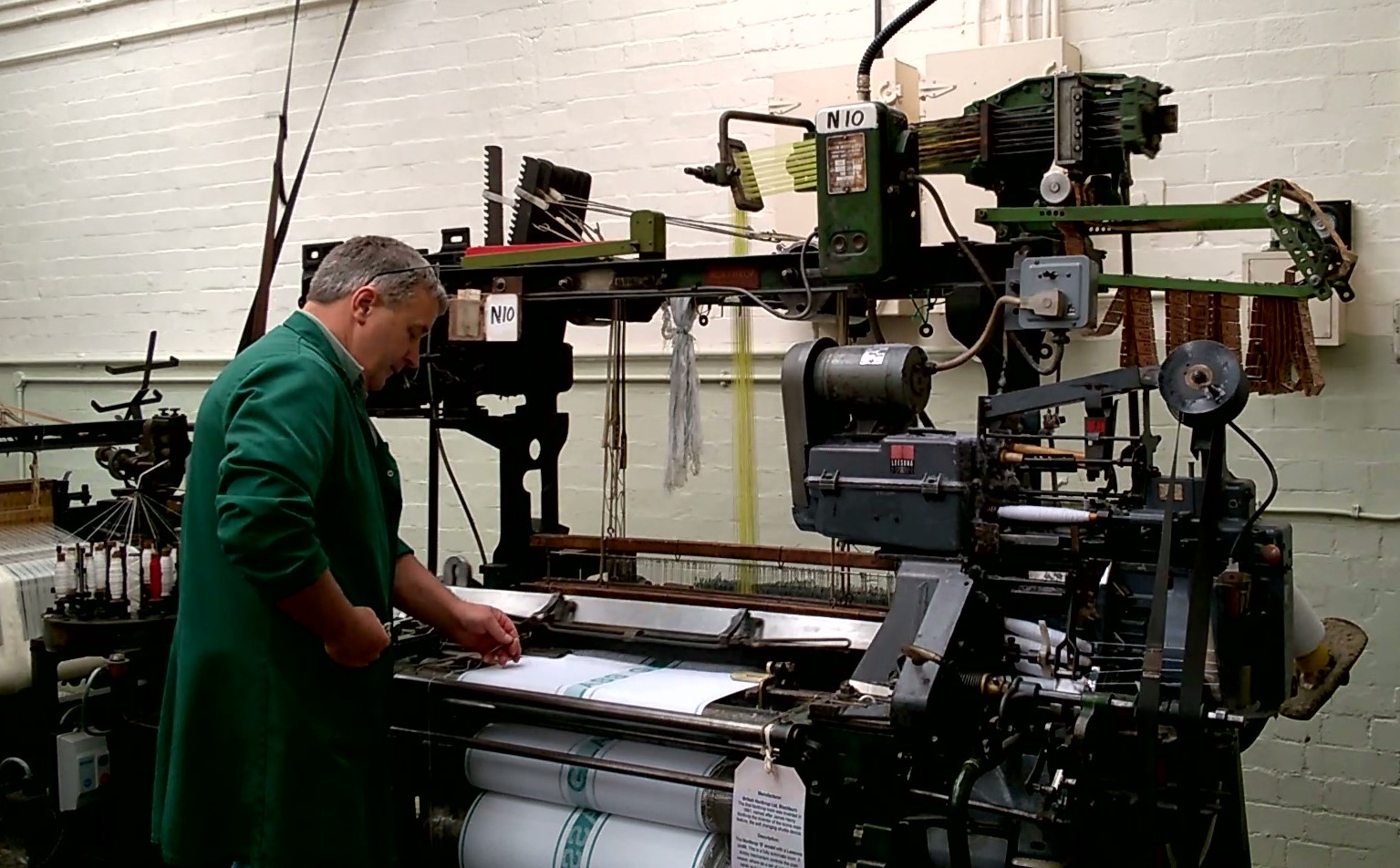
Graeme tending a Jacquard loom (runs on punch cards, complex patterns possible) made in Blackburn
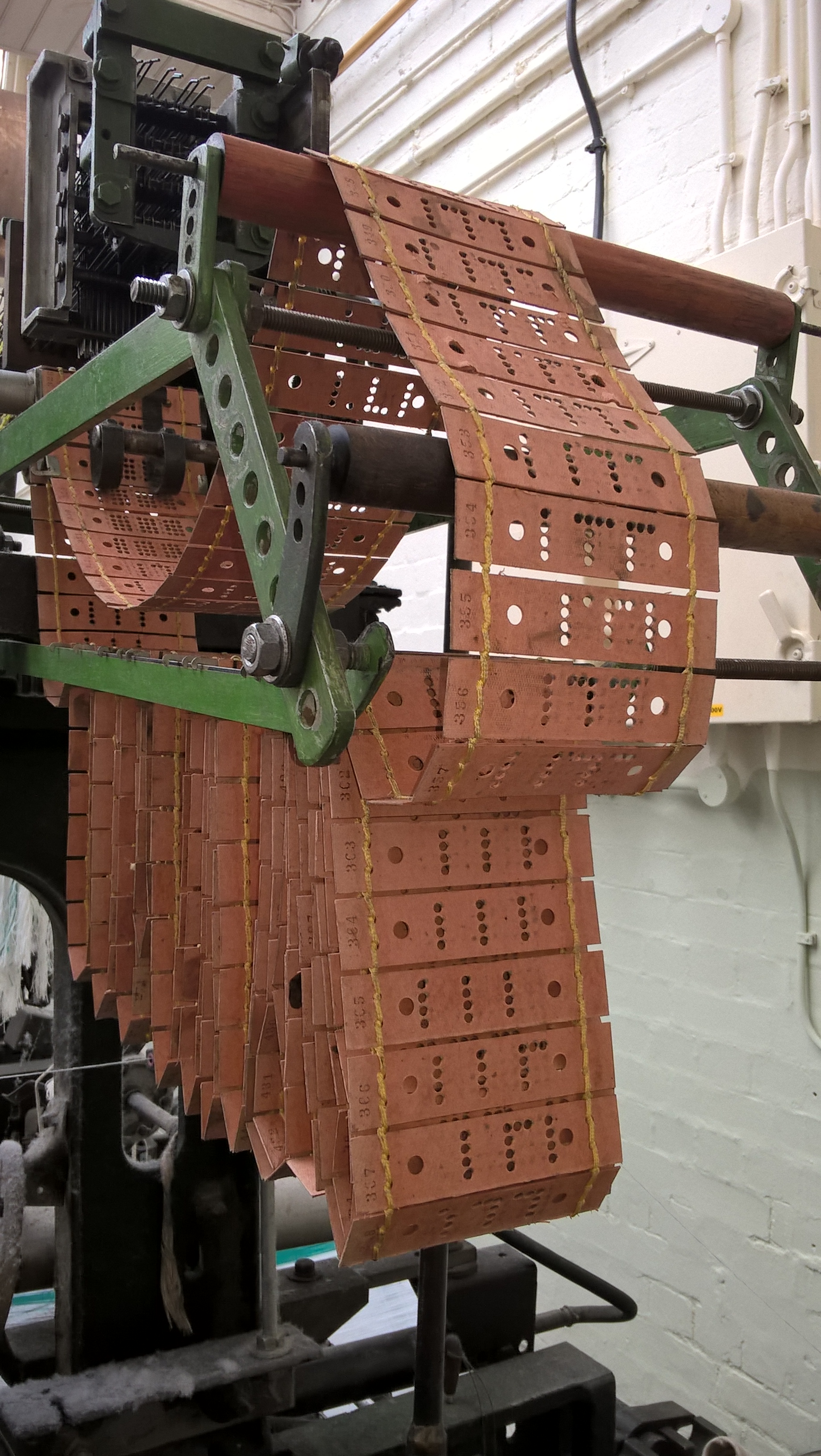
Graeme tending a Jacquard loom (runs on punch cards, complex patterns possible) made in Blackburn

Punch cards - a weaving loom that's a computer

Punch cards – a weaving loom that’s a computer


Graeme, our guide and expert weaver, tells us how women weavers – each tending several looms – looked out for each other. They were all ‘aunties’ who’d help out in times of trouble, tending others’ children, covering for ‘bathroom’ visits.

I travel back in time, again, to Blackburn, counting aunties. I had two real aunts, Edith and Madge. Madge frightened me – the only time I recall meeting her was in her house, a place my memory paints darkly.

I had cheerier aunties in Nell, Tisbeth, Irene, Dorothy, Barbara – a dozen at least.

Auntie Barbara lived next door.

One day, a friend who had that most enviable of playthings, a swing, said I could play in her garden when she was out.

My friend’s father had an aviary. The aviary door was open. I stepped in and the door shut.

I couldn’t get out.

I wailed, cried, called for my mummy.

Auntie Barbara came and let me out.

Long after we moved across the Pennines, when I was between school and university, I worked as a ‘relief assistant housemother’ in children’s homes. The children called me, 18-year-old me, auntie.

But I digress. Queen Street Mill made me realise what a sense of community we’ve lost with our fences and gates, blinds and locks.

We need our heritage, it tells us things.

Which is why Queen Street Mill is a ‘Grade 1’ (top grade) listed building.

Looking a bit Satanic
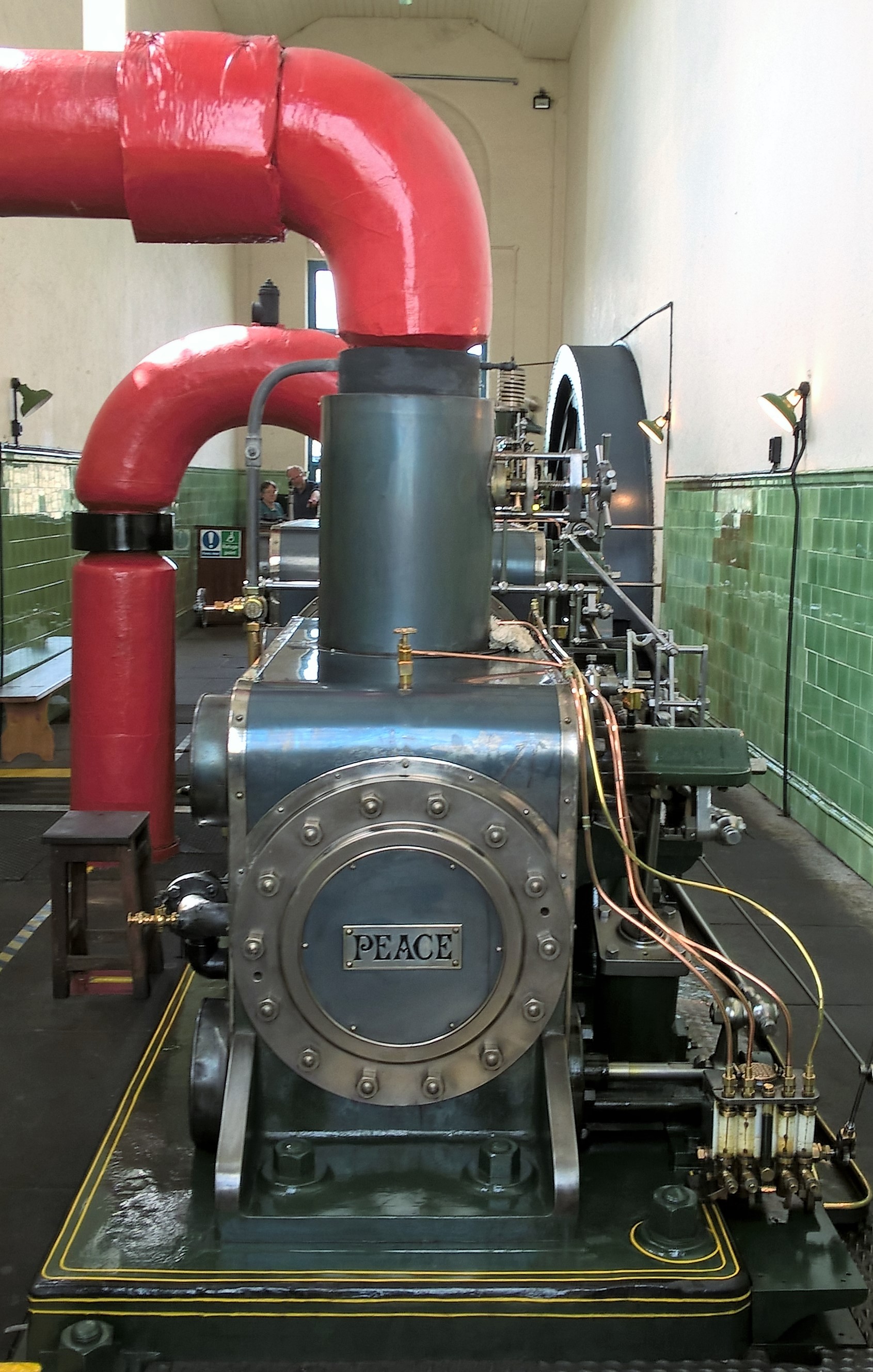
Looking a bit Satanic

Front view of the Peace engine built in nearby Nelson in 1894

Front view of the Peace engine built in nearby Nelson in 1894

Lancashire cotton kept the bread on Britain’s tables.

Between 7 and 8.30 am, it was said, its weavers made fabric for domestic consumption, the rest of the day it satisfied the world’s needs.

It was, arguably, the engine of the nation.
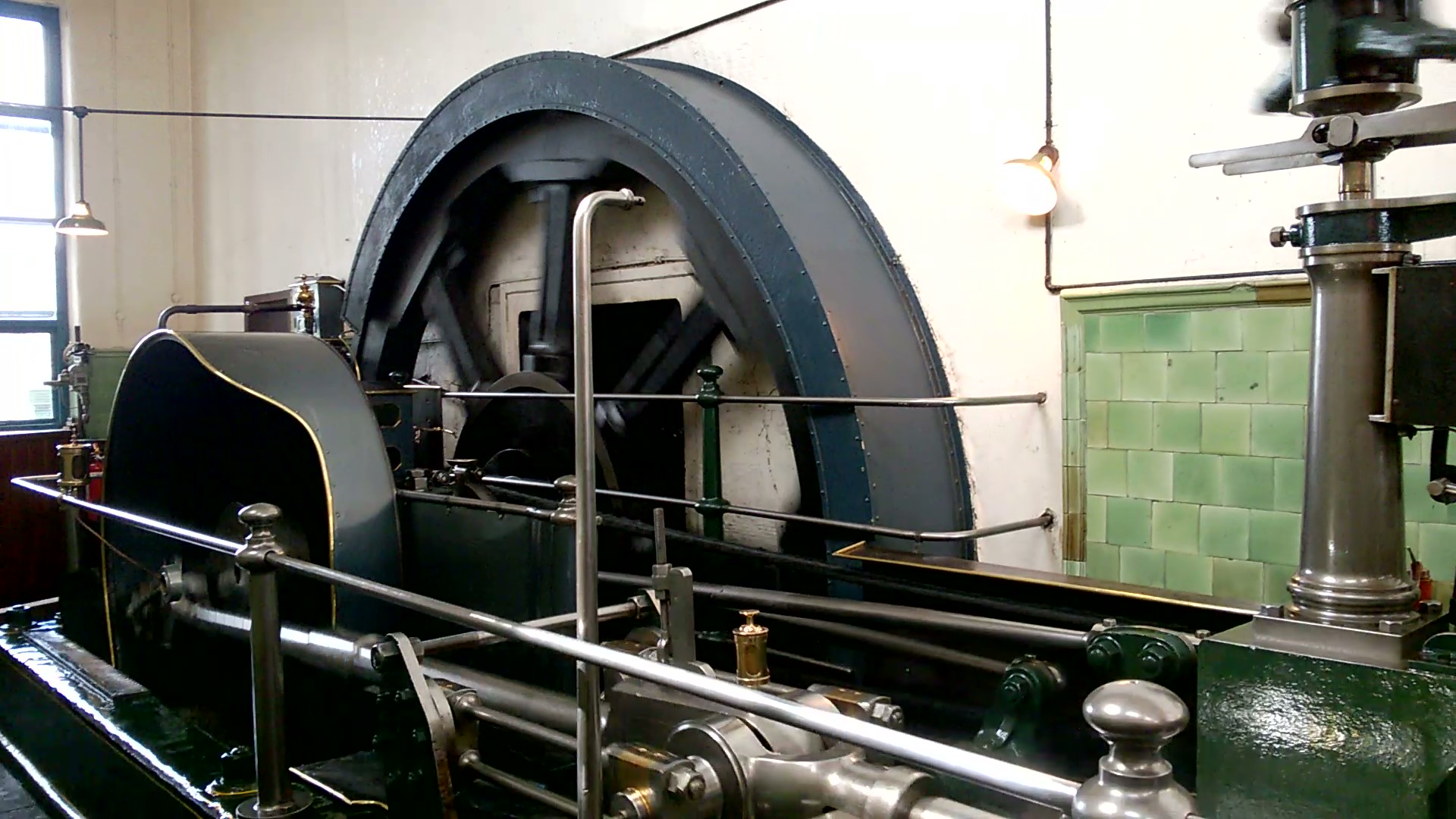
A still from a video of the Peace steam engine in motion

A still from a video of the Peace steam engine in motion


This mill’s the last working 19th century cotton mill in the world powered by a steam engine.

And it’s due to close in September.

Our Government has savaged Lancashire County Council’s budget. The five museums closing are just the tip of an iceberg. The savings from closing them are reported to be £1.13 million in 2017-18.

Yet, hundreds of miles away, the new London Mayor presses ahead with plans for an unnecessary garden bridge, requiring £60 million of taxpayers’ money, plus £3.5 million for annual maintenance.
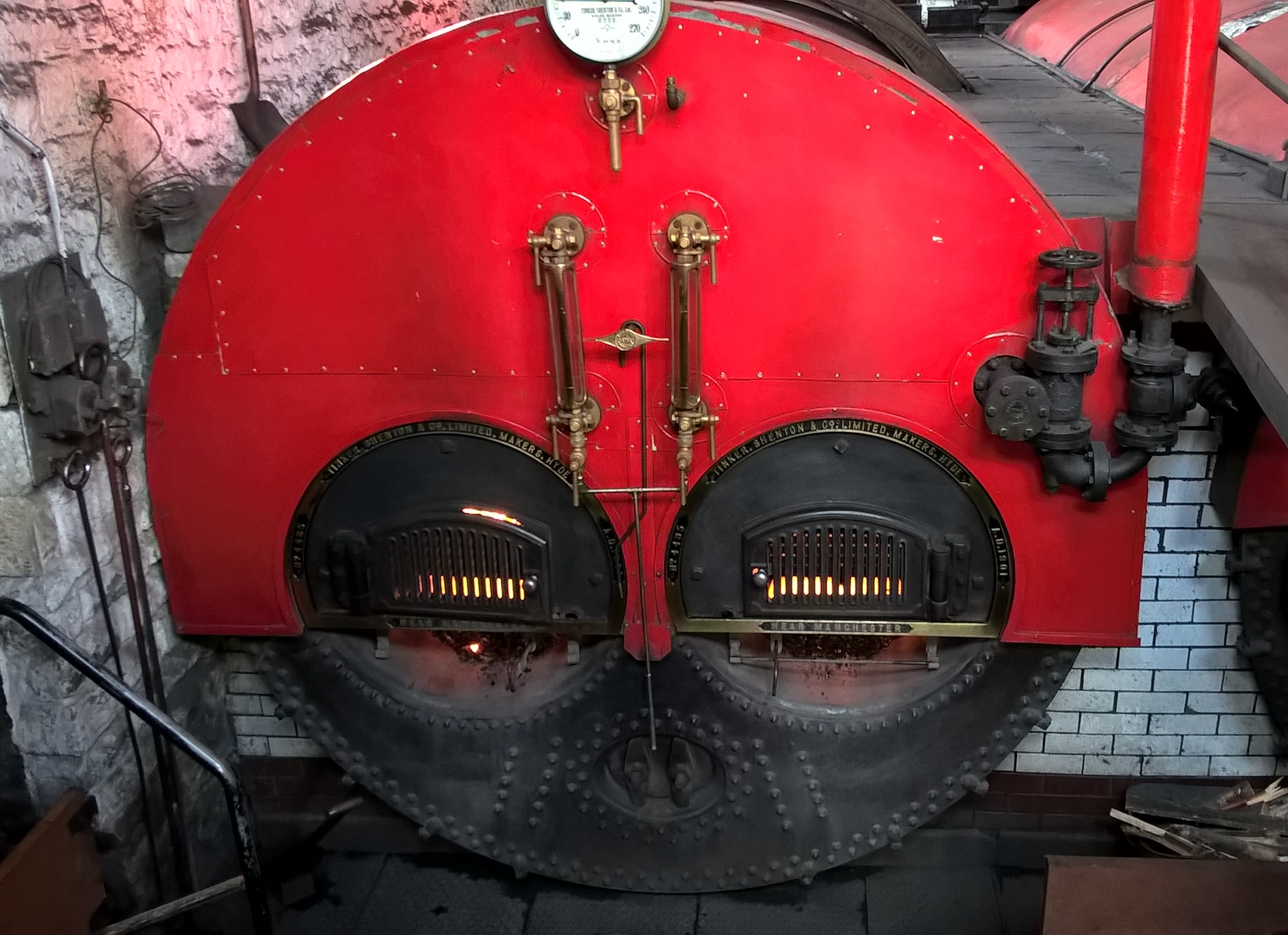
Lancashire boiler, one of two, made near Manchetser and looking suitably angry, methinks

Lancashire boiler, one of two, made near Manchester, looking suitably angry, methinks

And the industrial north?

Well, we’ve been promised a Northern Powerhouse.  And I really believe it’ll happen.

Yeah. And pigs might fly.

Get me out of here, Ms SatNav.

Fastest route.


I’ll be putting more pictures and information about the mill itself on my Maid in Britain blog site. I got a bit angry after we went to the other mill museum threatened with closure – if you fancy reading that post again it’s here: Helmshore Mills

If you’d like to sign a petition to try and keep them open please do sign this one:

http://www.pendleheritage.co.uk/save-queen-street-mill-and-helmshore-mills-sign-petition-here/

And if you know a millionaire philanthropist with a soft spot for industrial history, please pass this on  😉

Posted in Art, jaunts & going out, Britain now & then, Lancashire & the golf coast, Thinking, or ranting, or both, Uncategorized | Tagged , , , , , , , , , , | 8 Comments

Thoughts on a morning in spring

DSCN1630

And to think I used to hate currant bushes – but big & bold they’re fabulous

Oh, what a glorious sky!

So many words for blue – and yet not one will do it justice.

Here in Northern World, we’re accustomed to wintry gloom and misty, damp spring days. Perhaps the word for this colour eludes me because of what went before? The contrast? Because it’s not a real colour, more a perceived one?

[Stops. Adjusts mental attitude. Sips from cup of tea and gazes from window.]

Quite the wrong approach for this heavenly day.

The air’s abuzz with bees, with chirruping, nest-building, passion-crazed birds.

A butterfly rests on the dew-drenched grass – was it sensible to emerge so soon?

DSCN1619

Hard to capture the bronze – you’ll just have to trust me!

Buds strain to unfurl on the birch trees, their tippy-top branches glowing bronze in the sunshine.

A froth of pale blossoms covers the cherry trees.

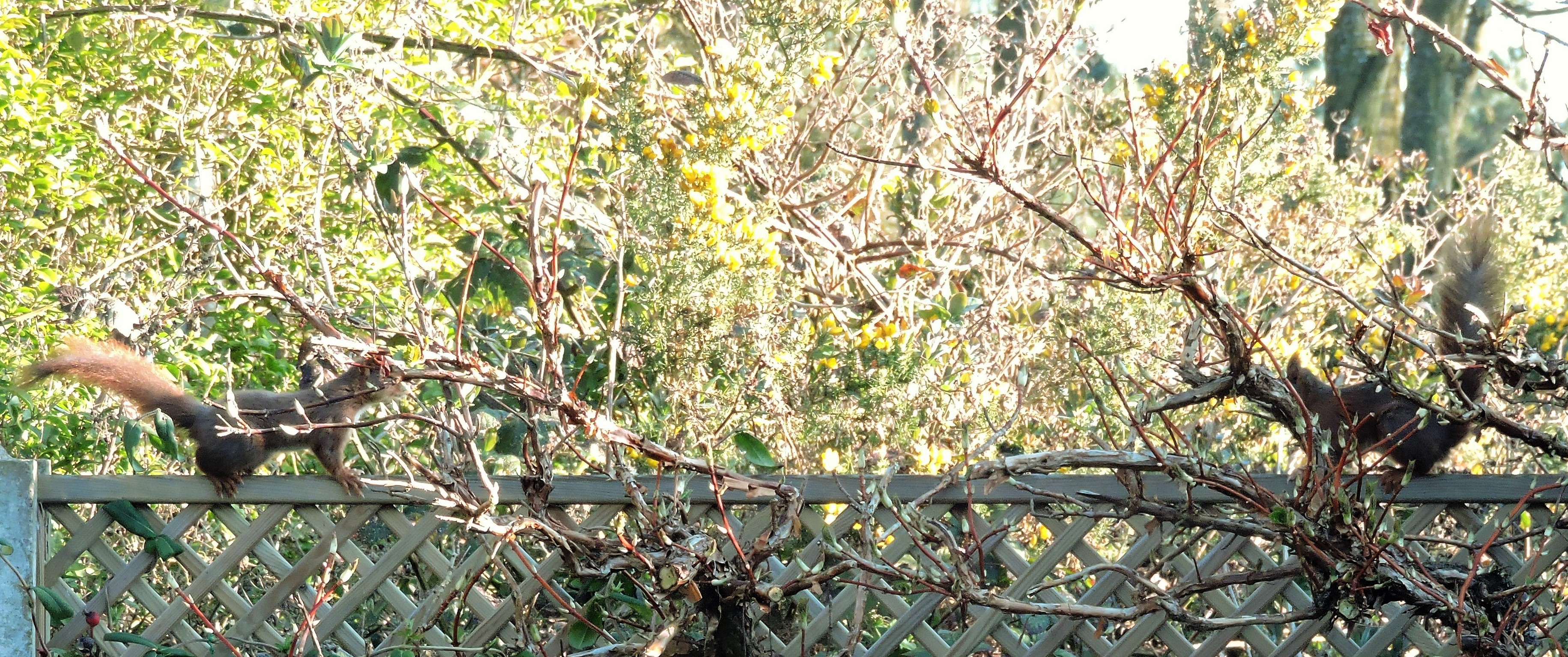
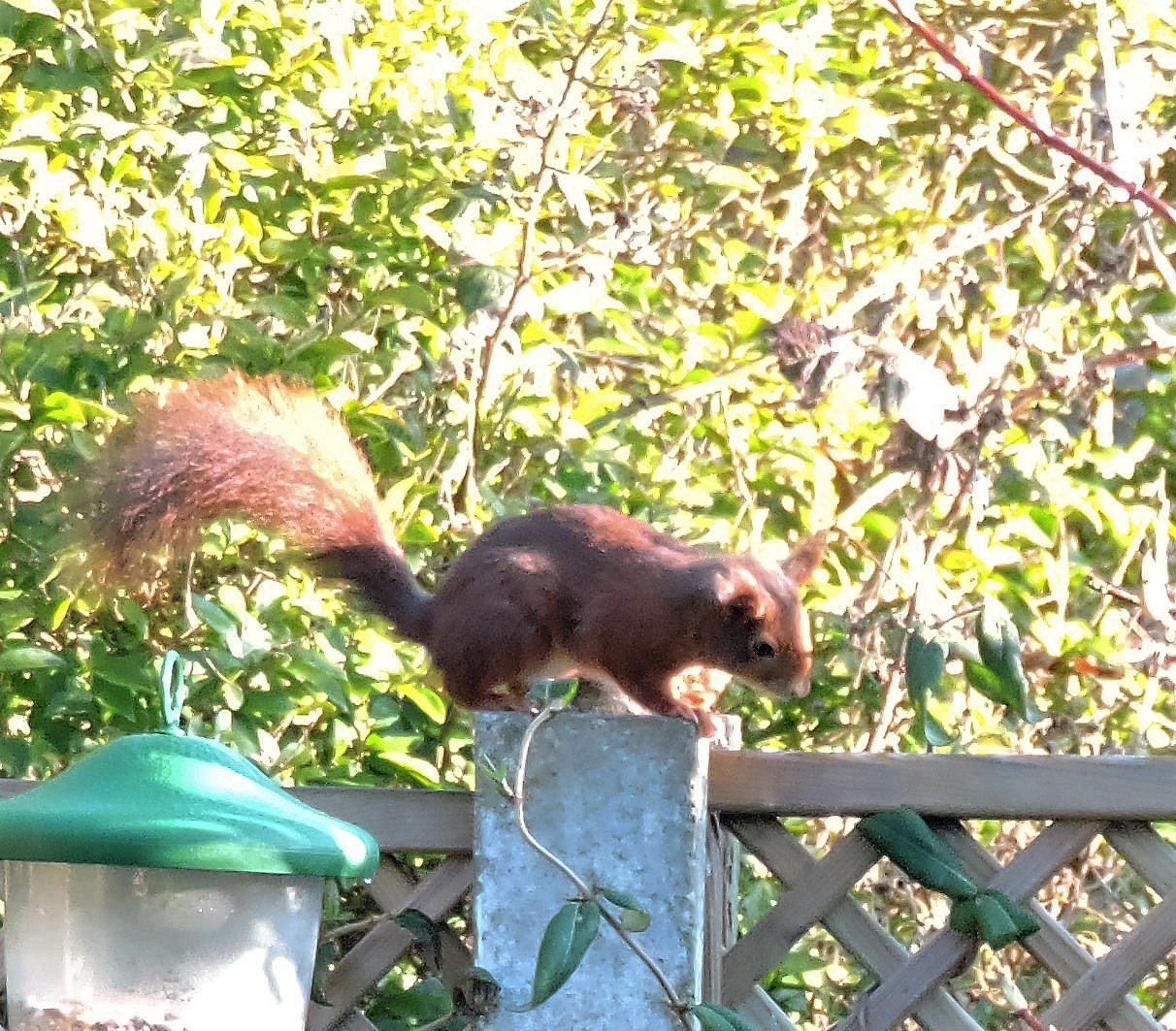
And two red squirrels compete for the water dish. Nibble at the peanuts that were there for little birds to enjoy.

DSCN1592 (2)

A bit of a stand-off atop the fence


DSCN1594 (3)

Eye on the water dish

A white pen draws a line across the sky, erasing itself as it leaves. Too high to see what kind of aeroplane it is. Have they been on holiday? Are they going to a business meeting, those passengers?

My day should have started long ago. By which I mean my ‘working’ day. I’ve been up since 6 am, but still haven’t showered or dressed for the day or started anything that approximates to tasks of duty not of pleasure.

I ventured into Twitter. But that medium is a fickle companion. It distils the best, the worst, the most painful, the silliest, the angriest the ugliest the most beautiful. Short snatches of everything – and today, thanks to the world outside my window, I’m aware how easy it is to select only the worst.

So here I am. Glancing outside. Typing.

DSCN1628

One of my favourite spring flowers, Pulmonaria, or lungwort, doesn’t like too much sun

Heart warmed by the day, by the trees, by the squirrels. By the birds, the blossom, the butterfly, the grass – and the promise that is spring.

Yesterday a bird died after hurtling headlong into our window. I found it outside the garage door, flies already crawling.

It was a Black Cap, a bird that is no common visitor to our garden.

In spring the birds seem to fly far faster, be less wary, hit our windows with abandon. Most often they survive. Especially the fat, waddling, far-too-numerous wood pigeons.

But this one died. It saddened me. Its little eye open but empty. Why me? It accused, or so it felt.

‘Who killed cock Robin?’

‘I said the sparrow, with my bow and arrow.’

No, said I.

I, with my kitchen window, I killed little Black Cap.

But this is spring. I hope that Black Cap’s partner will find another mate. That soon, added to the chirruping will be the squeaks of baby Black Cap. A replacement for the little corpse that rots, now, amongst the trees beyond on our fence.

April. The cruellest month?

Perhaps. Yesterday.

But not today.

DSCN1633

Golden weeping birches and a bit of that curranty stuff


Posted in Britain now & then, Lancashire & the golf coast | Tagged , , , , , , , , , , | 12 Comments
This bedroom was the one room home for the 7 members of the family of George Stephenson, whose famous 'Rocket' steam engine was the first train to run on the first public train line in the world, between Manchester and Liverpool

This bedroom was the one room home for the 7 members of the family of George Stephenson, whose famous ‘Rocket’ steam engine was the first train to run on the first public train line in the world, between Manchester and Liverpool

Bedroom of Thomas Bewick, master engraver and artist, at his tiny home at Cherryburn, Northumberland

Bedroom of Thomas Bewick, master engraver and artist, at his tiny home at Cherryburn, Northumberland

Just a note …

… to say that I have set up a new blogging site. Its aim is to let me carry on visiting old industries, or interesting people making things, then writing about them, without this turning into a ‘which steam engine I saw this weekend’ kind of site.

The latest post is quite topical, I think, given the state of the British steel industry.

I’ve posted some of the pictures here as a taster. It’s the usual mix of personal observation and sketchy facts!

There’s another thought-provoking bedroom picture in the post itself. Cramped accommodation seemed to be a leitmotif for this particular trip back in time in north-eastern England.

Here’s the link (the name is explained under the menu tab on the site):

Maid in Britain

WP_20160325_16_11_58_Pro (5)

The appropriately named Killhope lead mine in the North Pennines Area of Outstanding Natural Beauty (AONB), England (also a Unesco Global Geopark)

Posted on by memoirsofahusk | Leave a comment

A cliché walks into a bar …

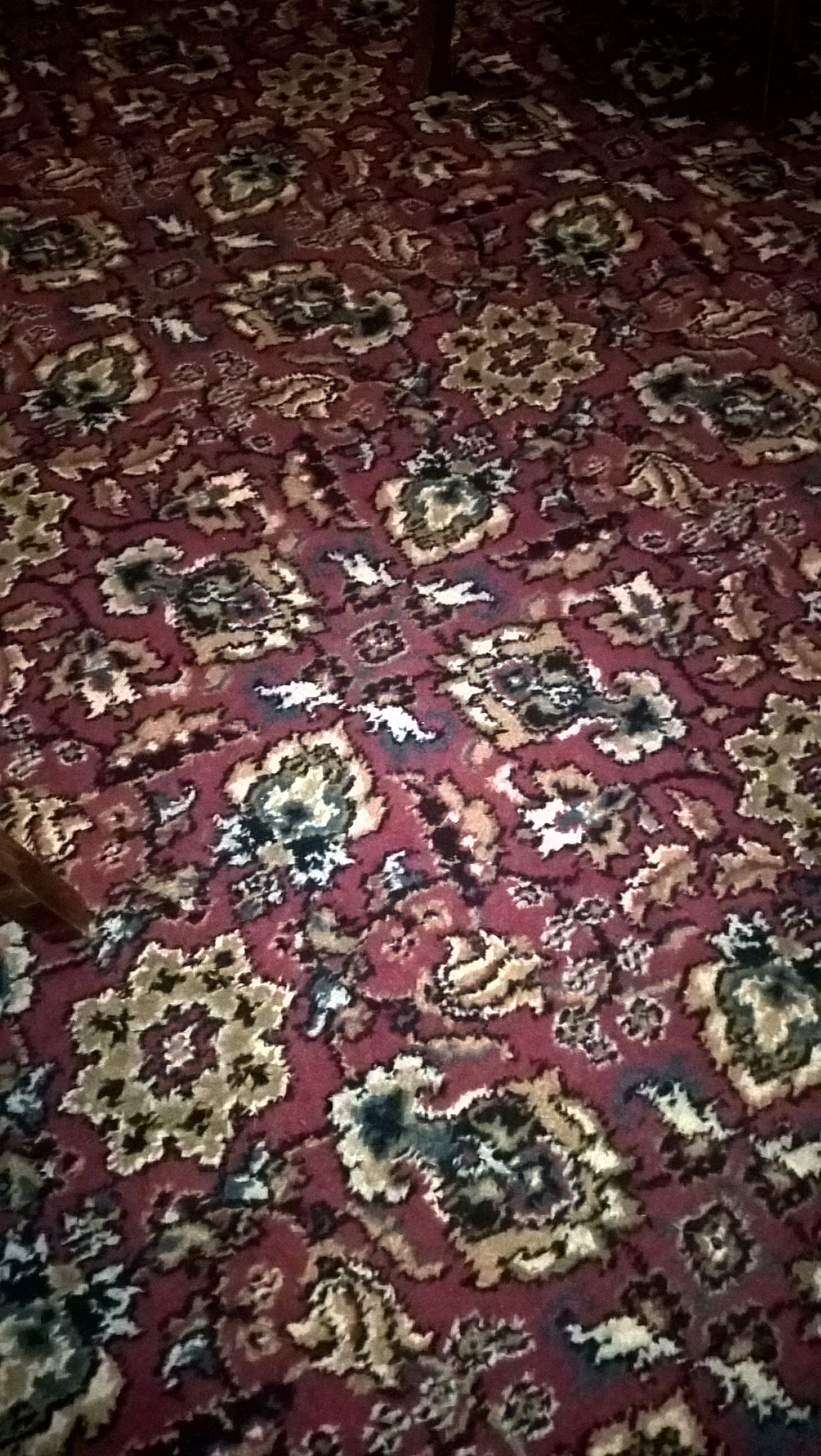
WP_20160324_20_38_40_ProWhippet-thin, the old man in a flat cap and raincoat treads his wary way across the red, pub-pattern carpet.

Beneath the cap, his narrow face is pale, his cheeks cratered with dark hollows. The overall impression is grey, like the storm clouds topping the boggy moors that rise around the village.

The thin man shuffles to a corner and chooses an upright chair with its back to the wall. He’s with a minder, of contrary dimensions, who stands over him while he settles.

The minder’s beach-ball belly stretches out in his maroon, v-necked sweater. His face is pale, his bald pate shiny in the harsh light.

His eyes? Well, there’s the thing.

His eyes belie the bravado implied by his comfortable bulk. From my perch across the room I sense that something’s amiss.  Is it sorrow? Worry? The stress of caring for this gaunt old man, now resting his white stick against the pub wall?

So far, perhaps so clichéd. We are, after all, in the far north east of England. In a land that has seen more prosperous days. In a landscape that’s at once both glorious and scarred.

WP_20160326_10_16_24_Pro (2)Like those rare souls whose inner beauty transcends superficial ugliness, the moors enthral the casual traveller.

Despite, or even because of the grey gashes of quarries. Or the odd contours of hills that once were waste mounds, now grown over, grass-golden, thanks to years of benign neglect.

Beneath them, here, in the village, the old church is open all the day long. Its graveyard replete with touching epitaphs and slabs of stone alive with rings of sulphurous-coloured lichen.

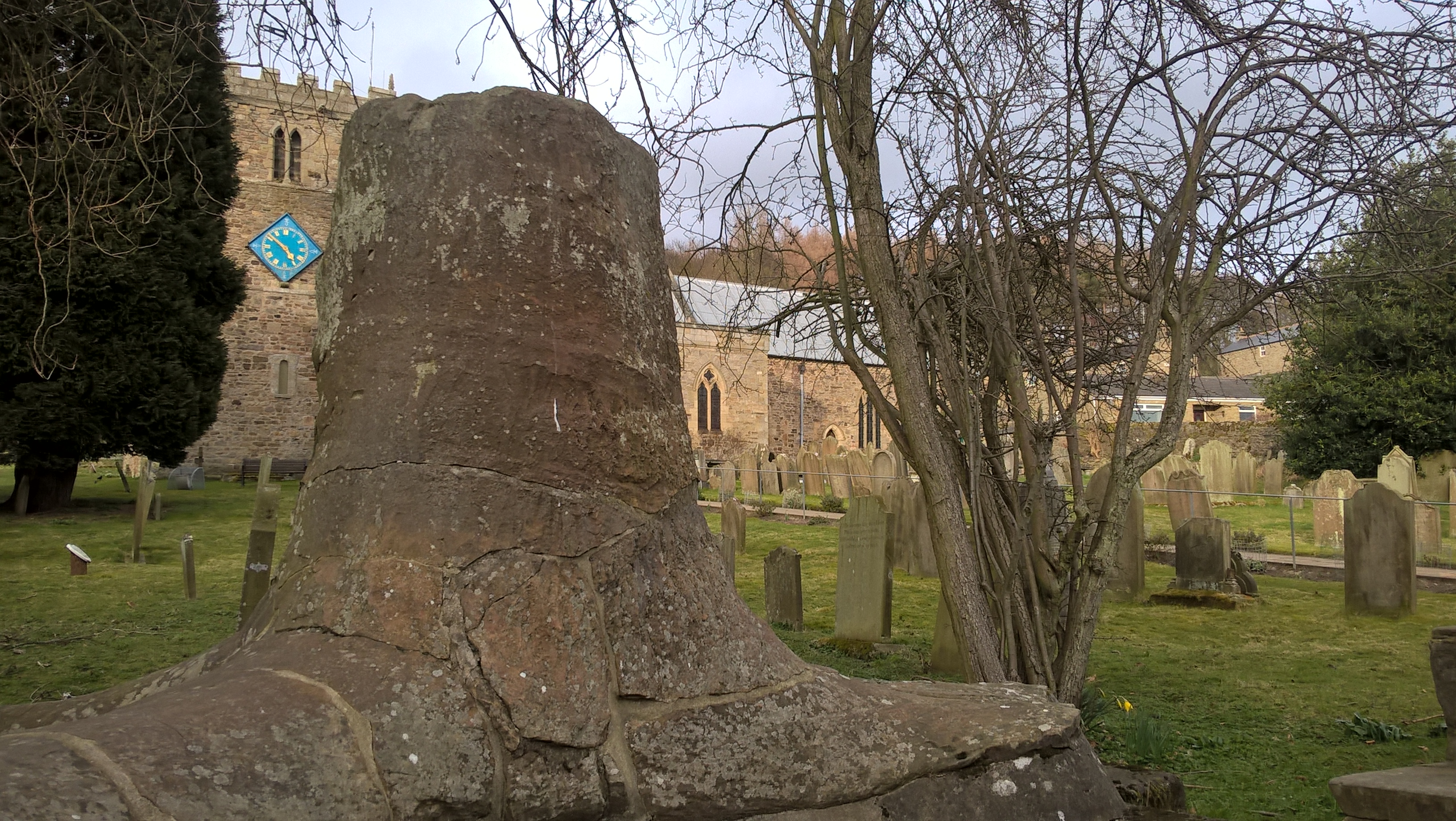
Fossilised tree trunk

Fossilised tree trunk


A Roman altar, a Saxon font, a fossilised tree trunk. An above-average haul of interesting items tucked away in its Christian corners.

Next door is the pub we’re in.

One room – not particularly large – is half denuded of furniture.

Brave diners cling to the remnant tables, hoping to finish mountains of mash, chunks of carrot and turnip, short, fat sausages and vast Yorkshire puddings laced with rich brown gravy, before the band gets going.

And this is where the clichés begin to fall apart.

The thin old man, still in his cap and raincoat, sits between the audio deck and a table, picking at a bowl of hot chips while a relative – I can’t tell of what degree – mixes the sound for the band.

It’s a family affair. Grandad and dad – maybe an uncle, too – sup from soft drinks in pint glasses, watching the younger generation making their bid for fame.

WP_20160324_20_02_30_Pro (2)

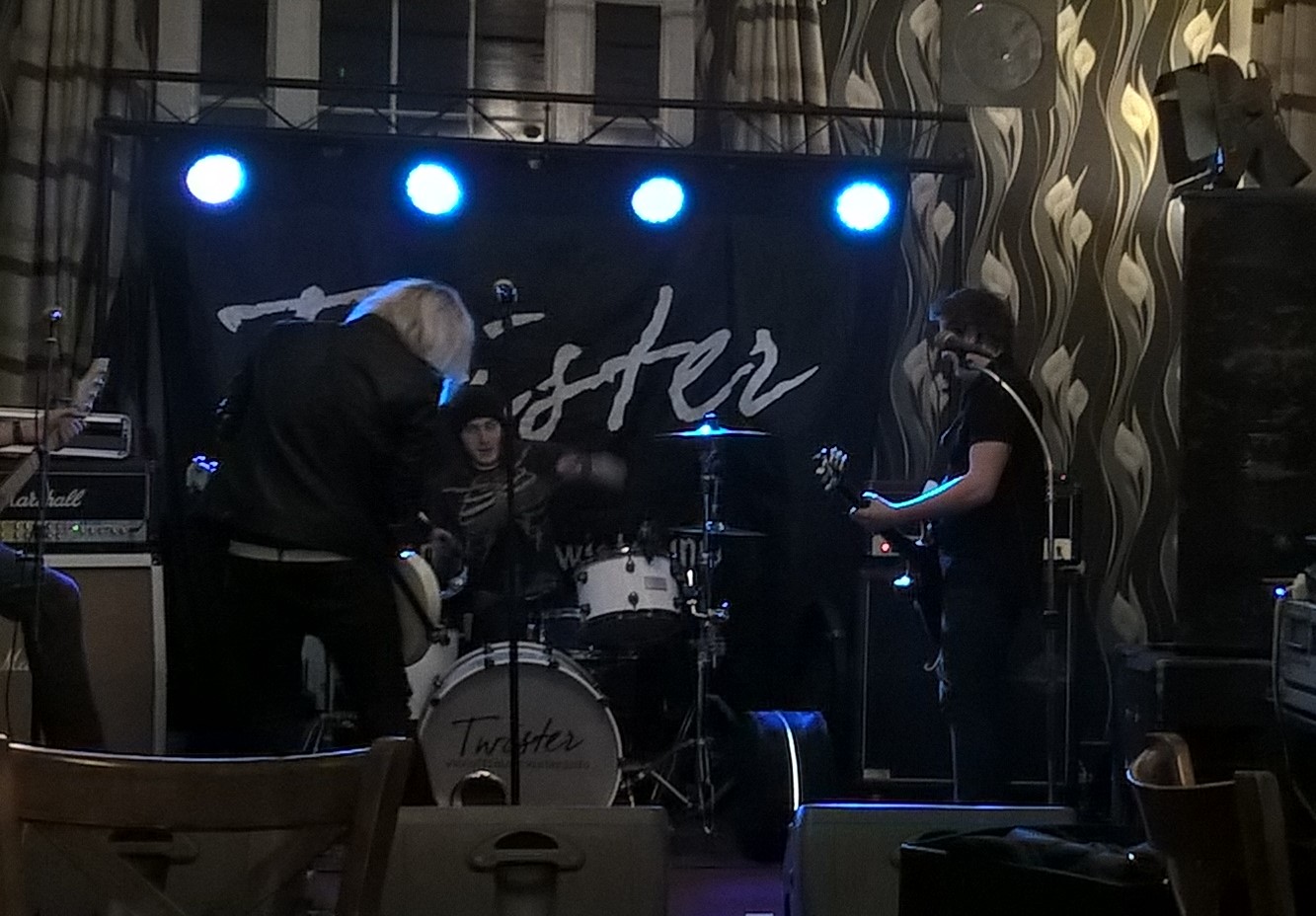
A rather energetic band (my excuse for the blurs)

They’re good, the band. The backdrop they stretch cross the windows is black and white.

The drummer, long-haired and skinny, wears a black t-shirt bearing a white skeleton image.

The singer – a stocky chap with a shock of coarse platinum hair, wears a black shirt, white belt and tight black trousers. I guess it’s de rigeur.


They do two test runs, the first Pink Floyd’s Brick in the Wall. And they’re good – very good.

After a second song I don’t recognise (the singer wrote it) they wander off and pick up drinks. Settle down to wait for 9 o’clock. The pub doesn’t want them to start, yet.

We’ve already downed a bottle of wine with our meal and we know – we’ve past form on this – that if we stay for the band we’ll drink yet more and regret it on the morrow.

The vocalist is lounging around the door as we leave.

‘I really enjoyed that,’ I say, meaning it.

‘Well, why don’t you stay,’ he says, ‘we’ll be on soon?’

‘We’ve had too much to drink already,’ I say, sort of meaning it.

‘Suck it up!’ he laughs. ‘Stay and have some fun.’

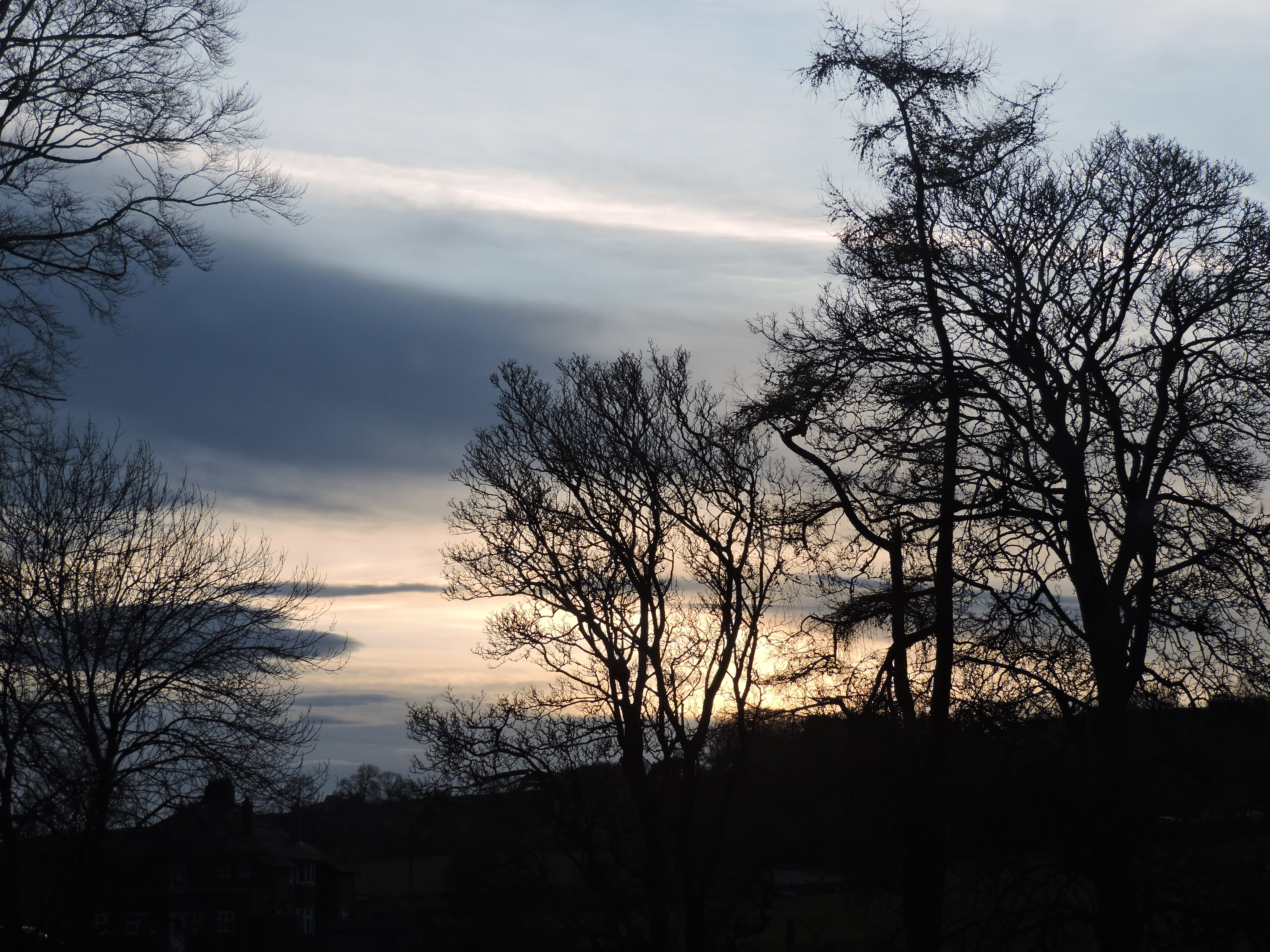
An owl-hooting nightscape

An owl-hooting nightscape

We wander home as night falls. A bold owl hoots again and again from the trees across the road. The river rattles the stones as it rushes under the bridge.

We open the door to our 900-year old bed and breakfast establishment and pick our way across the stone flagged entrance.

As we pass the kitchen, we collect a tiny bottle of fresh milk for our morning tea and thank our pleasant hostess, who’s just said she’ll serve us leaf tea at breakfast – Assam, no less.

Climbing the creaking stairs I mention the cliché idea for a blog post to my ever-tolerant companion. I outline the general concept, throw my bag on the bed and take off my coat.

He laughs.

‘I thought you meant you were the cliché,’ he says.

Posted in Art, jaunts & going out, Britain now & then, North east England | Tagged , , , , , , , , , , | 5 Comments

“Not even a pot to piss in”

I’ll never look at a certain shape of pot again without thinking of urine.

Made of plain clay, it’s taller than you’d imagine a ‘piss-pot’ would be – and narrower round the neck than at its widest point. It stood outside what was probably a hovel. Because the pot was used to store urine until it was sold. Urine from people who were ‘piss poor’.

Before the advent of chemicals, urine was used in the production of woollen cloth to strip lanolin from the wool. Men trod the urine into the wool with their bare feet and as a result they smelt. I would say you can imagine, but I can’t – and I don’t want to.

As our guide at Helmshore Mills in Lancashire was recounting these plain facts, I thought, ‘what’s to stop them topping up the urine with water?’

The man who collected it would taste it, that’s what.

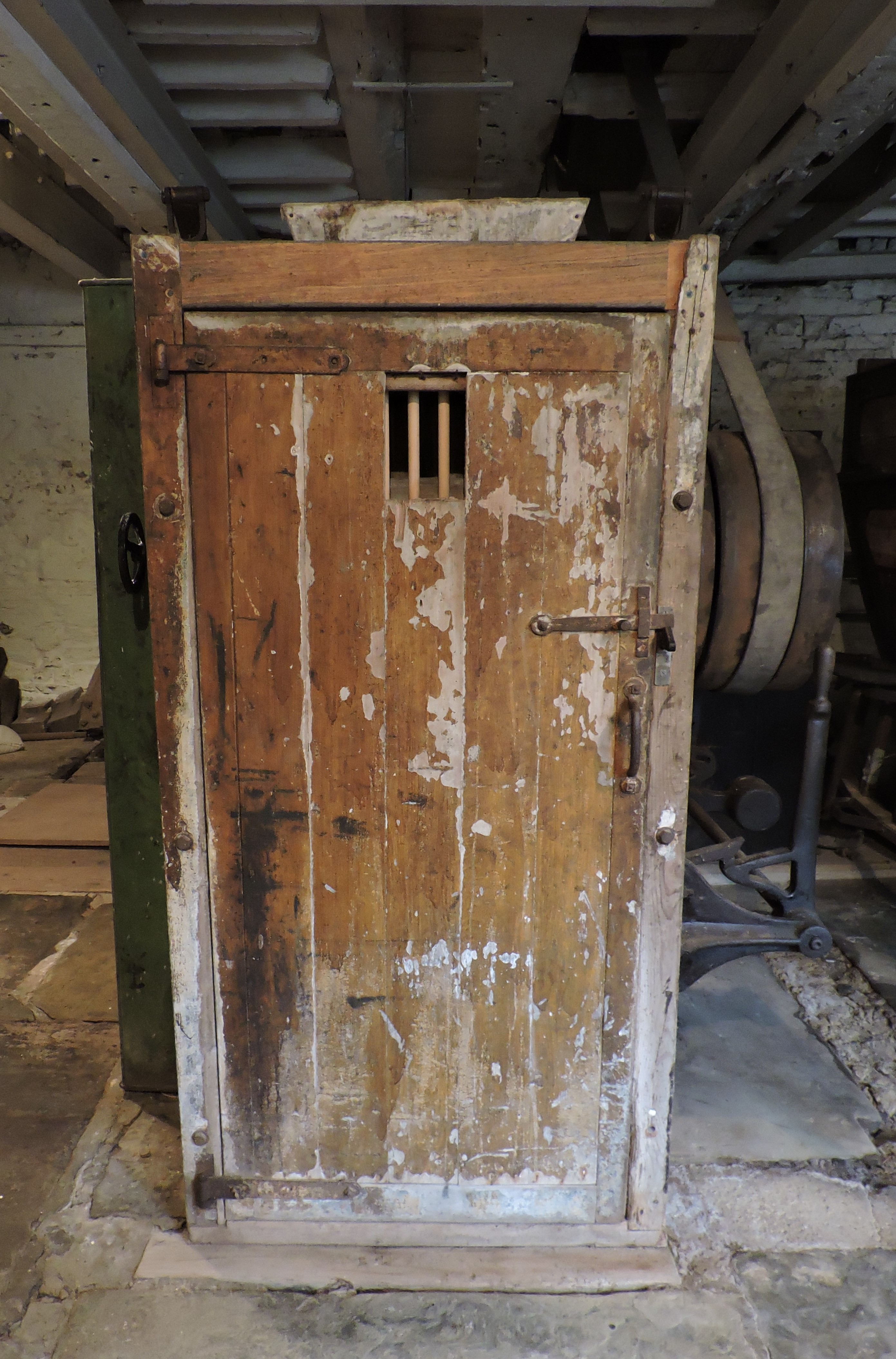
Earlyhealth &safety? The door shut on dangerous machinery used in fulling of wool

Early health & safety? The door shut on dangerous machinery used in fulling of wool

Red-heads and Methodists were paid more. Methodists didn’t drink alcohol, so I can see that – but red hair?

By the time I’d reached this point in the story of the two mills, cotton and woollen – unusually, side-by-side – I was cold and needed a cup of tea. But only because the last bit, by the old water wheel, was unheated.

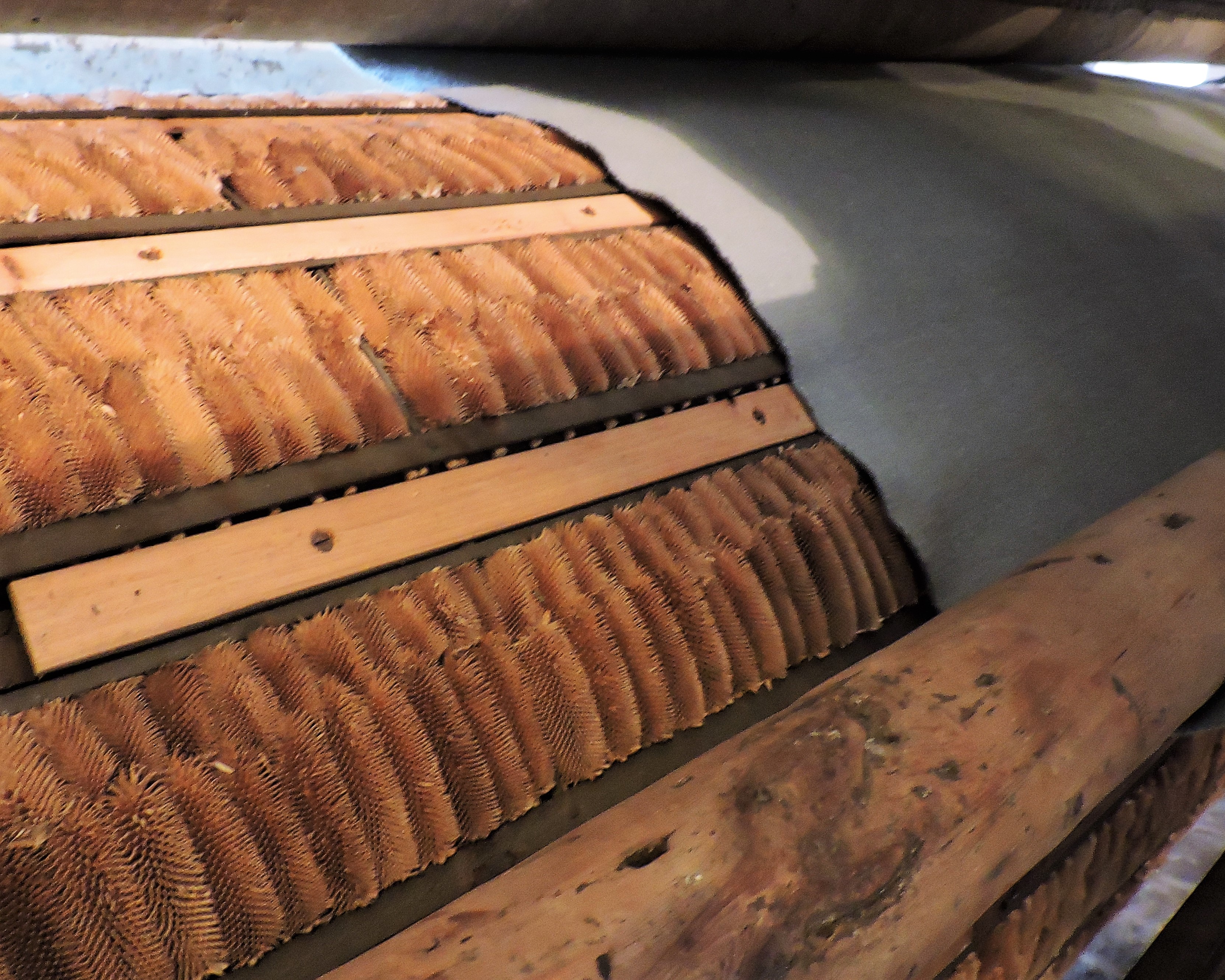
Teasels were used to comb wool even in mechanised production

Teasels were used to comb wool even in mechanised production


Upstairs, the cotton mill was hot and humid, ideal conditions for working cotton – but we weren’t having to run around, risking our lives, as machinery clattered to and fro and dust filled the air and our lungs.

DSCN1394 - Copy (2)

Everyone I spoke to at the museum was knowledgeable, enthusiastic – and worried. Because, in a few weeks’ time, the museum may shut. For good.

Lancashire County Council’s museums budget for 2015-2016 was £1.23 million. Five museums are scheduled for closure, two of them mills. The other, Queen Street Mill in Burnley is the world’s only surviving, operational, steam-driven weaving shed.

Alan was visiting at the same time as us - he used to work in a nearby engineering factory making equipment for the textile industry. In 1983 his factory closed down and he became a school caretaker 'the best job I ever had'

Alan was visiting at the same time as us – he used to work in a nearby engineering factory making equipment for the textile industry. In 1983 his factory closed down and he became a school caretaker ‘the best job I ever had’

Lancashire was the King of Cotton. The industrial revolution brought its merchants vast wealth, its masses drudgery and danger – but still, it was employment.

To save a few hundred thousand pounds Lancashire is losing what is arguably one of the most important reminders of its past.

To put those hundreds of thousands of pounds in context, let’s travel south …

As the machine went back and forth, children dodged beneath picking up debris. To see if they were old enough to work there, a child had to be able to touch the left ear with the right hand over the head.

As the machine went back and forth, children dodged beneath picking up debris. To see if they were old enough to work there, a child had to be able to touch the left ear with the right hand over the head.

In London, a new footbridge across the Thames is being planned. London already has many bridges, including a fairly recent footbridge. But this one will be a garden.

For the joy of having a footbridge we don’t need in our capital, taxpayers everywhere are paying £60 million. Plus annual maintenance costs – possibly £3.5 million.

The project is the brainchild of an actress and it’s backed by London’s fluffy-haired mayor. I don’t need to say any more, do I?

But I do want to say more about what lies behind this sorry state of affairs. Because I’m angry. Very angry.

I’ve always been pretty upset at what happened to our built heritage during the ‘Reformation’ of Henry VIII and later under Oliver Cromwell.

All around the kingdom, abbeys, monasteries and cathedrals were looted, stained glass destroyed, statues smashed, graves desecrated and robbed. Buildings used as off-the-shelf quarries.

Visiting functioning old cathedrals, seeing empty niches once filled with the handiwork of medieval masons, I feel sad for the loss of the heritage and the stonemasons’ work and art.

There’s something uncomfortable, though, about finding such destruction distressing.

If I’d been alive during the destruction, would it have bothered me more than the dismantling of faith’s less tangible assets?

I’ll never know.

But I do know how I reacted to the destruction of two giant Buddhas in the Bamiyan valley by the Taliban. And how I reacted to the destruction at Palmyra and the execution of its guardian by so-called Islamic State.

I was shocked. Outraged.

The media reverberated with that same outrage and shock.

Did we feel more as a result of this wanton destruction of things than we did for the destruction of lives and cultures that was going on before, during and afterwards?

No, I don’t think so. But it felt uncomfortably like it.

ISIS bosses were clever, targeting human heritage.

They reject what’s gone before: our world. Theirs isn’t just a new world but the new world. And behind the cloak of righteous fervour they smuggle out valuables, raising money for their ‘crusade’ from infidel westerners. Because we value history, emotionally and financially.

I’m not in any way condoning it, but I do understand how religion can drive people to do such things.

What I don’t understand, though, is how, in the 21st century, in the fifth wealthiest nation on earth, one man is being allowed to destroy the fabric of our society.

George Osborne. His family wallpaper business has soaped his route, almost to the top of the political hierarchy, with millions of pounds (and clever tax planning).

For six years he’s been cutting local government budgets.

He’s cut Lancashire’s budget so hard the county can’t afford luxuries. Soon it will have to raid its reserves to fulfil even essential statutory duties.

I despair.

DSCN1428 (2)Helmshore Mills aren’t just stone, timber and machinery. They’re the women who were scalped, their hair caught up in machinery. The men who paddled in urine. The orphan children bought as human fuel to stoke these engines of capitalism.

Today people are killing themselves because their benefits have been stopped. Disabled people’s incomes are being reduced by £30 a week. Families face eviction because they have one spare bedroom.

I think it almost justifies me lumping George Osborne in with ISIS and the Taliban. Because he has a fundamentalist’s zeal for a religion: unfettered capitalism.

I’m sure some old-fashioned Conservatives know things have gone too far – but why aren’t they doing anything about it? The Government has a majority of twelve.  Seven decent folk could halt the worst excesses of this crusade against the vulnerable, just by voting.

Well, “By their fruits shall ye know them” as the Gospel says.

DSCN1426 (2)

Posted in Britain now & then, Lancashire & the golf coast, Thinking, or ranting, or both | Tagged , , , , , , , , , , | 8 Comments

‘I am half sick of shadows’

She’s forever enigmatic, the Lady of Shalott.

A creation of Tennyson, inspired by Arthurian legend, she sits, day and night, weaving a wondrous tapestry. Although within sight of Camelot, her world is confined to reflections in a mirror. If she stops, looks out onto the real world, a ‘curse is on her’.

And so the Lady sits and weaves, seemingly content. But one day, she sees a pair of young lovers in her looking-glass.  ‘I am half sick of shadows,’ she sighs.

The stage is set for Sir Lancelot – and tragedy – to arrive.

For as long as I can remember, this poem has conjured up two very different images in my mind. One is those ‘fields of barley and of rye, that clothe the wold and meet the sky’. Golden, rippling in a warm summer breeze – my own imagination adding a few scarlet poppies.

The other image is taken straight from a painting of the tragic damsel, ‘All raimented in snowy white,’ by the artist John Wiliam Waterhouse.

The Lady of Shalott by John William Waterhouse [Wikimedia creative commons]

The Lady of Shalott by John William Waterhouse [Wikimedia creative commons]

The poster of the painting was one of many that formed a visual backdrop to my years at university.

I was reminded of both the poem and the image by a recent art exhibition at Liverpool’s Walker Art Gallery.

The gallery is one of my favourites, because of its Pre-Raphaelite art. I was therefore expecting great things of its ‘Pre-Raphaelites: Beauty and Rebellion,’ show.

What was I expecting? I suppose I was hoping to be inspired by those romantic, mythical, tragic, religious themes, the bright colours, the flowers, the heroines, for which the Pre-Raphaelite Brotherhood is renowned.

I should, perhaps, have paid more attention to the blurb:

“This exhibition explores different aspects of patronage, art, politics and of the careers of the artists who lived in Liverpool in a way that no exhibition has previously done.”    Christopher Newall, guest curator.

I also should have looked at the catalogue before I started …

I stopped before each work, read each description, gave it fair consideration and – to be honest – felt a little disappointed. There was better, more inspiring, work in the room that we had passed through, gratis, on our way.

But, had I looked at the catalogue, I would have known that I was lavishing my not-feeling-too-terrific attention on just the first, small room. The main room lay ahead.

Here at last, were some serious, stunning beauties. Romance, mythology, religion – and the wonders of nature. The Bible, Dante and Dickens (but no Brontës, were they too shocking?).

The walls were pale as a consumptive’s brow. A classic modern hanging. Words painted onto the walls. Clear, legible and simple. No arty-farty, exclusionary obfuscation.

The fake, three-walled drawing-rooms, built within the main room and hung with smaller pictures, were also pale, wallpapered in a William Morris design.

I marvelled at some of the art – and at some of the frames.

Mid-nineteenth century Liverpool embraced art in a big way – and especially this shocking new form of art which much of the Victorian establishment reviled.

The role of Liverpool’s successful merchants was key, if not to the success of the artists, then certainly to the feeding, clothing and housing of them over the years.

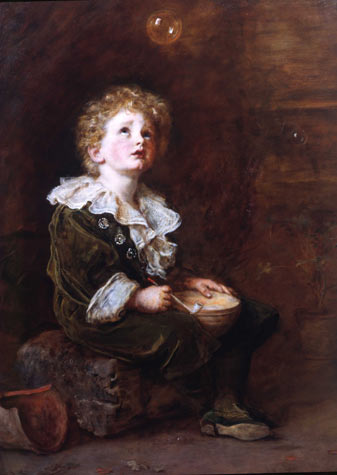
'Bubbles' by Sir John Everett Milias, is in the Lady Lever Galler, Port Sunlight, part of National Museums Liverpool. It was used as a poster for Pears soap.

‘Bubbles’ by Sir John Everett Milias, is in the Lady Lever Galler, Port Sunlight, part of National Museums Liverpool. It was used as a poster for Pears soap.

Businessmen bought and commissioned works to adorn their new mansions – and even, in Lord Lever’s case, to advertise Pear’s soap (Bubbles).

The caption to one image described the artist’s boast that his painting was his finest yet for decorating a room – sadly I can’t remember which artist. But nice and humanly honest, I thought.

So, yes, I learnt a lot. It was worth every penny of the £7 entrance fee. (I overheard a statuesque woman in black telling her phone it was expensive – she needs to reassess her sense of values, frankly.)

It didn’t inspire me. But though I left feeling slightly disappointed, I know I can return, any time, and visit the Walker’s other rooms.

For free.

The rooms where heavy doors open with solid brass handles. Wooden floors creak. Slightly faded, deep-crimson, brocade adorns the walls. And dark, heavy wooden seats are furniture, not just resting places for the weary.

The rooms where, for me, the gallery’s Pre-Raphaelite art belongs.

Some of the paintings are on an epic scale. Huge, in ornate gilded frames, or mahogany, or oak. Some with verses inscribed around or below. Many with themes that tell stories, that spark the imagination.

They aren’t to everyone’s taste, but they are to mine.

Alphonse Mucha poster, for Sarah Bernhardt as La Dame aux Camellias

Alphonse Mucha poster, for Sarah Bernhardt as La Dame aux Camelias

And I think back to my university days, to posters of Millais, Mucha, Beardsley – and I wonder why they were so popular, then. When we feared the bomb and sat-in to protest and gawped at the prices as inflation galloped, stealing away our grant money.

I don’t want to stretch a point too far, but today, as I write, it is International Women’s Day.

The Peacock skirt by Aubrey Beardsley [Wikipedia, public domain creative commons]

The Peacock skirt, Aubrey Beardsley [Wikipedia, creative commons]

Back then, many of us adorned our walls with Victorian and Edwardian images of women,  among them two tragic heroines, Ophelia and the Lady of Shalott.

And I wonder, just wonder, if maybe it was because we were on a generational cusp.

Too late to be hippies, not yet ready to be a ‘me’ generation.

Almost free, but still feeling constrained by our destiny, our upbringings, our mores.

Or maybe we just liked old-fashioned, romantic tales of doomed but lovely heroines.

And pretty dresses. Yes, maybe that was it. Pretty dresses.

Long, flower-sprigged, heavy cotton frocks …

Her clothes spread wide,
And, mermaid-like, awhile they bore her up;
Which time she chanted snatches of old tunes,
As one incapable of her own distress,
Or, like a creature native and indued
Unto that element; but long it could not be
Till that her garments, heavy with their drink
Pulled the poor wretch from her melodious lay
To muddy death

[Hamlet. Death of Ophelia]

Ophelia, by Sir John Everett Millais, is in Tate Britain [file Google Art Project]

Ophelia, by Sir John Everett Millais, is in Tate Britain [file Google Art Project]

Posted in Art, jaunts & going out, Liverpool | Tagged , , , , , , , , , , | 4 Comments

If a picture paints a thousand words …

… then why bother writing?

The world is a kaleidoscope for instant photo-gratification. Take a picture with your phone and – abracadabra – enhance it with a swipe of a digital magic wand.

Words? Well, perhaps just a few. To give it context.

It’s one of those ‘rules’ of social media – if you want to be noticed, add a picture. Or go the whole hog and make the picture your subject.

But I’ve been wondering. What if – heaven forfend – I wrote a post without a single image?

Could I write about words, sans pictures and yet cause you to see images?

I don’t mean by writing a thousand words – I make a point of never crossing that three-nought line. In fact, I thought I’d start with one word.

Rose.

Read that one word – rose – then, close your eyes for a moment and think of ‘rose’.

What did you see?

A just-unfurling, still-part-bud, dusty, crimson, velvety blossom of a rose? Did it have a bright green, juicy stem? Were its thorns, blood-red where they began? Were its leaves glossed by nature and slightly tattered by the wind?

Or was it a white rose? A blowsy lass, her mess of careless petals thrown open to all the world. A potent, fertile bloom.

No? Perhaps you saw a wild, pink rose? Sparse petals in a single layer, a delicate party frock around a yellow-stamened heart, smelling so divine that you knew her life would be short?

Ah – the rebellious one. You saw a girl. She was dancing, arms waving, freckles dotting her cute snub nose. Everyone laughing with Rose, the pretty, giggly, happy one.

Yes, my prose is a bit purple (we had a purple rose once, a bit gaudy, but gorgeous). But my point is, a rose can be so many things. One word – rose – and permutations galore.

Your imagination, my imagination, can take that word and create endless pictures. Inside our heads.

But what about big, complicated pictures, you might ask? What about those? Don’t they paint a trillion words?

I have a Picasso souvenir on my desk, given by a friend. I can move it around so I see bits of several of Picasso’s paintings – and one of them is Guernica.

Without knowing a thing about the subject, it’s obvious there is distress, horror, misery. Arms flung up in pain or despair, animals screaming in the melee, limbs underfoot – there’s really no need for words – unless you want to understand the context.

A novel the length of War and Peace could be read into the images.

But what if I try a single word again? Like war.

War.

Think about it for a moment. Conjure up an image.

I hardly know where to begin.

Drab uniforms, barbed wire. Boots wrapped in rags, sinking into the stinking mud of World War One trenches.

Sun glinting on Roman helmets as the legions march towards victory.

A monstrous cloud mushrooming over Hiroshima, leaving ghostly shadows of vanished bodies and crushed buildings far below, on what were once, a moment ago, the city’s streets.

The frostbitten hands and toes of freezing French soldiers dragging their weary bodies through the snow, away from Moscow and Napoleon’s defeat.

Blood, smoke, swords, bombs, battering rams.

Galleons, longboats, frigates.

Biplanes, jets and submarines.

It’s almost endless, the imagery we can conjure up from that one word, war.

One of the things I discovered, writing fiction, was the power of just a few, everyday words to make me feel or want something.

Tea, for example.

In the early chill of a Zambian winter morning, a tired tourist scans the riverbank, hoping for giraffe. Her cold hands cradle a mug of strong, hot Malawi tea. Steam dampens the end of her nose as she takes a deep, nutty-tasting mouthful of the dark, orange brew.

Then, I want a mug of tea. I see it, smell it, need it. (It doesn’t work with wine, or beer, which is probably a good thing – but then, perhaps I don’t describe them well.)

A yawn is the same. As soon as I start to … I’m yawning now as I type, just thinking about it.

And sadness, depression. I’ve just finished a draft of a novel written in the first person, present tense – I was never so glad to finish a piece of writing in my life. Tess of the d’Urbervilles eat your heart out, I’m afraid you’re not gloomy enough. (I’m exaggerating, but not by much.)

Novelist Anthony Powell wrote a book entitled Books Do Furnish a Room. (It’s one of ten books in his Dance to the Music of Time series which every serious reader should probably have read. I confess, I haven’t, but I do know the first books are set in the Second World … War.)

But back to words and furnishing. Pictures can certainly furnish – or at least decorate –  a blog post. They entice the eye. And as a shorthand, speedy way of conveying a message they are very, very useful.

Paintings, like Guernica can transport us on a vivid mental journey in a moment.

Together – are words and pictures always good companions? Or does each detract from the other?

Perhaps the answer lies in the quality of both – and of the design. Graphic novels are an obvious example of successful juxtaposition or integration. But for bloggers, the technology does limit our ability to design.

In the end, though, I think I believe (I’m not sure) that words can take me places pictures can’t.

Over to you. What do you think?

I’ve finished. And I need a cup of tea.

[926 words, by the way]


Posted in Thinking, or ranting, or both | Tagged , , , , , , , , , , | 12 Comments