The eye of the beholder. An experiment (do try this at home)

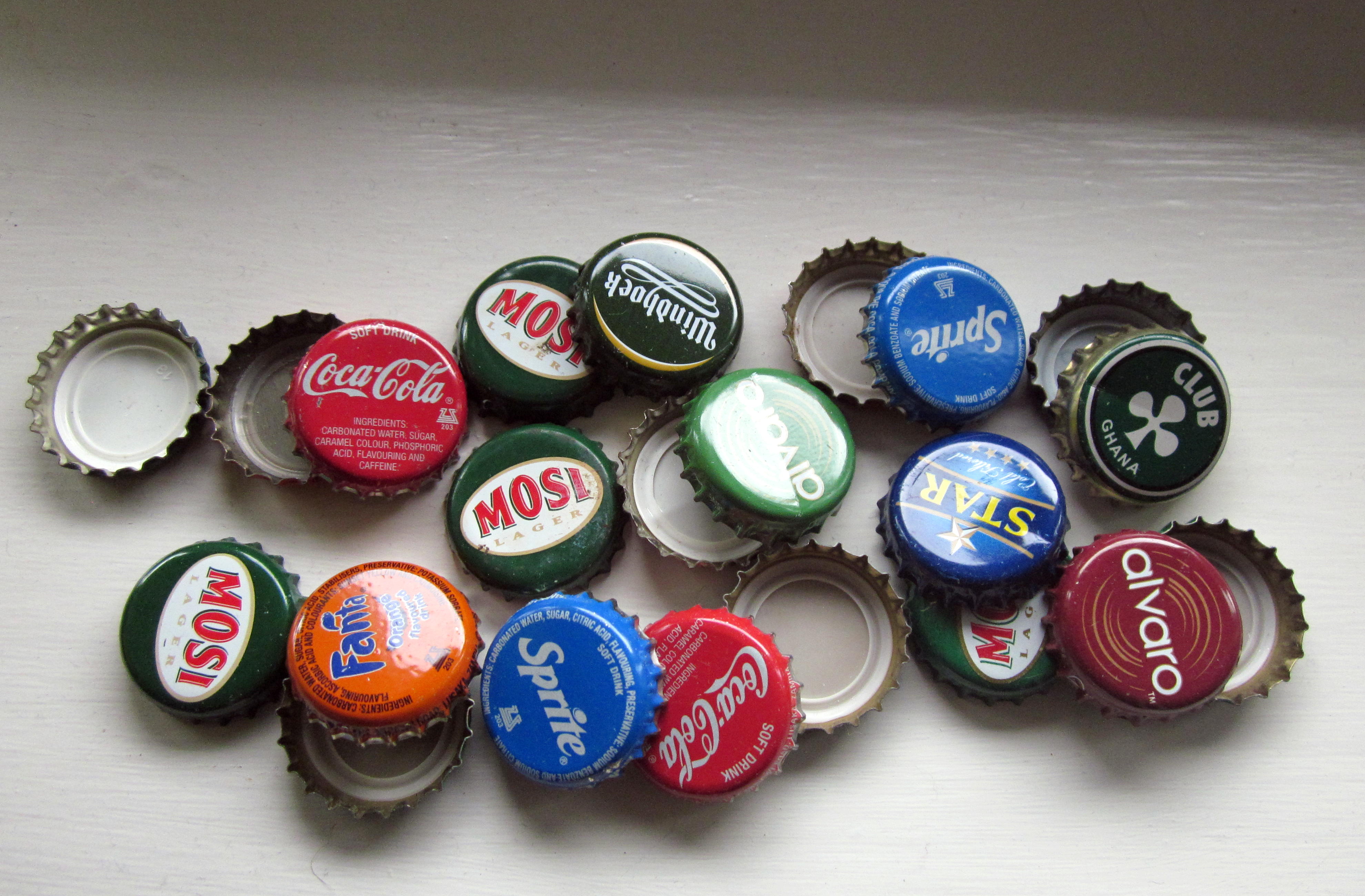
A bottle cap from a beer bottle. A clear plastic tray from an over-packaged quartet of peaches. A silver coin.

The box is gradually filling with objets – not d’art, just objets.

A disposable cigarette lighter, its liquid fuel visible in a tube of clear blue plastic.

A snowstorm with the New York skyline inside.

‘A paperclip – how about a paperclip, this big one?’

It’s solid and chunky, matt silver, the metal slightly ridged.

He looks up, underwhelmed. Goes back to cutting a plastic wrapper down one side so the gold foil within is visible.

I still think the paperclip’s an interesting one – a challenge – but I shrug and put it back.

We’re trying to amass enough items to give a class of students one object between two or three as a basis for discussion.

Yes, we’re talking his occupation here, the university teaching side of his life – archaeology.

It’s the most fascinating class of the year – well, I think so.

He hands out items and asks the students to look at them as if from a basis of no knowledge. As if found by an extra terrestrial or a future archaeologist (or possibly one and the same).

To observe them, try to divine their function – if there is one. Use the evidence seen by their eyes and felt by their fingers. Focus on the why and the wherefore. Apply what they know about humans.

And – here’s the really interesting bit – estimate their likely value.

It’s very revealing about our attitudes.

Try it for yourself next time you have a bag of crisps (that’s chips, to you, US-English speakers).

Cut or tear the empty plastic bag to reveal the foil inside. Do your best to dodge your preconceptions. Try to be objective. See it for what it is, not what you know its purpose to be.

It’s disconcerting. At least, I think so.

Countless bags like this are landing in bins or being discarded willy-nilly, all over the world today. Every day. Yet, without knowledge of its contents, what is it?

Gold, indicating it’s precious.

Almost unbreakable, implying it’s highly valued.

Writing we can’t (as extra-terrestrial archaeologists) yet decipher.

So, symbolic maybe? Or religious?

Now take a look at the lighter. That’s practical, surely?

But what about that clear blue plastic? Is it a symbol of the sky that’s gone dark and needs illuminating? Something only to be used by magic men or women, interceding for the oppressed serfs of humankind?

Shake the snowstorm, watch as New York’s obscured by a blizzard of synthetic snow. Is it a plea to the weather gods to give respite to a world that’s become too warm, that never sees a snowflake, even in the depths of winter?

It seems like a very potent thing. No, it can’t be just a toy. Or can it?

And on you go. It makes for a really good conversation over dinner. Leaving a few items on the table, taking more and more extreme views, becoming more and more aware that we can never, ever, be objective.

We’re humans.

We make things and use things.

We believe in things we can’t see. Worship things (and people).

We create art and admire it.

A beautiful piece of engineering, though, is still seen by its function not its artistry – and do we really consider its value? Beyond the merely commercial I mean, beyond the price tag on a shiny, white, four-wheel drive or a sleek, black, low-slung convertible.

Or perhaps I mean its cost?

In these days of global warming, of food shortages for some and gluts for others, of an impending, self-made global crisis – if you believe the vast majority of the world’s serious scientists – what do we value?

Do we value our petroleum enough to do something different with this precious resource? To stop using so much plastic? Stop throwing away crisp bags with gold linings as if they were worthless pieces of rubbish?

Do we appreciate our precious finite resources, like metals? Treat paperclips as things to be valued – re-used, recycled, not thrown away?

Valued.

If we don’t understand cost, can we ever appreciate value?

No answers, just thinking …


[Thanks to Tess for her ‘Finders Keepers’ post which prompted this 

Finders Keepers?

]

Sierra Exif JPEG


Posted in Thinking, or ranting, or both | Tagged , , , , , , , , , , | 6 Comments

‘Come on goyly, eat the pizza’ (taxi driver to District Attorney Anne Osborne in ‘The Big Easy’)

1996. I’m a director of a large, highly profitable, engineering-based organisation.

A couple of years back, before I scaled the dizzy heights, when I was just a manager, I was naïve enough to cut my budget without a fuss. By more than I was asked to cut it, in fact. Because I could.

No-one told me I’d be asked to do it again – by more – because I’d given in so easily. I thought I was doing the right thing, I’d done what was asked of me, knowing if my team worked hard we could still do the job – and do it well.

It’s one way of learning. And I did.

Soon I was wheeling and dealing – though not as skilfully as my male peers.

But I have a couple of cards in my hand that they do not.

I’m female and I’m not plug ugly.

My male chief exec likes me. One of his favourites on the board likes me. Neither of them is threatened by me.

You see?

I have to play the female card because it’s my only ace in this game.

And I work hard. Influence the boss for the better, I hope. Try to keep profits in perspective. Try to prove that happy staff and customers are worth a little spending.

Hard when you have a virtual monopoly.

I nurture female colleagues who deserve to be noticed. It helps that a longstanding (female) member of my team is another of the boss’s favourites. We work a pincer movement, whispering in his ear from either side, hoping to make female waves in this macho world.

Soon the first female director is on board – in engineering. And we’ve done our bit to get her there, brushing the ice before her as she curls into place.

I’ll admit, I feel a bit peeved that I’m still a lowly manager. But I’m a bit of a stir-things-up, set things in motion, move-on kind of person anyway.

I start getting itchy feet – and the boss notices. He asks me what’s wrong – and I tell him.

I’m soon promoted.

It doesn’t feel so good, knowing I’ve asked. I’d rather there’d been a spontaneous recognition of my amazing skills. Applause as I swept into the boardroom in triumph (yeah, so likely).

And, you know, once I’m on the board I realise how awful it is. How they spar and bicker and fight.

Some of the men do whatever the boss wants – wrangle with figures, with jobs, with whatever it takes to produce the ‘right’ answer.

Some of the chaps are super bright and play with the mice who aren’t so Machiavellian. I learn to keep quiet around them. Well, sometimes.

And on top of the politics and the in-fighting I hate the boardroom. An arrangement of tables in a square around an empty space – purpose built for conflict.

Somehow we end up with one table, like a long dining table. In a smaller room. Not sure if it’s my doing, but whatever – it works. When you’re that much closer you’re not as nasty. Well, not overtly.

Soon, with much listening, something begins to bug me quite a lot.

It’s one word.

You’ll not be surprised to hear that words are important to me – I believe that they matter. That how they are used may not be consciously manipulative, but still …

Girl.

That’s the word.

I notice it more and more.

No-one calls the engineering director girl. But anyone else is fair game. And she uses it herself, indiscriminately. I never tackle her on it, but I bet she wouldn’t understand my problem with it.

One of the finance managers – someone I thought would be a natural ally – says she likes to be called a girl.

The personnel manager doesn’t do it, he calls women ladies. But leave that aside for now.

You might think me petty, but girl is a diminutive. It’s not like lad – lad can also be ‘a bit of a lad’. Girl is young, inexperienced, directable, biddable. Like I was when I arrived.

It assumes the female is subordinate.

And of course, we so often are – and partly through our own connivance.

I use my looks (and personality) to influence my boss because it’s the only weapon I can marshal that my male colleagues can’t – and they have so much more in their armoury.

Then one day an experience knocks me back so hard I feel like I have to exit the game. Not the cheeky request from the boss to join me in my room at our hotel in London – you expect that kind of thing and just treat it as a joke – whether it is or not.

No, it’s about that young, able, hard-working woman you brought to his attention. The one he had promoted, who’s now a manager.

A few months into her new role you ask him how he thinks she’s doing. He wrinkles his nose.

I’m taken aback. A bit anxious – after all, I did push her forward.

I really thought she was good, I say.

He shrugs.

Have you guessed?

I doubt it.

She’s put on weight.

Too many pizzas, perhaps?

I guess the cheese affects the female brain, somehow. Yes, that must be it.

Posted in Thinking, or ranting, or both | Tagged , , , , , , , , , , , , | 7 Comments

A little dancing cowboy

It’s time I did some writing. Picked up my sleuthing Catholic priest – so to speak – where I left off.

I need to do a bit of research. Don the hat of character. Pull on the coat of atmosphere.

I drive into my favourite car park, the one beneath the Catholic cathedral in Liverpool. Sniff the tarmac air, listen to the padded silence, feel the weight of the lightness above.

But I’m not here to pray.

I’m here for the gift shop.

Not for a rosary, a holy-water stoup, or votaries bearing images of saints.

I want books.

I buy several pamphlets and a pictorial guide to The Way of the Cross. Amble into the café, order a mint tea. Set my stash of Catholic Truth Society pamphlets on the table.

A Catechism of Christian Doctrine.

The Priesthood Today.

If I have the temerity to write from the point of view of a priest I need a bit of background.

I flick through the first one and discover I’m still destined for hell if the Catholic church’s doctrine is observed by an omnipotent God.

I drive back home wondering.

To distract myself I start to think about evangelists, about speaking in tongues.

Now, as far as I’m concerned, talking in tongues was a gift which enabled people in the early church to be understood by foreigners. I imagine a tongue of flame appearing over my head and then finding a Bushman or Pygmy could understand every word I said.

But speaking in tongues has evolved – as far as I can see – to mean gabbling gibberish or declaiming in gobbledegook. Please don’t be offended if that’s your thing, you’re quite entitled to do it, it’s just that I simply don’t see the point.

Now, Atheist-man’s granddaddy held revival meetings. It’s always fascinated me. He was, I gather, a rousing speaker (it runs in the family).

Exhorting his congregations to praise the Lord, he’d whip them up to fever pitch. Then people began to speak in tongues, receiving the ‘gift of the spirit’. Falling over backwards, often, when touched by the evangelist.

He made a blind man – a man who was born with no eyes – see. Or so he claimed.

He never saw a film.

Would not allow dancing.

Nailed rattle-snake heads to his fence.

I wish I’d met him, but I arrived on that scene too late.

His wife gave me a small gift, a turquoise ring which he had worn. It has the soft edges of much wear and I love it. But it can’t talk. Nor can grandmother, she’s gone to the great revival in the sky too.

It must have been tough being married to a man of God. When I met her she was already old and frail, but I remember those piercing eyes scrutinising me and I thought, oh-oh. I was wearing a bright red raw-silk outfit with a v-necked top. A scarlet woman sporting a chunky African necklace, many strands of seeds and beads – what you might call a statement piece.

But you know what she said when she finally spoke up?

‘I like your necklace, Mary.’

I looked at her with different eyes, then, wondered what lay inside that neat head, beneath the hair scraped back in a tidy bun.

Anyway.

‘Tell me more about your granddaddy’s church,’ I say to Atheist-man.

He pauses, thinks, shakes his head.

‘You’d be better asking my brother,’ he says, ‘he used to go with him to revival meetings. He took the tin around for collections.’

Wow.

You probably haven’t seen Leap of Faith. It’s a Steve Martin film – I know, a Marmite kind of actor – love him or hate him, he’s perfectly cast in this film as the charlatan evangelist.

There’s a big-eyed lame boy, too.

And a big tent.

And a miracle – well, maybe there is, maybe there isn’t.

And maybe Atheist-man’s granddaddy made a blind man see, maybe he didn’t.

But talk of revival meetings made me think of Leap of Faith and that lame boy.

And when I remembered the lame boy, I slipped further back in time, to the little dancing cowboy.

I look at Atheist-man from under my goodness-they-do-need-plucking eyebrows.

Wary.

‘Do you know what image that conjures up, your brother taking round the hat in the big tent?’

I’m not sure if he’ll want to know this. We are, after all, talking about his brother, his older bother, his respectable older brother. Albeit he lives in Texas (not that Texas is not respectable, I just mean he’s a long way away but nevertheless might read this).

‘The dancing cowboy?’ he says.

Ha!

The very same.

It was the Great Dorset Steam Fair. On a hilly field huge traction engines were massed, puffing out smoke, limbering up for the ploughing competition. But the first thing that caught my eye was a little side show.

A skimpy awning hung over a tiny stage. And on that small stage was a small boy. Tap-dancing. In a cowboy outfit. With a fringed shirt, a cowboy hat – and a blank expression.

It put me in mind of Robertson Davies, the masterful Canadian storyteller. (If you like great yarns superbly unravelled and you haven’t read his Deptford trilogy, try it. Such characters, such prose – such a story.)

Texas brother-in-law, forgive me for likening you to a little dancing cowboy. You’re not at all like him and never were, I’m sure.

No fringes on your shirts.

No tap dancing – though I’ve seen you do the Texas two step.

Your granddaddy would not have approved. But I suspect your grandmother might’ve, given half a chance.

Posted in Texas, Thinking, or ranting, or both | Tagged , , , , , , , , , , | 2 Comments

Windows in the rain

Clickety-click

clickety-click

clickety-click.

A six-carriage train, like a long yellow caterpillar, glides through the distant gorse, appears briefly, then disappears into the trees.

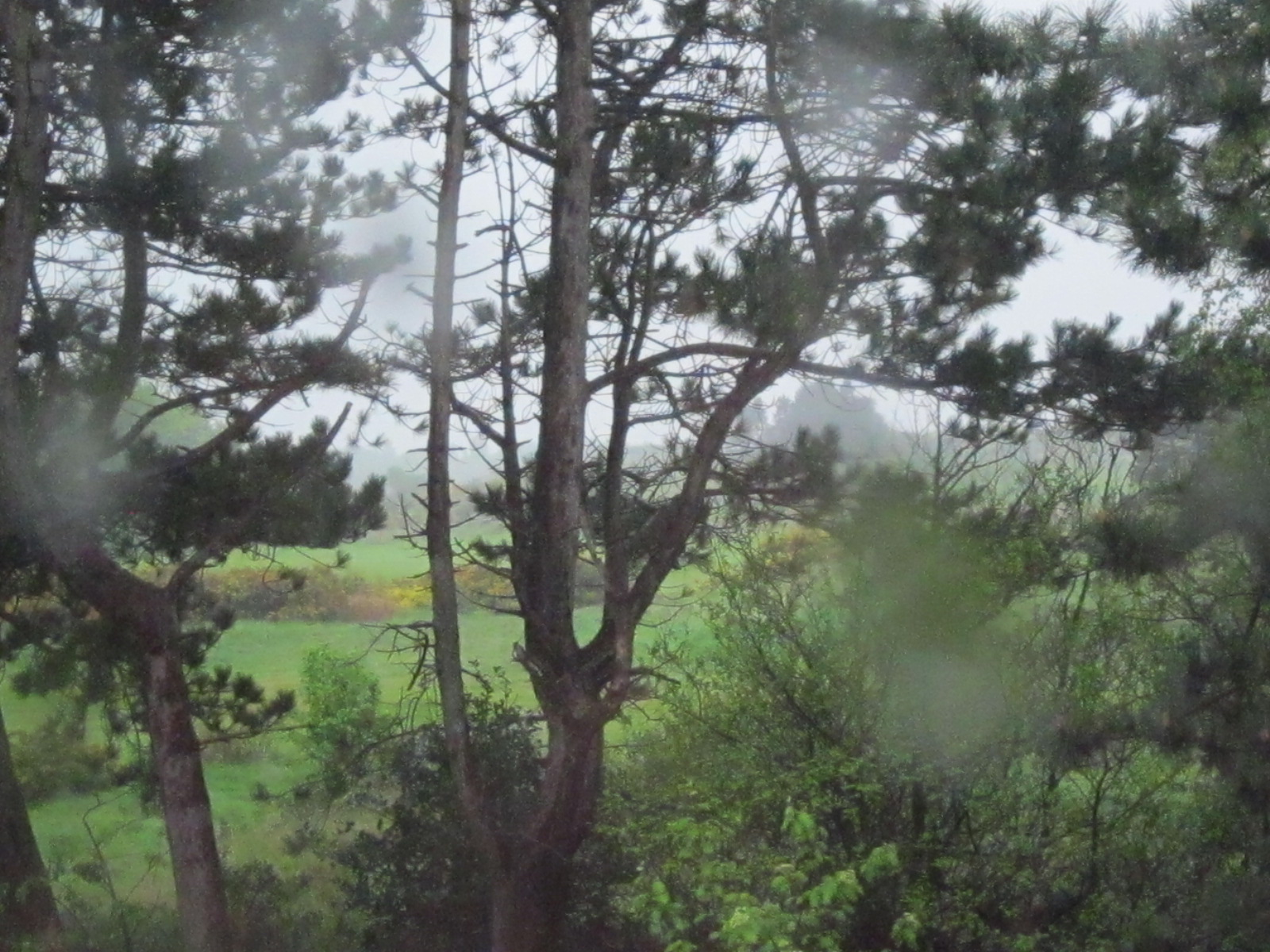
We’re sitting on top of a big dune here, hence the stands of golden gorse and pine trees. So the golf course wrapped around us rests on sand, albeit covered (except for the bunkers) in well kempt grass.

It’s not yet nine o’clock in the morning. I’m in the kitchen, upstairs, doing last night’s dishes (tsk, I know). And I’m surveying the world through an open window.

You have no idea how wild that is for me – an open window.

We Brits have a reputation for open windows that’s always worried me a bit – can I really be of solid English stock if I hate opening windows when it’s cold and wet and windy?

Am I a changeling?

Did some ‘night tripping fairy’ (just showing off, Shakespeare, Henry IV part 1) swap me for a namby-pamby Mediterranean type when I lay in my cradle?

Looking back on it, we’ve always had elderly windows, because we’ve always had elderly houses.

And agèd windows leak.

The most agèd place we lived was a teeny-weeny cottage in Dorset that one friend called our ‘doll’s house’. Two up, two down, built when people were smaller, Tex couldn’t even stand upright downstairs.

Upstairs, the bedroom window that looked out over the road at the front was a tiny, ancient, metal and lead affair with broken latches that we couldn’t replace.

At the back, slightly larger wooden windows opened onto a rural view – spiked with romance.

Behind the cottages – we were one in a row – ran a stream and a watercress bed. A tumbledown ruin of a house at the back of the bed was, we were told (and utterly believed) the home of a mistress of Thomas Hardy.

I’m a sucker for Thomas Hardy.

The Return of the Native, my favourite.

Eustacia Vye. Egdon Heath – and the reddle man.

Letters written in black ink, on paper turned pink with the reddle man’s ochre, like bare hawthorn branches, black against a winter sunset.

All those ‘passing strange destinies’.

But back to the windows.

Today, in this house with its plastic (I’m sorry, they just are) windows I’m beginning to understand. Because they keep the place warm.

I’m wearing a heavy jumper. With hands in very hot water I begin to feel positively steamy – in a domestic kind of way, you understand.

And then it comes to me, like a revelation.

Open the window.

What’s more, I can, because the bees have gone.

Three days with a swarm – unable to open the windows as the sun poured in. That’s one noise I really don’t want to hear again – a couple of thousand bees.

I open the window. Hear a distant, gentle, clickety-click (not clack – they’re small commuter trains).

The caterpillar, carrying workers to work, pupils to school, travellers to bigger trains.

The benign buzz of the groundsman tending the greens, the squawk of the pheasant wandering free.

And when the last pan’s rinsed and stacked, the counters wiped, I stand in front of that open window, watching a light rain fall gently on the verdant world outside.

Listen.

The clickety-click’s back. Three cars this time, heading the other way.

Rush hour over. Time to start work.

Me too.

And I have company – well, other people are in the house.

One man laying flooring in the utility room. Another fixing woodwork in the dining room.

The window’s shut now, because the men at work have many doors open.

But I could become addicted.

I’m English, after all.

IMG_3018

Posted in Lancashire & the golf coast, Thinking, or ranting, or both | Tagged , , , , , , , , , , , | Leave a comment

Every piston tells a story (in which Jezebel goes on an outing)

Jezebel, our nine-year-old Skoda, sits at home, alone most of the time. The main variety in her daily life is a trip to the Co-op, shopping. (I empathise.)

There are times, though, when Jezzie has a really grand day out.

And so it is this Saturday morning. A hint of rain on the wind, a bouncy road along the coastal marshes, she soon rolls up in the middle of a field. Ejecting the two of us, fast as she can, she settles in for a parking fest. A carnival of badges and hues.

Leaving Jezzie to her fun, we trudge towards several ‘mature’ men wearing Rotary t-shirts, waving leaflets and taking our money.

Crossing a land drainage ditch, we’re stopped in our tracks by a banner showing how much Rotary has raised to help end polio. I’m glad we added £7 a head.

Hunger sets us straight on course for food.

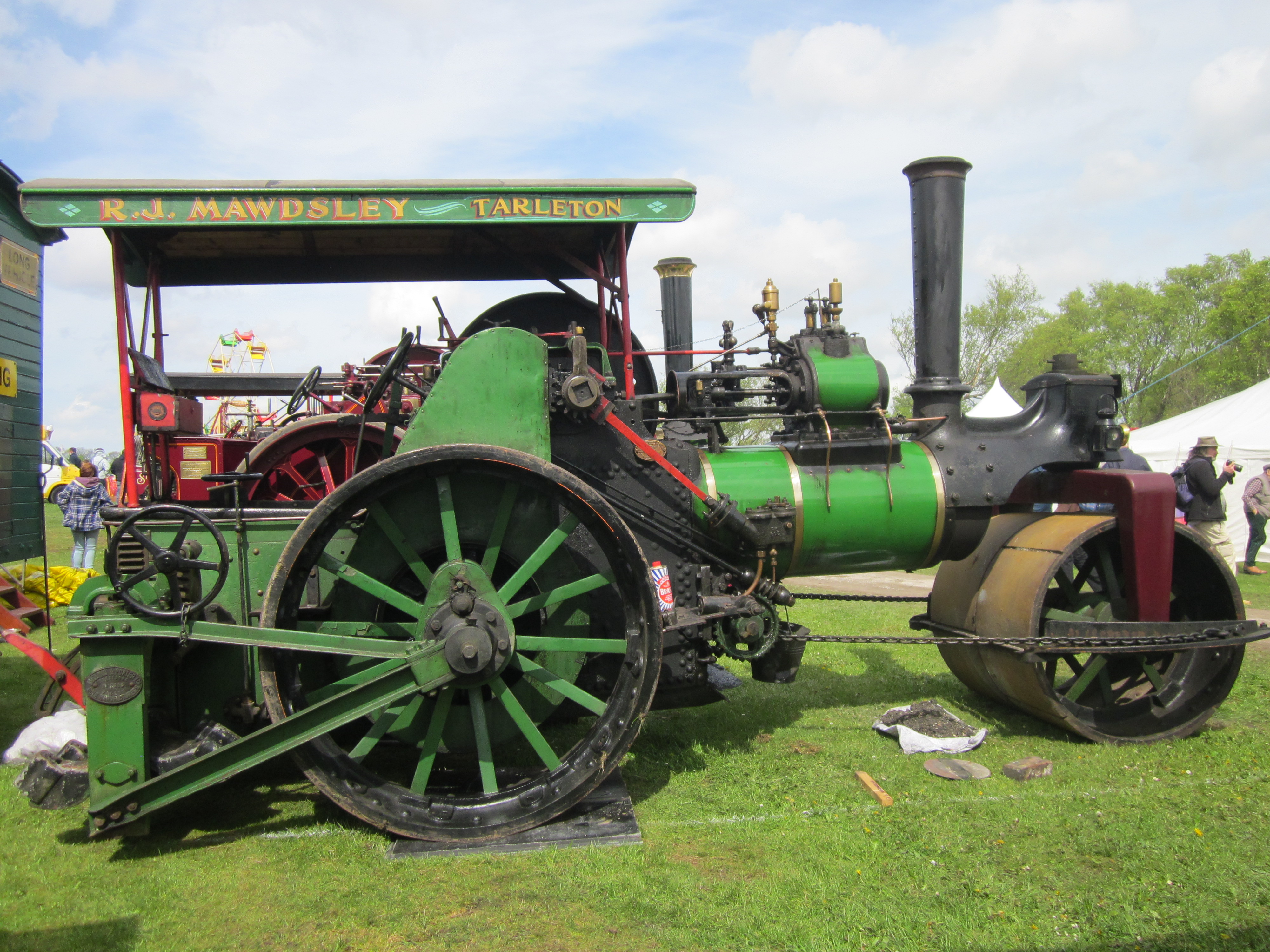
As we step smartly past the first ‘steam engines’ I’m a little disappointed. They’re not as big as I’d expected – in fact they’re downright small. Even the vintage prams are more spectacular.

But when we reach the main arena, the sound of music fills the air.

The warmth of the sun eclipses the dropping wind.Sierra Exif JPEG

And I start singing.

I know. But I can’t help it.

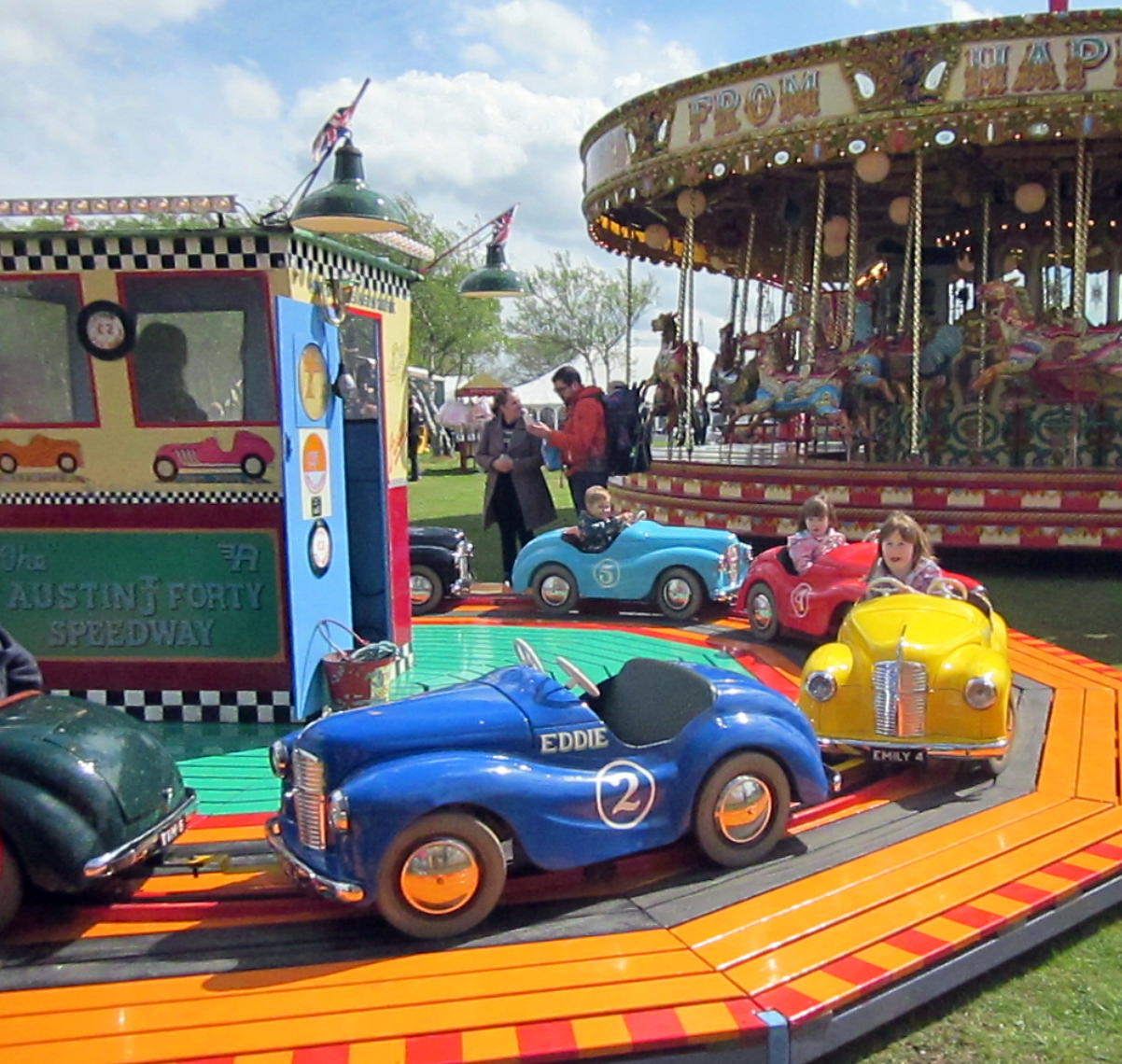
The Beach Boys are blaring out in the fairground.

It’s an omen.

The last time I had a really great outing the Beach Boys set me off – surfing downtown … And now it’s happening again.

Sierra Exif JPEG

Who’s that heading for the big wheel? Well I’m taking the picture so it’s not me!

Goggle-eyed as a toddler, I gaze up at the big wheel with desire in my eyes. Born in Atlanta in 1949, she’s oh-so enticing.

But first, we must feed.

Giving the Hippy Chippie a miss, we opt for shredded topside of beef, in a floury bap, with horseradish sauce. So much I can’t finish mine (and I’ve clocked the ‘Robinsons’ home-made ice-cream’ van).

Strains of the ukulele orchestra seep through the canvas walls of Aunt Nellie’s Victorian Tea Room. Men in bowler hats and flat caps wander by.

Flecks of soot land on my face as we start our trek. The scent of coal smoke’s becoming stronger.

I feel a prickle of excitement.

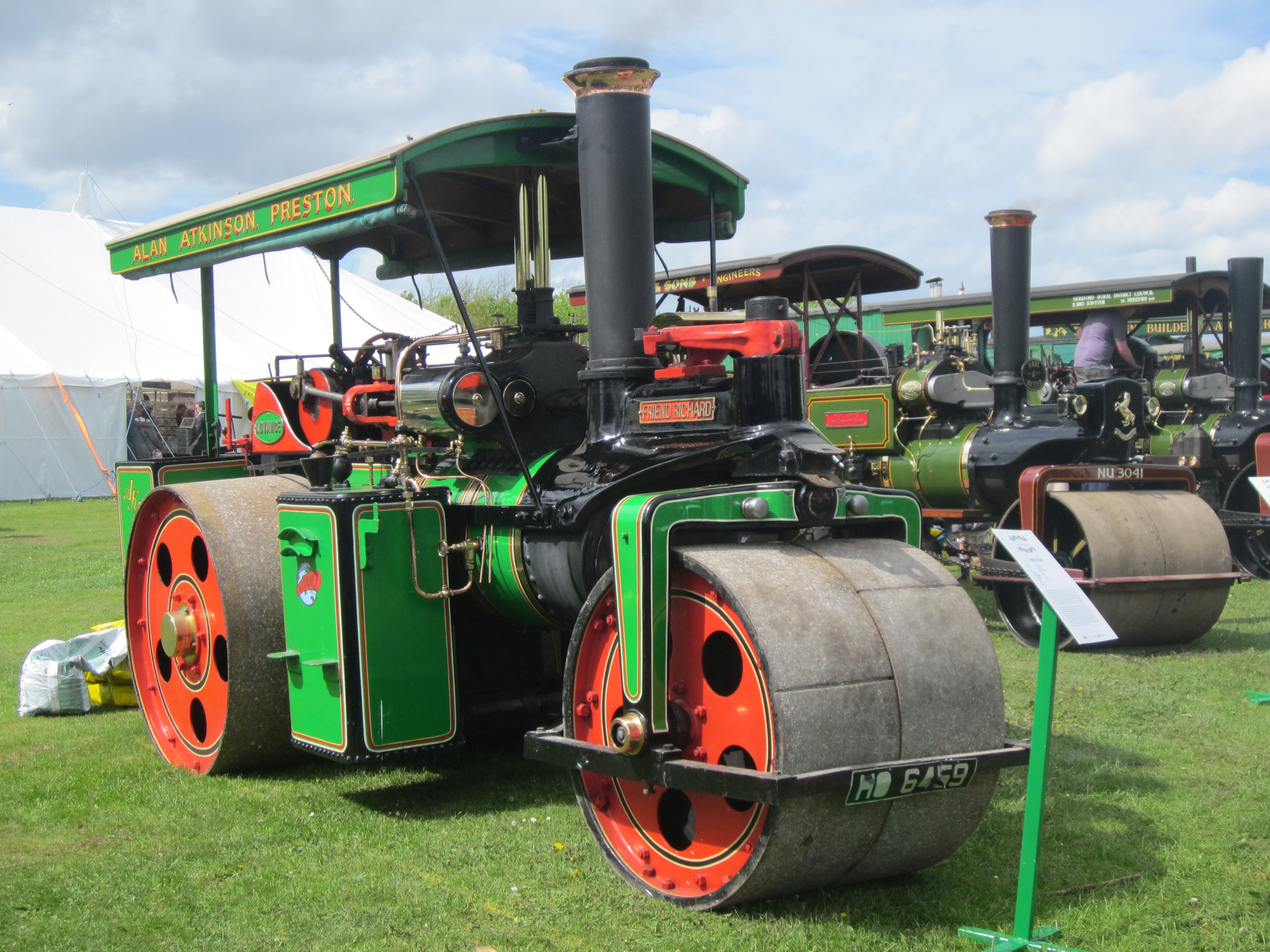
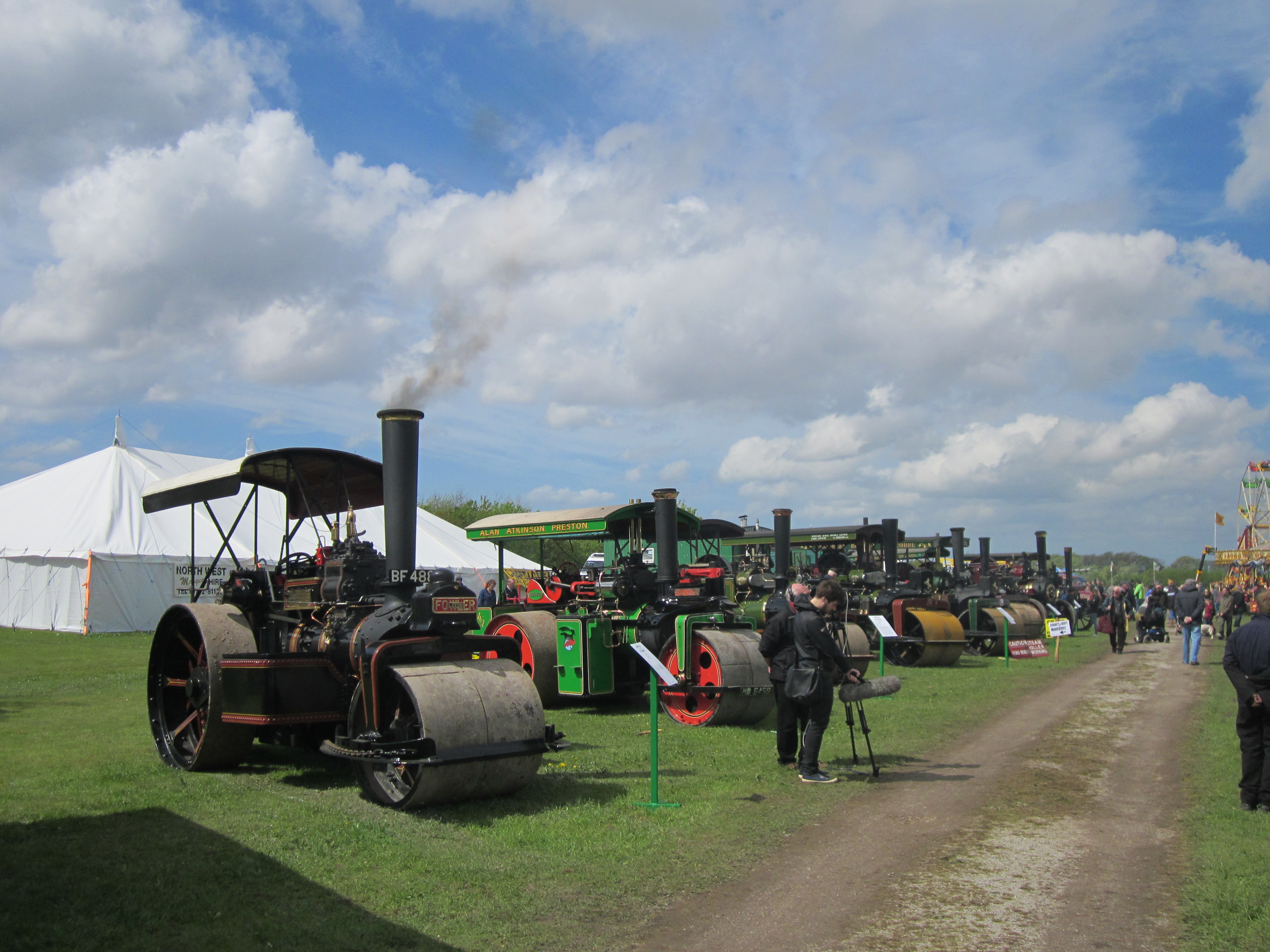
Sierra Exif JPEGSteam rollers.

The smell of hot tar – just a memory.

‘They still used those when I was little,’ I say.

Anthro-man looks at me as if I’ve just said dinosaurs walked the earth with humans.

Am I muddling my sister’s Matchbox toys with real life?

He reads about one from Preston. Working into the late 1960s, it says.

Vindicated.

Like vast metal carthorses, their gleaming coats and plaited manes replaced by burnished metal in glossy reds and blacks, the engines are beauties.

Each one tended by devoted figures in dark blue overalls.

Look carefully and you'll find both Brasso and steam coal (clue: yellow bags) in this picture

Look carefully and you’ll find both Brasso and steam coal (clue: yellow bags) in this picture

Tins of Brasso and stacks of yellow-packaged steam coal punctuate the displays. A steam-fair version of ‘spot Wally’. There, somewhere if only you have eyes.

new april2014 092


Sierra Exif JPEG


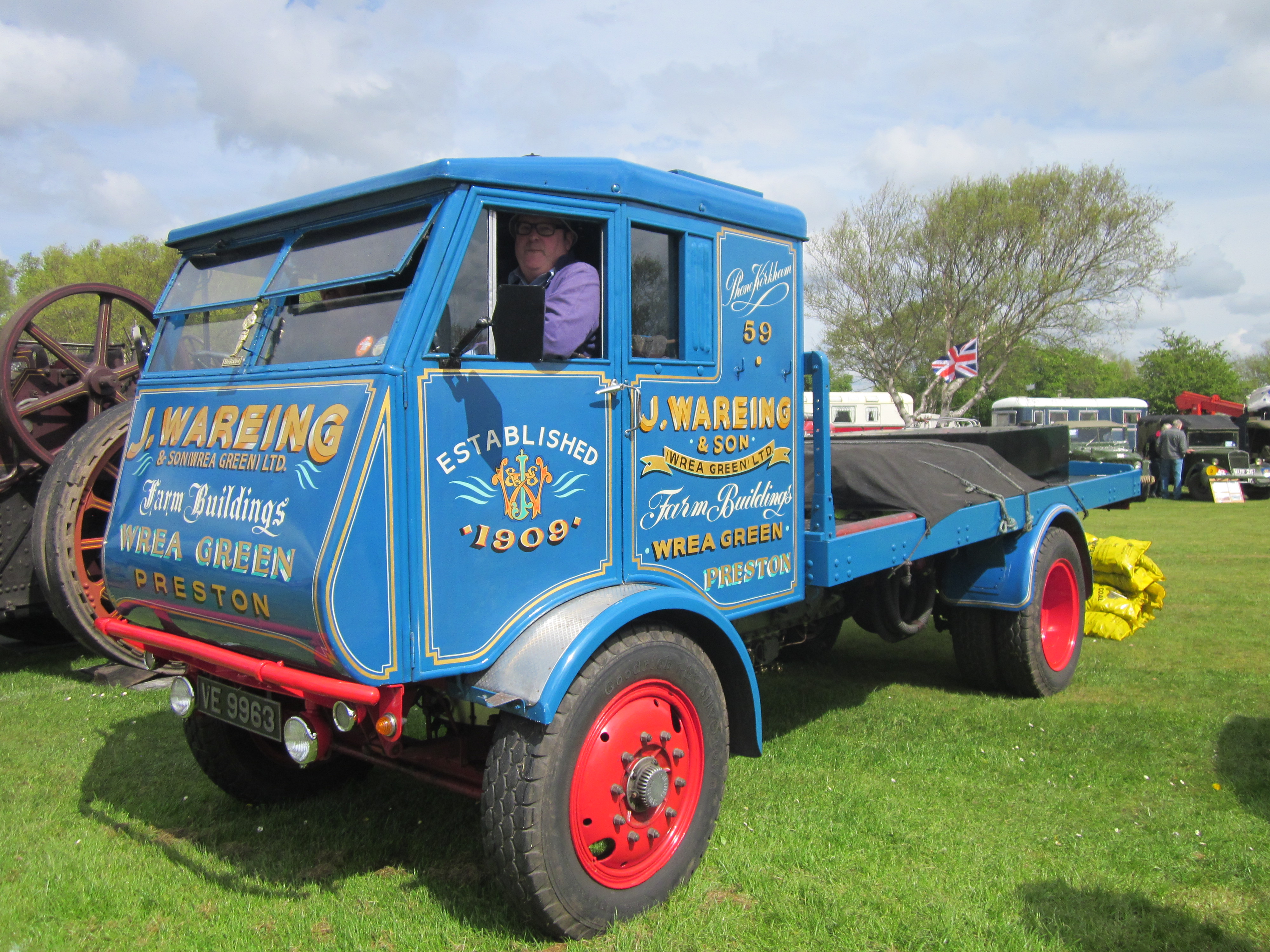
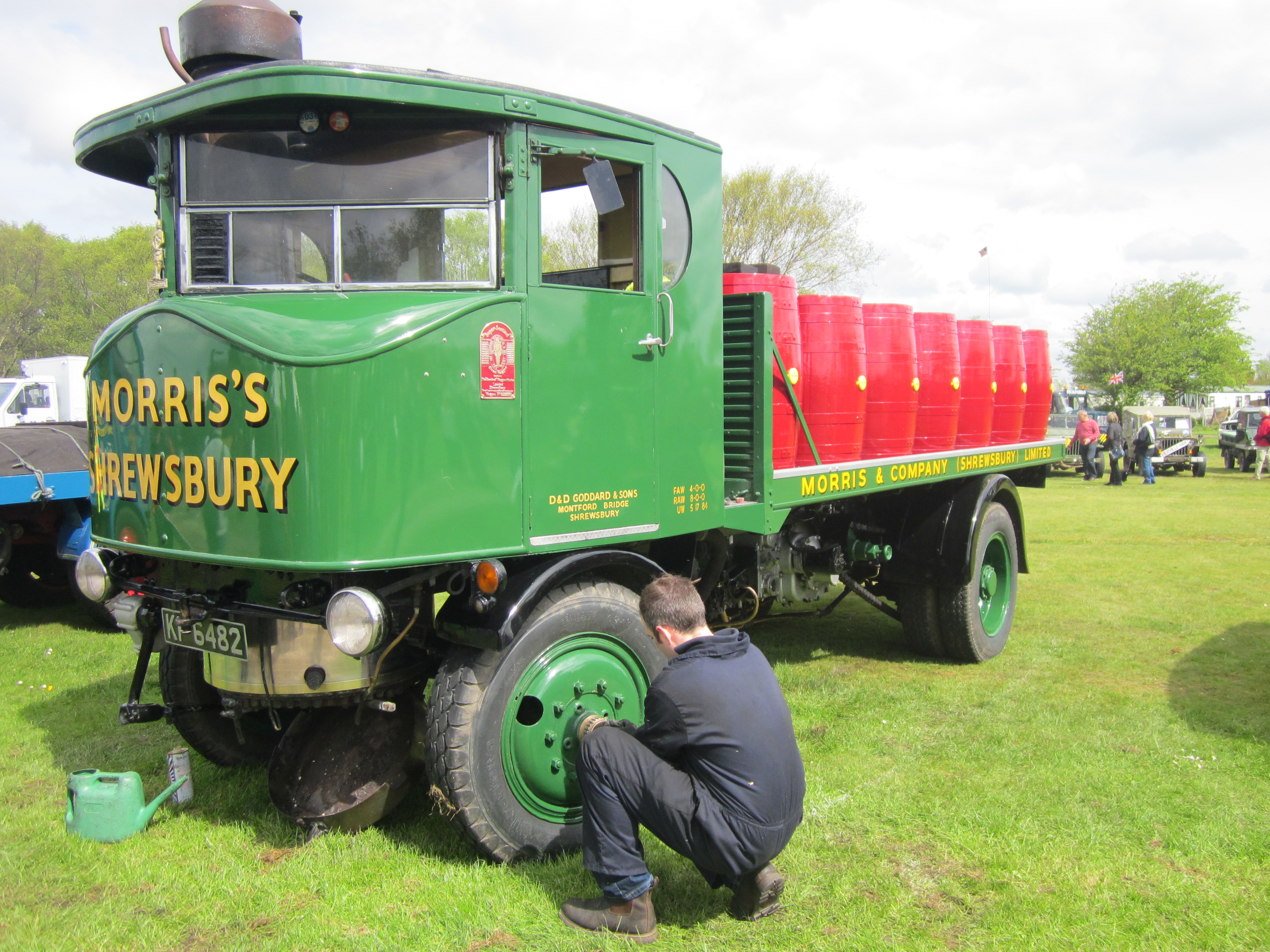
The old fashioned engines give way to hefty lorries, military vehicles, motorbikes and vintage cars.

And the Robinsons’ ice-cream van.

‘Two 99s, please.’ It has to be.

White, frosty ice-cream, scooped onto a cornet, speared with a Cadbury’s flake. I have sauce, he has sauce and bits.

What more could a person want? The sun, warm on my head, the fairground organ steaming away and an ice-cream in my hand.

Car spotting, I see my first Lagonda, a name I encountered in a Betjeman poem. Now I can envisage it, ‘crunching over private gravel’.

The model T Ford’s so big – and, yes, it’s black.

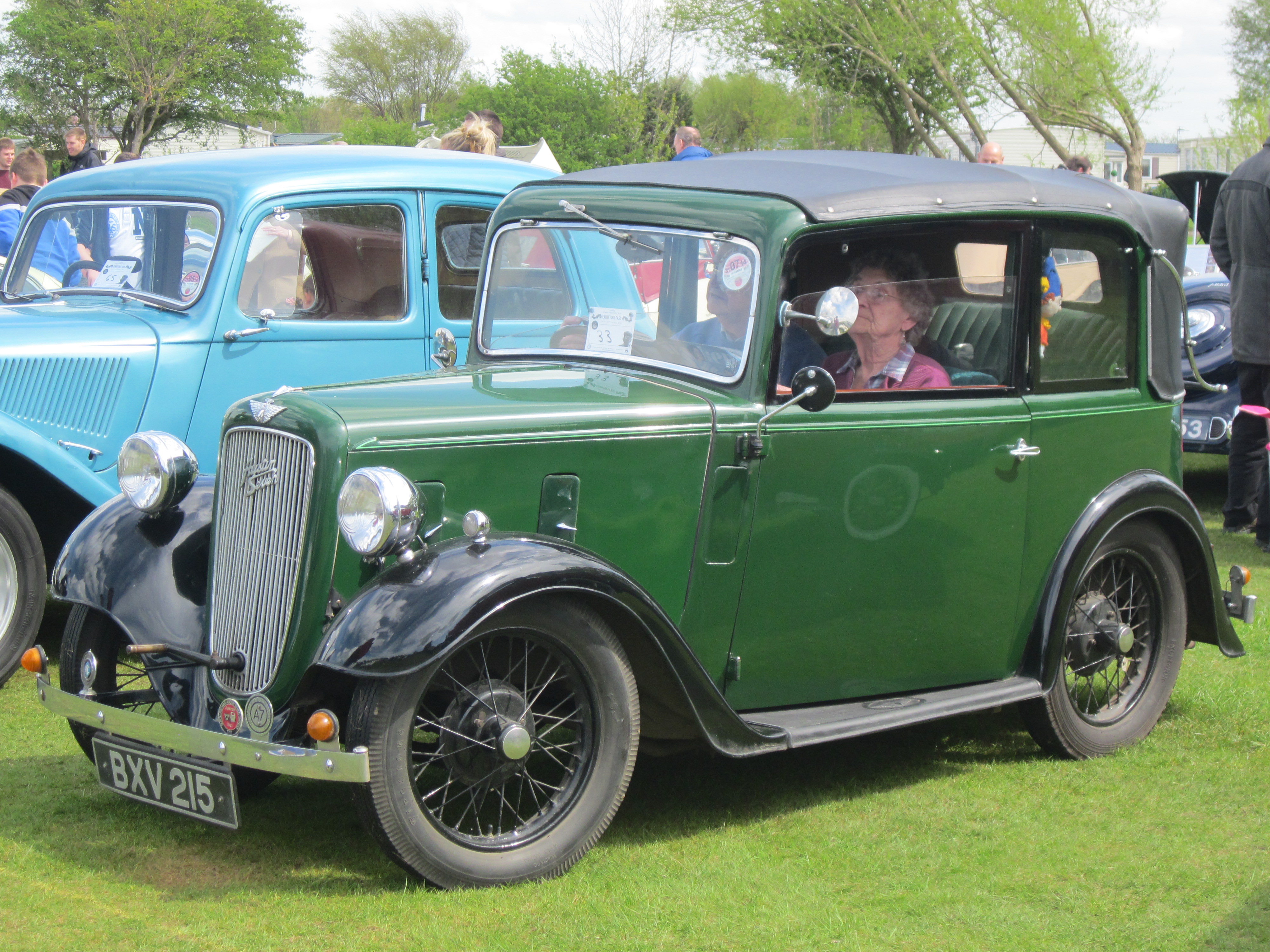
Sierra Exif JPEGI almost miss the Austin 7, she’s so tiny.

There’s a couple sitting inside, like an art installation.

‘See the badge on the bumper,’ says the elderly man, ‘that’s from the Zuider Zee rally.’ He beams with pride. ‘And she still takes us to France.’

‘I bet you cause a bit of road rage,’ says I.

He smiles, ducks that one.

‘Forty miles an hour. With the top half down I can keep my Panama hat on.’

I hadn’t noticed it was a soft top.

His passenger looks as if she’s been sitting there forever – in the nicest possible way, I mean – happy to be touring.

‘How old is she,’ I ask, ‘the car?’

‘1939. Wearing well, aren’t we?’ answers the woman with a twinkle.

We tear ourselves away. My feet are complaining.

Time for a sit down. With a view.

Like the big wheel.

On the first turn I wonder if I’m going to be sick.

I reverse my strategy for small aeroplanes. Look straight ahead, not down.

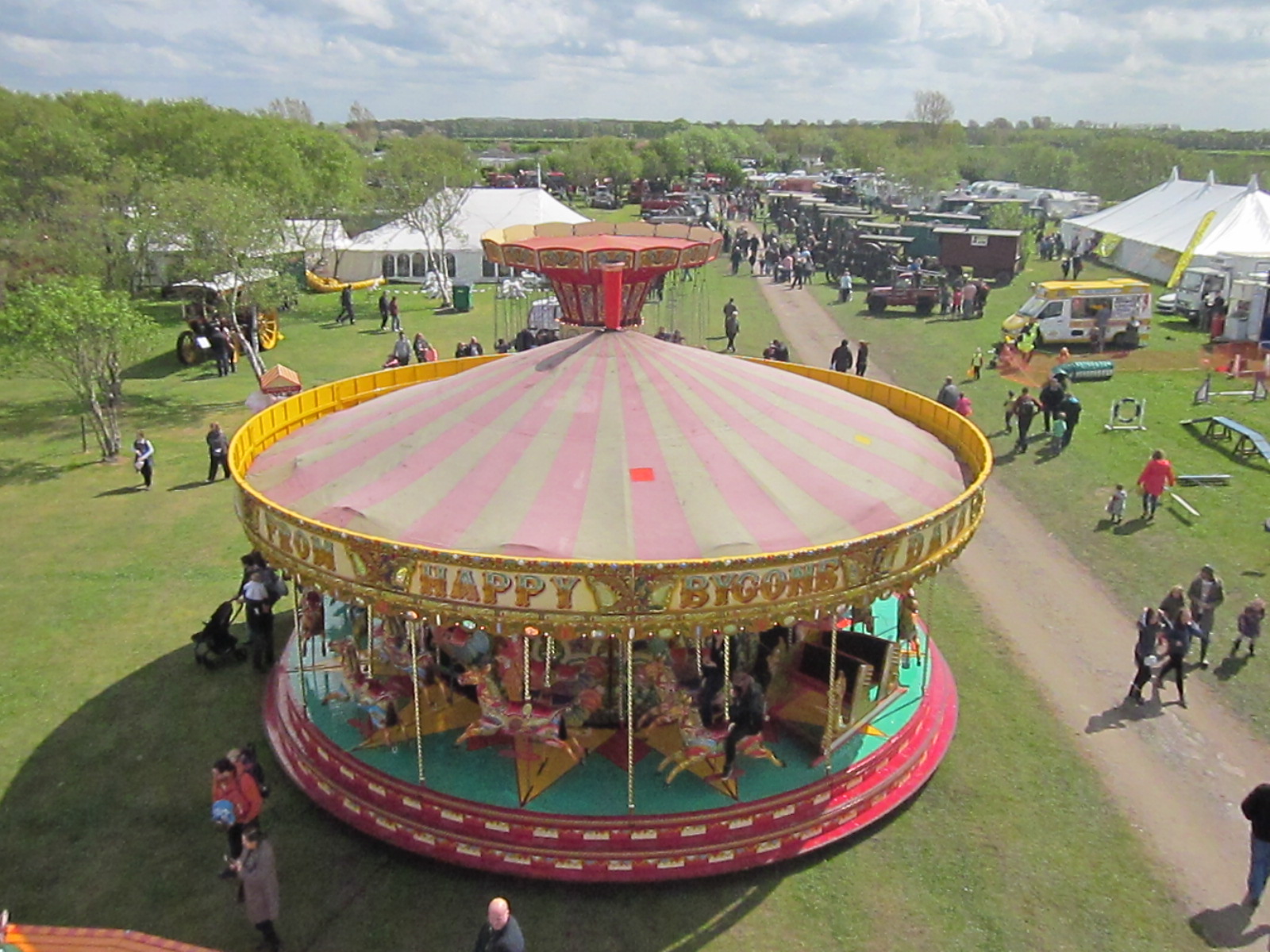
The second time we reach the top I’m loving it. Wind in my hair, distant hills, ploughed fields – and a perfect panorama of the rally.Sierra Exif JPEG

I’m sad to leave.

But it’s time.

And so, back through the small machines. More solitary men in blue overalls. More bags of steam coal. More vintage oil cans and bottles of Brasso.

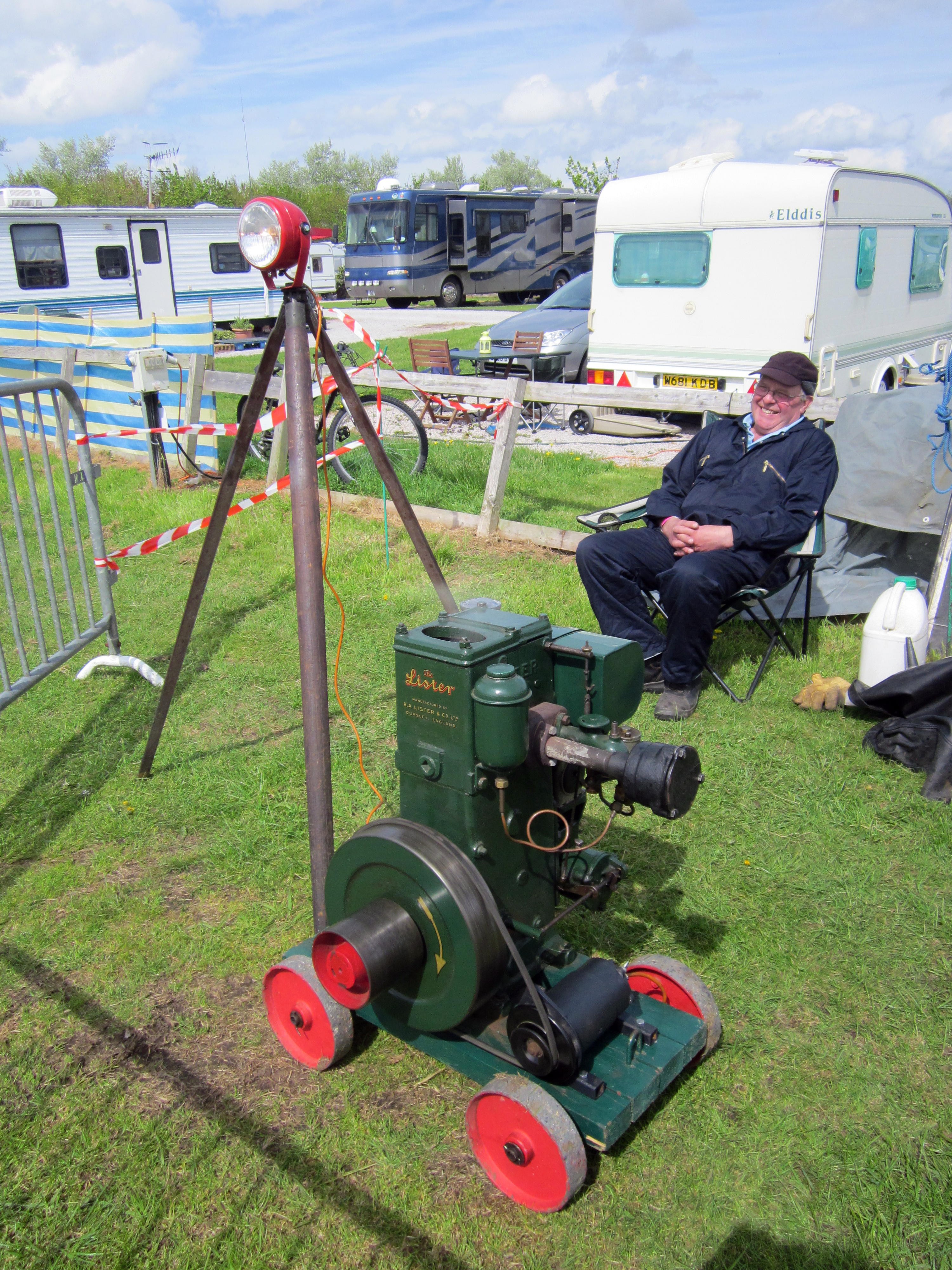
We reach the last little display. I smile at the man but can’t think of anything to say. It’s just a small machine. Doing nothing much.

As we stroll on Anthro-man comments on the light.

I missed the point completely.

The machine’s powering a light.

I turn back, confess, have a laugh with the man. Ask him about the machine.

Another labour of love. Another story of passion – and cherishing – and history.

She was started life in a putty factory in Yorkshire.

(A putty factory? Something new to wonder about.)

Ended her working days in a milk bottling plant. In Yorkshire.

He tried to clean out the putty from some bit of the machine I didn’t recognise but Anthro-man did (well he nodded) but it was set so hard he couldn’t budge it. He left it. Part of its history, we agree.

‘Maybe you’ll find some cheese there, too,’ I quip. He looks a bit confused, then gets it.

Sierra Exif JPEG I walk on, then go back to take a picture. He’s sitting down again now, the man in blue overalls, big smile on his face, amused at the new convert he’s made.

Jezzie welcomes us back. Reluctantly, I suspect. Hundreds of everyday motors are parked in the field. I doubt, somehow, that ours will be cherished by a man in blue overalls, wielding an oil can and rubbing her with Brasso, in another 100 years.

And so, our dull but doughty Skoda takes us home, resumes her place outside, once more.

It’s been a grand day out.

new april2014 106


Posted in Art, jaunts & going out, Lancashire & the golf coast | Tagged , , , , , , , , , , , | 7 Comments

My house for a Hockney? Well, I’d miss the spitting cones …

Ahhhh.

Spring.

I love it. Well, when it’s sunny I do. Yes, even if it’s ch-ch-ch-ch-chilly.

Today the trees have that Impressionist look about them – les nuages comme des little puffs of Pope-announcing white smoke. Le ciel, bleu comme a robin’s egg.

They’re not poplars and they’re not marching across a field in Picardy, or Limousin, or Burgundy – but they’re tall, spindly and waving at the heavens for all they’re worth, trying to claim the foreground when the sky’s the real hero.

It’s been a cheering few days. Yes, the temperature has left a certain amount – as in, several degrees – to be desired, but the garden’s at last beginning to look like ours.

Rhododendrons and azaleas gone to a happy home in our postman’s son’s garden.

Prostrate rosemary creeping over the ground, sprinkled with dazzling, deep-blue flowers.

Thyme, sage and chives snuggling in nicely.

Lavender boasting bright green shoots of new growth, honeysuckle twining, roses climbing.

Wisteria, pushing out fluffy flower buds.

The fir trees just outside our fence are blurred with soft new needles, the pine cones turning upside down before our very eyes.

Listen …

That spitting sound’s the seeds being ejected.

Did you know that happened? I didn’t.

In Zambia there are trees that produce long, hard bean pods that crack like a starting pistol when they explode and disperse their seeds.

I suppose a gentle ‘spttt’ is more appropriate for an English golf course.

Back inside the fence, our wheelbarrow sits, full of gravel.

There’s a well in our garden. It had a ‘water feature’ on it that made me react as if I had an eyelash in my eye. Involuntary blinking. I wanted it out.

It’s gone. So has the gravel round the edge. As I dug into the hard ground beneath, ready for planting a circle of thymes, a toad leapt from his shady hiding place and startled me. His home despoiled by a meddlesome new gardener.

I hope the magpies didn’t spot him.

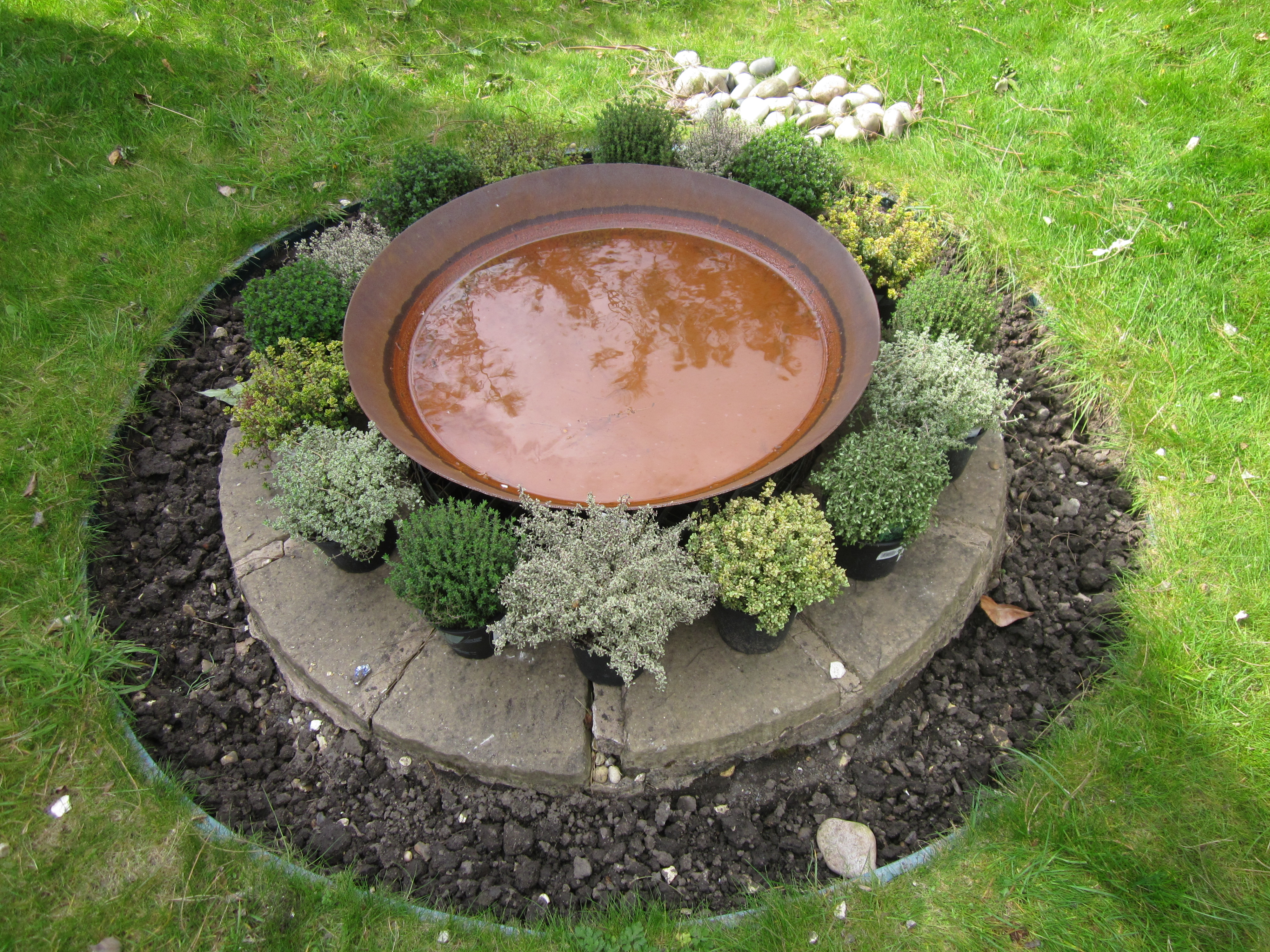
We’ve put a ‘Corten steel’ water bowl on the zinc mesh cover where once a load of pebbles lay. Over time the bowl will turn a rusty orange all over. The rust will protect it, so the story goes. That’s why it’s used in things like bridges – places where it’s rather important the metal doesn’t crumble to nothing.

IMG_2896

The collection of thymes is waiting to be planted where the gravel and the toad once were

It’s quite deep, the bowl, deeper than your average bird-bath. We thought – hoped – it would be too difficult for the fat, ungainly wood pigeons to drink from it. But they’ve found a way.

I just hope they don’t take to bathing in it.

The pair that have claimed this patch as their own are so clumsy that they slip on wet leaves when padding around on the ground. I can see myself having to get a shrimping net to fish them out.

I didn’t know birds could be clumsy, did you? Or fall?

I saw a robin fall the other day. Trying very hard to reach the seeds destined for finches it stretched too far and fell – yes, fell. He made a quick recovery, but it was a shocking thing to see for one with no previous experience of a dropping robin.

Inside, meanwhile, our walls become calmer. The red and white paper has gone. The blue checked metallic is almost banished. We now have bookshelves – if not enough – and Delius has spent the morning inspiring me over the Saturday newspapers.

Almost ready to swap my pyjamas for gardening trousers and a Cornish fisherman’s smock (that’s a style, not an actual smock belonging to a fisherman), I turn one more page in the review section and there it is – Spring.

In black and white.

David Hockney’s drawings from last spring in Yorkshire.

The Chinese, writes Hockney, say black and white contains colour.

I see it.

Life returning from the winter snow.

I can splash in that puddle, hear those new leaves rustle, feel that dappling sun.

Last year we talked about selling our house and buying a Hockney. A painting, that is. Renting a place instead of buying. Spending our spare time admiring the picture on our wall. Until the day when it was worth a lot more and we could sell it and buy a home – and have some left over.

There was, however, a massive great flaw in that plan. Two flaws, actually, of serious enormity.

1. Our house was worth less than the Hockney paintings we coveted.

2. I’m pretty sure we’d never have let the painting go.

So here we are.

With trees and a well and the music of Delius (from Bradford, like Hockney).

With birds.

And a toad.

(I hope.)

Happy Easter, everyone.

Posted in Lancashire & the golf coast | Tagged , , , , , , , , , | 5 Comments

Never mind minorities, what about the half?

It’s a routine introduction from the announcer, except for the words:

‘… all-male final …’

I’m about to watch University Challenge.

It’s the final final. There’s been a blizzard of quarters and semis – felt like the fractions had mutated out of control, aiming for world domination.

But, all-male?

‘I bet,’ says I, ‘one team’s from an Oxbridge college* that used to be women-only.’

It is.

Somerville College, Oxford, until 1994 female-only, has reached the final with an all-male team.

The other team?

All-male, from mixed – but formerly all-male – Trinity College Cambridge.

Oxford has been on my mind.

I recently re-connected with a friend from my student days – days spent in the comforting bosom of my single-sex alma mater, St Hilda’s College, Oxford.

We re-met thanks to social media.

Like me, she was commenting on the fact that St Hilda’s – the last of Oxford’s five formerly women’s colleges to admit men (in 2008) had just announced the appointment of a new principal.

A man.

Lord Duff.

(Unfortunate name, that, Duff.)

Most of us were pretty unimpressed by the college telling us first on Facebook.

The page developed the jitters as a stream of new – mostly unfavourable – comments sprang up.

A few axe-grinders lauded the choice because he’s a scientist.

But the bit that had us gnashing our teeth came in the last line of the announcement.

[I paraphrase]

‘Oh, by the way,’ (spoonful of sugar), ‘Lord Duff’s wife, Lady Duff, is one of our old gels.’

Lady Duff?

Is she not worth a little more? Like her own name? Her own job?

Or was she, perhaps, just a qualification for the appointment?

‘Applicants must have a St Hilda’s gel in their close family in order to be considered for this important role.’

Hmm.

A few comments down the thread, came the inevitable …

‘Never mind women, what about minorities? Where are the college heads of Indian, Inuit or Bushman extraction?’ (I made up the last two, I confess.)

Now, I’m all for fair treatment of minorities.

I don’t even like calling ‘them’ minorities, they’re just people who should be treated fairly.

But while the world still doesn’t treat roughly half its population fairly, or pay them equally – and turns a blind eye to aborting of female foetuses – I think there’s room for concentrating on us. The ‘other’ half.

I listened to a radio reporter in India, this week, trying out an all female carriage on the Delhi underground. Is it a woman’s right, she asked, to be segregated?

Isn’t that interesting?

We become agitated about women being excluded from religious and networking organisations – so isn’t this tantamount to having our cake and eating it?

Not really. The alternative is groping and harassment. If the men can’t behave, then it’s definitely a woman’s right to keep them at arm’s length.

Which is not why I was involved in the campaign to keep St Hilda’s all-female.

I have nothing against mixed colleges, I just enjoyed the comfort and security of my all-female college life. (And believe me, my social life was not constrained by segregation in our sleeping and breakfasting arrangements.)

But for some young women, it wasn’t a luxury, a choice, or a preference for single-sex bathrooms, it was the only way they could brave the system, whether for religious or purely personal reasons.

The end of this last all-female Oxford enclave came about for many reasons, not least our gender’s tendency to work behind not with power. But it was – irony of ironies – an unfortunate side-effect of equal opportunity legislation that set the college on course for admitting men.

Candidates applying for university-funded posts at St Hilda’s had also to be offered the option to be based at a mixed college.

Now, St Hilda’s has a picturesque setting on a bend in the Cherwell River, a tennis court, a meadow. But Sir Christopher Wren had no hand in her buildings.

Why would good candidates, faced with a name that has stood for centuries, a historic founder like Cardinal Wolsey, instead choose an establishment set up in the 19th century by Miss Beale (the one who, with Miss Buss, ‘Cupid’s dart could not feel’)?

The college could not raise enough money to fund posts and scholarships itself and thus avoid seeing the talent opt for other, more prestigious colleges.

We just didn’t have enough rich old gels.

Or rich old husbands.

Think that’s not fair? Well, the university’s been around in one form or another since at least the 12th century, but it wasn’t until 1920 that women were able to claim a degree, even if they had studied for one. Not till the 1950s that the women’s colleges were given equal status with the men’s.

So, perhaps it was too soon to expect our graduates to be able stump up millions, like the young men who’d been churned, over the centuries, from medieval establishments into the establishment?

And mixing has brought its rewards. The proportion of male to female students is not far off 50/50 now. But the work for women is far from done. When Lord Duff takes up his post there will be only nine female heads among the 38 college leaders.

And in 2012 only 20% of professors were female – though that was up from 18% in 2011.

Some statistics suggest that it’s not that women can’t make it, nor that it’s discrimination that holds them back, but that they don’t always try. Women competing for professorships, for example, enjoy a greater success rate. If they apply.

Where women live while they’re at college may be irrelevant, not make a jot of difference. (So why does Cambridge still have women-only colleges I wonder?)

But young women still need to learn that not only can they aspire, they can succeed – even amid the daunting dreaming spires.

Which is why I’m disappointed.

A once all-female college fields an all-male team in a highly visible TV programme.

Another appoints a man as its head only six years after it went mixed.

What does that say to girls?

And, forgive me Lady Duff, for asking, but who are you?

The woman behind a good man, perhaps?

I trust so.


*Oxbridge is a shorthand term for Oxford and Cambridge universities. Both universities are collegiate. Many people are confused by the collegiate structure, I didn’t want to get into that here – but if you are interested there are many good explanations online, such as Wikipedia’s.

Posted in Thinking, or ranting, or both | Tagged , , , , , , , , , , , | 4 Comments