The dead were fast becoming the underlying (sorry) theme of our trip to Uppsala.
First it was ancient DNA.
Then, as day two dawned – actually, it was long after dawn – it was the turn of Viking burials.
Replete with smoked salmon, mustard sauce and dark brown bread, we set out for the bus.
After what felt like miles of tromping – and the sight of the requisite bus heading in the opposite direction – we finally en-bussed.
As we headed out of town, to Gamla Uppsala, all seemed set fair. But.
We arrived in the outer suburbs, to what looked like a building site. And no obvious signs.
Had we reached the wrong place?
No.
There was the museum. Buzzing with children … behind a locked door.
A little boy indicated we should wait and we’d be let in.
We were. Only to be told the museum was shut.
‘But we’ve come from England to see this,’ I exaggerated.
‘You can come back tomorrow,’ she said, smiling.
I didn’t return the smile.
Stomping down a track the real goal came into view. A trail of mounds.
Burial mounds.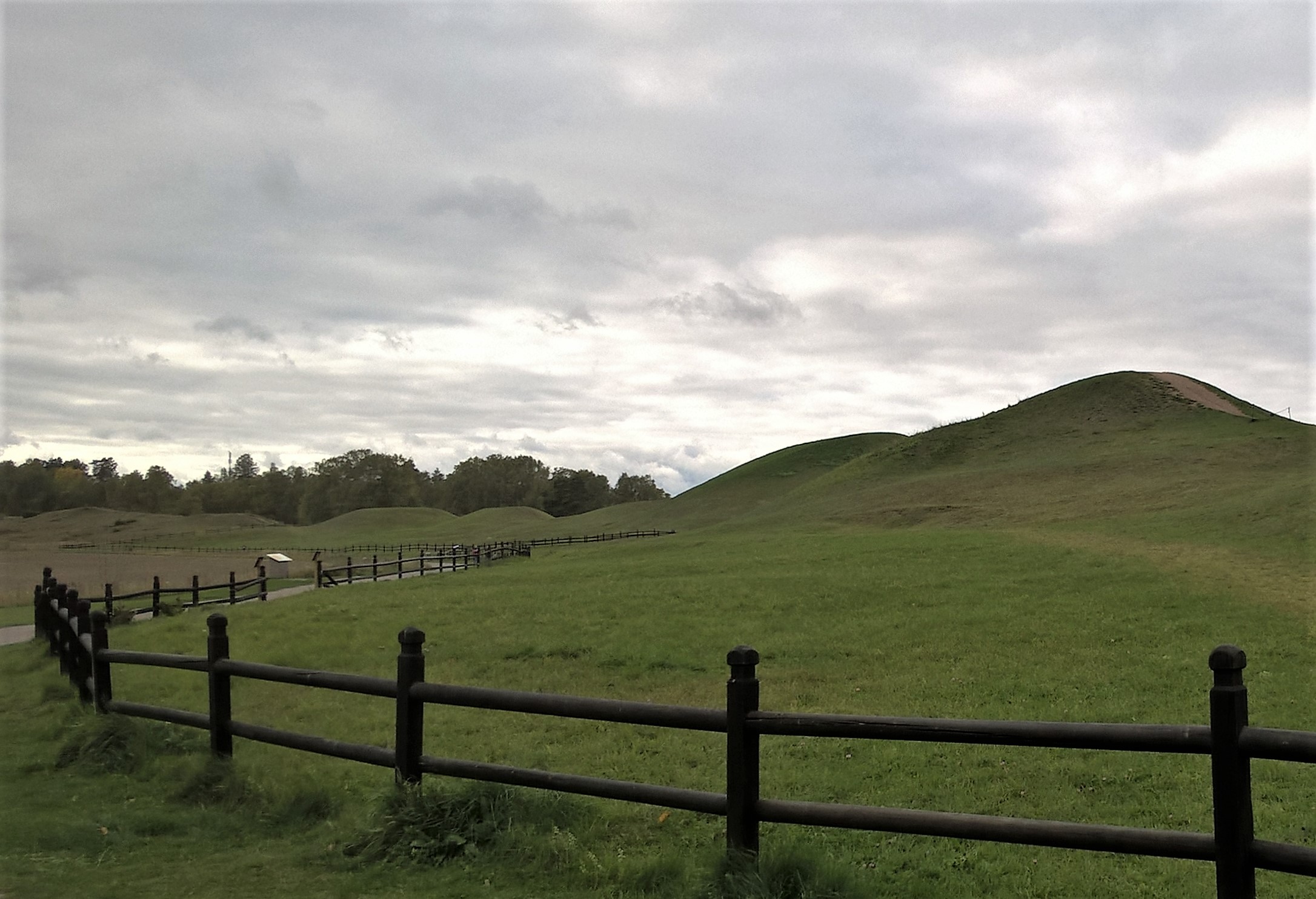
As I sit here typing, at 2.35 am, in the close, dark time of the night (snuffles keeping me awake), thinking of those mounds, I begin to feel the magic.
The mystery.
Thoughts of sleeping lords and ladies, of dragons and hideous trolls (the real kind), of monsters, spells and… well, you get the idea.
But at the time, I was becoming more and more grumpy.
I’ve not only seen lots of mounds. I’ve climbed lots of mounds.
Like Etowah Indian Mounds, Alabama. Awesome, #biggly mounds.
So this string of hummocks, like the knotty spinal cord of great a sleeping giant, was tempting.
Across the flat fields, the spires of Uppsala cathedral pointed skywards. The view from the mounds would be …
But the sign said to keep to the paths. So, with an ill, will we did. Unlike the locals. Or their dogs.
By now even the archaeologist was more interested in a nearby church than mounds behind fences, so off we set.
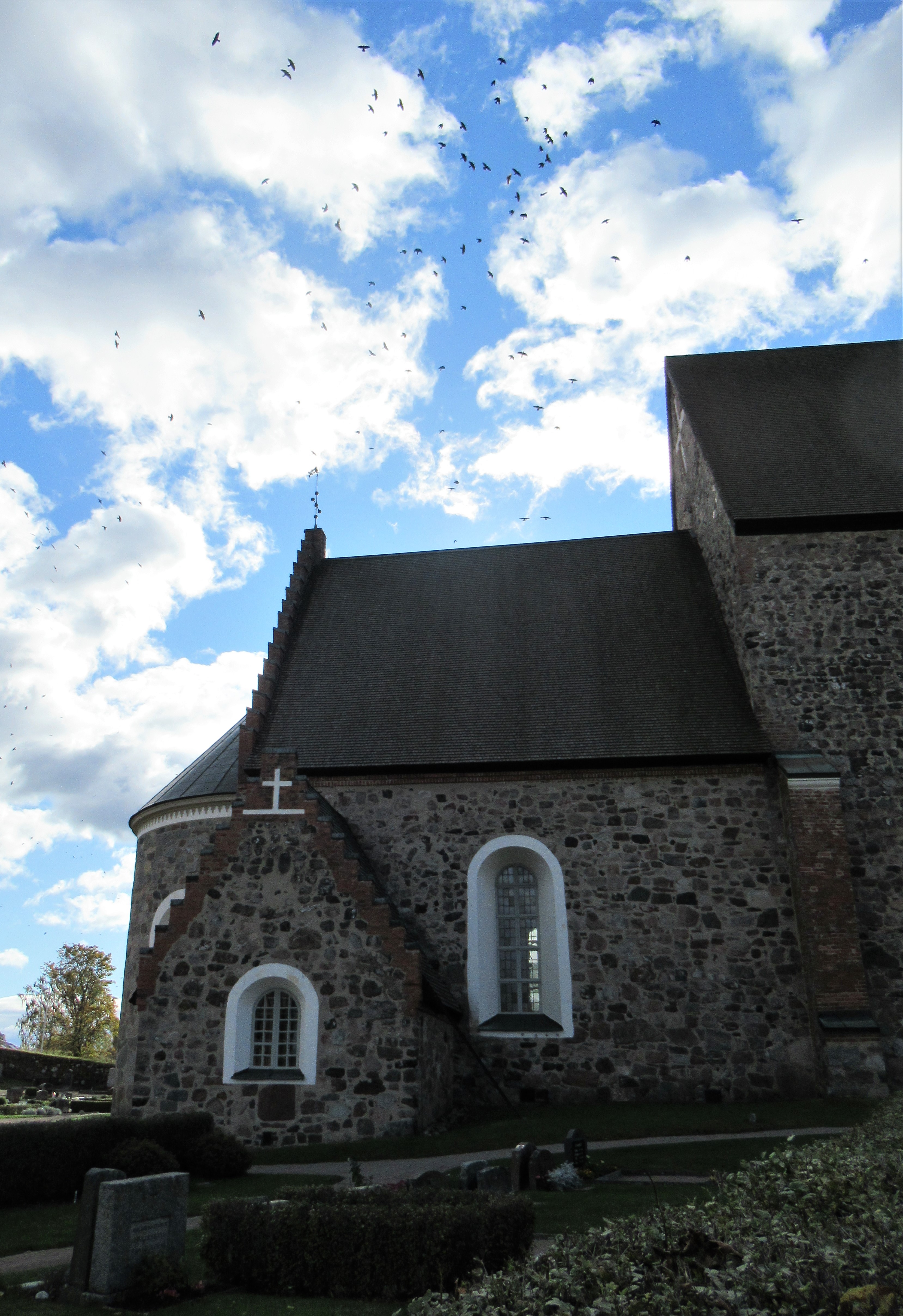
Why do rooks and ravens find churches such a magnet I wonder?
‘A funeral is in progress,’ read the sign.
For a moment we thought our run of bad luck was continuing.
But the church was empty.
Then a man began vacuuming the aisle.
The church was a delight. I’d thought, on our last trip to Uppsala, that the painted church and cathedral were unusual, but perhaps not.

Copious painting above the organ
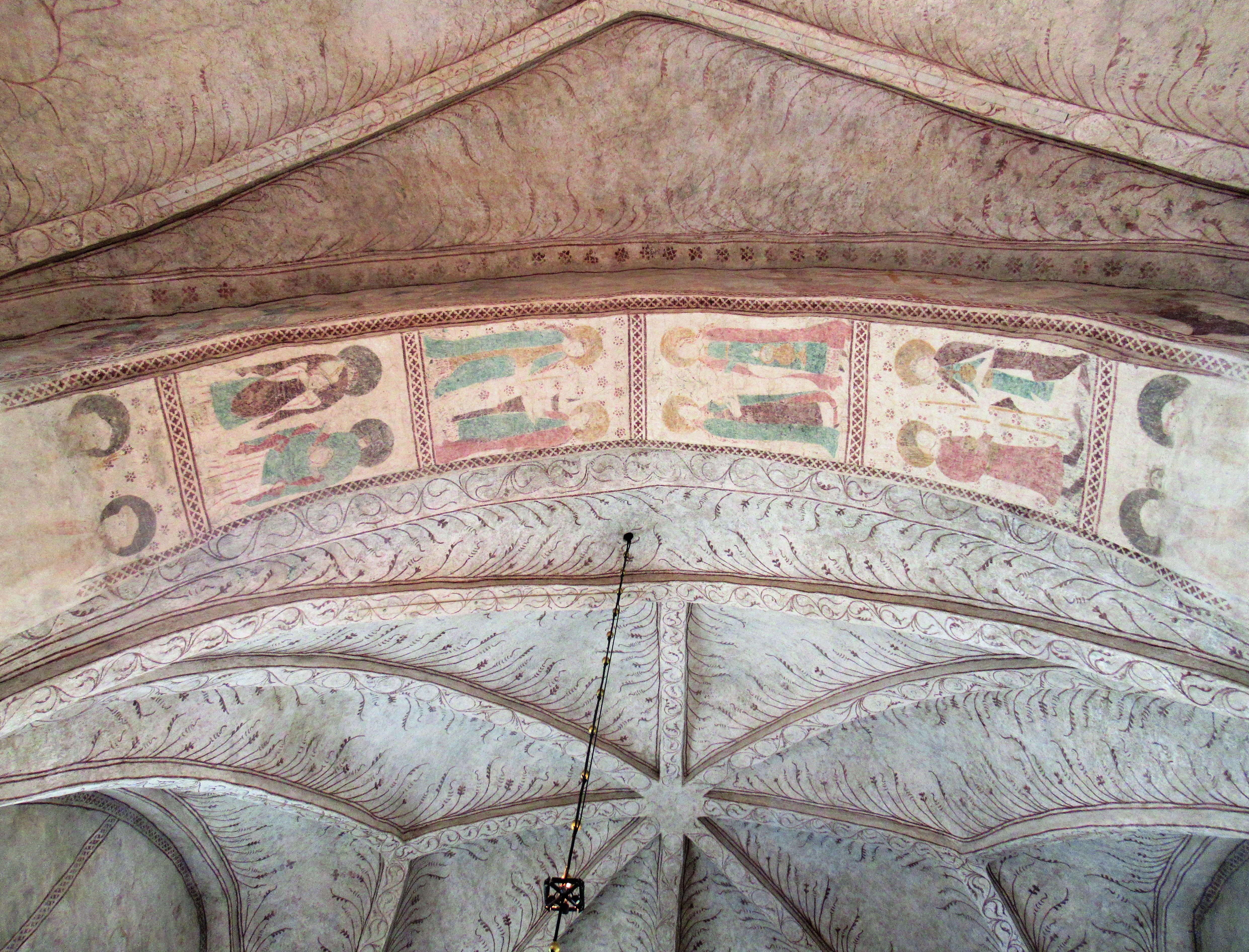
A bit of detail

Beautiful tree-like with such delicate painting

The 15th C altarpiece

St Erik dates from the 13/14th C & the guide says, ‘the crowned troll under the saint may symbolise both paganism and pagan contenders for the crown’ Erik being both king & a saint
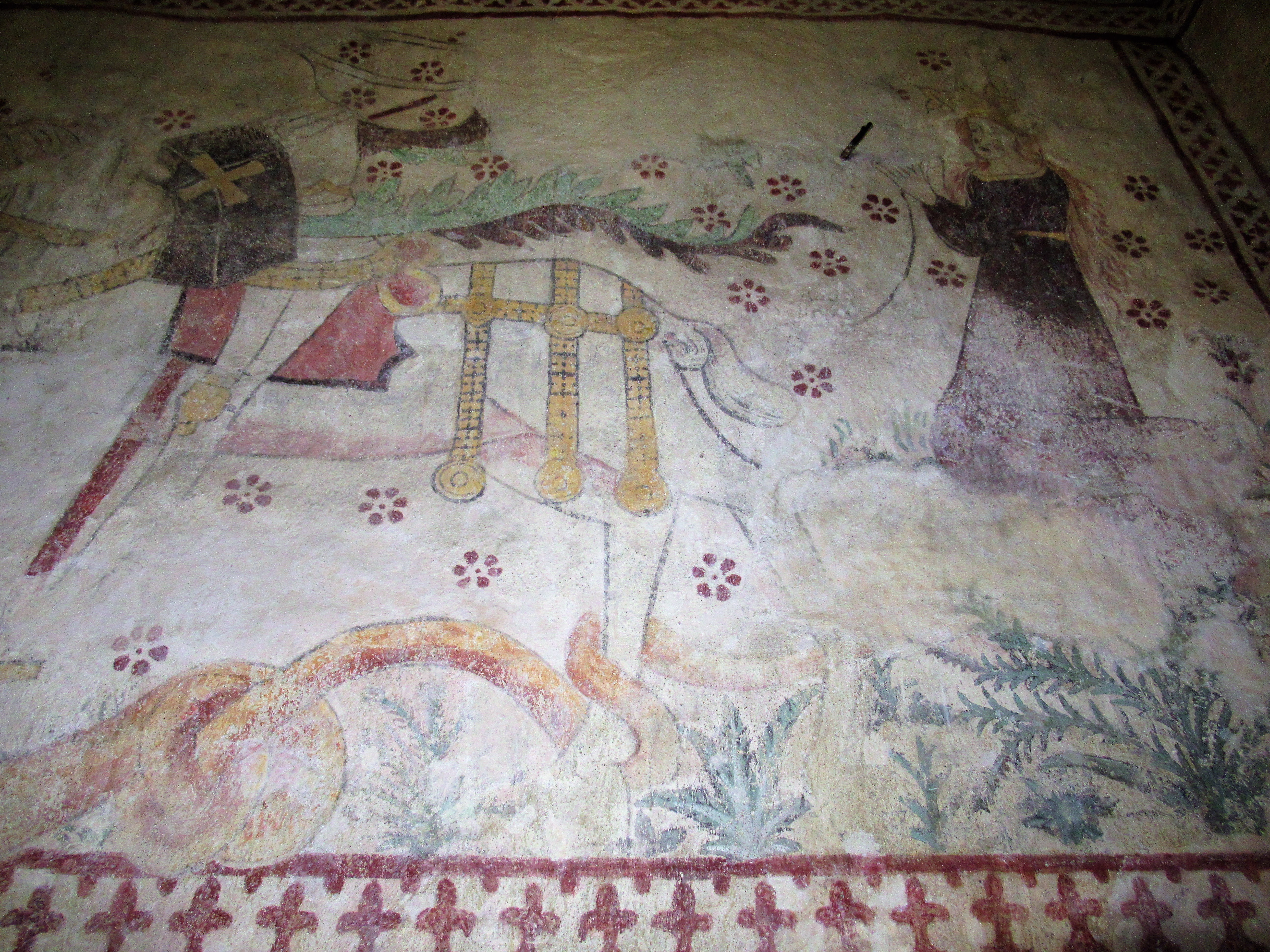
It was impossible to picture this full on – but I couldn’t leave out St George and the dragon
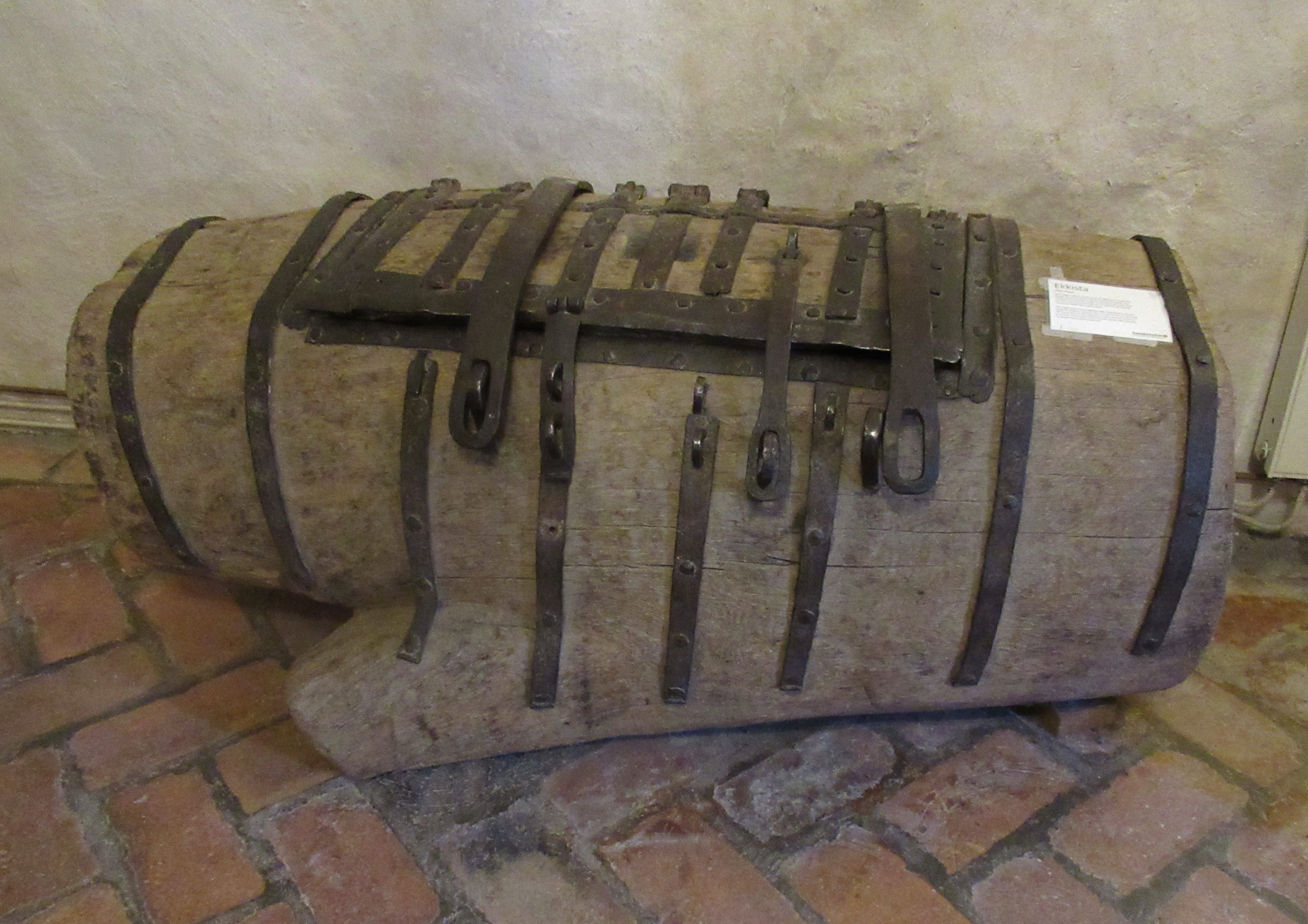
This chest is just a hollowed out hunk of trunk which the guide says is as old as the church – which dates back to the 11th/12th C
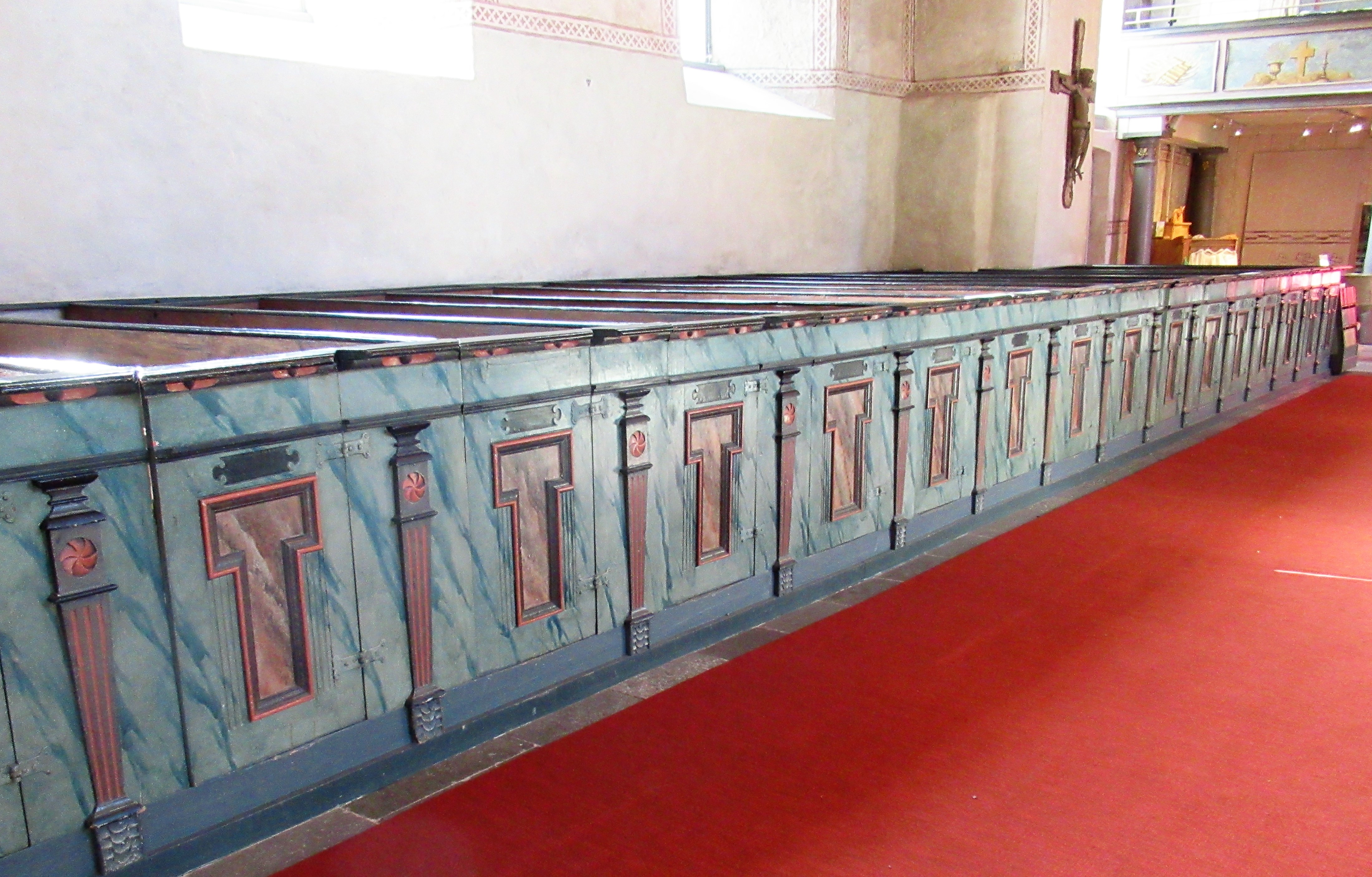
When we get to the dissecting theatre (below) I realised this is a typical type of painted decoration of wood
After much oohing and aahing over the paintings behind the organ, out we went, into the graveyard, to scrutinise an odd building we’d seen from a distance. It had fascinating wooden shingles and appeared to be resting on lumps of stone. There was no clue to its function.

If you know what this is please comment and tell me, It has a face, don’t you think?

An odd combination of the makeshift foundation here & precisely cut shingles
As we puzzled, the unmistakable sound of digging arose. Not an archaeologist at work, but a new grave in the making.
It was turning chillier, both physically and spiritually. We hurried to investigate the remainder of the church exterior, where one more treasure lay in store: a rune stone built into the wall.
 Despite the robust breakfast, lunch was now sounding tempting. We took the bus back to town (and there’s a tale for another day, perhaps, of immigrants and liberals).
A vegetarian buffet, all we could eat for 99 krone, set us up nicely for the next brush with death.
The University’s Gustavianum Museum is an intriguing landmark of a building. Its distinctive cupola sets it apart from the other buildings around it – no mean feat given the massive spires of the cathedral. But it is what’s inside that’s really impressive.

The building is from 1625 but the octagonal blob on top is the dissecting theatre built in the 1660s by Olof Rudbeck the Elder, a professor. There’s a sundial on top of that
I must confess we didn’t ‘do’ the Egyptian stuff, or even the Augsburg Art Cabinet.
We did the deathly bits.
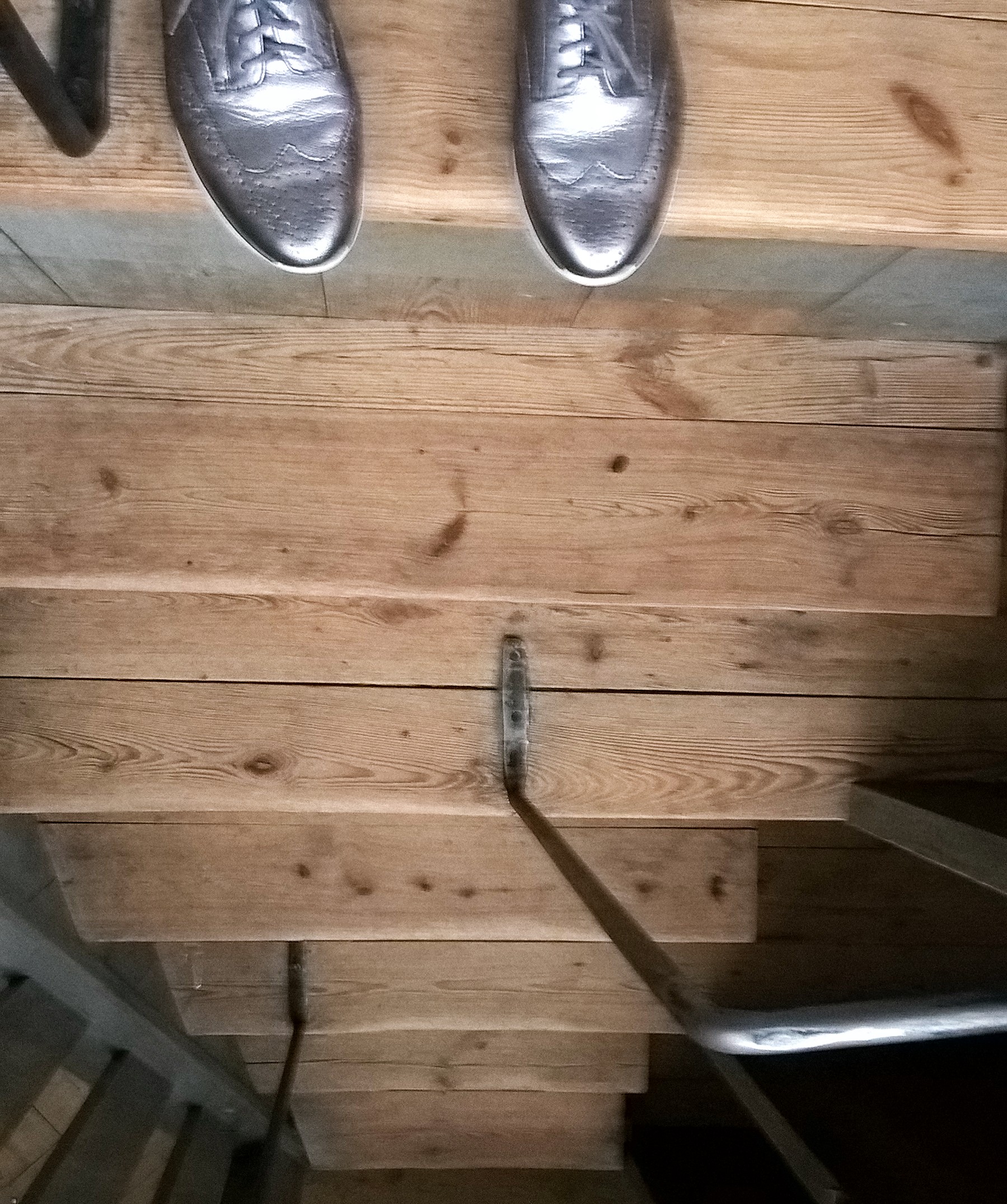
First the octagonal seventeenth-century dissection theatre. Which was spectacular – and scarily vertiginous. Climbing huge steps to the top tier of the viewing galleries was bad enough, descending would have been perilous without the iron handrails.
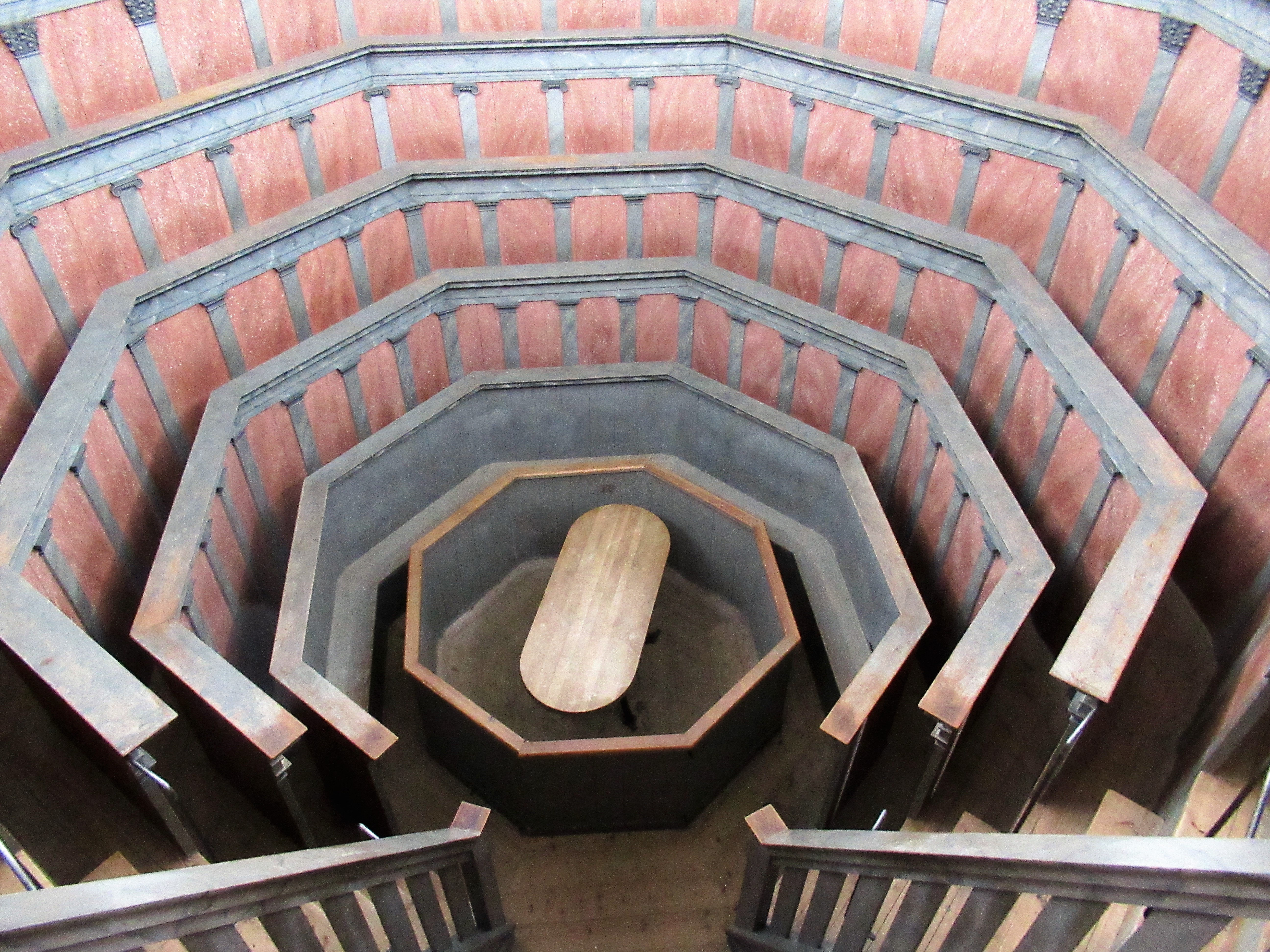
Beautifully painted wooden stalls around the dissecting table
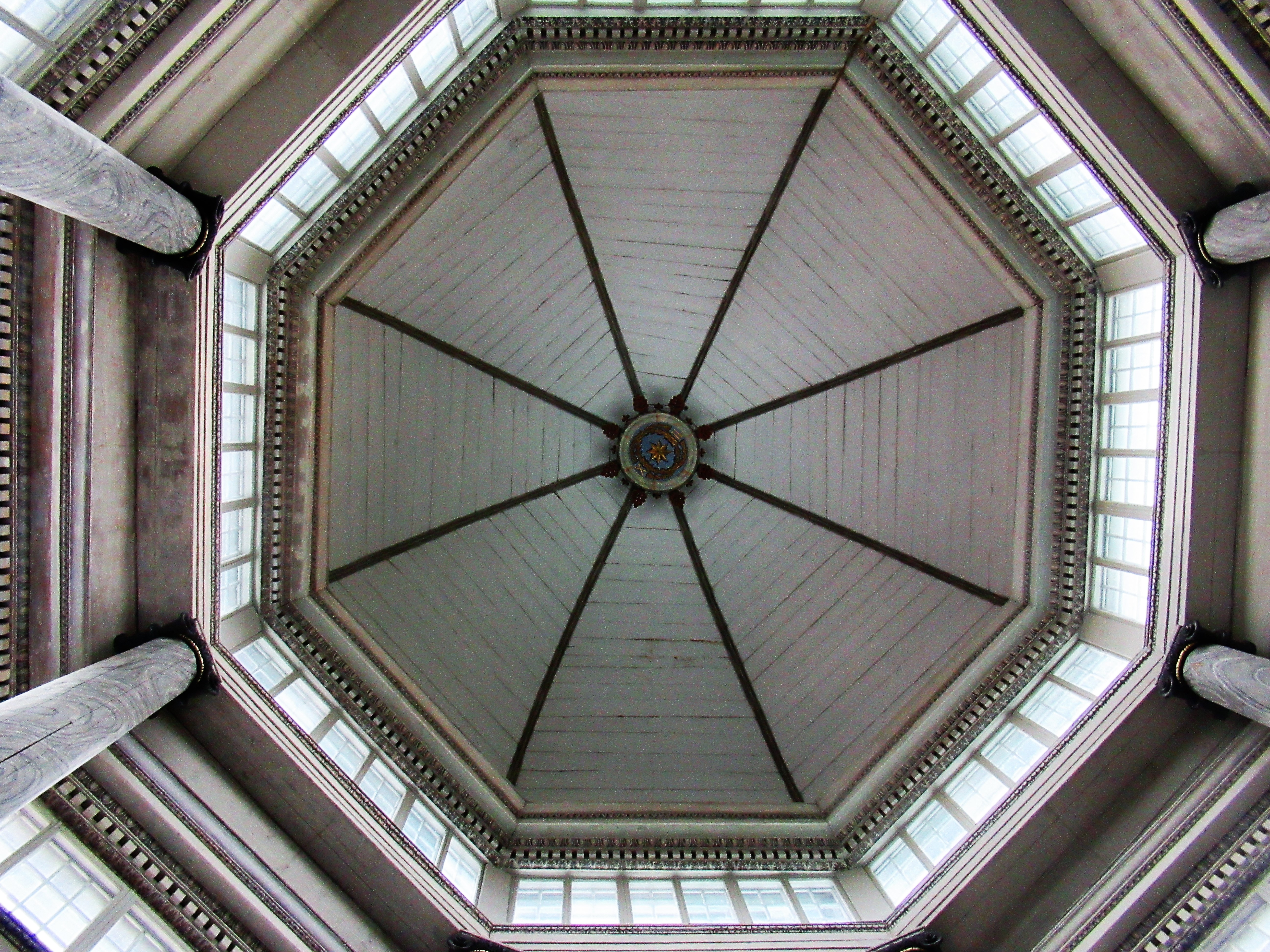
Nearly got it all in!
I imagine the narrowness of the gap between the barriers and standing spaces – there were no seats – was to stop people falling over when they fainted during dissections of the criminal corpses.
Because Professor Rudbeck’s intention was to allow students and member of the public to see, smell and taste the dissection of the corpses.
Eeeuw!
Impressive.
But the highlight of the day was still to come.
The best archaeological exhibition I’ve ever seen.
Old hazy black and white pictures – of the excavation of a Viking boat burial at Valsgärde, between the 1920s and early 1950s – had been melded together to form a slow-moving video, totally capturing the essence of the excavations.
And the excavators.
Pipe-smoking men in white caps and knickerbockers. Women in dungarees.
Diligently recording the resurrection of a burial.
Picnicking.
Laughing.
An intimate glimpse of their lives and work and fun.
Turning to a large area covered in glass, lit from beneath in the dimly-lit gallery, I saw two children take off their shoes and walk on the glass.
I looked closer. Sure enough, there was a boot jack to take off your shoes and images of feet on the edge of the glass.
It was amazing!

Walking on a dig – on history revealed – what a brilliant idea
The whole ship burial was underneath us – not the real thing obviously, but the site illustrated in graphic format just as the archaeologists had found and recorded it. There were some real finds in place, such as the rivets – which threw shadows over the two-dimensional lines of the illustration.

I had the urge to run and slide down the glass but restrained myself
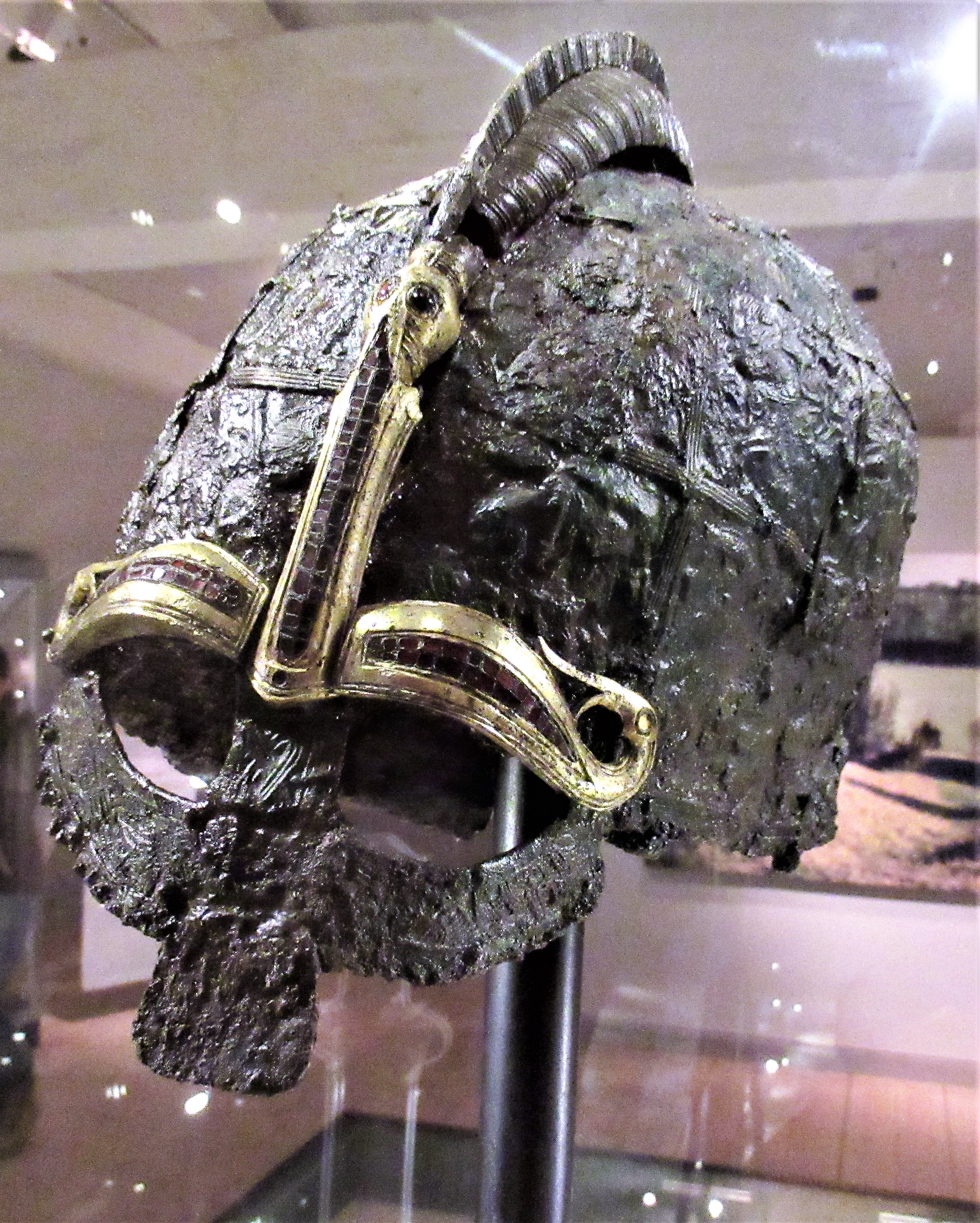
There were swords, a shield a helmet. Gaming marbles. A drinking horn, a dog’s collar, a horse’s harness, fire irons… so many delights – too many to share. And anyway, hard to take decent images with a compact camera and no flash (that’s my excuse!).

The only way to get up close was to walk on the glass but hardly anyone grown up did

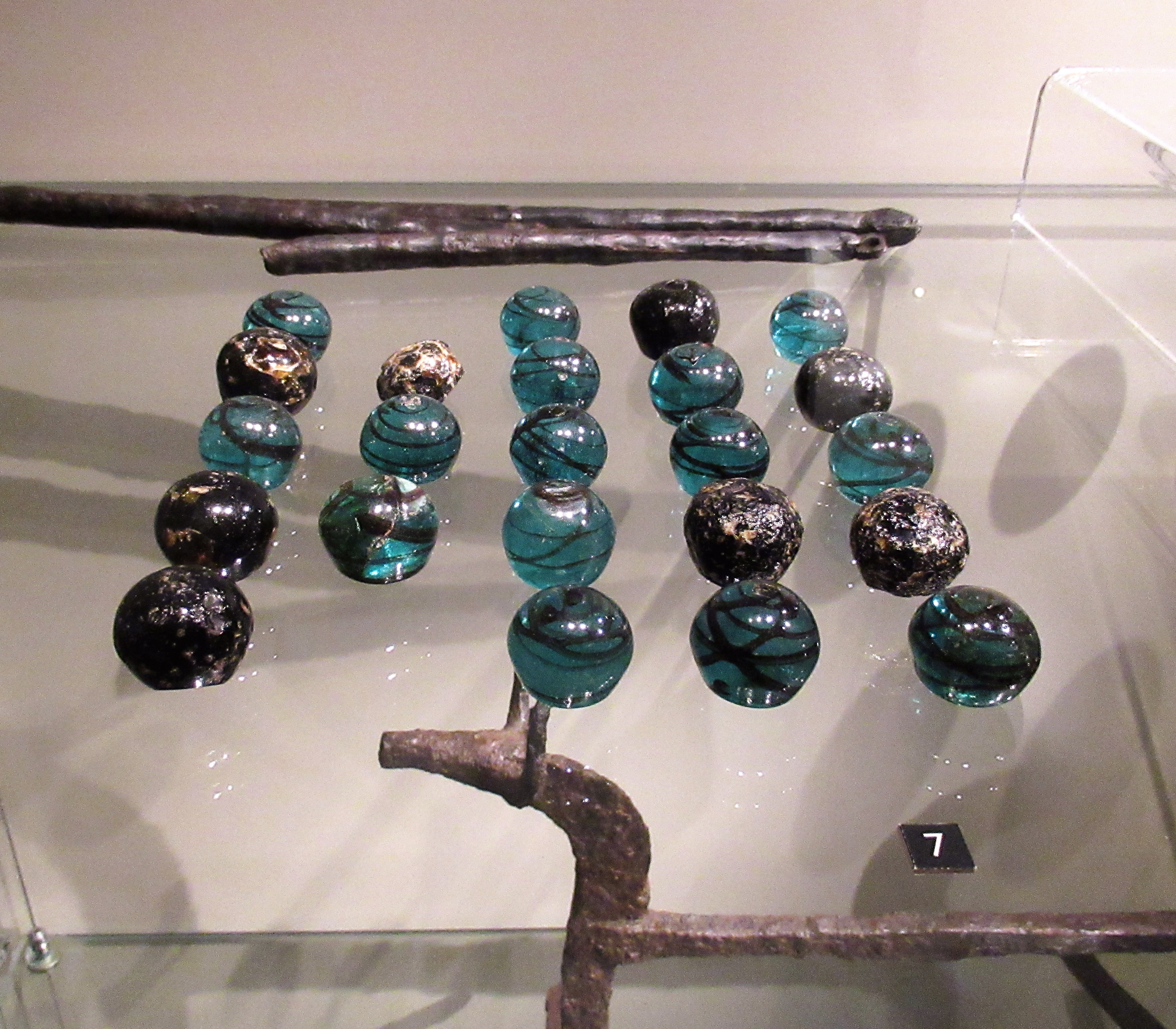
Lovely marbles – my favourite colour, turquoise

Graphic illustration of the burial site which was in use between the 7th & 11th Cs
I found it hard to tear myself away. But we did, for the day was not yet over. More to do, more to see.
It wasn’t till later I thought, I’m not sure about this digging-up-the-dead lark.
But I’ve been doing it myself for years and years and …
Hey ho.
I’ll leave it there for now. So, adjo, till the next instalment.
When there may be chocolate.
And Moomins.



















 MEMOIRS OF A HUSK