Nonpareil. On voyaging from darkness, into light

I can’t remember what we had for breakfast. But, as always, we had tea. Thank goodness.

Unusually, while still at table, I checked my emails on my phone.

That’s where the shadow was waiting.

My lovely husband, baby of five siblings, was suddenly one of four.

That’s all I propose to say about his beautiful, vibrant, charismatic sister. He’s on his way to her funeral now and I’m here, thinking of them all.  That’s enough.

But the reason I’ve shared this personal sadness, this dark shadow that fell on our morning rituals – and stayed – is because we found solace in nature. And I’d like to share that, too.

The day was a Thursday, and the Prof was still the Prof. Still had to catch his train as usual. Still had to teach his students as usual. Still had to do his admin and hold office-hours. Mark papers and deal with emails. Until home-time.

But next day was his research day. A day he looks forward to all week. A day for thinking, reading, writing. For being the academic he is in his heart and soul.

It was not to be taken for granted then, that he’d lightly give up that day. But the lure of a B&B near prehistoric sites helped – and by midday on Friday we were on our way.

Nature sent us off with a great big hug in the form of a glorious sun in a cloudless sky.

And as we travelled up the motorway with the most scenic views in England, the hills greeted us with snow-topped peaks.

If your soul doesn’t soar with a sun-kissed, snow-topped peak on a glorious day – well, perhaps you see them every day.

Our spirits, certainly, rose.

And as we left that road – which quietens the further north you go, threading between the hills and mountains of the Lake District – calm reassurance set in.

Prehistory helped.

Mayburgh Henge – its one remaining hunk of stone set in a circular hollow – would, we thought, be the star of two nearby features from Neolithic times.

Its mighty banks were built of river cobbles. Oak trees clung to grassy slopes strewn with flurries of pebbles.
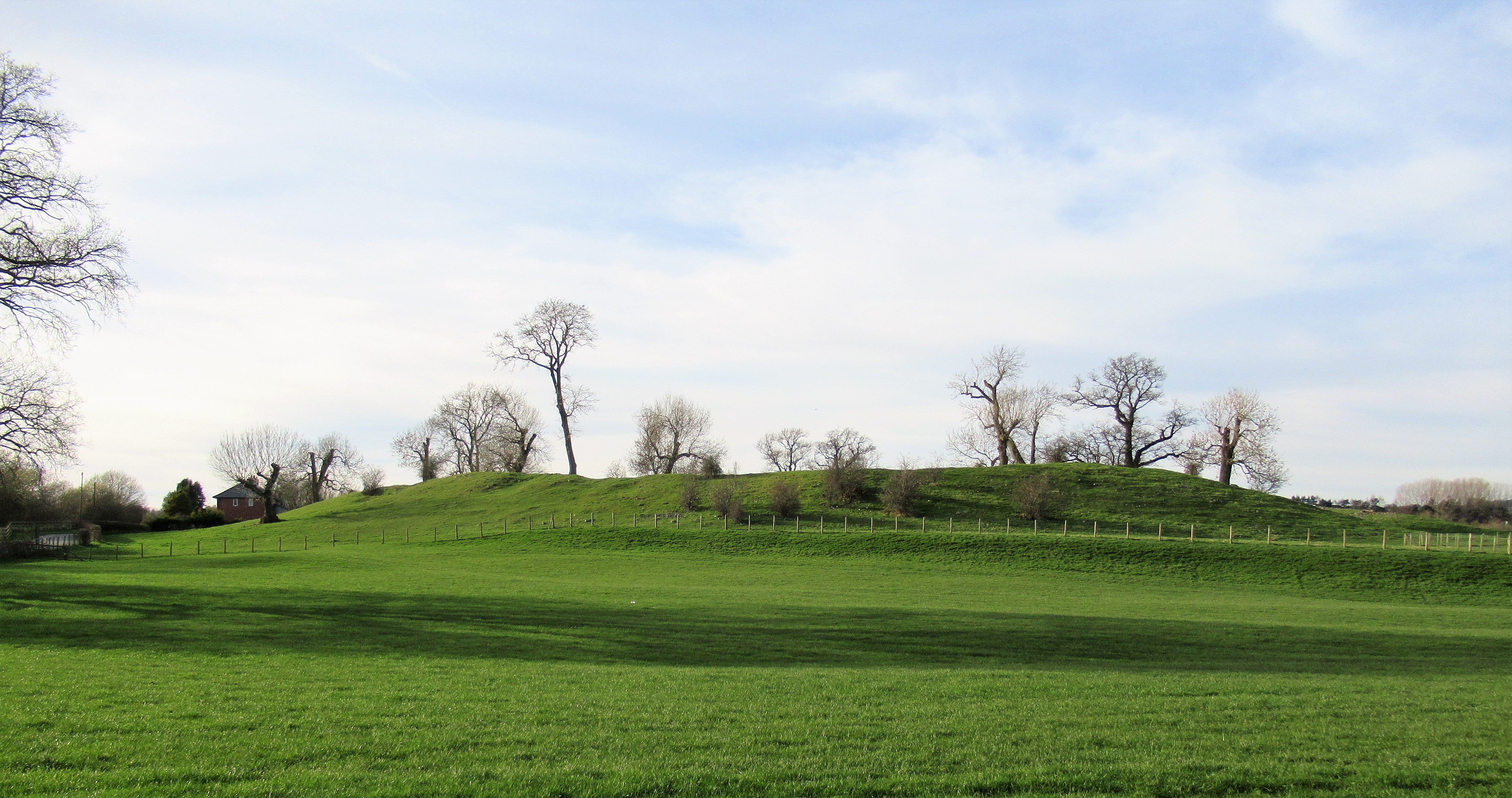
Mayburgh Henge (link with more details below)
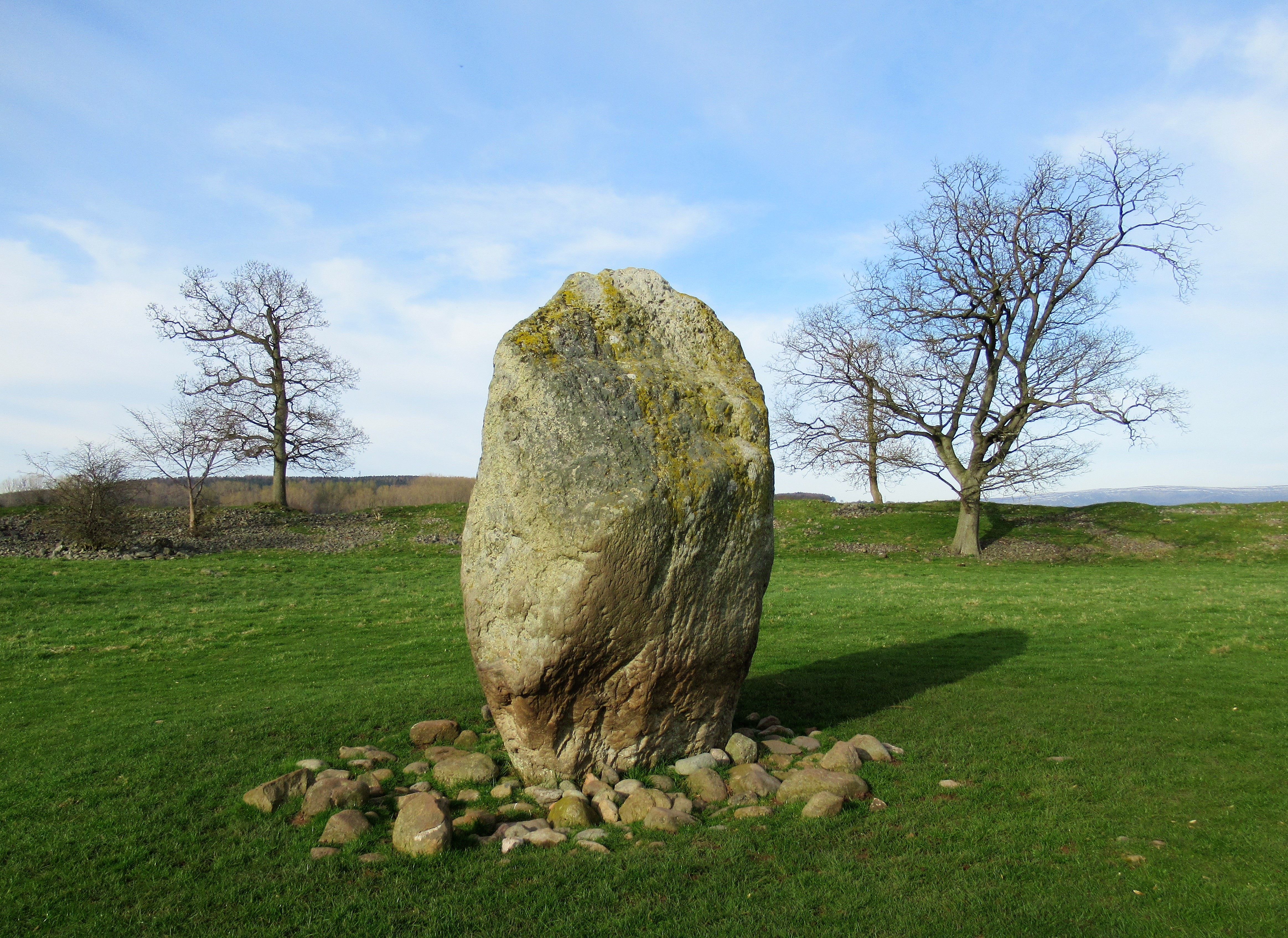
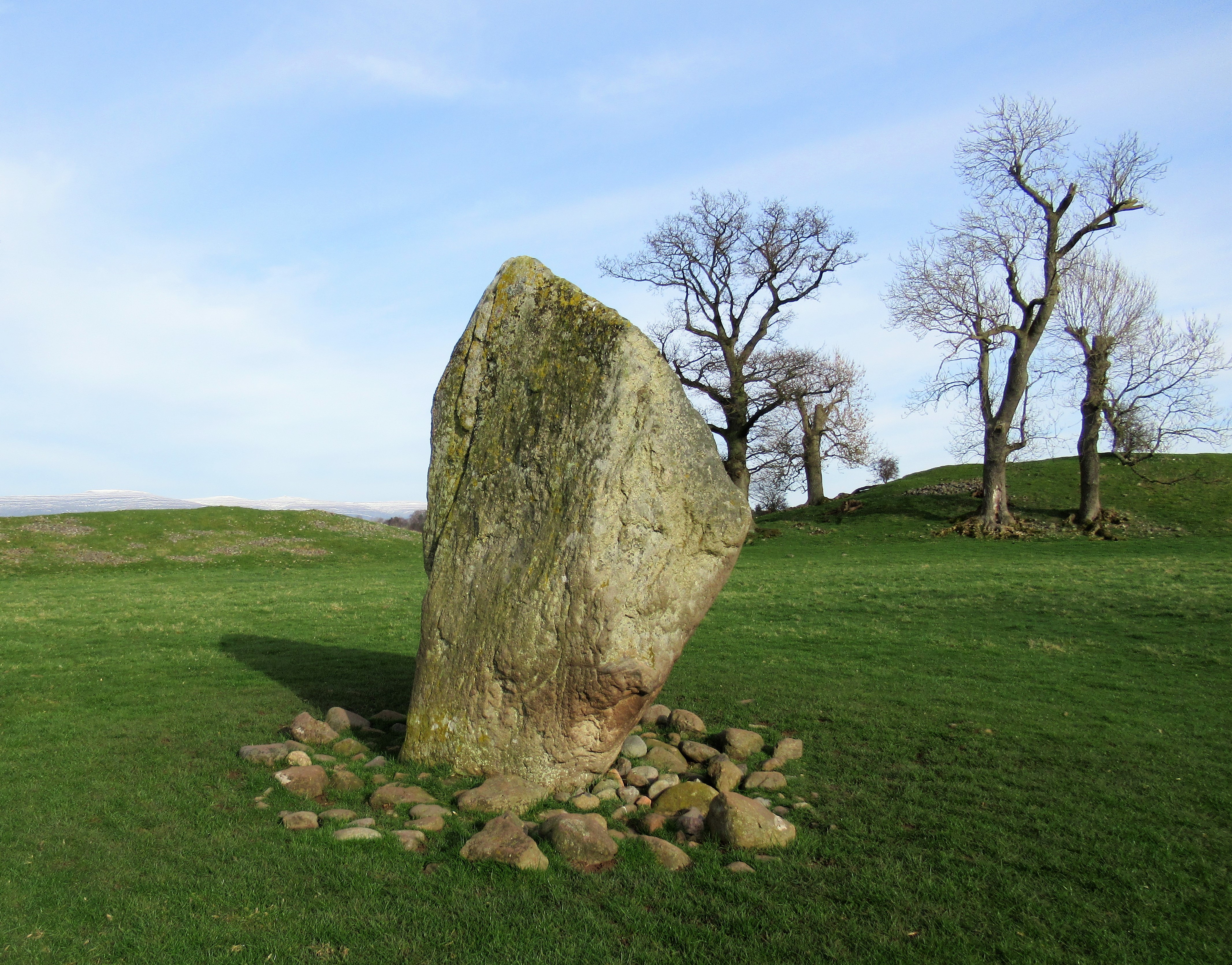
We nearly skipped King Arthur’s Round Table. It looked unimpressive from the road.

But, wow!
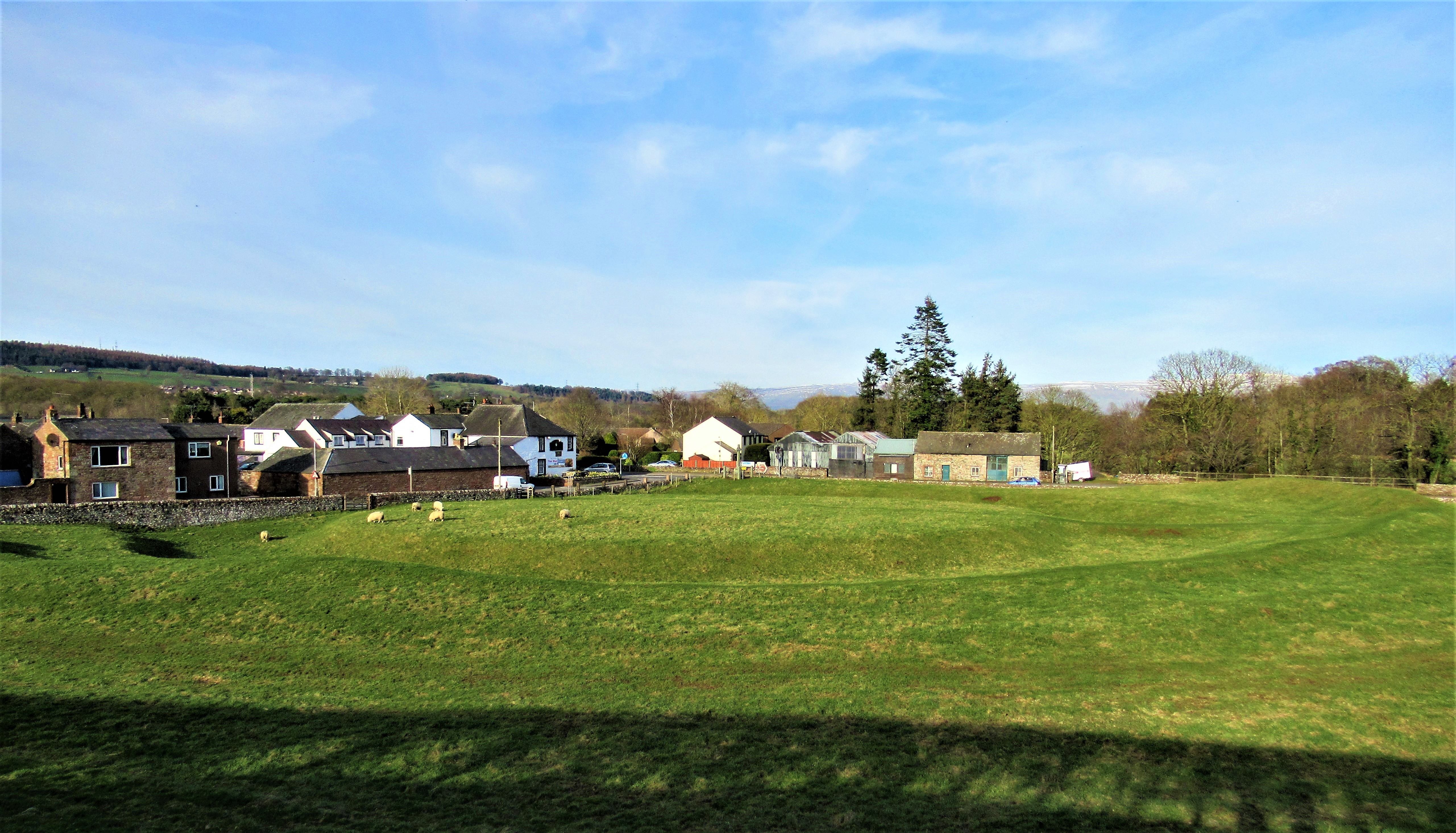
King Arthur’s Round Table (link with more details below)
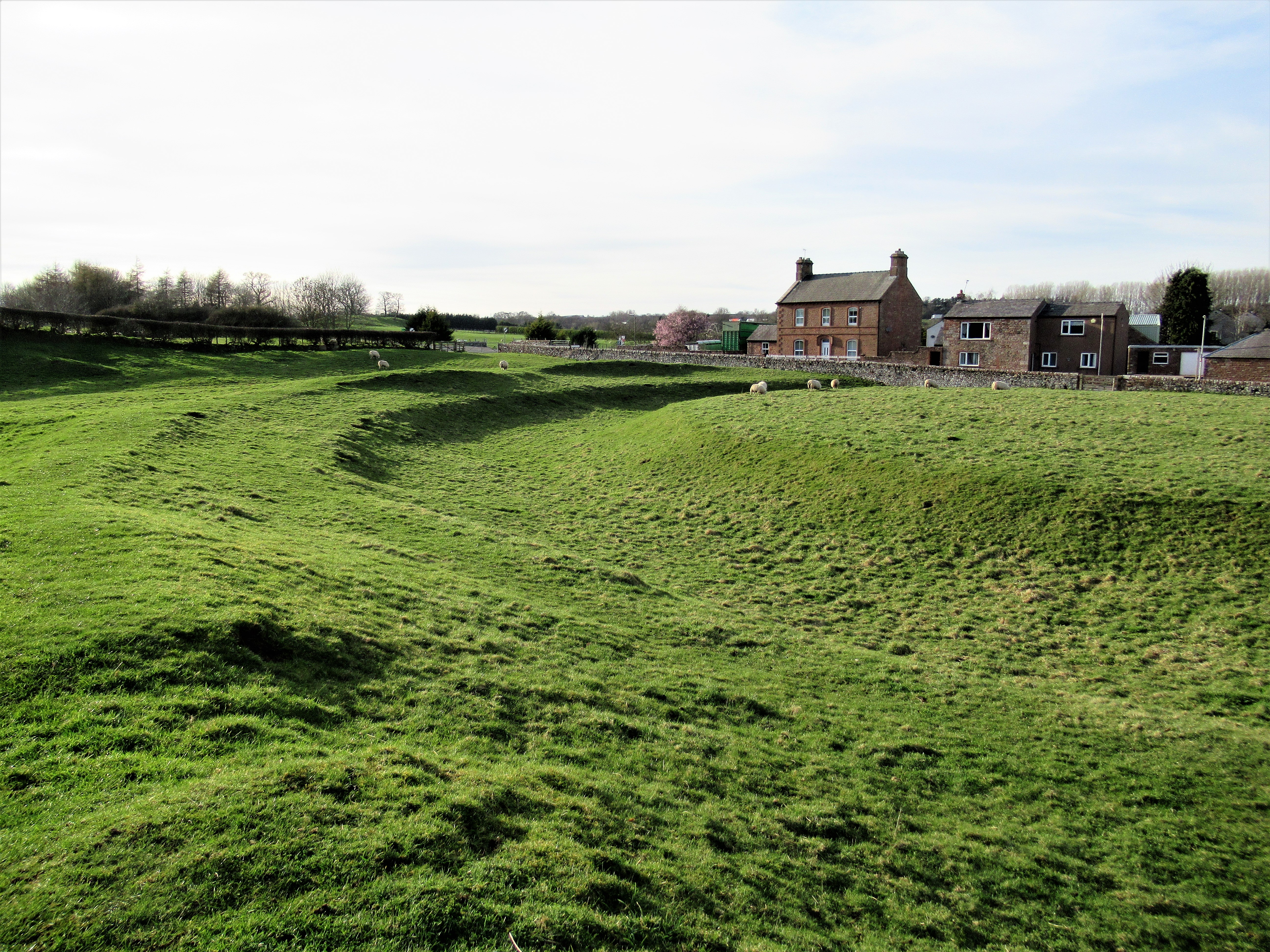
The newly warming sun helped. Only mid- March, but coats were scarcely needed as we walked amid the sheep.
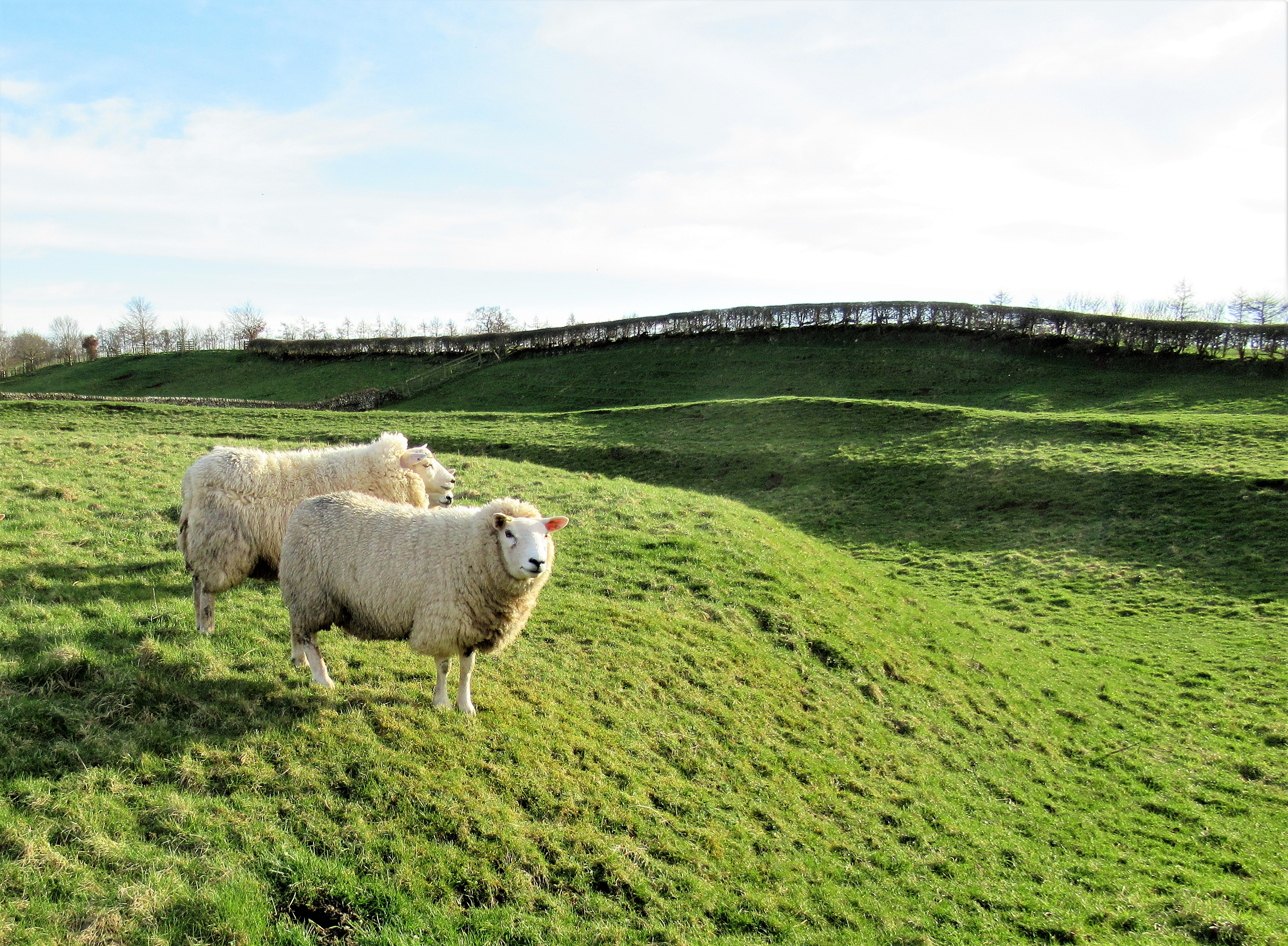
More recent heritage was signposted off the main road. Brougham (pronounced broom) Hall, a castle in all but name. Ramparts.  A sunny courtyard.  A café. Tea, with a slab of beetroot-and-chocolate cake.
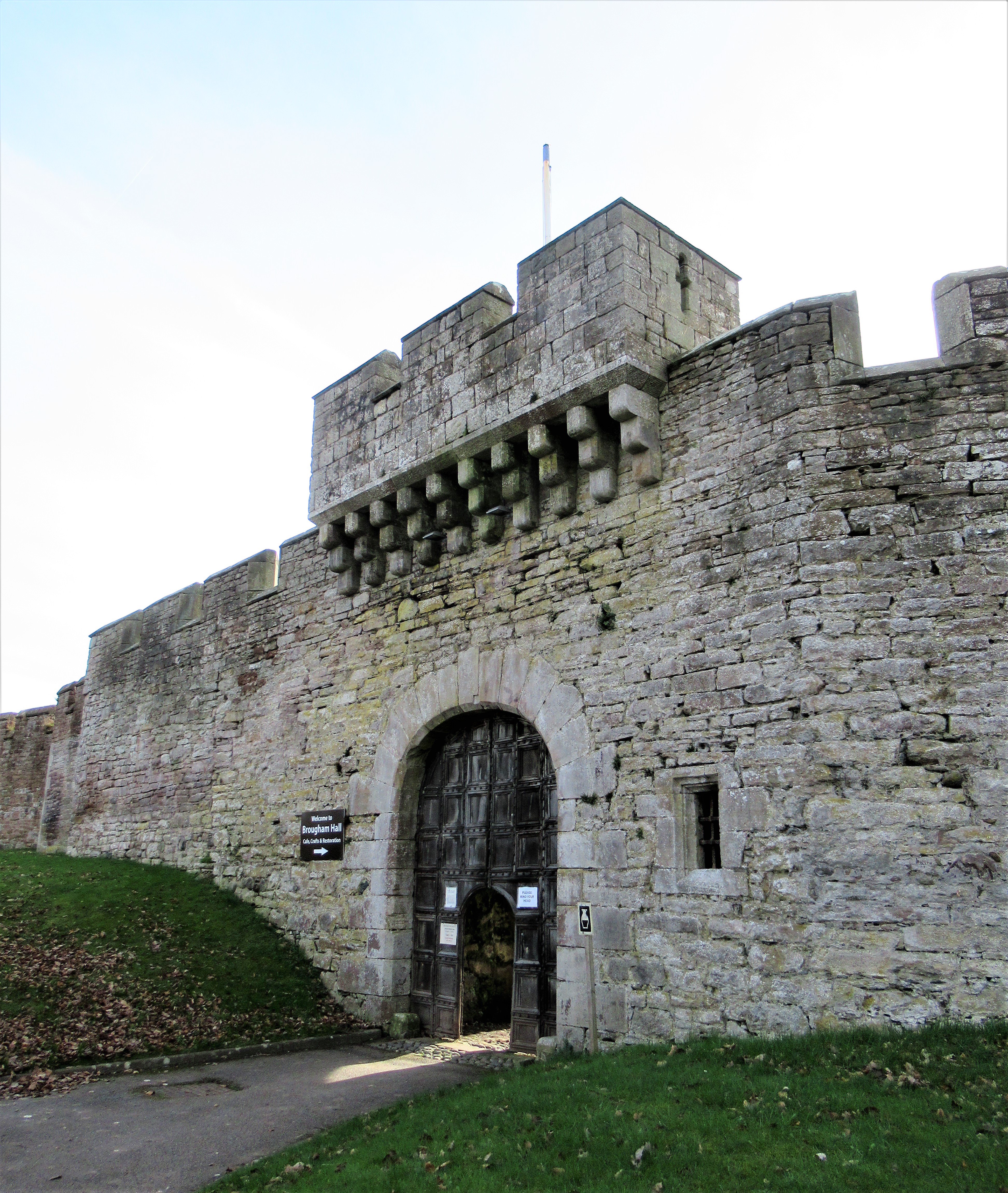
Brougham Hall

Then on, towards Penrith and our B&B. A grand Victorian villa, but also rather Bohemian – the woman of the house being an accomplished artist.

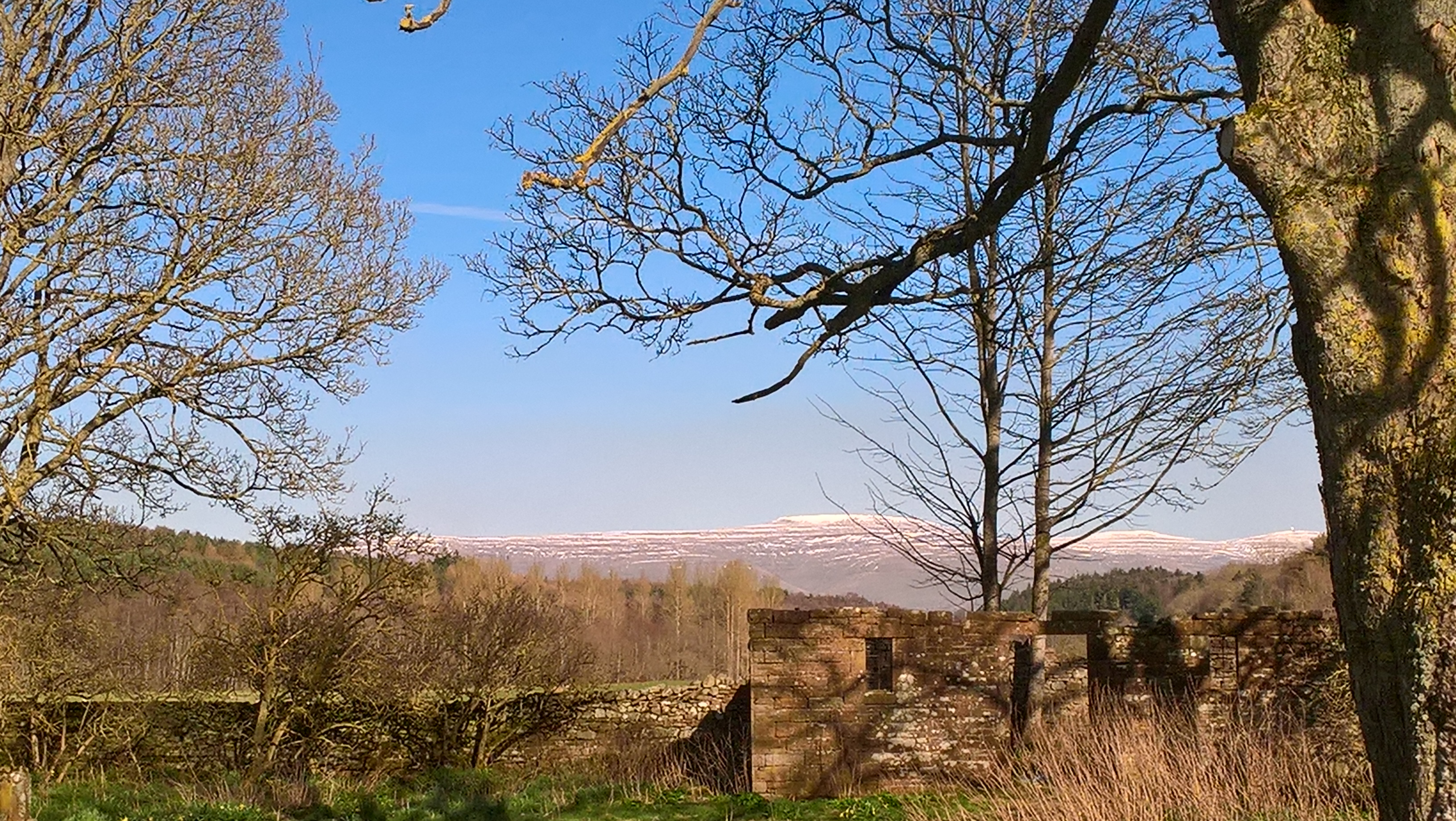
Our room was gorgeous, though chilly. And the view – oh the view! Over a fabulous urban garden, across the town to distant hills. Their snow-capped summits gleamed until the sun went down, leaving a fanfare of colour.

Our hostess had recommended a place to eat and as we tromped downhill and across town, I wondered…

And what a surprise.

A historic gem, Dockray Hall dates from the fifteenth century.
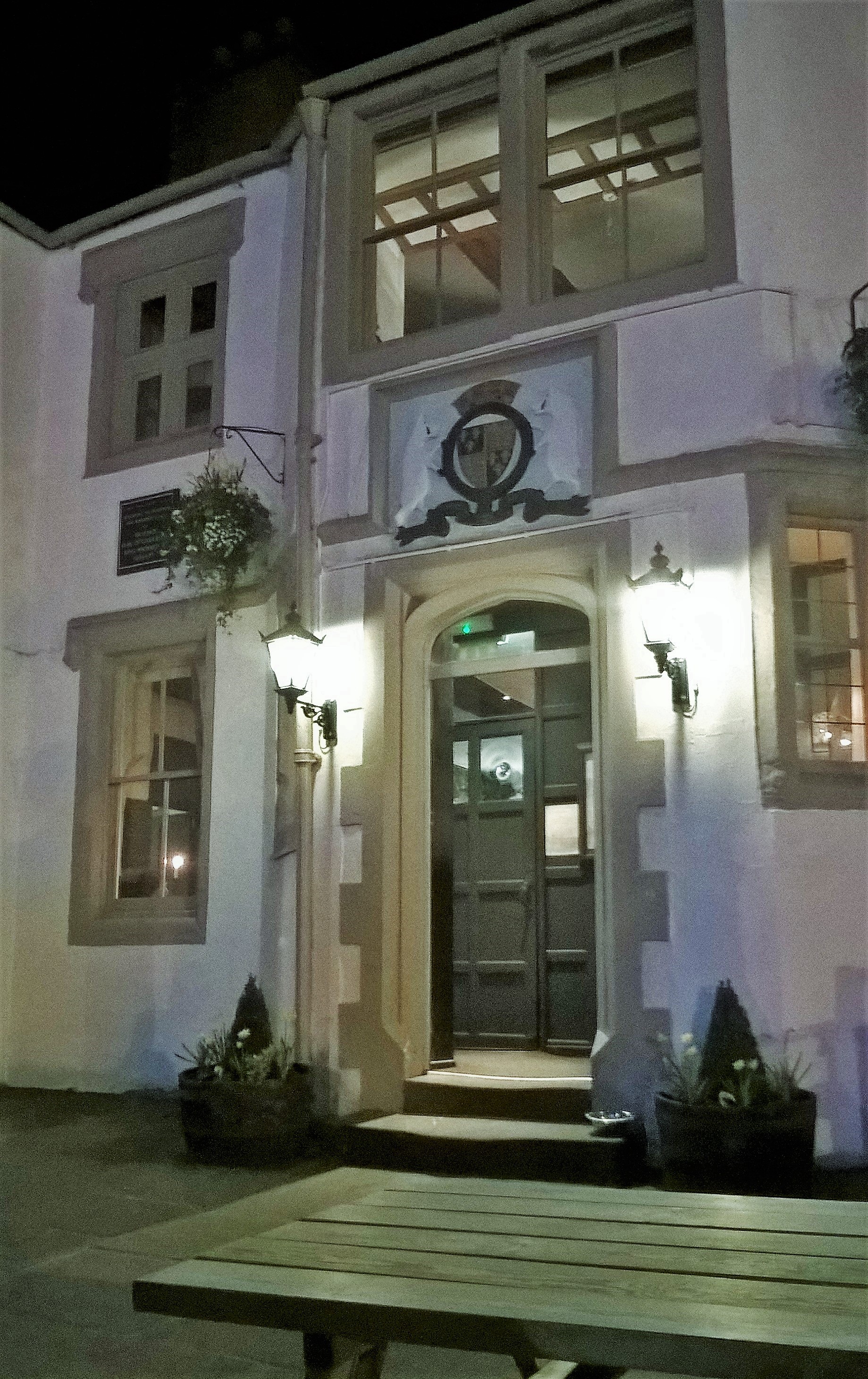
Cosy yet stylish, relaxed yet smart. And the smoked local venison – amazing.
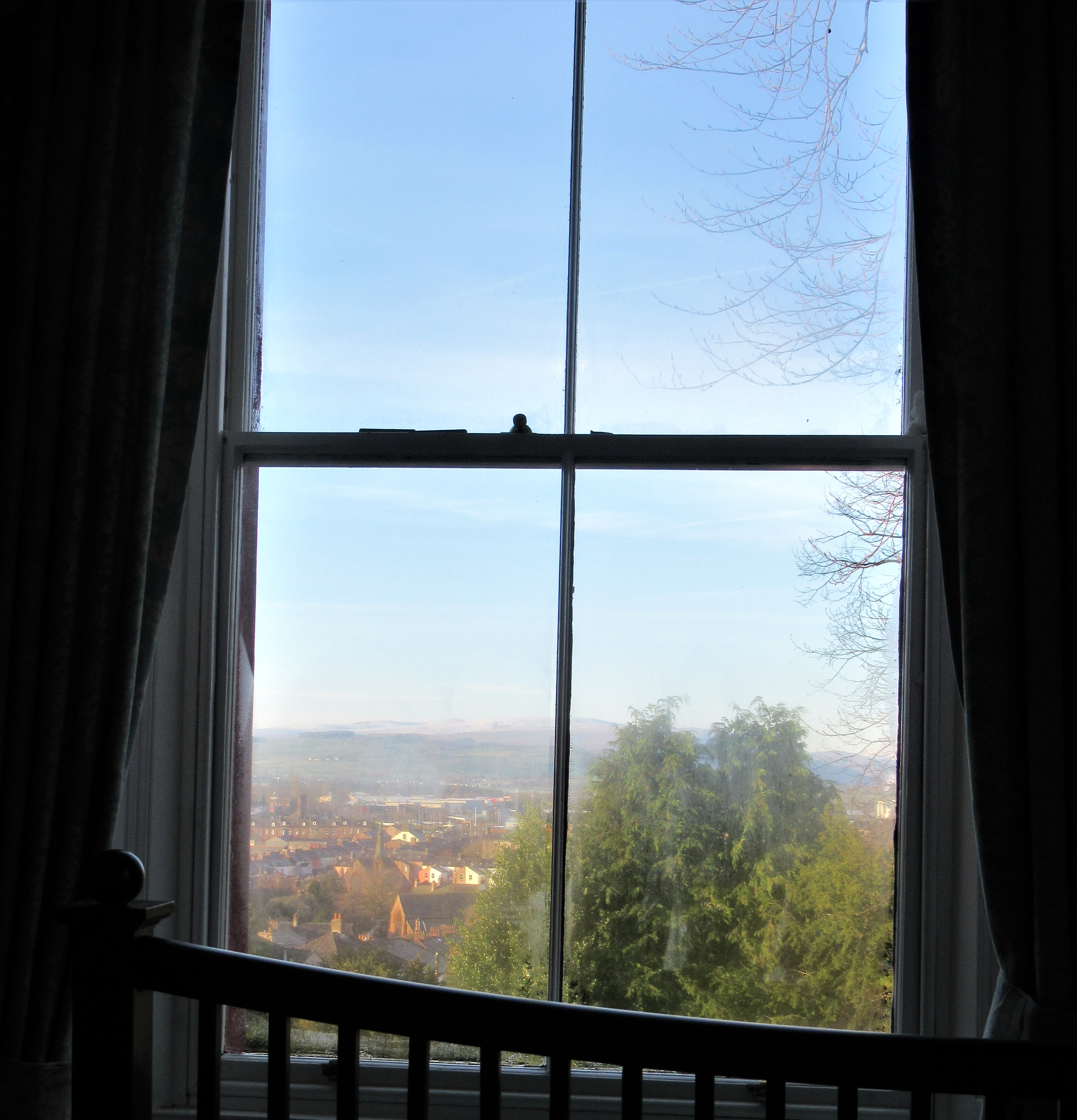
Yes, the window was a bit misty – but you get the idea


Next morning we awoke in our cool room to a glorious view.

The Prof made tea in a teapot. There was real milk in a small jug. And biscuits.

Perfection.

Over a delicious breakfast, we sat in solitary splendour, marvelling at the day, the view, the goldfinches.

And the stray chicken.

With a gift of fudge from the artist, we left for Clifton ‘Hall’ – a historic tower, sans castle.
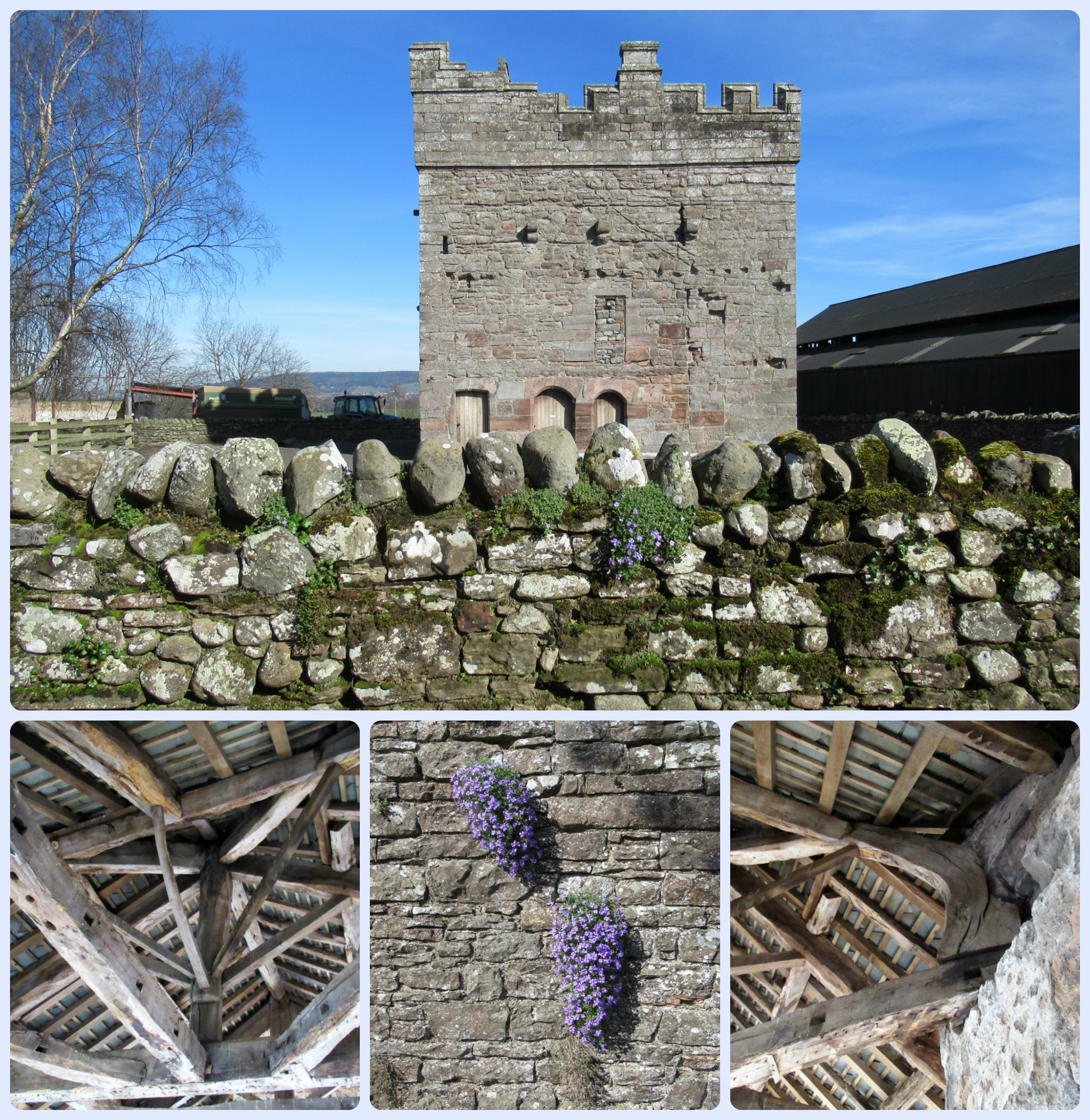
Clifton Hall Tower (link with more details below)


Close by, a first for us – a motorway footbridge (cow-bridge).
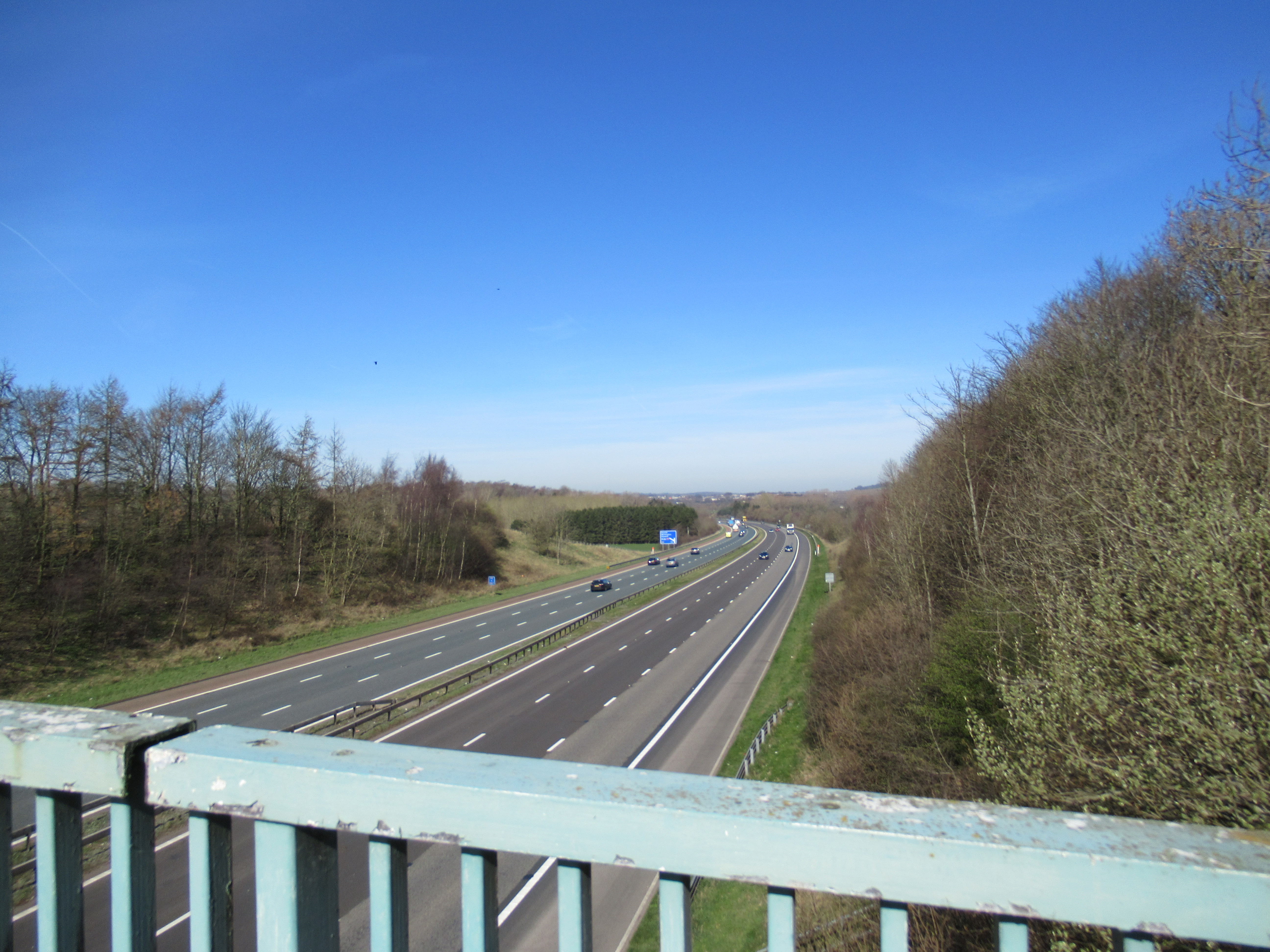
Well, if the cows could do it – so could we. And we did.
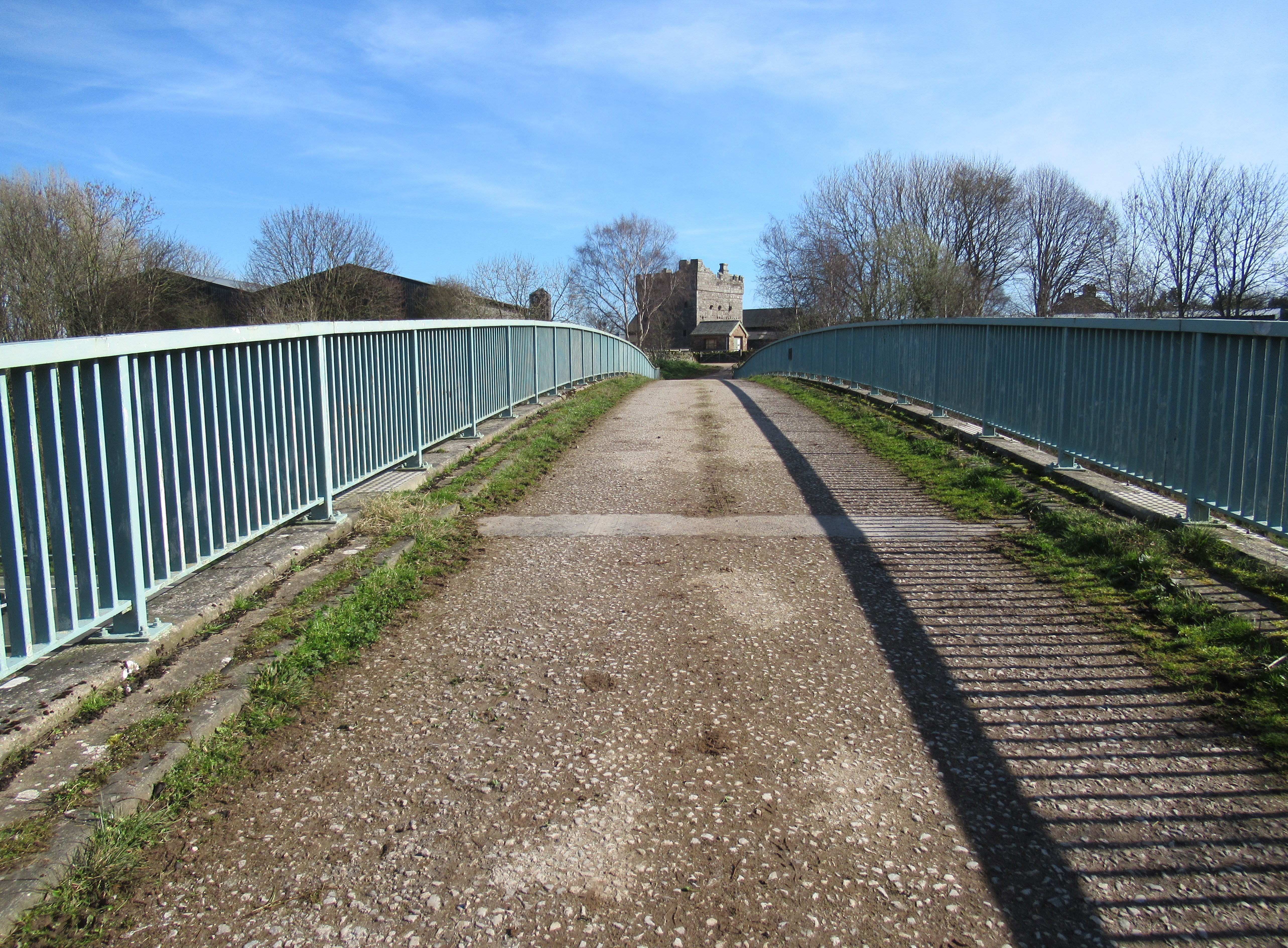
Across six lanes of traffic! Looking back towards the tower
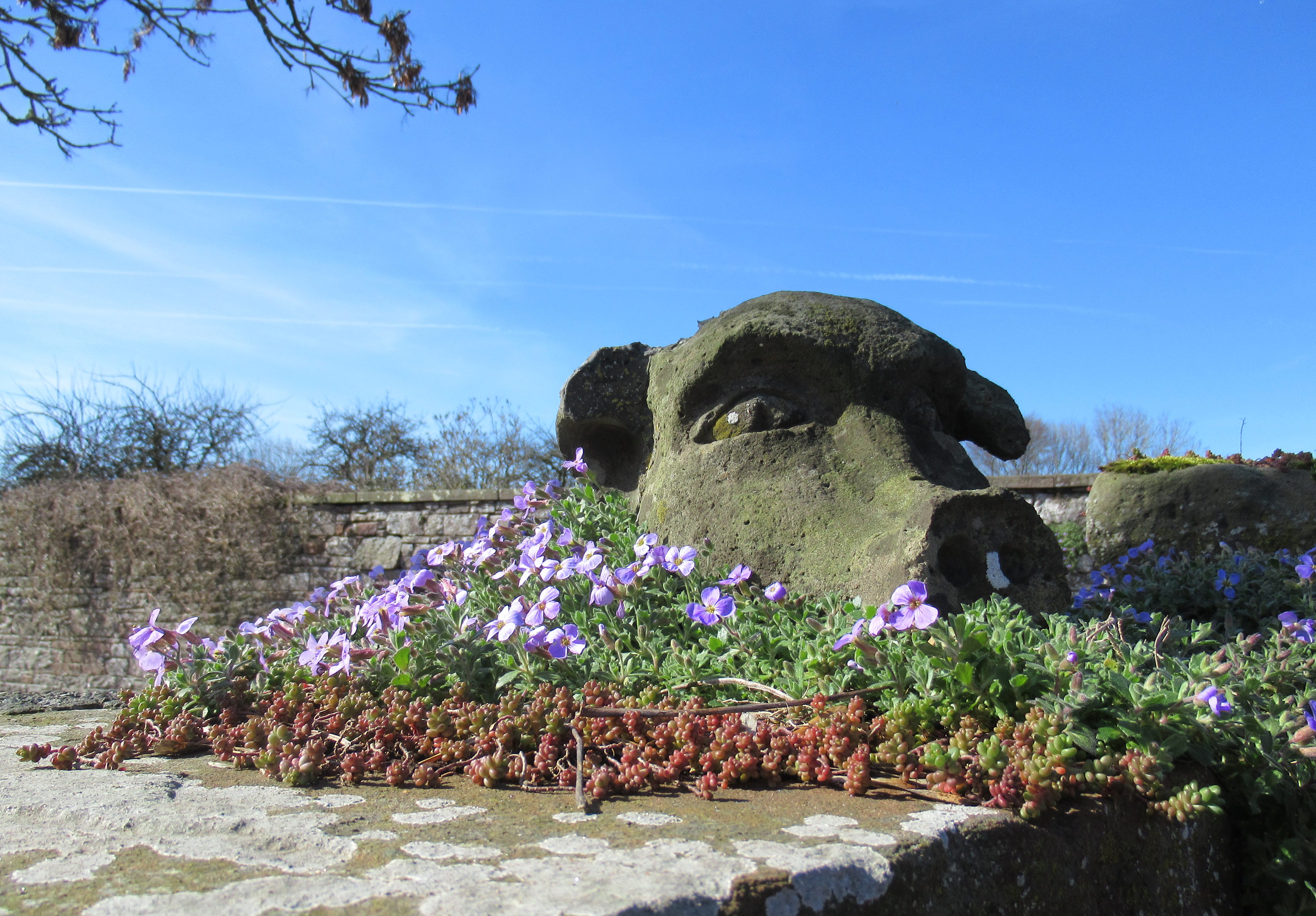
Why? I don’t know. Just had to include it

Next an old church across the road.
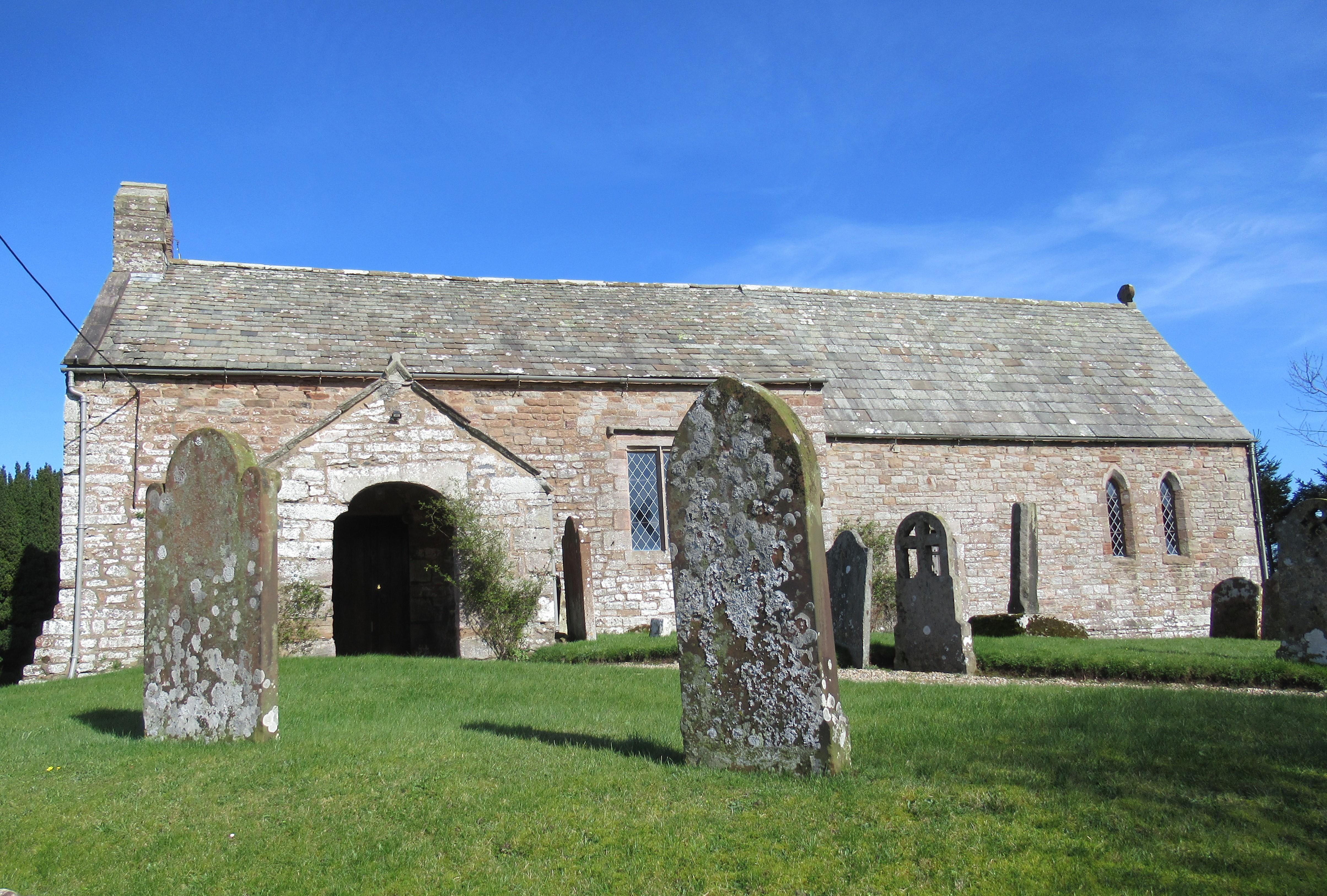
St Cuthbert’s foundation in Clifton dates back to Norman times

With more hill views.
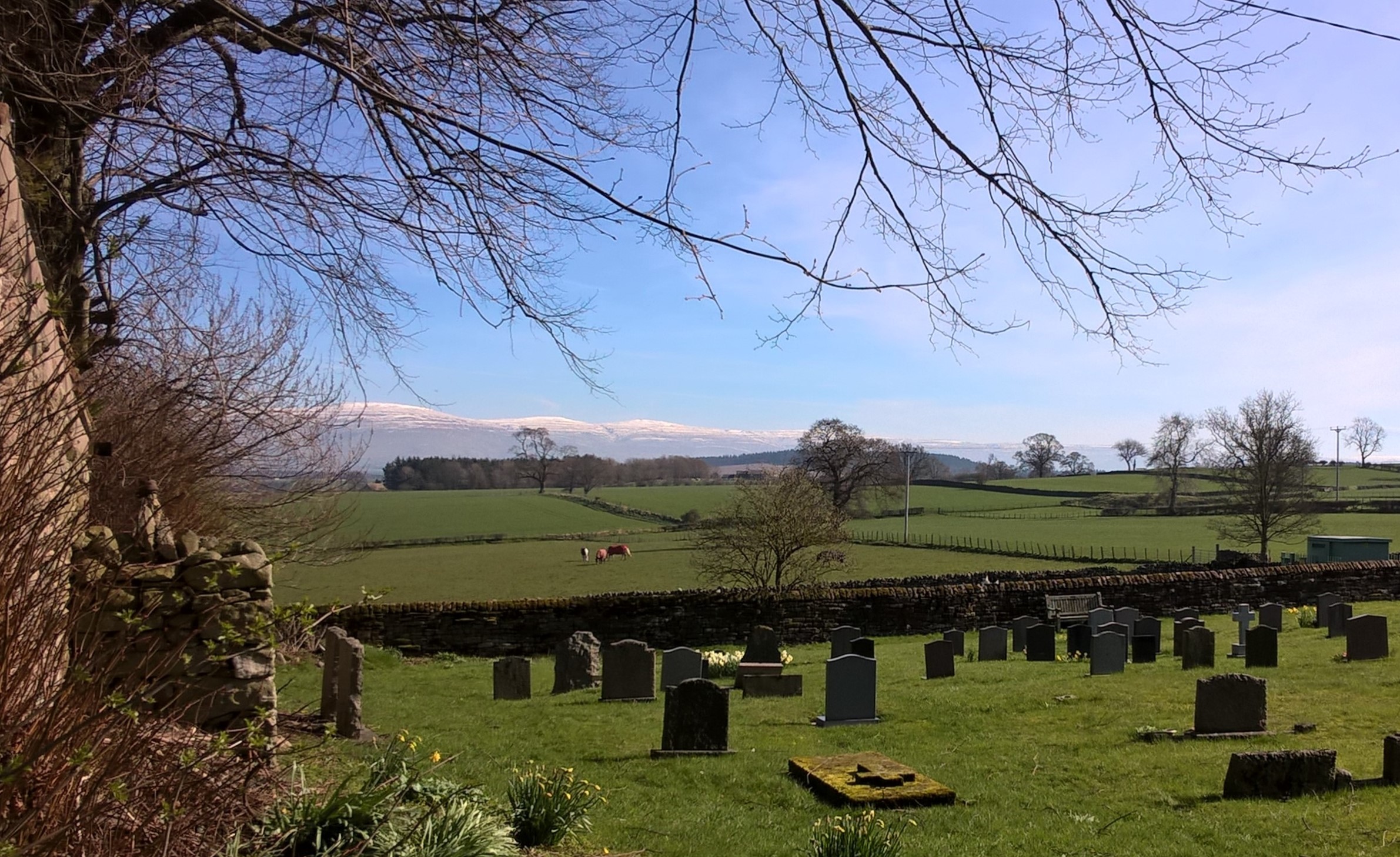
St Cuthbert’s church graveyard

Then back down the road…
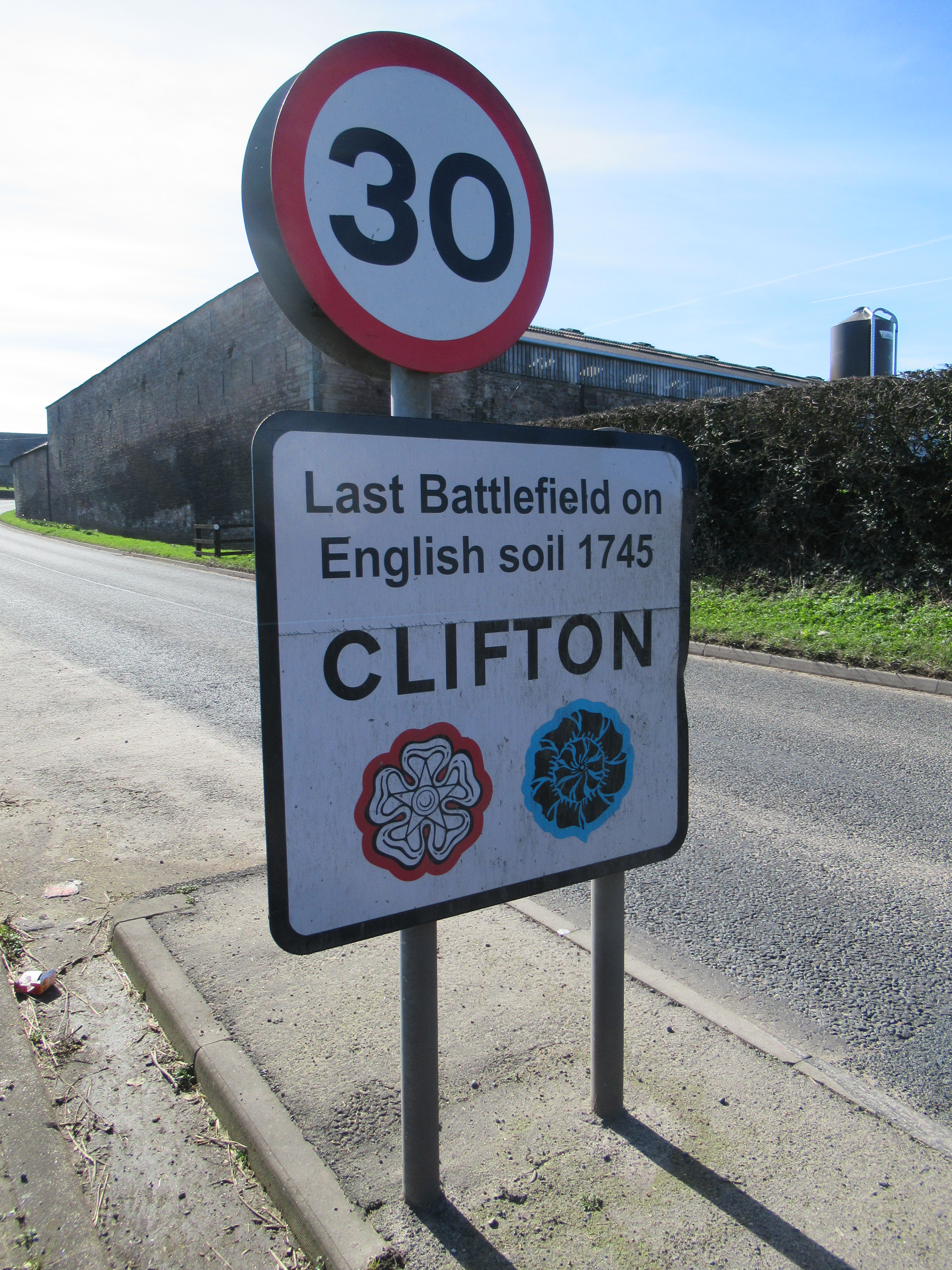
What you might call a historic marker?


… to yesterday’s courtyard suntrap for more tea, history – and megalithic scones.
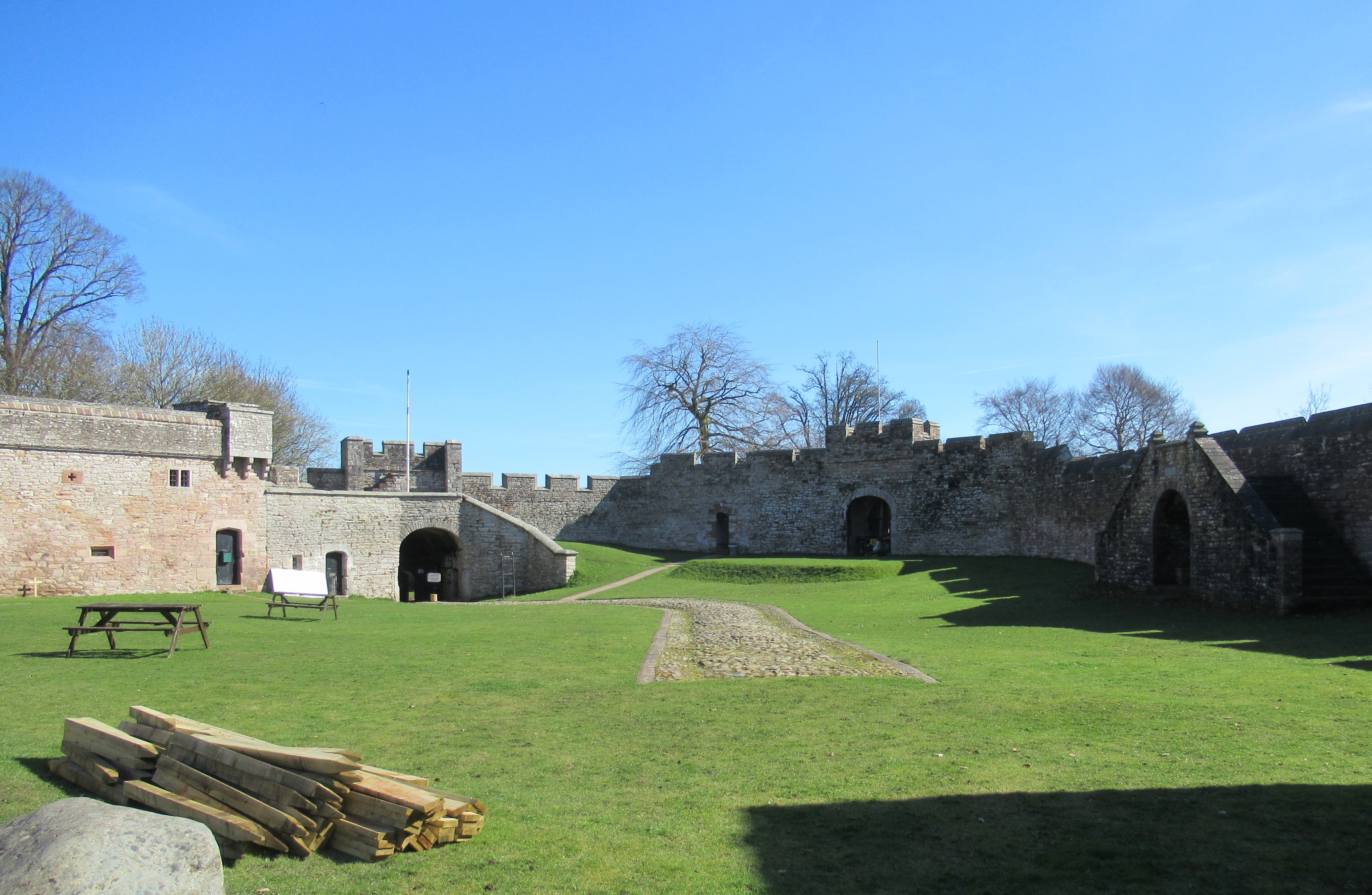
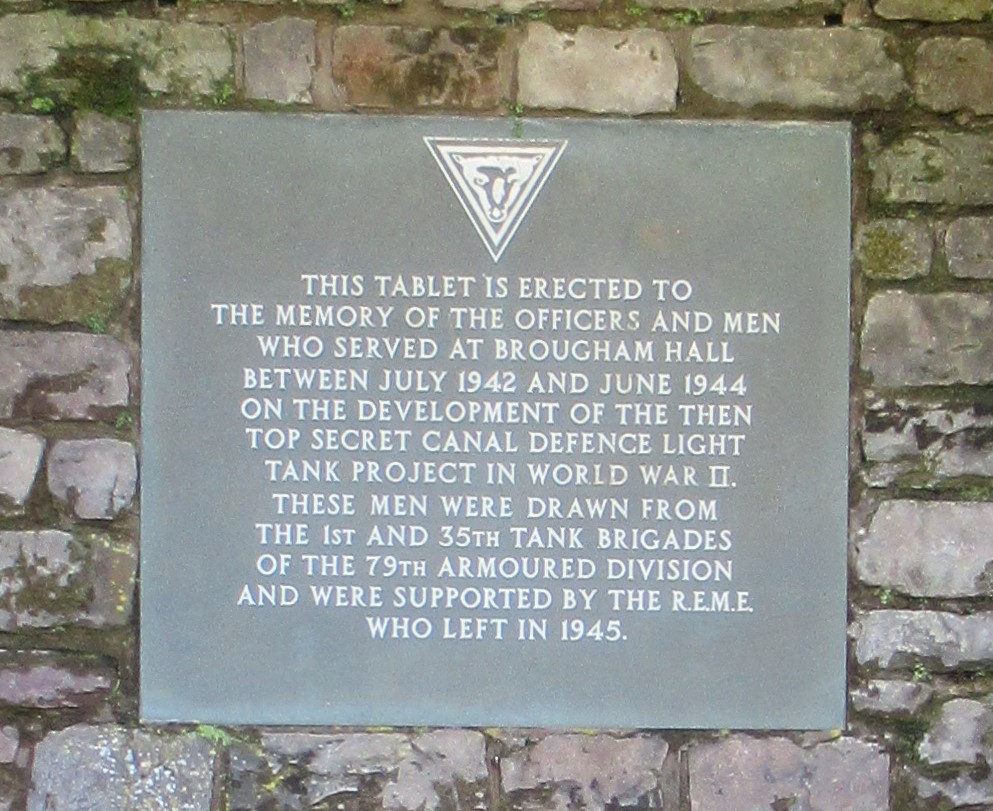
Top secret canal defence!
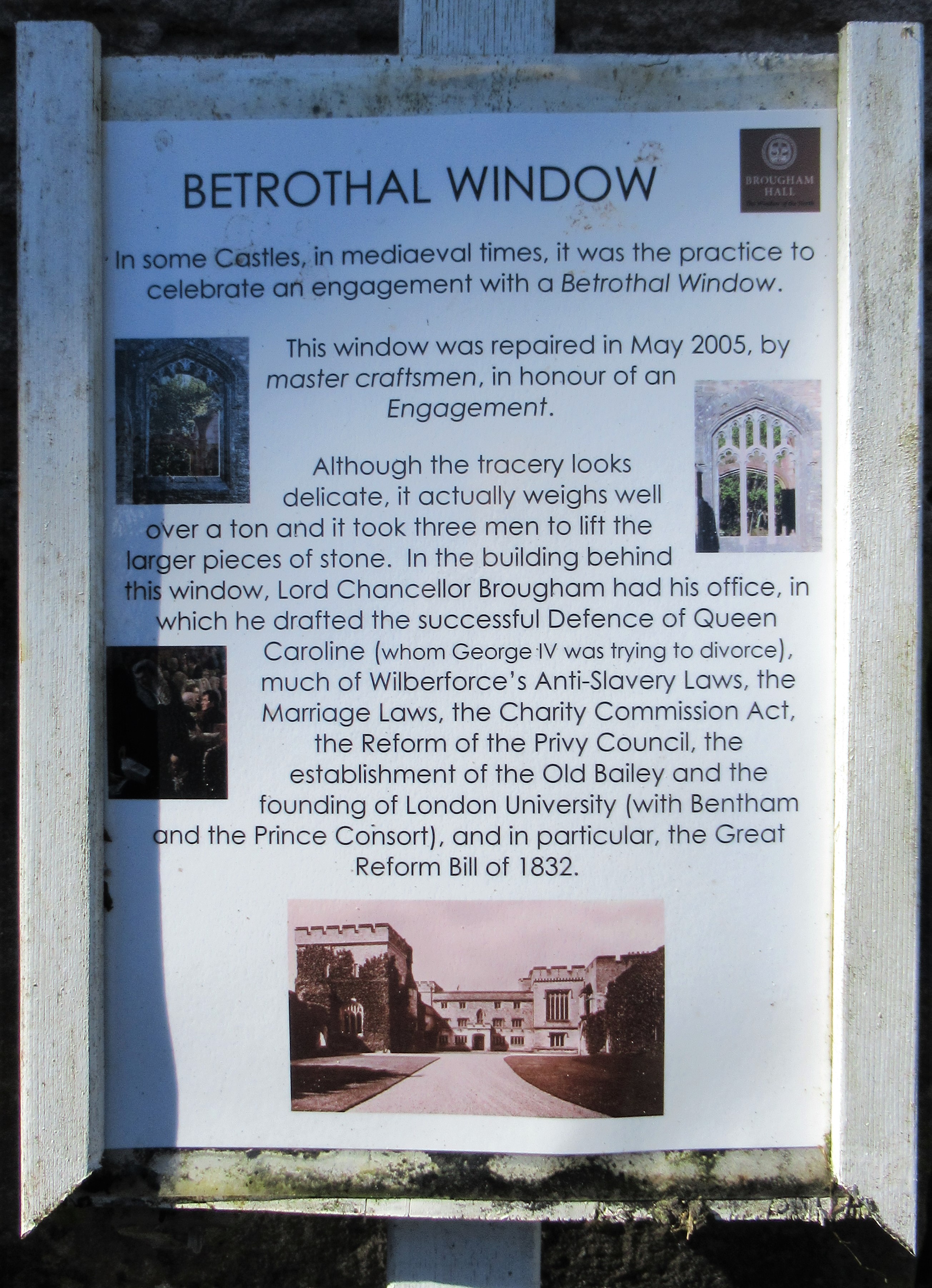
Lord Chancellor Brougham was quite a man

Onwards, fortified by the henge-like scones, to a real castle.

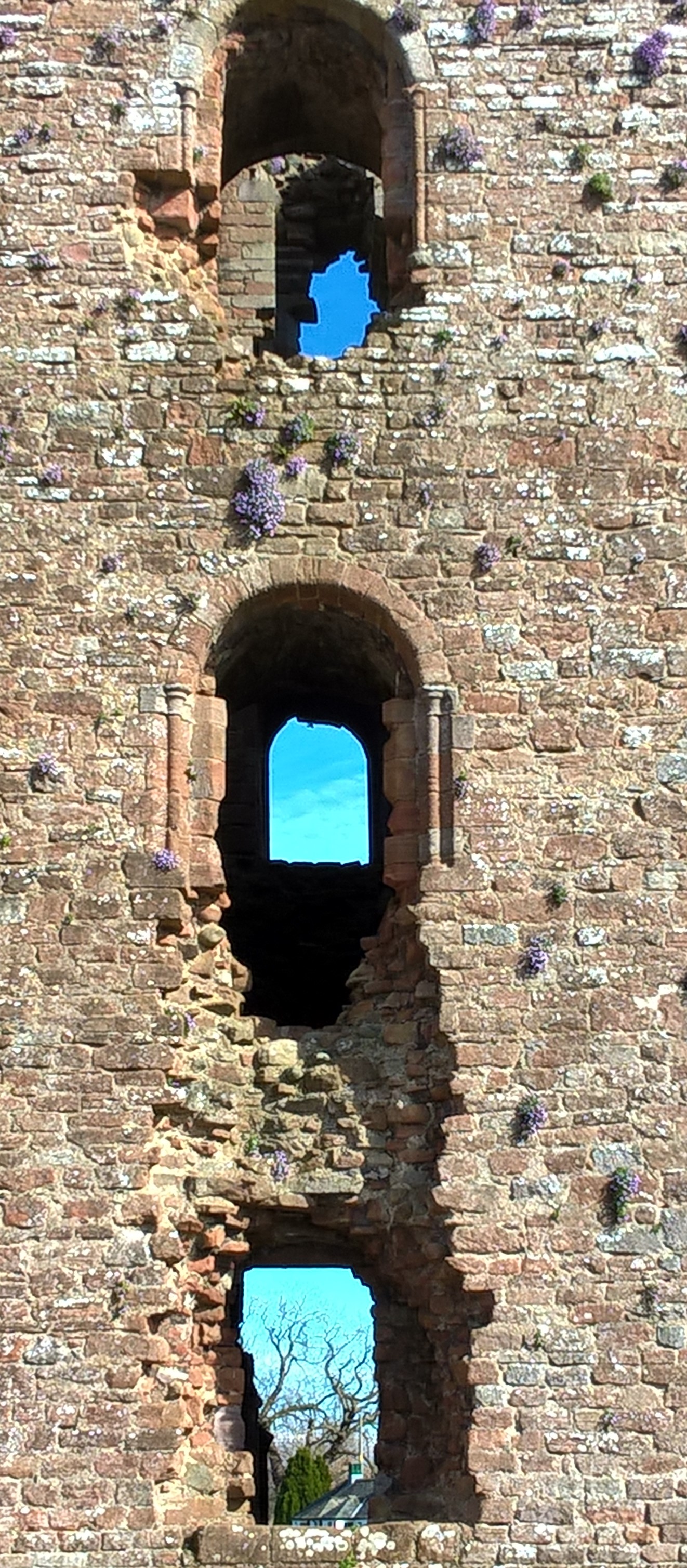
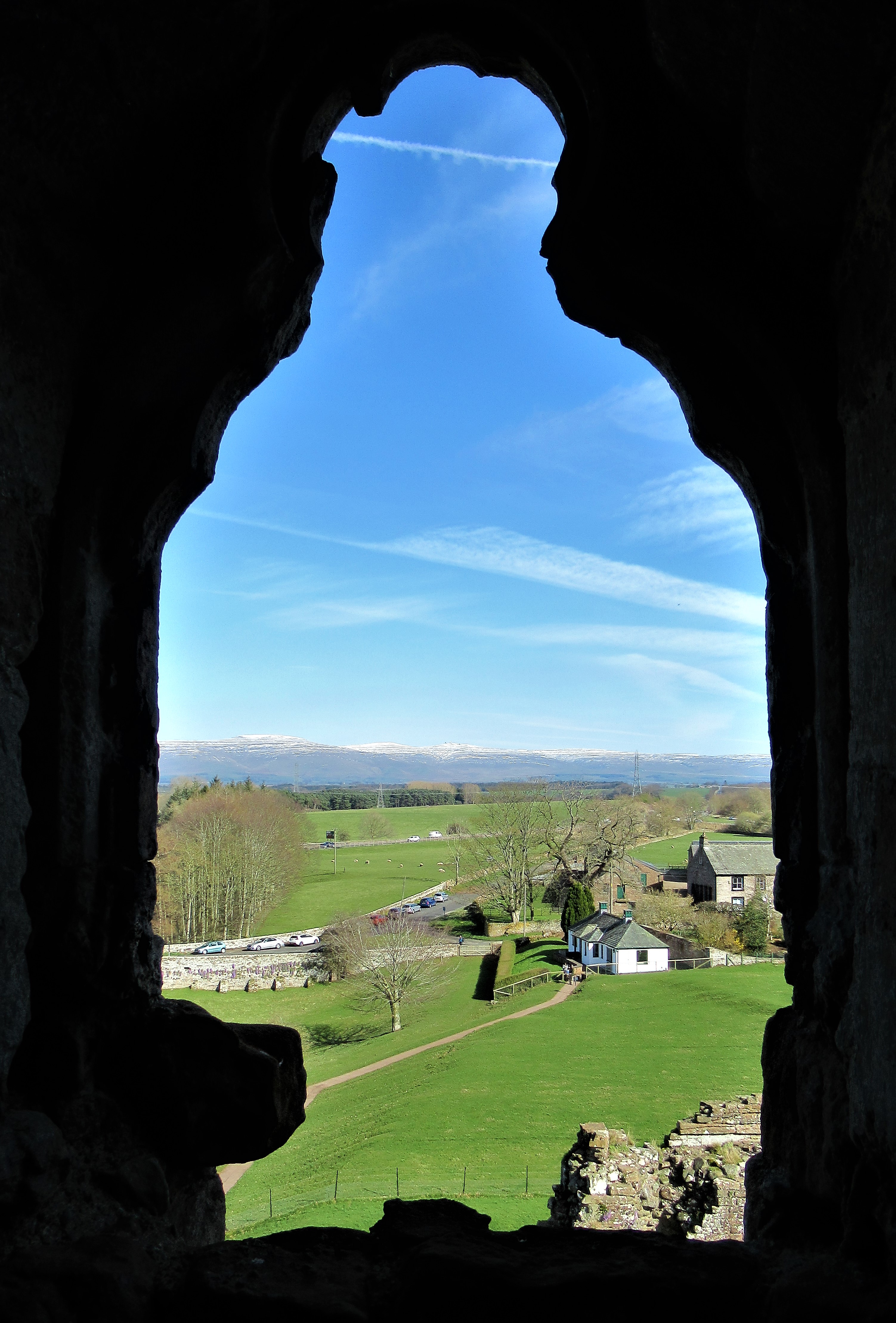
A perambulation round the upper storey obligatory, even to vertiginously challenged me.
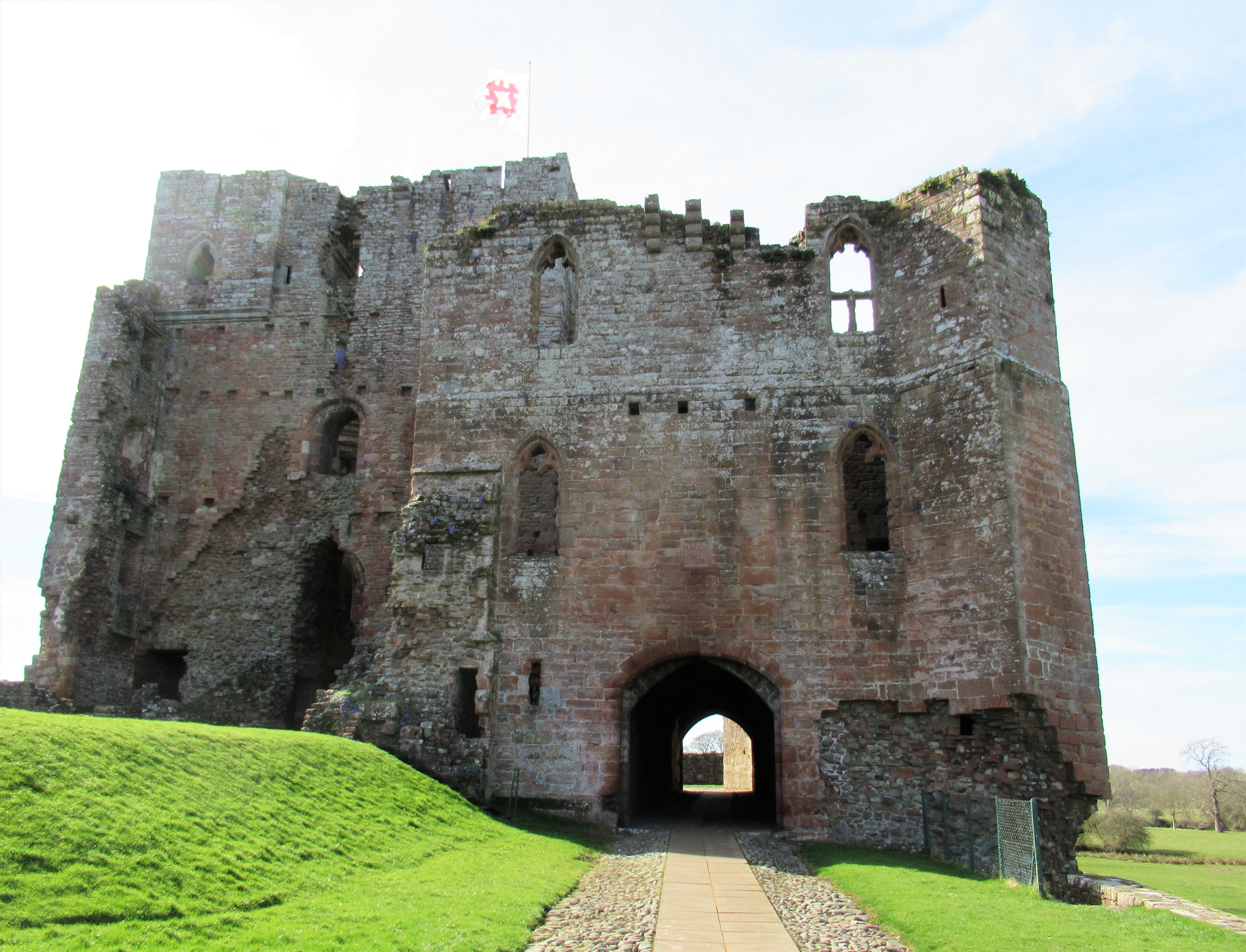
Brougham Castle (link below this post with more information)
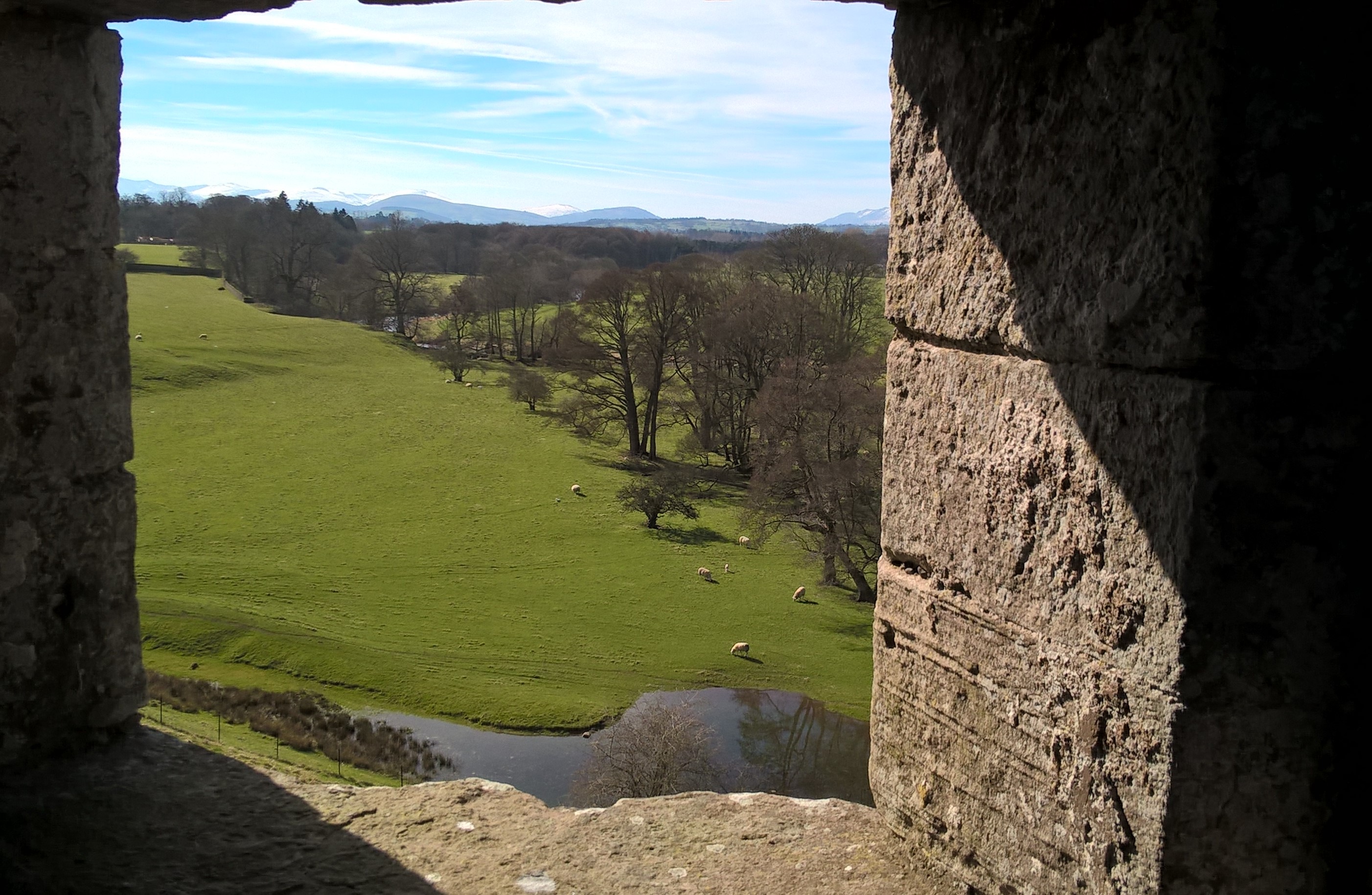
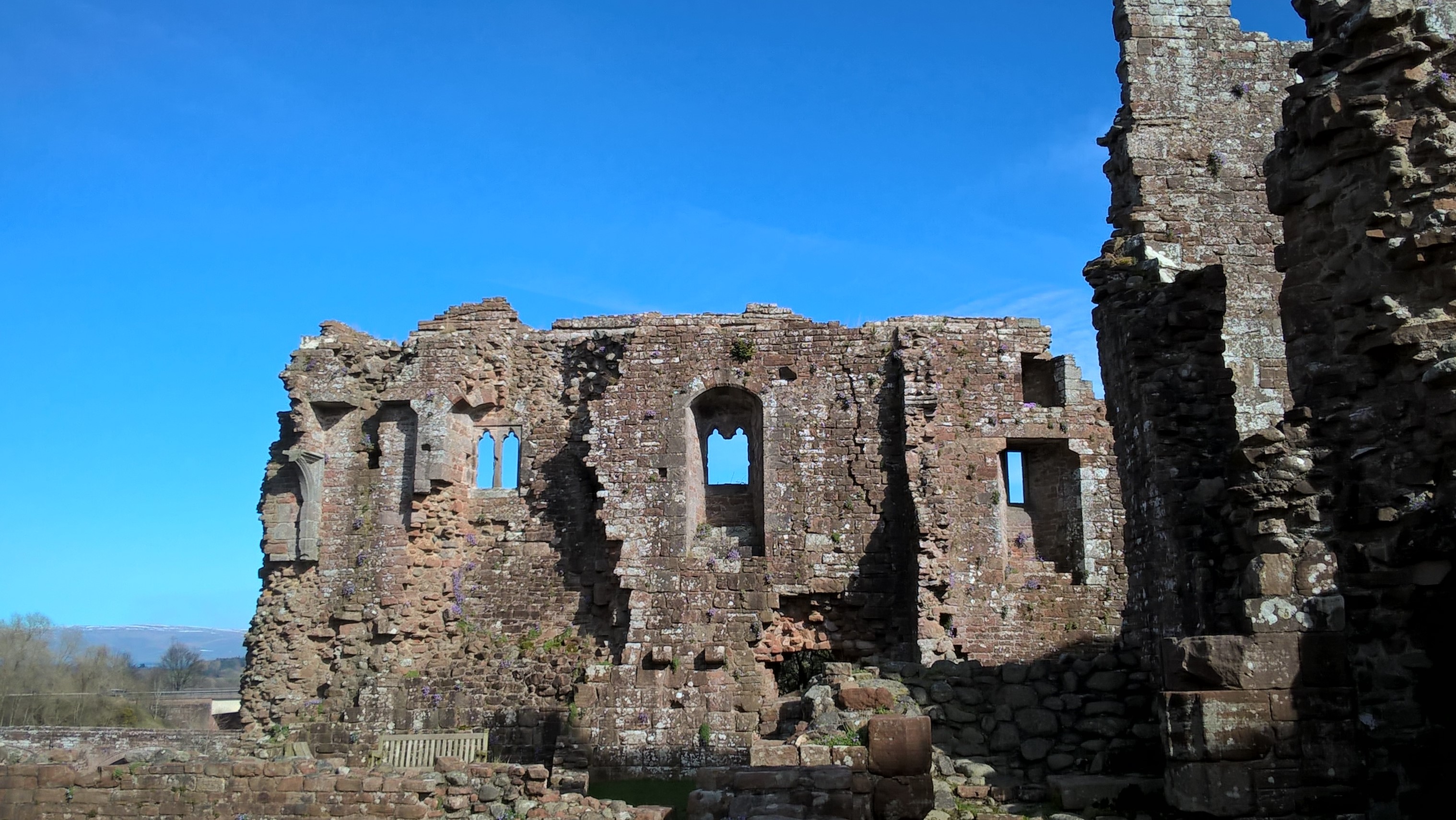


And then.

The treasure Nature had been keeping in reserve.

Finding the little parking area was no mean feat. But we found, we parked. And off we set.

Across the rising field, seeking St Ninian’s church.

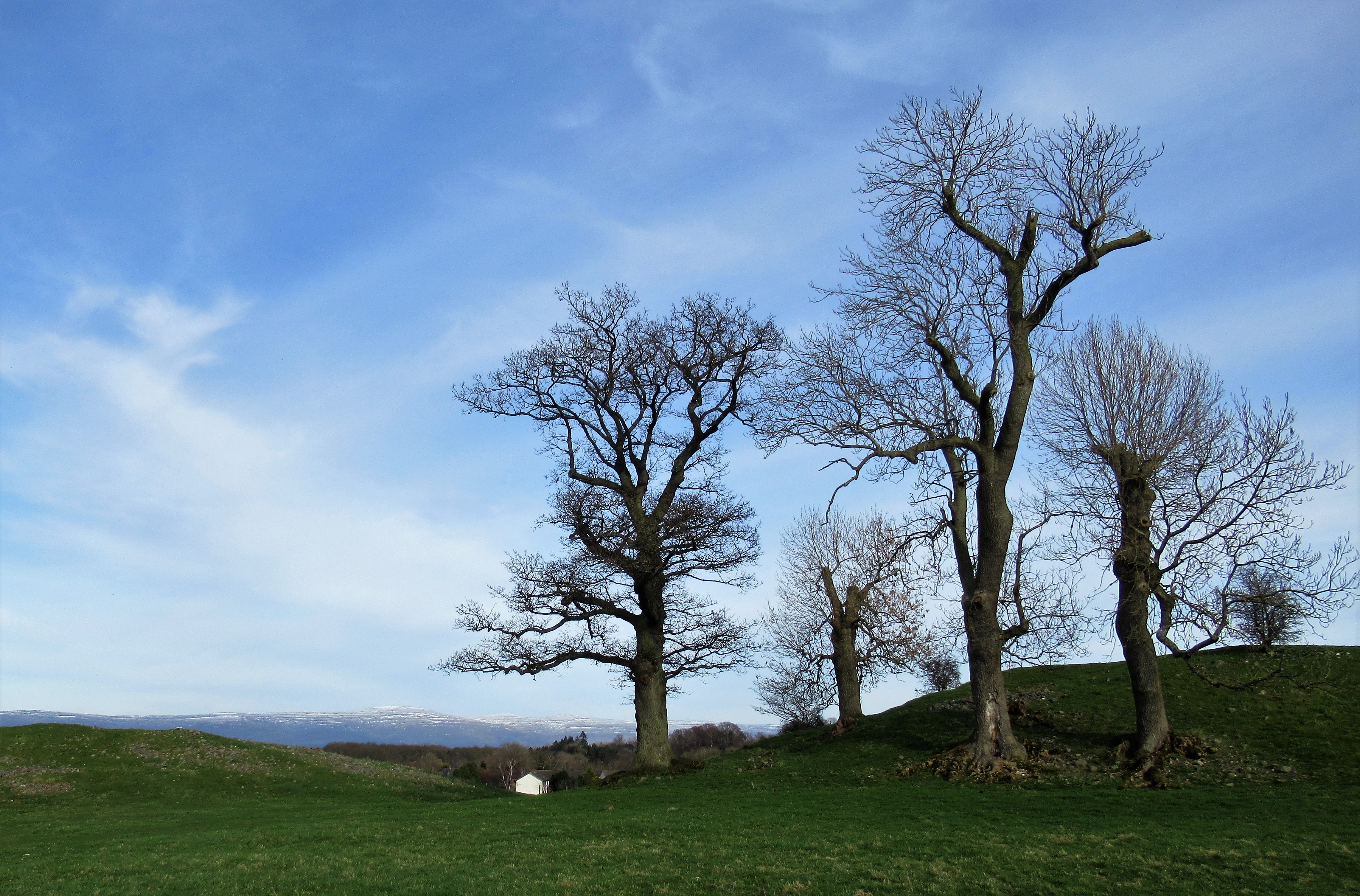
Such trees!

Mighty, almost mystical oaks. Bare, still, of leaves. Living skeletons stretching skywards, feeling spring a-coming-in.
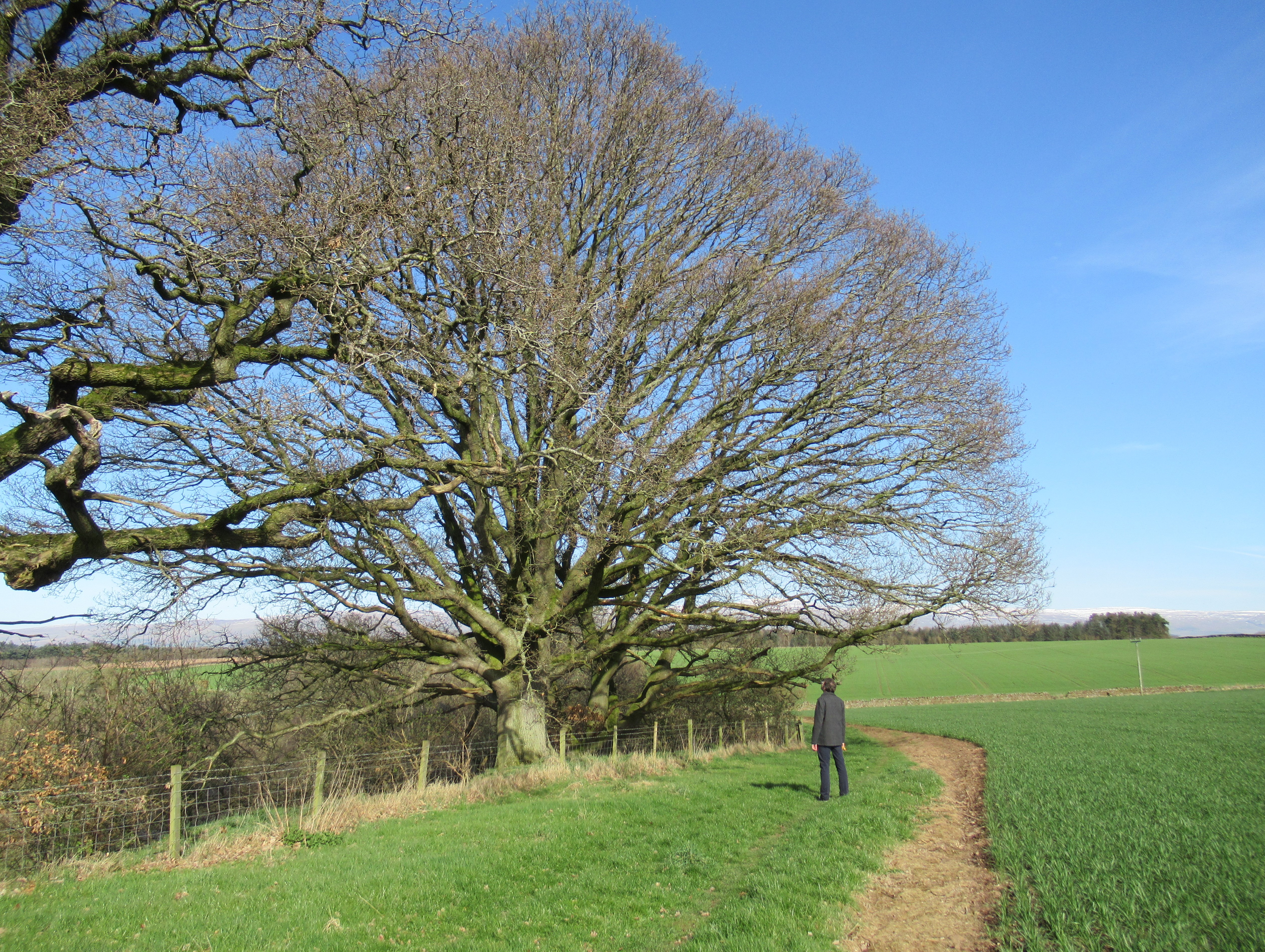
Field after field we tromped.

Past heavily pregnant, waddling sheep.

Two birds of prey, circling the edge of a wood.
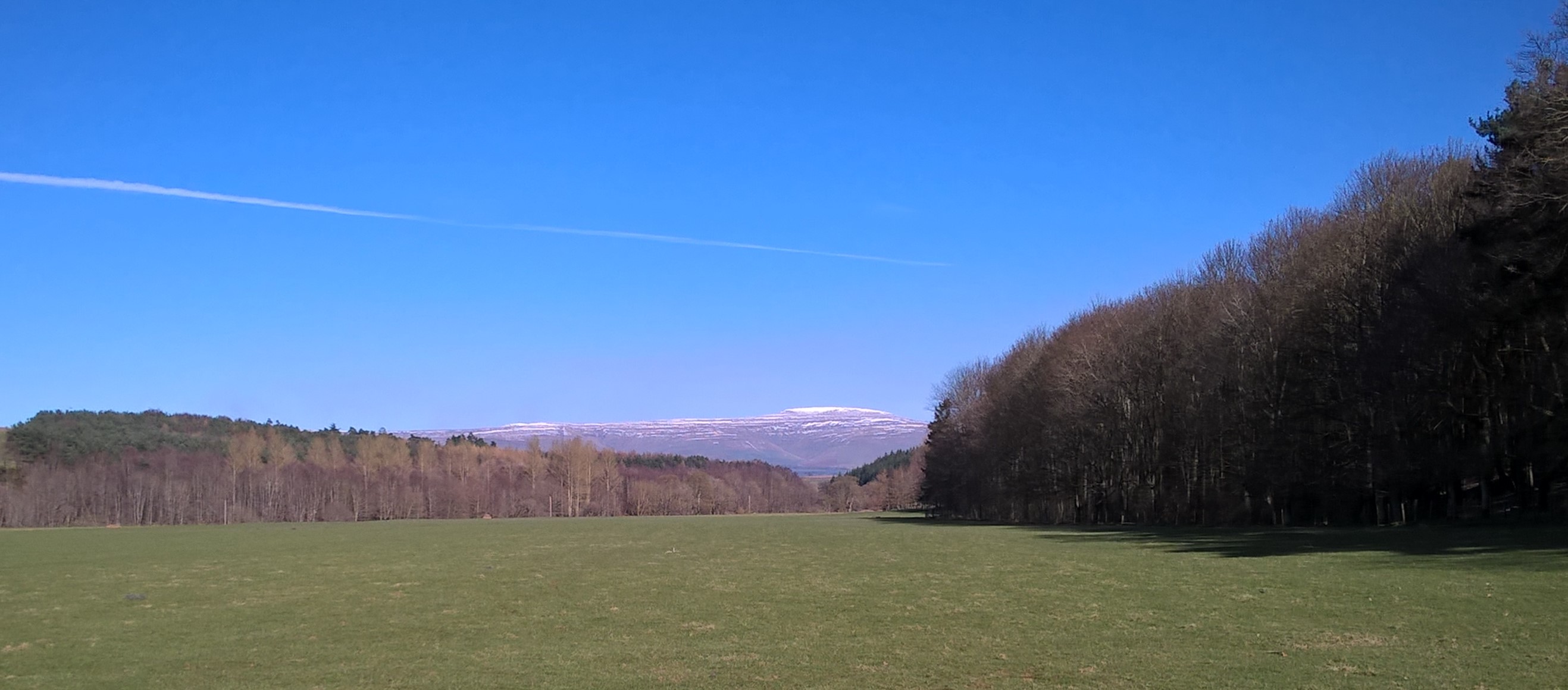
No birds in sight, just jet trails way above

Mud underfoot.

A river, way below. Chortling at the sun, the birds – and us.
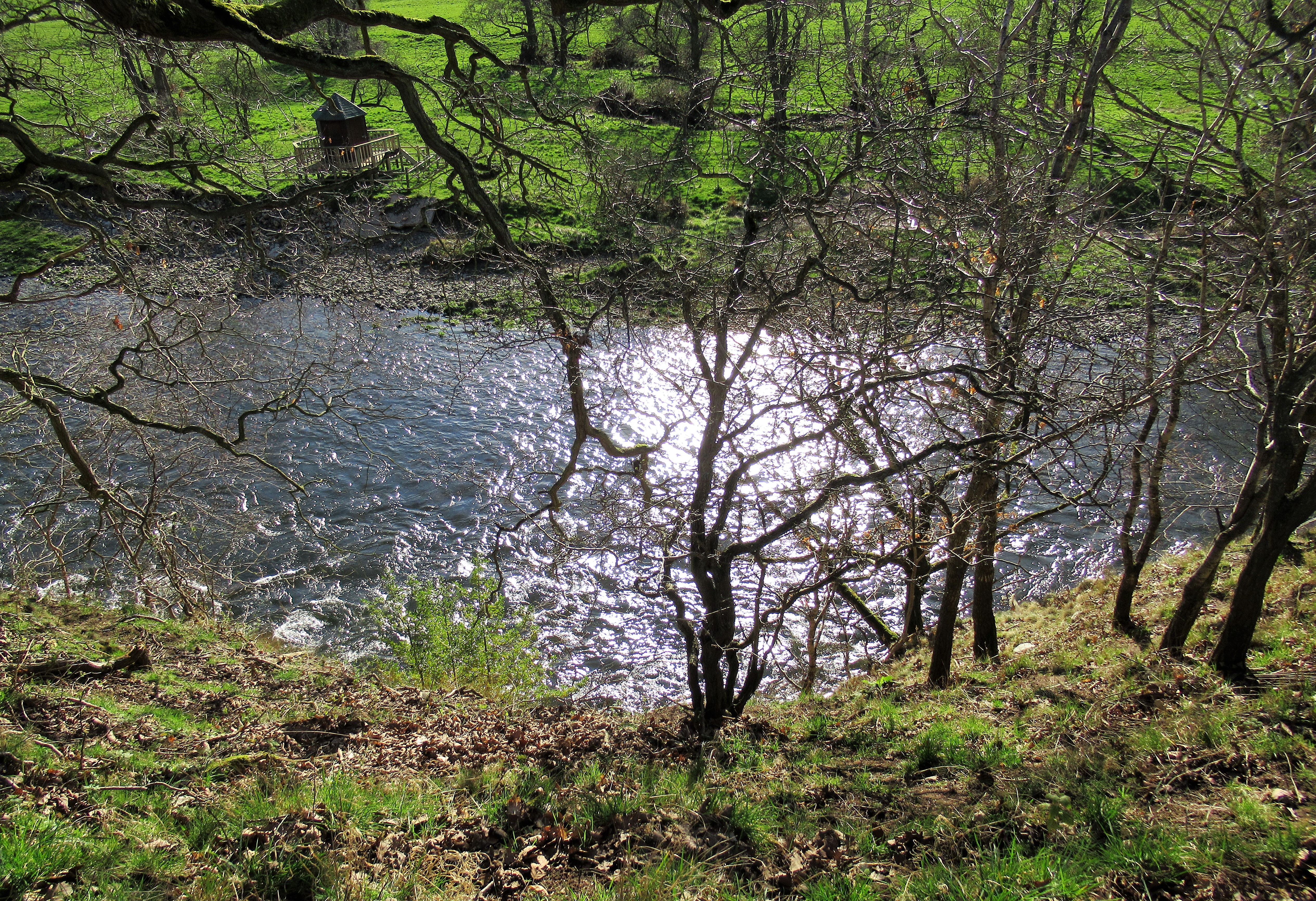
See the summerhouse?

Trees pumping sap leafwards as winter loosened its grip.

And then.

We reached  the church gate.

I, who love to describe, find it hard to relate how overwhelming the feeling was.

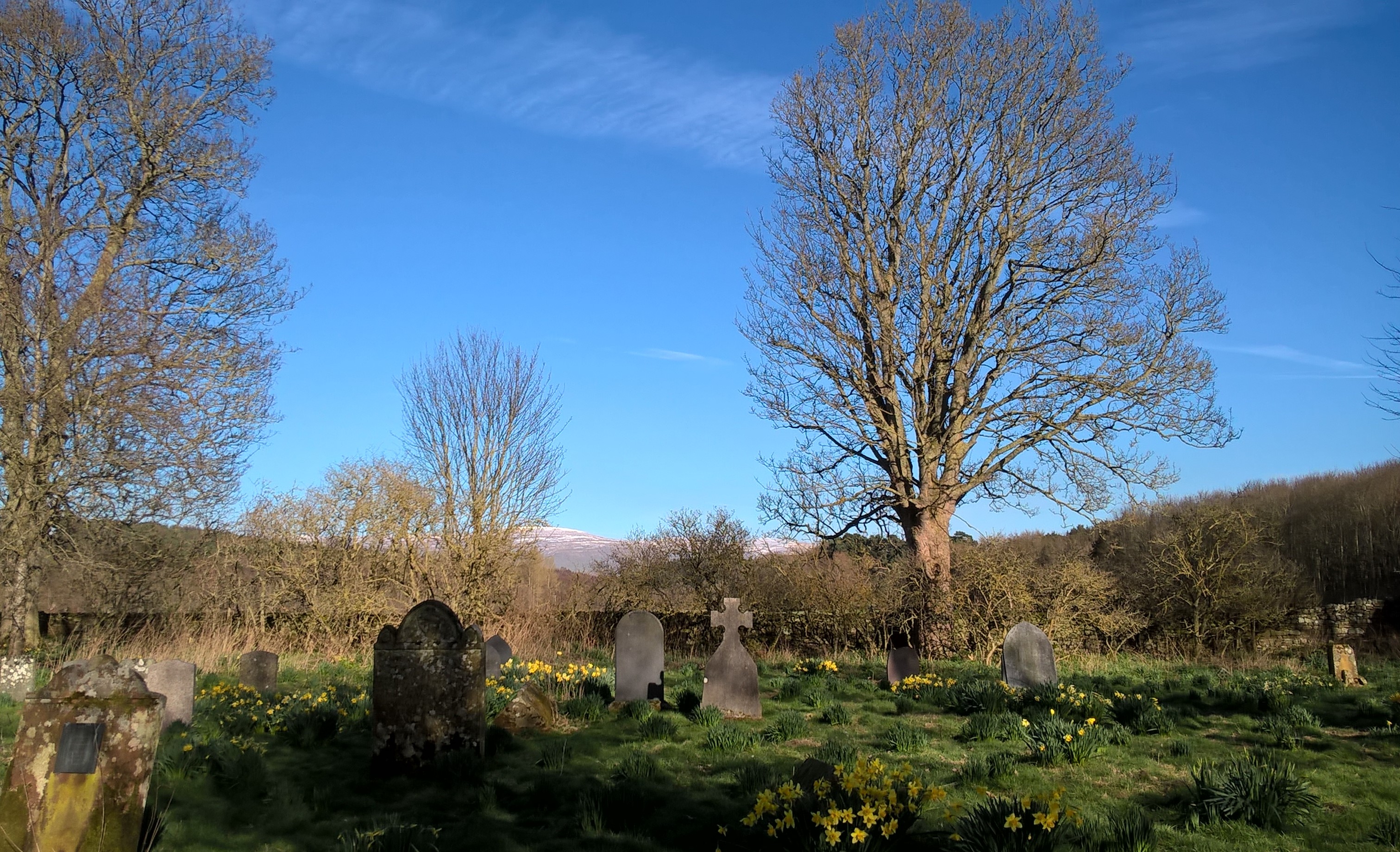
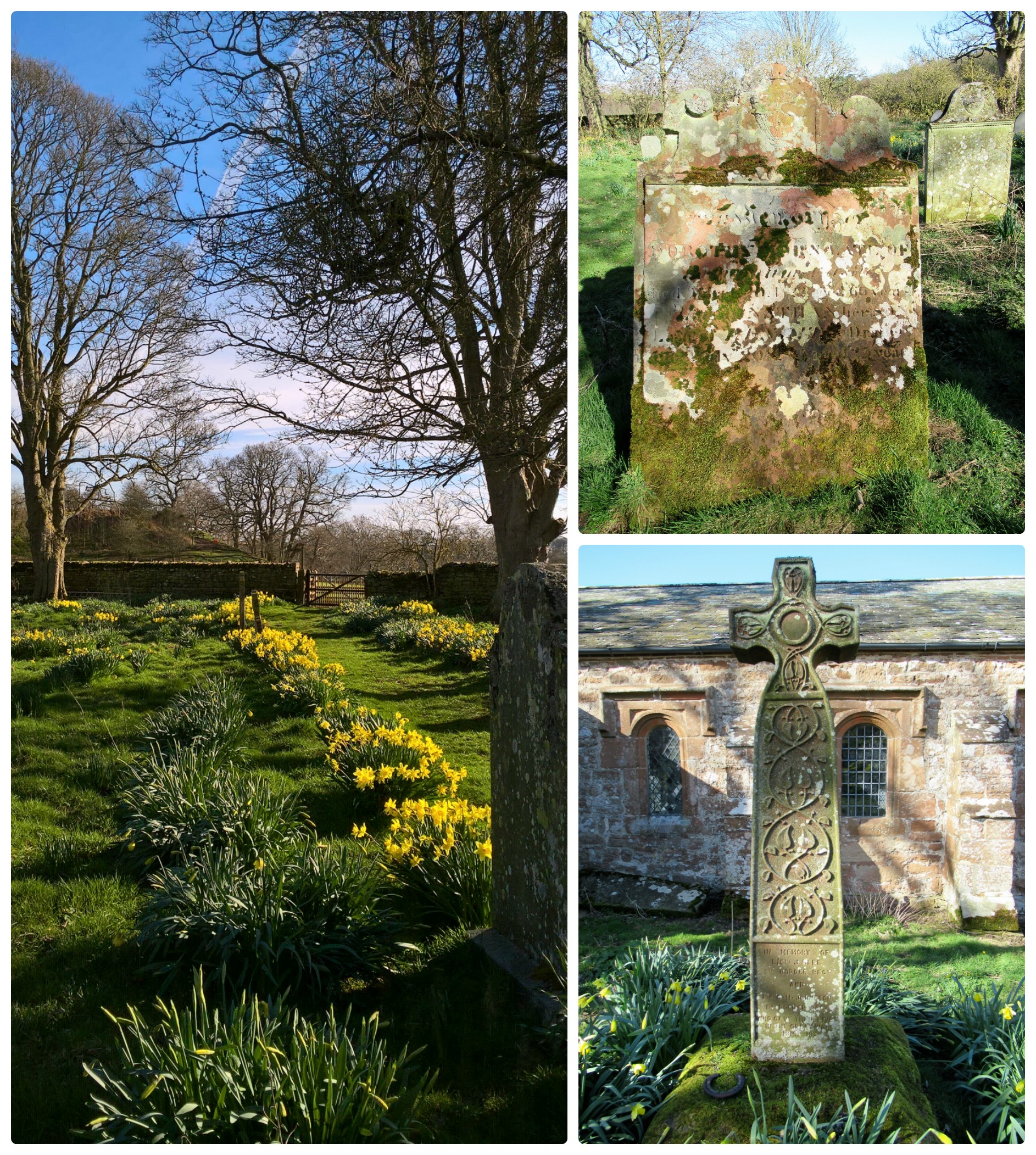
The warm stone, the sun-dazzled yellow daffodils, the whole was like a surge of joyous affection. Yes, I think that’s the only way I can describe it. A wave of sheer, calm, reassuring joy.

Pictures, trust me, don’t do it justice.
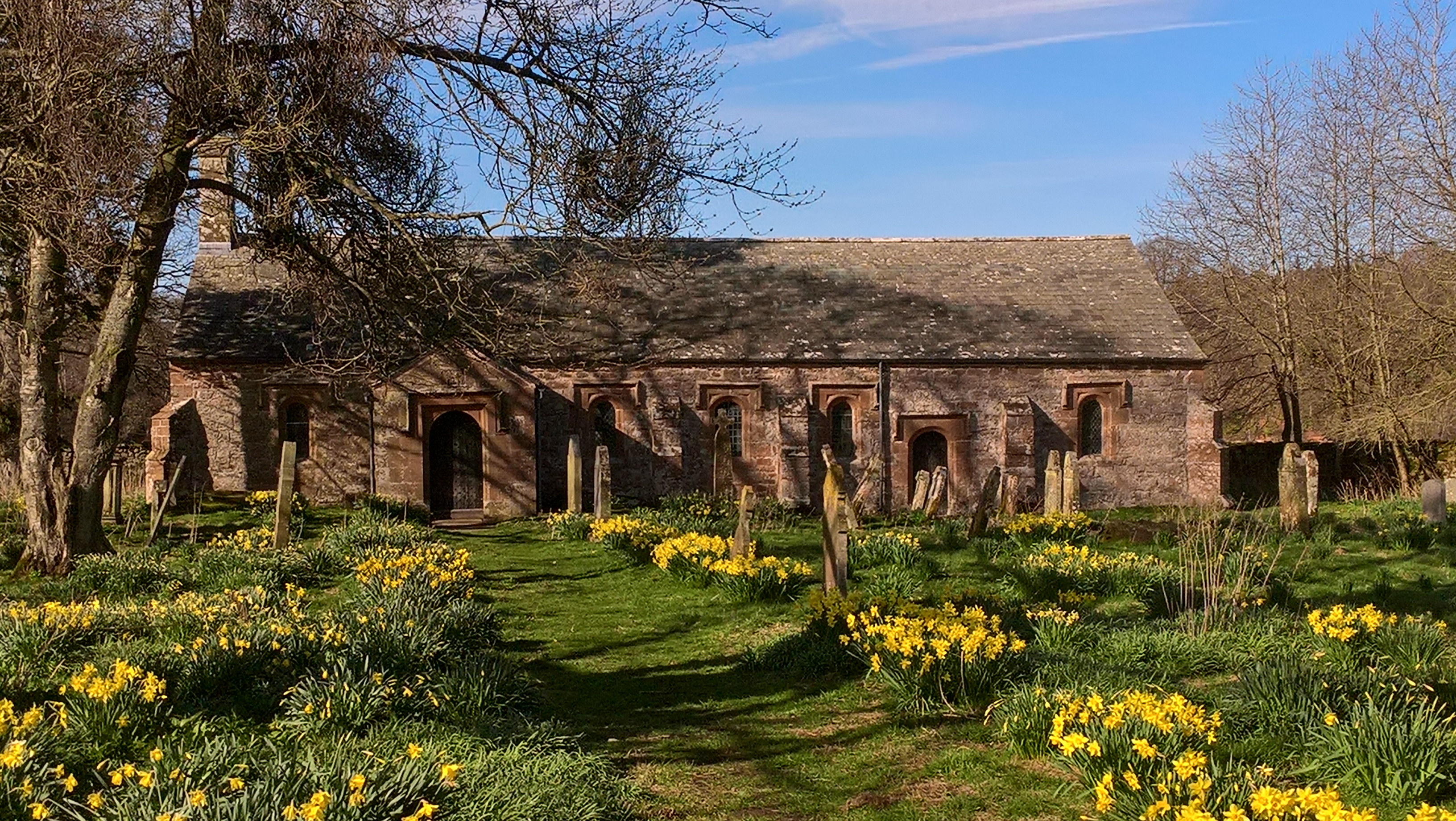
Beautiful, solitary, enigmatic, St Ninian’s is the orphan of a long-deceased village. Hence the tromp across sheep-filled fields, past rushing river and under gracious oaks.
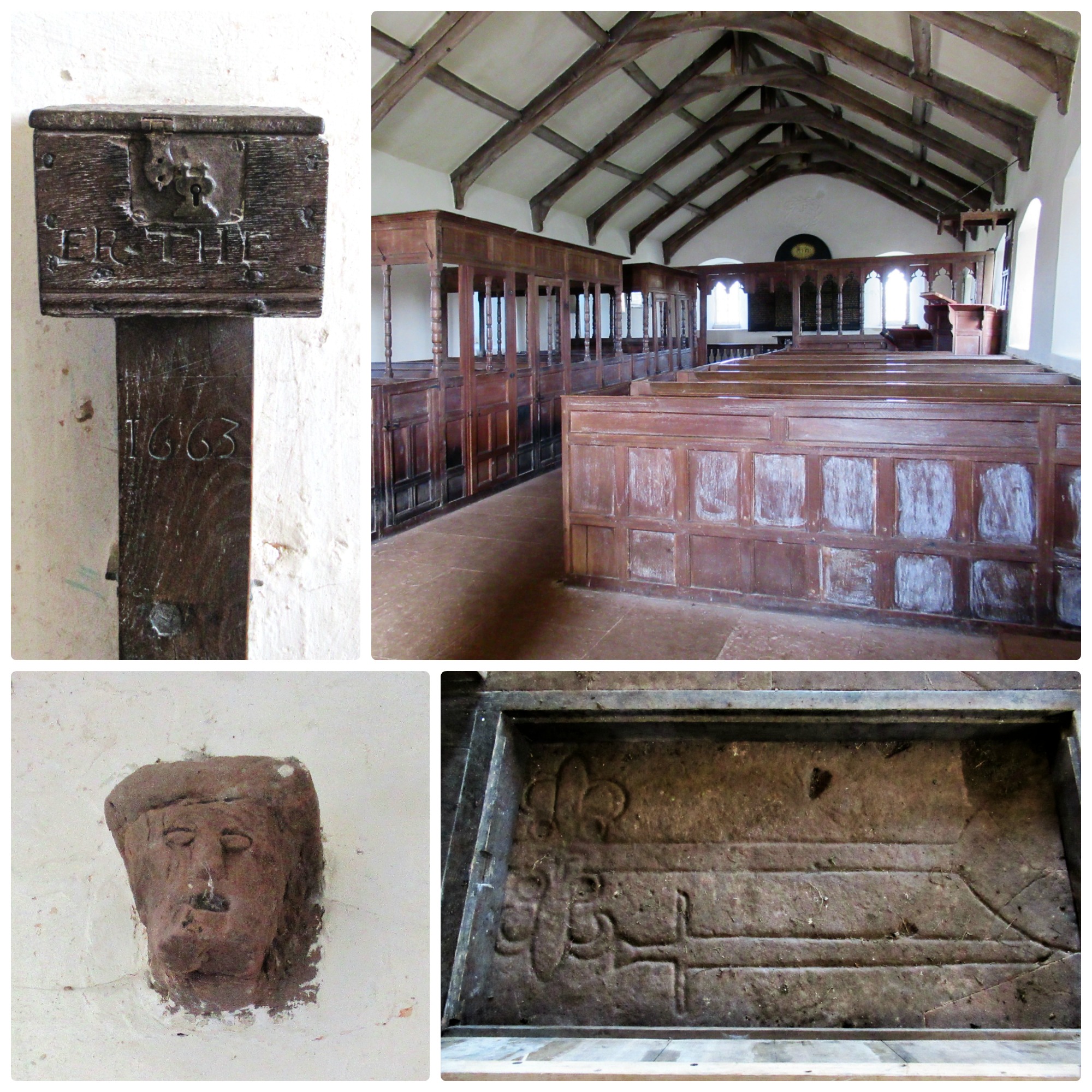
Upper left, the poor box from 1663; upper right tall box pews on the left for ‘the gentry;, lower right a stone memorial hidden beneath a wooden lid near the altar and believed to be to Odard and Gilbert de Burgham and therefore 12th C & part of the original church. And an odd head over the door…

And I thought, as we went into that chilly interior, of another Ninian.

‘Ninian the Nonpareil.’ A hopeless magician in Mageia, the land of prestidigitators. Experts in sleight-of-hand.

And I thought of  ‘The Man who was Magic’. Really magic. Who made Ninian really nonpareil. And unleashed the darkness of jealousy and fear.

The book was by Paul Gallico, of The Snow Goose fame. And it had a profound effect on the young me.

Its message, the power of minds, of words. The value and danger of truth –  in a world of illusions.

And so, after 36 hours that took us from darkness into a wonderful light, we left this other Ninian, a very different, genuine nonpareil, and we went home.

Salved.

Grateful to Mother Nature.

And almost believing in magic.

Links:

Brougham Castle

Brougham Hall

Clifton Hall

King Arthur’s Round Table

Mayburgh Henge

St Ninian’s Church

Posted in Art, jaunts & going out, Britain now & then, Cumbria | Tagged , , , , , , , , , , | 15 Comments

A rather trifling matter

Custard has reared its head again.

I’d planned to write about the colour yellow. While glorious spring was rampant and the British newly friendly on the street. Daring to go out without umbrellas. And smiling at total strangers.

But that will have to wait. I need  to talk about a few things first. Starting with custard.

What do you mean by custard?

To me it’s Bird’s. Made with powder, from a tin. Two rounded tablespoonsful, with one of sugar, mixed to a paste with milk from a pint.

Like cornflour it has that wonderful ‘press it and it’s hard, stir it and it’s soft’, structure.

Ever since I was a child I’ve loved seeing it all turn yellow. And smelling the sweet scent of of vanilla (I add more).

Mmmmm.

Boiling milk (the rest of the pint) makes it unctuous and thick.

But custard purists only like the ‘real’ thing. Eggs and milk – or cream in these extravagant, obesity-rich times – with sugar and vanilla pod, stirred in a Pyrex bowl  over a pan of just-about-simmering water that’s not touching the bowl.

It’s a performance. An art form. A nightmare (depending on your point of view). Making ‘real’ custard.

I’ve never mastered (mistressed?) it.

The stubbornly thin liquid never goes ‘firm’. Even when left in the fridge for hours on end. Unlike the cold Bird’s version, which (bonus) tastes like ice cream as you scoff it out of the jug.

Sneakily. When mum’s not looking.

That great, sensible cook, Delia Smith, has a workable recipe for custard to use in ice cream. She adds …  custard powder, to stop the custard curdling.

So, really, it’s posh Bird’s Custard.

But there I must leave custard.

It was just one ingredient planned for this post. Which really concerns a much more important matter.

Bear with me while I meander towards it, from the Wiltshire/Dorset border …

There, for a while, we lived in the tiniest house in which you could imagine someone 6’4” living. Not me, him. He couldn’t stand up straight in the downstairs rooms – either of them.

The two upstairs rooms were conjoined twins. When guests stayed they had to sleep downstairs on our sofa bed.

The bathroom was beyond the back door in a slapdash lean-to extension. And that was in a small, cute, garden surrounded by a large, fat hedge. Beneath it, a septic tank.

Behind the house and garden were watercress beds and the stone ruins of a house where Thomas Hardy’s mistress lived. Locals said.

It was an odd little place, that village.

Next-door-but-two lived a witch. A nice witch. She saw the colour of our auras. And kept dogs, sensitive mongrel creatures, in a house even smaller than ours.

She had a penchant for strays of all kinds. A man with a long beard (or was he a goblin?), comes to mind. He spent his days leaning out of a thick hedgerow, higher up the hill, frightening strangers passing in their cars.

Either side of us, though, were second homes. One as small as ours and always empty. The other a large, thatched beast.

The thatched beast had stolen most of our back garden at some stage in the past, giving it a long grassy expanse leading down to a gurgling brook.

Two gay men belonged to the thatched beast. Frequent weekend visitors in their glamorous E-type Jag, one was a businessman, the other a lighting designer.

We socialised a lot. Cooked for each other a lot. Pretended (this is us) we weren’t jealous of the garden and the stream.

One day I said I would make a trifle.

‘With real custard?’ asked the businessman.

I said yes, without thinking. Because for me, of course, real custard was Bird’s, made from powder, sugar and milk. As opposed to Ambrosia Devon from a tin.

And that really wasn’t the divergence of opinion I’d anticipated when I mentioned ‘trifle’.

Because ‘trifle’ is no trifling matter, unlike ‘real’ or ‘unreal’ custard.

Trifle. Is. Serious.

If you think the debate over how to pronounce ‘scone’ is fierce (it rhymes with gone, not bone. This is the truth as all real British northerners know it. End of) …

Sorry, back to fierce.

Fierce isn’t in it when it comes to trifle.

The question of ratafia biscuits is neither here nor there. I don’t like them. Can’t stand anything almond flavoured. So, leave them out if I’m coming round, please.

No, the really big issue is much more fundamental than that.

Jelly.

Or no jelly.

Well, I think it’s obvious.

Jelly trifles are simply, I’m sorry [no I’m not], just horrid.

Squelchy sponge.

Grainy texture.

Yuk.

No, real trifle’s utterly simple – and scrumptiously, lusciously, fabulous.

A packet of trifle sponges (or home-made fatless sponge). Sliced and lavishly raspberry jammed. Cut into chunks, heaped in the trifle bowl. (What do you mean you don’t have one? Every home has one.)

Splodges of jam, dotted around. Liberally doused with medium sherry.

Custard – real, unreal or surreal [not sure about that last one, actually] – poured all over and left to ‘firm’ up.

Double cream whipped with a teaspoon of caster sugar slathered on that.

Left to sit for a while in the fridge.

Decorated with one, or any, or many of:

  • toasted blanched almond slivers (not my thing)
  • angelica cut into little leaf shapes (nice) to go with:
    • glace cherries (bleeurgh, not for me)
    • crystallised mimosa balls (quite nice)
    • crystallised rose petals (mmmm)
    • crystallised violets (oh, heaven sent, best ever, end of).

Then devoured as if you haven’t eaten for the last twenty years.

What’s that?

Hundreds and thousands?

Sorry, jelly trifles only need apply. The colours run. Which can, admittedly, be fun.

So, trust me, jelly-free it must be.

No trifling with the real thing, please.

Unless it’s custard 😉


A lovely article from the Black Country* Bugle about the fascinating story of Bird’s Custard (no, really):  http://www.blackcountrybugle.co.uk/story-bird146s-custard/story-20122291-detail/story.html

The Black Country is a hard-to-define area in the English Midlands – another interesting story: The Black Country http://www.birminghammail.co.uk/news/midlands-news/21-things-you-not-know-7418256

Posted in Britain now & then, Simple Food for Simple Folk (like me), Thinking, or ranting, or both | Tagged , , , , , , , , , , | 12 Comments

Trampled. Green. And sparkly

Flick. Skim. Flick. That was me, last Sunday, with the newspaper. Jaded with news, jaded with the world.

Just jaded.

Then an opinion piece caught my eye. About ‘the song of the selfie siren’. And the deaths that result from pursuing the ultimate shot.

Towards the end, author, Eva Wiseman, wrote:

There is a way to prevent more deaths by selfie, except it involves reducing the power of the selfie itself. Part of that is promising to believe that a person once saw a fast coming train, or stood on a very tall cliff, without expecting time-stamped proof. Another part is learning how to tell better stories, without the use of pictures.

Then she added, by way of example:

“The light was the colour of custard,and it reminded me of being six”

Wow.

With that one sentence my confidence toppled.

It was still on the floor, next morning, when the first rejection arrived. And trampled it, while it was down.

Many thanks for getting in touch, but your project is not for us and I wish you all the best elsewhere.

One sentence – just the one – for the thousands I’d gambled in the harsh game of authors’ submissions.

After the hollow feeling had begun to subside (via toast with blackcurrant jam), I took myself off for a trip.

Just a few miles.

First to an old, worn branch of my favourite, family-owned supermarket, Booths.

The velvet slipper of the supermarket world.

There I bought food we didn’t need. And afterwards went for a walk.

A walk to let the light in.

And I thought of Eva’s words. About telling better stories without using pictures.

So I put my phone in my bag, with my camera. And I tromped.

Everywhere I looked, I saw green.

A kissing gate (but no-one to kiss). Its blonde wood pale with the green of late, damp winter.

A path between trees of many types and ages. Their trunks lime-green in the sun.

Over some, ivy ran rampant, with berries black as sin. Its heart-shaped leaves a glossy, dark, blue-green. Like shiny shadows on the neon green of the trunks they were busy smothering.

A hawthorn’s snaggle-jagged branches tipped with pinches of juicy green. Bright frothy leaves, tentatively unfurling.

On the ground, clumps of sharp green daggers waited for bluebells to emerge.

Primroses, milky-yellow on sallow-green leaves, clustered on muddy-green banks.

Above, pretty against a sky-blue sky, frail white blossoms fluttered, shielding tiny dark stamens. The would-be leaves barely pinpricks of green on the twigs and branches holding them aloft.

In the dappled shade of marsh and swampy pond, almost-felled trees lived on. Still rooted, parallel with the dark water, clothed in lush moss. Velvet green, like a dinner jacket for a frog that should be a prince.

Frailer trees, with slender trunks and branches, wriggled over marshy mud. Their limbs, too, dressed in moss. But a fleecy gym-clothes moss, not the royalty-appropriate kind.

And on the damp margins of swamp and pond, tall bright spears thrust upwards, readying themselves for the glamour of soon-to-be irises.

Elsewhere, whip-thin stems of sappy trees rose, straight and vertical, from old stumps coppiced long ago. Ripe for basket making. But not around here, as far as I know.

Another lonely kissing gate, a country lane to cross.

Puddles, where the path sloped down, attracting two wellington-booted toddlers, wielding sticks.

Not stomping and splashing, but beating the puddles like an old, folk ritual of spring.

Well, it was the equinox. So perhaps a natural urge was buried in their genes. Innocent, toddling, carriers of our adult superstitions.

Here and there I passed men walking, women walking.

And dogs tugging. Herding, leading, sniffing. Relishing mud and water, the dirty, smelly patches their humans would rather avoid.

Below the path the reed pond was stagnant, the water scummy surfaced. Like dull raw silk, the colour of chip-shop mushy peas.

The reed maces still stood guard, but their bold brown drums were turning now to fairies – or tinder for survivalist fires.

I reached the end of the path and had to retrace my footsteps.

Ducks quacking – in pairs, because it was spring.

Geese honking. Seagulls squawking and wheeling, somewhere, way up where.

While nearer the ground, red-breasted robins hopped from tree to tree.

Silver-grey, fuzzy-tailed squirrels, fur spiced with a touch of rusty orange, scurried for height at the heavy approach of a human step.

And the sky-scraping poplar, its delicate, almost-white branchery dazzling in the sun, screamed, ‘look at me, I’m different’.

Bright as an omen, in a world that was mostly green.

A verdant, promising, budding, germinating, growing world.

And all this to the accompaniment of piccolos – birds, being birds, in springtime.

One last touch of nature awaited in the car park.

I ran my fingers over moss on the fence. Felt its springiness. And spring-ness.

Up close, it looked like tiny ferns – for elves or pixies or will-o-the-wisps

Back in the car I ate a tuna sandwich.

And on the way home the world darkened.

By the time I reached the coast, the coal-dust sky was striped with fat, crude, yellow brush-strokes.

Rain poured, out at sea. Sneaking, slowly, inland. To descend, of course, upon me.

In an ordinary supermarket, I bought ingredients for dinner, on that green, grey, rejected day.

I also bought sparkly jelly.

And it rained.

Those careless brushstrokes of lemon-icing-yellow – not custardy yellow, note – had found me.

Six. Or maybe seven, years old. With a packet of sparkly jelly.

Can you picture that?

Posted in Art, jaunts & going out, Lancashire & the golf coast, Thinking, or ranting, or both | Tagged , , , , , , , , , | 19 Comments

Democracy Dies in Darkness

Diogenes, it’s said, carried a lamp by day as he walked the streets of Athens. Asked why, he said he was looking for an honest man.

Is this a perennial quest, to remain forever unfulfilled?

Because we simply don’t know who to believe or who to trust?

And thus we trust what we want to trust,  believe who we want to believe?

Well, I’m not happy with that.

The truth isn’t an easy thing to pin down. But lies, it seems are even harder to name.

In my last post I mentioned ‘operative’ and ‘inoperative’ statements. An innovative categorising of accurate and (let’s be kind) inaccurate by Richard Nixon’s press spokesman, Ron Ziegler.

Does that wilful dissimulation remind you of anything?

Alternative facts, perhaps, from Trump team member, Kellyanne Conway?

The new team in the White House has developed a remarkable hallmark style. As spin goes, it’s in a league of its own.

And where does all this creativity with the truth leave us?

We have access to more information than humans have ever had at their fingertips – but truth has become a soap bubble.

Try and grab it – ping! It vanishes.

But it’s plainly nothing new in modern politics. Or even ancient politics. Witness Diogenes.

And, frankly, I realise now that in taking this semi-analytical, semi-historical path, I’ve taken on too much.

Watched too much, read too much, thought too much. Therefore…

I’m going to say a few things, make a few suggestions for further watching and reading, then exit gracefully (if it’s not too late) from this pit I’ve dug for myself.

I hate giving up, but, frankly, none of your lives will be changed by my thoughts on a world-scale conundrum – and I really ought to be writing something else.

So, for what it’s worth, here are the bare-bones thoughts.

There are parallels between Trump and his election campaign and Nixon and his. This has already been pointed out by one or two people who have rather bigger audiences and more research facilities at their disposal than do I.

There are also big differences. Chiefly, Nixon was expected to win, Trump wasn’t. So you could argue Trump’s campaign had more reason to – perhaps – get outside help in stymying the Democrats than did Nixon.

Both men have/had press spokespeople who are extremely inventive with the ‘truth’.

Ziegler, Nixon’s spokesman, was, according to the man himself and also other people, duped.

Perhaps Sean ‘Spicy’ Spicer is likewise being duped?

One of the things that hammered the nail in the Nixon presidency’s coffin was the firing of Special Prosecutor Archibald Cox.

But Nixon thought he, as President, could do anything.

Here’s part of his interview with David Frost:

Frost:

Would you say that there are certain situations …  where the president can decide that it’s in the best interests of the nation, and do something illegal?

Nixon:

Well, when the president does it, that means it is not illegal

There are those who say Trump believes he can do anything. He’s apparently one of them. This is what he said during his campaign:

‘I could stand in the middle of Fifth Avenue and shoot somebody and I wouldn’t lose any voters’

I suppose he didn’t say he wouldn’t be arrested but…

People in Trump’s team seem to keep stumbling over the truth.

Did the new Attorney General Jeff Sessions meet the Russian ambassador? Did he lie? Weasel words abound, but he’s not the first, not the last – and it doesn’t look good.

Here’s what the Guardian newspaper had to say:

Sessions has faced growing pressure from both Republicans and Democrats amid claims that he “lied under oath” after about twice speaking with Sergey Kislyak, the Russian ambassador to the United States, during the presidential campaign, in apparent contradiction to his testimony to Congress.

In the latest (as I write) episode of the Russian did-they-didn’t-they saga, Trump’s man Spicy has said, when asked if there would be a Special Prosecutor appointed to investigate this mess:

‘Special Prosecutor for what?’

There are other examples of Special Prosecutors bringing down Presidents. Could this be Trump’s nemesis waiting in the wings?

Looking back to Nixon once more, the big smoking gun was those tapes. The ones he himself had secretly had made of his conversations in the Oval Office.

And – germane to today’s political climate – the Republicans voted for them to be subpoenaed. They put country, not party, first.

The whole truth, despite the subpoena, will always be missing. Eighteen and a half minutes of the critical tape had been wiped.

But through dogged reporting of the early days of the scandal, a President had been brought to the point he had to resign.

I’m not going to go into ‘defense’ spending increases and the military industrial complex and employment … and where all that might be leading.

It’s time to shut up and reach a conclusion.

Here we go.

Truth.

How do we find it? Well …

The scandal that was Watergate began thanks to the Washington Post.

Last week the Post broke the news that Sessions had met the Russian ambassador.

And here’s a final quote for you, from the Post’s former Executive Editor, Ben Bradlee:

in my experience, the truth does emerge. It takes forever sometimes, but it does emerge. And … any relaxation by the press will be extremely costly to democracy.

There is no perfect source of truth.

And proving a lie can take a lifetime.

But real, reputable newspapers with a long pedigree, which employ real journalists, trained, paid and with instincts honed by dealing with inveterate liars, some of them politicians, have a chance. A better chance than people like me.

Newspapers have their biases. Don’t we all?

But if you know what they are, you can take those into account.

I have paid for subscriptions to two newspapers.

They are not perfect.

But they try.

And the strapline of one of them is the title:

Democracy dies in darkness


Postscript:

bizarre, as I finished this see what the Washington Post reported:

https://www.washingtonpost.com/news/post-politics/wp/2017/03/04/trump-accuses-obama-of-nixonwatergate-plot-to-wire-tap-trump-tower/?utm_term=.2972ea0740c5&wpisrc=nl_most-draw16&wpmm=1


Further watching/reading

All the President’s Men

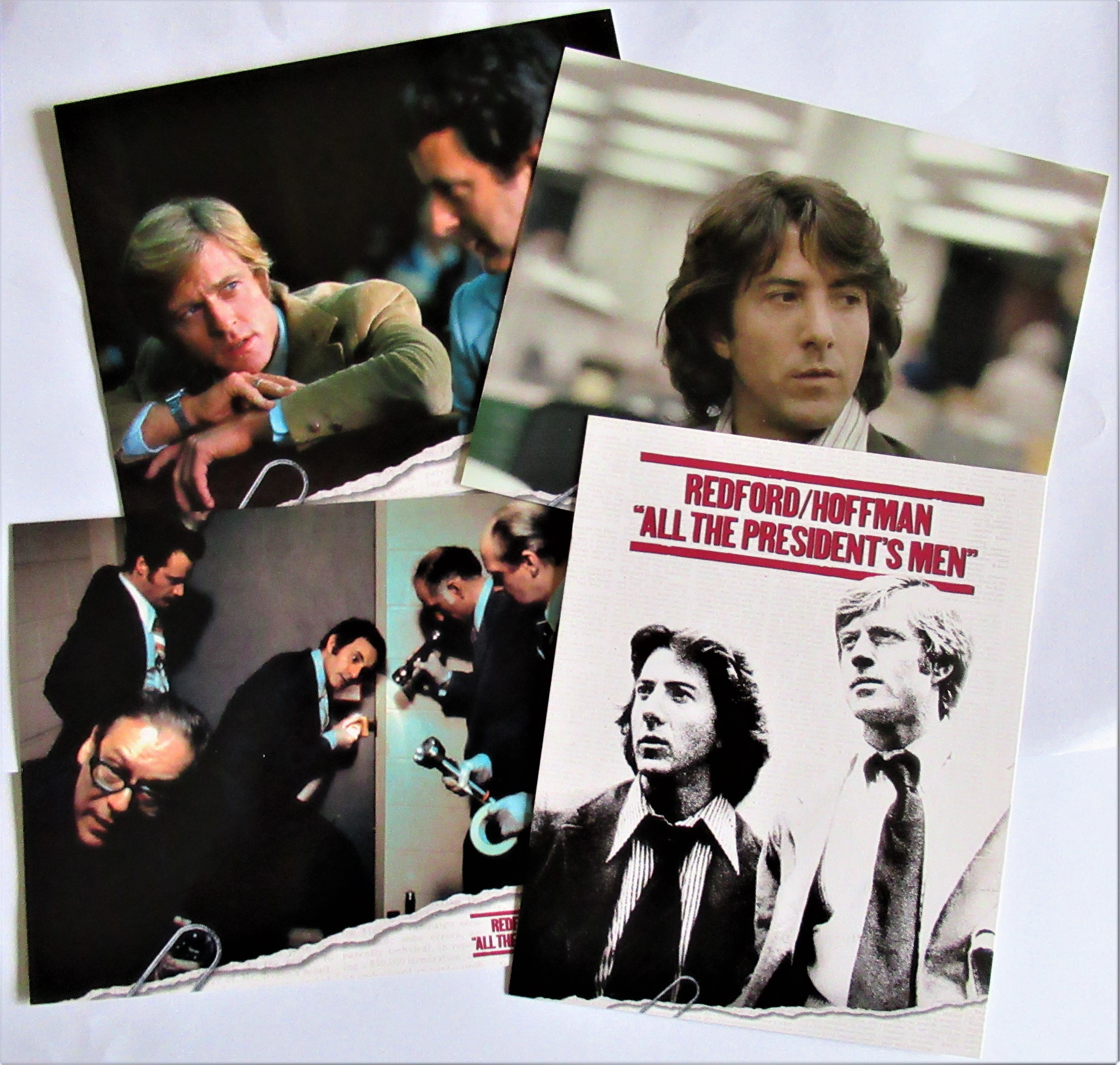
I suggest you order the book (has more detail than the film) from your local bookshop and if you want the film in Britain get it here (blu ray and DVD and collectable cards!) not form Amazon:

http://store.hmv.com/film-tv/blu-ray/all-the-president-s-men-(hmv-exclusive)

All the President’s Men Revisited

The Fog of War

https://vimeo.com/149799416


Posted in Thinking, or ranting, or both | Tagged , , , , , , , , , , | 6 Comments

“What is truth? What IS truth?”

Couldn’t we – shouldn’t we – all be asking that question?

When we’re living in a world in which a big red bus drove Britain out of Europe.

And a new American President claps his hands – because he believes in fairies.

I made that up. The fairies bit.

Sorry.

Getting back to our brave new world. To Trump’s team in the land through the looking glass. The world of fake media, neologisms and – of course – alternative facts.

I’ve been trying to understand why we, the electorate – so lacking in trust in so many ways – are so foolishly trusting in others.

Consider, for example, the ‘Leave’ campaign here in Britain.  Brexiteers charging round the country in a big red bus, emblazoned with the slogan:

“We send the EU £350m a week. Let’s fund the NHS instead.”

Politicians posing beside it as they churn out dubious claims.

From the 'Independent'

From the ‘Independent’

Fast forward.

Just hours after the vote for Brexit is confirmed, on ITV’s Good Morning Britain, Nigel Farage (he of the UK Independence Party) is asked to confirm that £350 million would now go to our NHS.

Farage says:

No I can’t, I would never have made that claim … That was one of the mistakes made by the Leave campaign.

He’s been photographed standing beside the bus. But denies he would have made that claim.

He wasn’t the only one.

Newspapers, TV programmes, academics and ordinary folk on social media had warned it was a lie – but to no avail.

‘The people’ voted.

And the NHS won’t get any more money.

But historically, as political mass-delusions go, this is small beer.

Let’s look at the USA. Step back in time to 1972. To the offices of a newspaper In Washington.

The (incomplete) quote in the title comes from its Executive Editor, Ben Bradlee, who occupied that seat at the Washington Post from 1968 to  1991.

In 1972 Bradlee gave two relatively inexperienced reporters, Bob Woodward and Carl Bernstein (All the President’s Men) enough rope to hang a president’s reputation.

That of Richard M Nixon.

The only US President (so far) ever to resign from office.

The Watergate break-in – a Republican attempt to bug National Democratic Committee offices in Washington DC – happened in that year, an election year.

Nixon was nearing the end of his first term as President, seeking re-election.

And nationally, things were not feeling good.

Carried in protest (Thanks, Thel)

Carried in protest (Thanks, Thel)

The country was embroiled in a disastrous war in Vietnam. A war in which tens of thousands had already died and tens of thousands more were to die.

Americans had begun to realise that their Commanders in Chief – first Lyndon Johnson, now Nixon – were not being wholly honest about the progress of that war.

And by the time voters were at the polling booths, the Washington Post had uncovered more than enough about the administration of Richard Nixon to make anyone think twice about his honesty.

Yet he was re-elected. And by a cracking 60% of the vote.

To a nation in turmoil, epitomised by campus riots, free love, draft dodging and drugs, Nixon’s law and order promise was plainly what people wanted.

Wanted more than integrity and truth.

But things soon began unravelling.

In 1972, the President’s press secretary, Ron Ziegler, had famously called the Watergate break-in ‘a third rate burglary’.

By April 1973 he was telling the media that only his future statements to them about the Watergate scandal would be ‘operative’.

A New York Times journalist, RW Apple, asked him if that meant his previous statements were ‘inoperative’.

He agreed.

Inoperative? Did he mean false? Wrong? Untrue?

Were they lies?

Had the media quoted them, knowing they were lies?

If a newspaper knows someone is lying, why don’t they come out and say so?

Don’t they have a responsibility to be honest?

That particular straw was clutched at by Nixon himself.

Here’s a quote from his famous interview with David Frost in 1977:

… Ben Bradlee, wrote  … as far as his newspaper was concerned: “We don’t print the truth; we print what we know, we print what people tell us and this means that we print lies.”

And here’s Bradlee himself on the subject, speaking in 1997:

Newspapers don’t tell the truth under many different, and occasionally innocent, scenarios. Mostly when they don’t know the truth. Or when they quote someone who does not know the truth.

And more and more, when they quote someone who is spinning the truth, shaping it to some preconceived version of a story that is supposed to be somehow better than the truth, omitting details that could be embarrassing.

And finally, when they quote someone who is flat-out lying. There is a lot of spinning and a lot of lying in our times — in politics, in government, in sports and everywhere. It’s gotten to a point where, if you are like me, you no longer believe the first version of anything.

Great.

So we can’t trust the papers. Even a legendary figure like Bradlee says as much.

Where, then, do we go to find the truth? News that we can trust, devoid of lies?

The answer is, we don’t. But…

There is a least-worst-case scenario.

Believe me, I’ve been working on versions of this post – at least six – for over a week and there’s no way I could fit everything into 1000 words. Especially now ‘Russiagate’ is bubbling 😉

So, yes, there’s more to come.

And it’s really quite optimistic.

'Collectable' cards from DVD package of the film, 'All the President's Men'

‘Collectable’ cards from DVD package of the film, ‘All the President’s Men’

Posted in Thinking, or ranting, or both | Tagged , , , , , , , , , , | 10 Comments

The witch’s cauldron

Hubble bubble. Toil – and so much trouble.

It’s been a while since I penned a post.

Titles sit alphabetically festering in my file. Symbols, waiting to lead into eloquent cries of woe. Painful shrieks of angst. Or even, you never know, stuttering odes to joy.

Too much turmoil, anyway, to stuff into a fewer-than-a-thousand-words-long post.

Which is why I’m resorting to … food.

Don’t we all? Sometimes?  When the going gets tough and the lure of toast, cake, cheese or chocolate – or sausages – becomes overwheming?

Sausages?

That’s right. Sausages.

I’ve been inspired by a silly picture going around Facebook which, yesterday, made me snort out loud.

Shared on Facebook by one James Young (not one of my 'friends')

Shared on Facebook by one James Young (not one of my ‘friends’)

Then, last night, I cooked one of our favourite one-pot meals.

And in my head I was back there: Swaziland.

Yes, no matter how far time removes me from those turbulent times, still, a sausage, takes me back.

And if you’re sniggering, please stop. It’s not a euphemism.

I occasionally think about doing a campfire cookbook. Recipes for those days when you’re stuck in the African bush, remote from anywhere, with limited food, cast iron cauldrons and an open fire.

But the market for that, let’s face it, is likely to be small.

And then there’s the other equipment you’d need.

Okay, so at Kalambo Falls, Zambia, I had none.

No, I lie. I had a kitchen.

Aka, vehicle with tailgate. Great kitchen… not.

Sierra Exif JPEG

Chopping onions on an inverted plastic lid seems a good idea doesn’t it? It’s not, well, not if the lid is convex by nature and becomes concave as you chop … think about it

(And, yes, that diversion was just so I could use this old picture, again)

And before we move on:

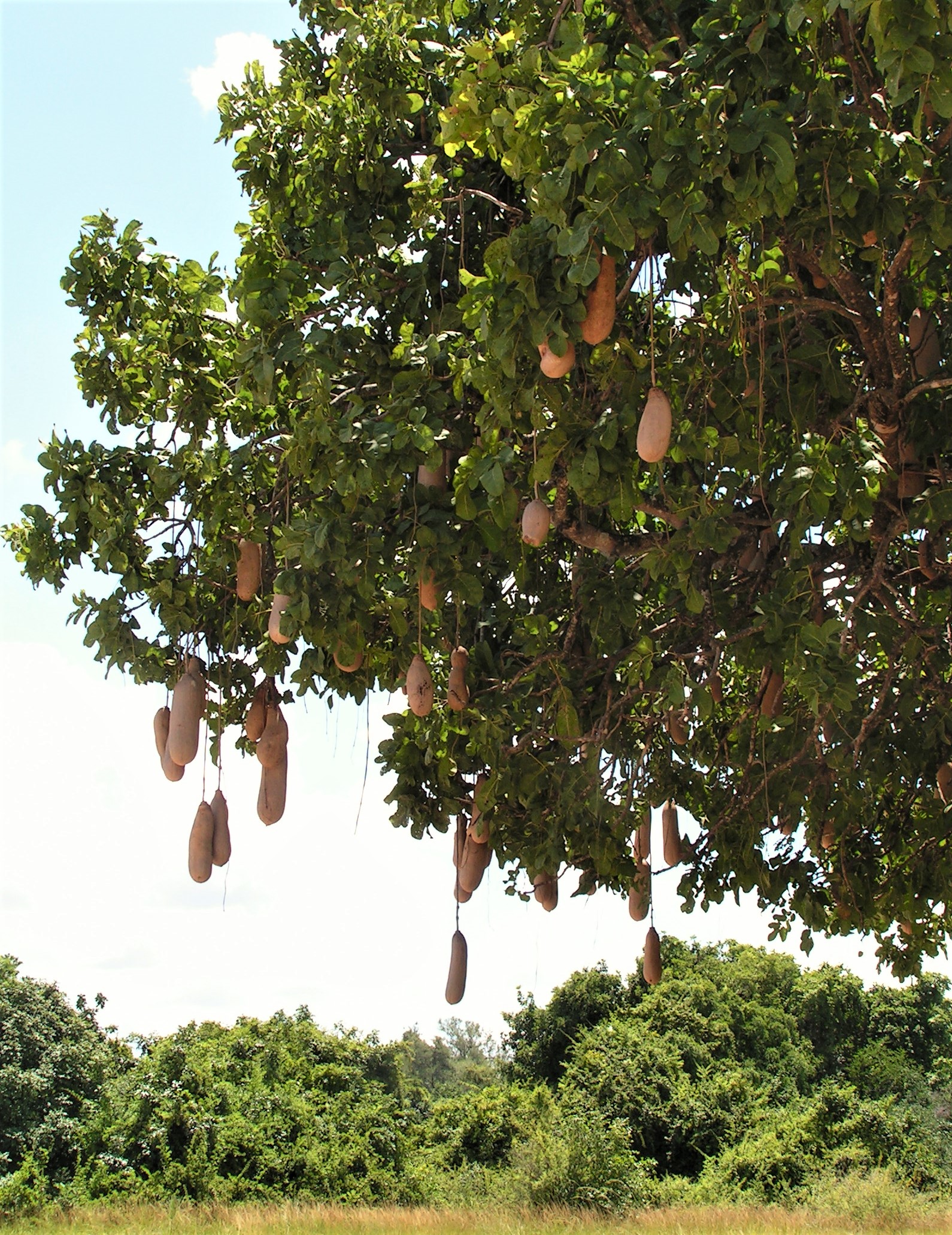
Sausage tree in the Luangwa Valley Zambia at the end of the rainy season

Sausage tree in the Luangwa Valley Zambia at the end of the rainy season

But going back to Swaziland…

It helps if you have caravan to hand with a battery-operated fridge. And if it’s working.

Then, if you have water, you can whip up iced coffee, with Coffee Mate. Which I did.

But that was a once-for-all-time occasion. And, let’s be honest, designed to impress You-Know-Who.

Mostly, I had an old Coca Cola fridge. It didn’t work, except when engineer Al came to stay for two weeks.

Elderly Al from the US of A was a quadruple-bypassed star.

The thing ran on paraffin – which we had – and his magic touch got the temperamental beast going.

Sadly, his magic wasn’t infectious – and soon it was back to being an insect-rodent-baboon-proof metal storage space, perfect for fresh fruit and veg.

Most evenings out in the bush, in our camp at the foot of the Lebombo mountains, under the shooting-star skies, we ate meat.

Day one, fresh meat in the cool box was still safe to eat.

Maybe chicken, as curry with tinned peaches.

Or chunks of culled wildebeest, with potato chunks and tinned waterblommetjes. South African waterblommetjebredie.

Day two and ‘one I made earlier’  would defrost in time for dinner. Impala goulash, or Wildebeest bourguignon. Cooked in a proper kitchen, many bad-road miles -and a lifestyle – away.

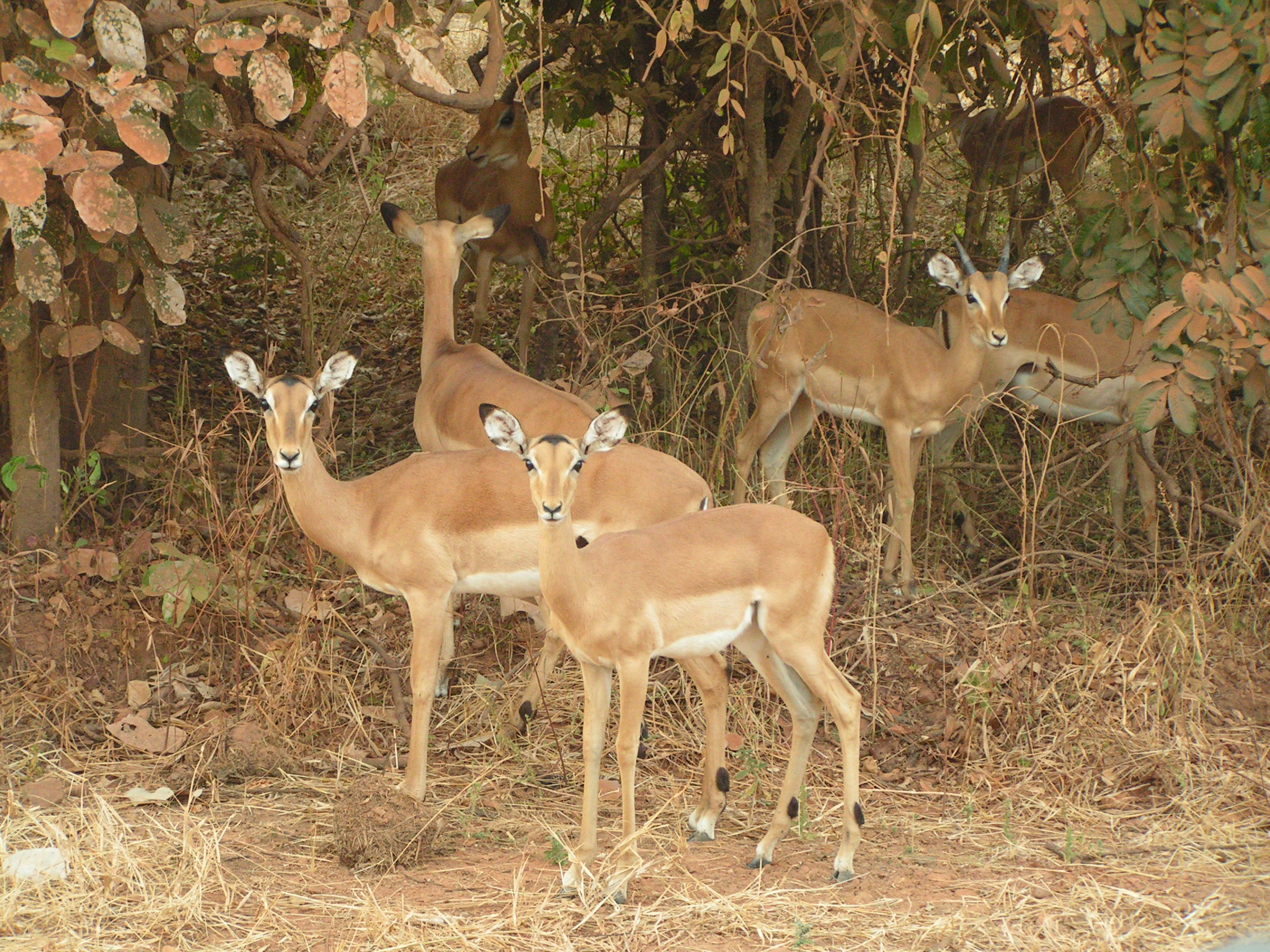
Impala. Far too pretty to eat I know, but they do make a nice roast haunch of...

Impala. Far too pretty to eat I know, but they do make a nice roast haunch of…

More boxes of pre-cooked wild animal concoctions would be stashed in a freezer on the Wildlife Reserve. We’d pick up one on our way homeward from digging.

Each evening, while Dudu, my Swazi helper and I prepared the meal, a certain tall Texan was in charge of snacks.

Tinned sardines on Provita biscuits, with a dash of hot pepper sauce. Or the best guacamole, ever.

Great nets of avocadoes sat waiting to be mashed and mixed with chopped fresh tomatoes from our safe metal store.

Tex and a helper would chop onions finely and create –  yum – a new taste sensation.

Guacamole hadn’t reached England yet, then.

Day three, if we’d brought Russian sausages, might be Cassoulet day.

And that’s the recipe I’m sharing today.

Not Cassoulet as you may know it, but to me, always the best.

(Pssst! there’s quite a nice picture at the end, if you want to skip the food)

Lebombo cassoulet (this version serves four,  if you have 24 hungry diggers to feed,  scale up!)Simple food

Ingredients

2 small/medium or one very large onion, peeled, halved and sliced

Oil or other fat for frying

1 small white cabbage (any cabbage really, but these work best), quartered, core removed and sliced

1 or 2 tins of cannellini, haricots or butterbeans (depending how much you like them/ whether this is your entire meal)

Sausages – depends what kind they are and how much you like them as to how many. I use whatever comes in the pack in the UK for 2 of us, usually three each or, in the case of the low fat ones, four. If you had four Russian sausages or boerewors you might burst

Apple juice/cider/white wine ½ pint

Stock (veggie/chicken) or water ½ pint

Black pepper

Dijon mustard

Caraway seeds

Bay leaf

(Possibly cornflour to thicken)

Method

Fry the onions slowly in the oil or fat in the cauldron, till soft, over a pile of embers and ash at the edge of the fire. Add the sausages and move to hotter coals so the sausages brown a little.

A kitchen spoon and a spoon for stirring a big pot of mealie meal stodge

A kitchen spoon and a spoon for stirring a big pot of mealie meal stodge

(You can move coals and embers around into little depressions to create different temperature cooking areas but do be careful, use a spade/shovel with a long handle. By now if using a cauldron you will understand why African wooden spoons tend to be long…)

Add the cabbage and stir for a minute or so, then add the stock and wine/juice/cider.

Add caraway seeds to taste (I use about 2 teaspoons for us). Add the bay leaf.

Drain the beans (and rinse if you can but don’t fuss if you can’t) and add to the pot. Stir carefully. Put on the lid and move the cauldron to low heat.

Leave for 10 minutes then check the liquid. Add more if it’s evaporating too quickly. Check now and again.

After 35-40 minutes it should be done. If the cabbage looks tender and the sauce looks well combined it’s probably there, but as long as there is liquid in it you can leave it longer if you like.

If you’ve used fatty sausages then the sauce should by now be quite thick. If it’s not – or if you’ve used low fat sausages – you may need to thicken it. I use a little cornflour – 2 or 3 teaspoons, mixed with a little water. Stir into the pot over the heat until it thickens.

Now add mustard to taste – I use two teaspoons. Stir, serve and enjoy!

And be grateful for that hob, that kitchen, that sink and that running water. No matter how humble, believe me, it’s a blessing.

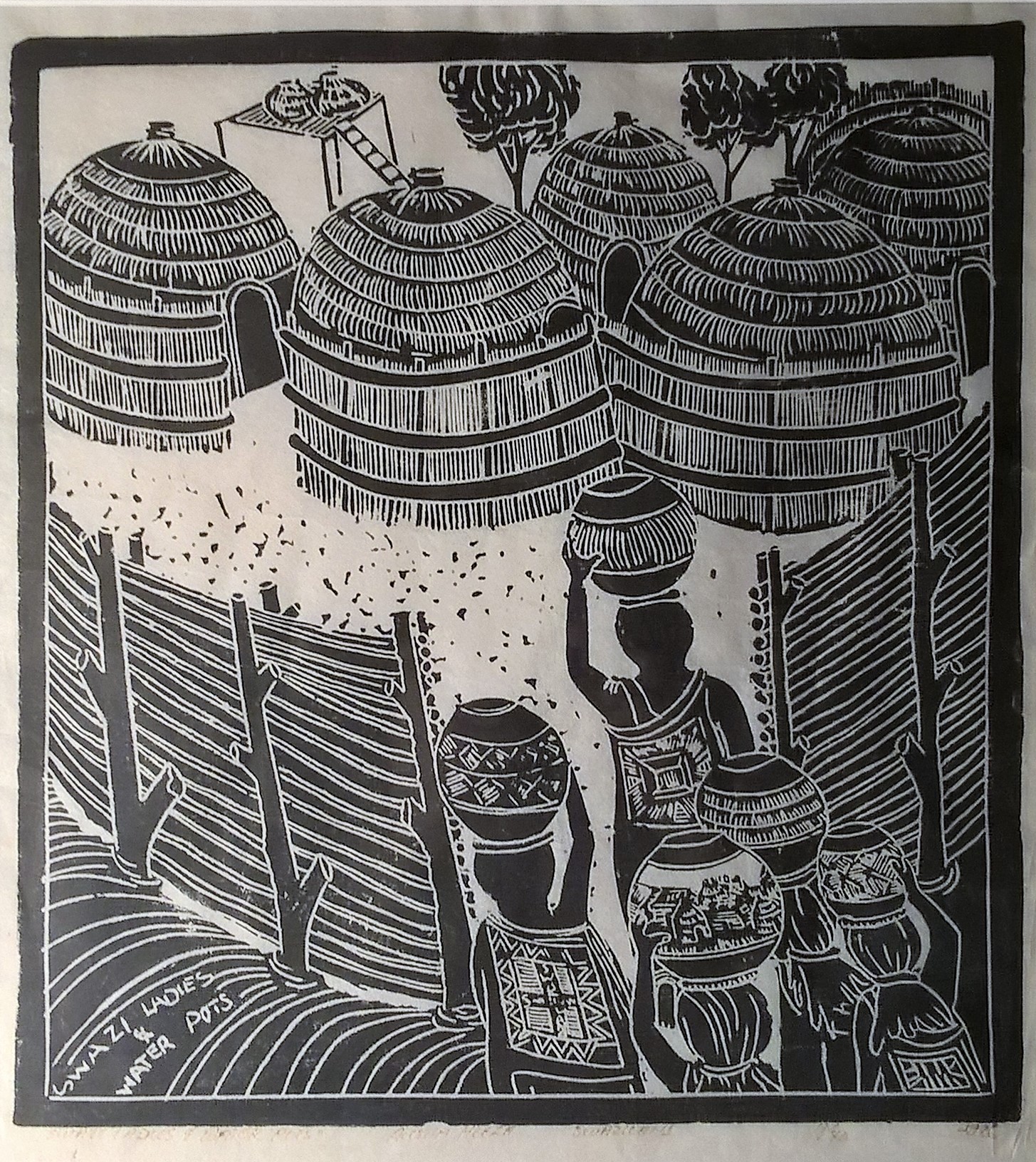
A print by a man called Austin, bought from the shop of a dear and sadly deceased friend in Malkerns Swaziland, showing Swazi women and typical Swazi huts - but no cast iron cauldrons, sorry

A print by a man called Austin, bought from the shop of a dear and sadly deceased friend in Malkerns Swaziland, showing Swazi women carrying Swazi water pots approaching typical Swazi huts – but no cast iron cauldrons, sorry

Posted in Simple Food for Simple Folk (like me), Socks, spoons, stones and sunsets, Travelling, Zambia | Tagged , , , , , , , , , , | 11 Comments

Young girls picked them, every one

For the last few days I’ve been wondering what I can do, if anything, to make things better in this mad, mad, post-truth, us-and-them world.

And I think I have a solution.

That’s quite a claim to make, I know.  And I might, of course, be lying.

But aren’t you the tiniest bit intrigued?

It’s become a bit of a preoccupation, pondering how to make a difference.

So many people, so perturbed by the world around us, gasping, hopelessly, online.

Because it does grind you down, all the online obsessing over Trump, Brexit, Syria, refugees, terrorism … et cetera.

And it’s hard to tear free.

One more meme, one more blog post. Just one little editorial – and a peek at a US satirical show.

I find myself wanting to see Trump fail – but also feeling a frisson at each bold, new departure from previously accepted norms of American presidential behaviour.

‘Ooh, look what he’s gone and done now!’

The world-wide protests, at first, felt reassuring.

But.

Articles have been proliferating, penned by people who seem to know, saying protest doesn’t work. Each outburst is a flame, singeing the big man’s sensitive ego.

More dangerous still, it distracts attention from other worrying things.

Decisions sneaked through. Obscured by slapstick Tweets, or signed-with-a-flourish-executive-orders.

‘The Origins of Totalitarianism,’ by Hannah Arendt – a Jewish refugee from Nazi Germany – is the new must-have tome for the worrying class.

Might it really be happening?

An end to enlightenment?

A forced march to totalitarianism?

And if it is, how do we stop it?

Well, let’s assume hostile protest is not the way. What then?

If you haven’t seen this heart-melting video from a Danish TV station watch it now:

Add to that sentiment my in-house academic’s frequent references to hunter gatherer societies. Groups where there was no hiding from shame – or from shaming. Behaviour regulated by peer group pressure.

And that Hawaiian Huna philosophy I discovered when blogging about the Women’s Rally.

Can’t we start to make things better, simply, by being differently?

I can’t do this thing alone. I need friends.

In fact, I don’t just need friends I need enemies.

I need apathists.

I need old people and young people.

I need men and women, black, white, purple – whatever the hue.

I need gays and straights and transgender people.

I need Jews and Christians, Muslims and humanists, Quakers, Buddhists, Hindus, Sikhs and atheists …

I need everyone in the whole wide world.

I need we not me.

And we need a bigly idea 😉

all-you-need-is-love


That’s when a song started playing in my head. From the summer of love. 1967. Two, actually:


I thought of flower power. Of love, peace, harmony – and dope.

Sorry. I meant grass.

Which brings me back to flowers.

It was the poet Allen Ginsberg who coined the term ‘flower power’ and, man, that dude wrote some heavy sh-t. This, for example, about Plutonium, our ‘radioactive Nemesis’:

My oratory advances on your vaunted Mystery! This
breath dispels your braggart fears! I sing your
form at last
behind your concrete & iron walls inside your fortress
of rubber & translucent silicon shields…

I’m no aficionado. I looked him up for this post and read his Plutonian Ode.

But it struck me he created, in the concept of flower power, a similarly invincible, fragile – and thereby extremely powerful – antidote to seemingly un-fightable power.

Google ‘flower power guns’ and you can track down images that should make you believe you can do anything.

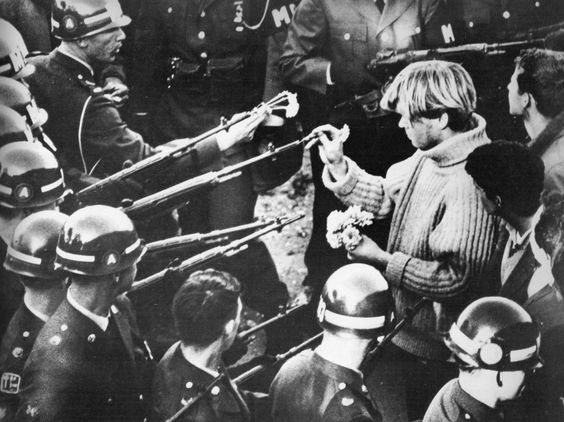
A young American man feeding a flower into the barrel of a gun. (My husband’s economics professor was there.)

Pentagon march 1967. Image Mark Riboud

Pentagon march 1967. Image Mark Riboud

A young woman in Prague holding a flower before the bayonets of invading Russian soldiers in 1968 (scroll through, it’s worth it):

http://www.tresbohemes.com/2015/08/the-day-the-tanks-came/1968

The flower power movement’s strength was in its very fragility.

OK so it didn’t, ultimately, work. Or last. Nice idea, lousy implementation – especially for women.

But now is different.

Now we have the World Wide Web.

Now we are all part spider.

Every time a finger swipes a screen or pounds a keyboard, our sensitive limbs can feel the trembling of the virtual world.

And I’m not saying that flower power is the solution, but it could be a start.

What’s that?

I said I had THE solution?

No, you said that, I said A solution.

#FakeReading.

But I do feel there’s a crack in the wall, where the light gets in.

That Danish video shows our boundaries are far weaker than our common humanity.

So how do we break them down?

Start small.

Start individually.

Talk to other people. Don’t assume they’re wrong. They may be, but understand why they may feel the way they do – and remember we’re all human. All weak.

Instead of anger, wonder why. Instead of swearing, admit you just don’t understand why that prat overtook you in a 30 mile-an-hour zone.

Begin to feel differently yourself and it will have a knock-on reaction.

Trust me, I’ve been trying it. It (mostly) works.

You’re probably thinking, huh, what a let-down. A wishy-washy stupid solution.

But humour me. Watch this beautiful video. Feel the love and optimism. (And envy the fab clothes!)

[Edited – this video is no longer available – here instead, for as long as it exists is a short clip of it – you can still see the clothes and feel the optimism]

John Lennon urged peace and non-violence – and some will say, yeah, and look what happened to him.

We do need to argue. Respond constructively, when freedoms and rights are threatened.

#resist

And so I write in hope.

I also write as someone who, as a pre-teenage child, was terrified of nuclear war. The doctor prescribed a tranquilising medicine. I still remember its milky colour and grainy texture.

And I still fear what happens when we don’t learn.

Please, watch this video of Marlene Dietrich. I defy you not to be moved.

And as you wipe away the tears, ask yourself, can we learn, this time, not to pick all the flowers?


Posted in Thinking, or ranting, or both | Tagged , , , , , , , , , , | 23 Comments