Alternative. Routes, lifestyles & mammoths. Plus, a fine Dusky Maiden

‘Recalculating route,’ she says.

I’ve only heard that voice a handful of times but I’m beginning to bristle every time she speaks.

It’s the inbuilt navigation system in our car.

She’s been more vocal than usual just lately because we’ve had a few days away. Visiting friends.

It was an ambitious five days. Lots of driving. Lots of catching up to fit into respectable time slots. Three nights on hard b&b beds. Why do people insist hard mattresses are good?

Anyway.

Day one was the worst. We had to abandon the south-west-bound motorway early. What should have been a three or four hour journey took six. But the slow-roaded Welsh borders were pretty.

The first hard-b&b-bed-night didn’t help our mood as we set out for Devon next day.

P1020001By mid-afternoon prissy Miss Satnav would’ve been thrown out of the car if she weren’t built-in. But thanks to written instructions from our host – and a map book bought at a petrol station – we reached our beautiful, isolated destination.

Next day, well fed on food, wine and art (our hostess is an artist), much conversation and a little dog-walking to our credit, we set off back to Bristol without ‘her’ help.

In Bristol the sun shone and the company of old friends was convivial, but after two more hard-b&b-bed-nights it was time to strike out for home.

It took about forty five minutes of the manic motorway before we resorted to lesser roads and ‘her’. Sleep was sneaking up. The hard beds had taken their toll.

We stopped for a wake-up cuppa – and the world stood still. That’s how it felt. The pace of life had shifted underneath our wheels.

An odd man in the car park yelled, ‘Are you all right?’ the moment we opened the car doors.

Round of tum, middle of age, he carried a large brown envelope as Don Quixote carried his lance.

‘Park here,’ he commanded, in vain. Then he chose another spot – and another.

He was plainly obsessive – and not a little strange. Which prepared us, somewhat, for the café we chose.

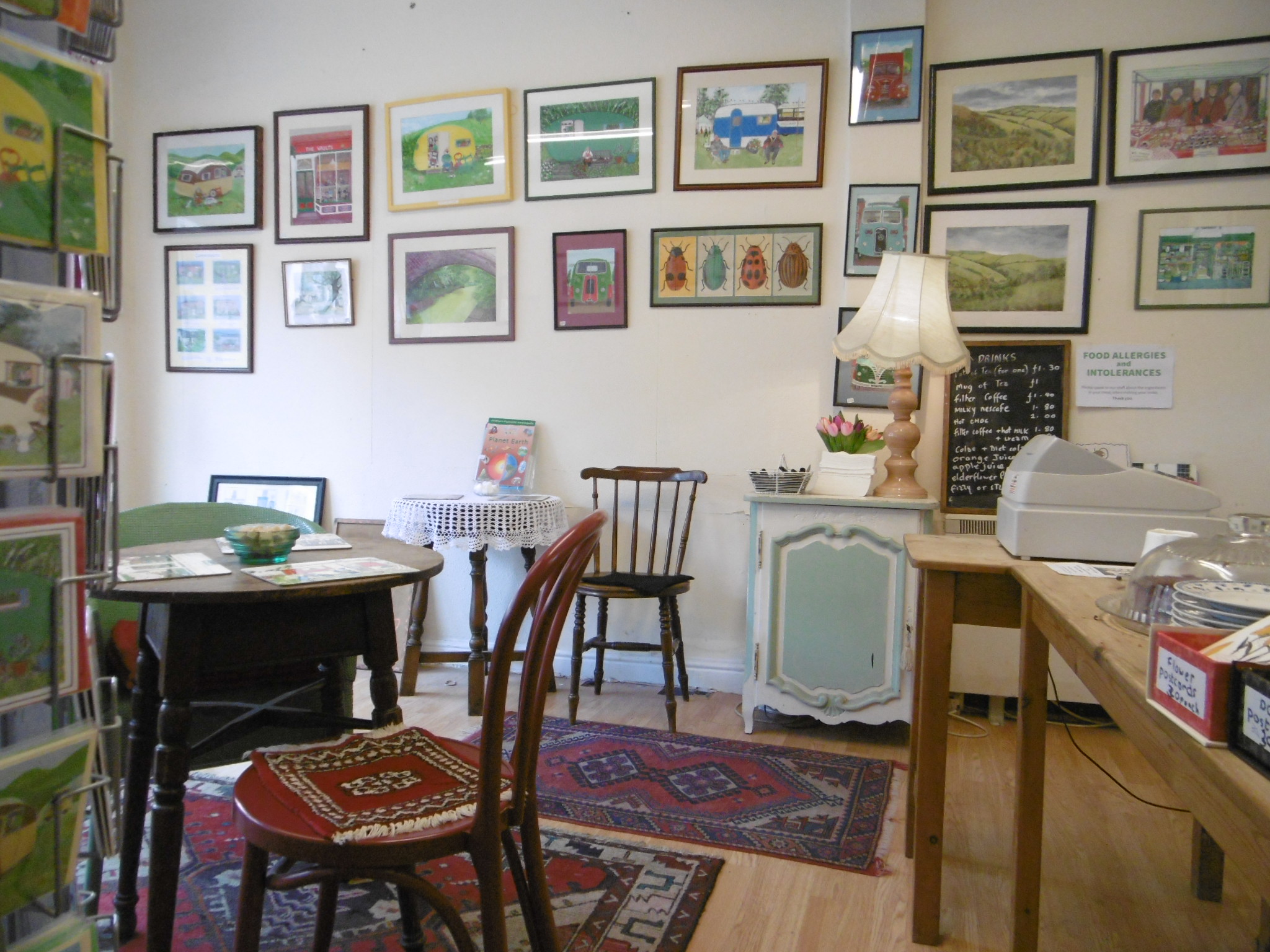
Outside, the blackboard boasted a hand-drawn picture of a dog. Dogs and their owners, it said, were welcome.

I hesitated.

I’m not a doggy person, not often around dogs. But I was wearing a shirt that had been tugged by a happy dog, jeans licked by her, pawed by her. A nice dog.

And it did look quirky, the café.

We stepped in.

Quirky was an understatement.

‘No mobile phones, please,’ a handwritten sign requested. Polite, but firm. You could tell by the writing.
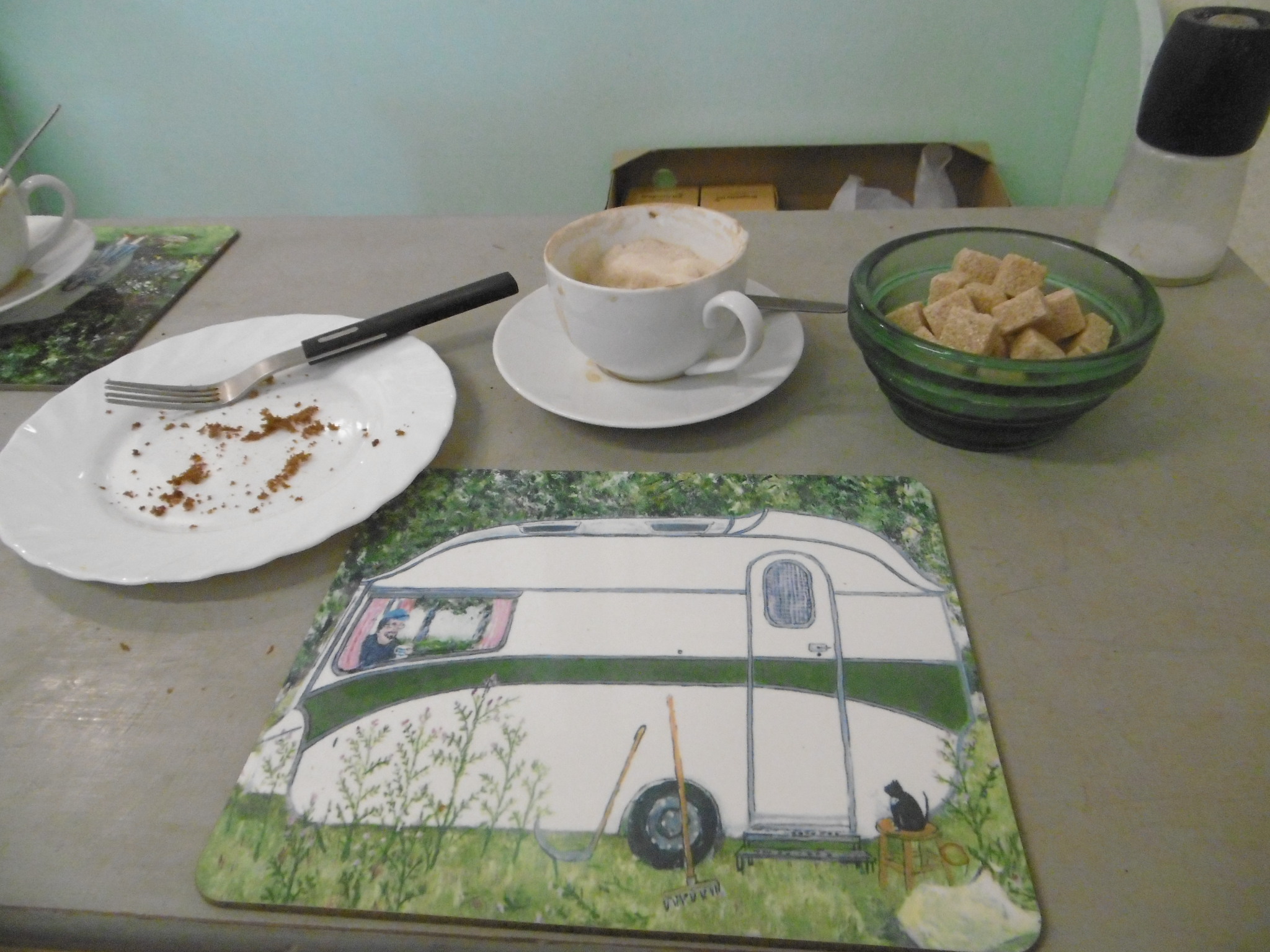
P1020007The place mats were reproductions of paintings on the walls. Not exclusively pictures of brightly coloured caravans, but that was the overriding theme.

Many with feature-cats. (Was everyone in this town obsessive?)

The inner blackboard listed the usual drinks, but also that quaint old hot beverage – Milky Nescafé.

Neither of us has sipped so much as a drop of coffee for many, many years. Yet we both opted for the milky instant version. (I know. Some people dispute whether Nescafé is coffee.)P1020006
A slice of ginger cake came warm, with two forks.

Revived, an amble down the road took us to a cornucopian wholefood shop. We bought bread, grains, teas, condiments. Cheap olive-oil soap.

It was hard leaving. Everywhere I turned was an, ‘ooh, look,’ enticement.

But leave we did. Despite a notice telling us that if we stayed till June 21st, we could join in solstice dancing, round a tree.

Back in the street, in the warmth of a fine mid-morning, everyone was walking slowly.

Not a single person gazed upon a smartphone.  One or two wheelchairs, a mobility scooter, prams, wheeled baskets, dogs on leads. But no mobile phones.

As if the café were ruling the world for the day.

It seemed we were in a county of witches, warlocks and deep, old magic. This we discovered further along our route, when we turned right (contrary to ‘her’ instructions) to find a mammoth.

P1020011

Not the real thing. Suspicious look it’s giving me, don’t you think?

A cast of the massive mastodon was the high point of a rather good exhibition devoted to hill forts and landscapes, castles and history, mystery and superstition

Yes, Shropshire had begun to beguile us with its magic.

En route again, an hour or more later, eyes drooping once more, my chauffeur saw a sign for a garden centre with café – and turned left.

‘She’ was busy recalculating route when I switched her off. Oh, that felt good!

But it began to look as if we’d made an error of the human kind.

The road wound deeper and deeper into the enchanting Shropshire countryside. Was a mischievous spirit leading us astray? Would we end up spell-bound, deep within a dark, dank cave?

No.

It was serendipity.

For we found ourselves in a paradise of roses.

P1020012

The building originated in the 12th Century

Row upon row. Climbers and shrubs. Standards and ramblers. Red, yellow, white, pink, purple and orange. Nine hundred varieties.

P1020022Humming with insect life. Wafting with fragrance. Blessed by a scorching sun, offsetting the gentle breeze.

A secret garden. Well, except for the other people.

A former monastic pond

A former monastic pond

As chance would have it, we were in search of a rambling rose.

‘We mustn’t buy much,’ I said, in vain. ‘We don’t have room in the car.’

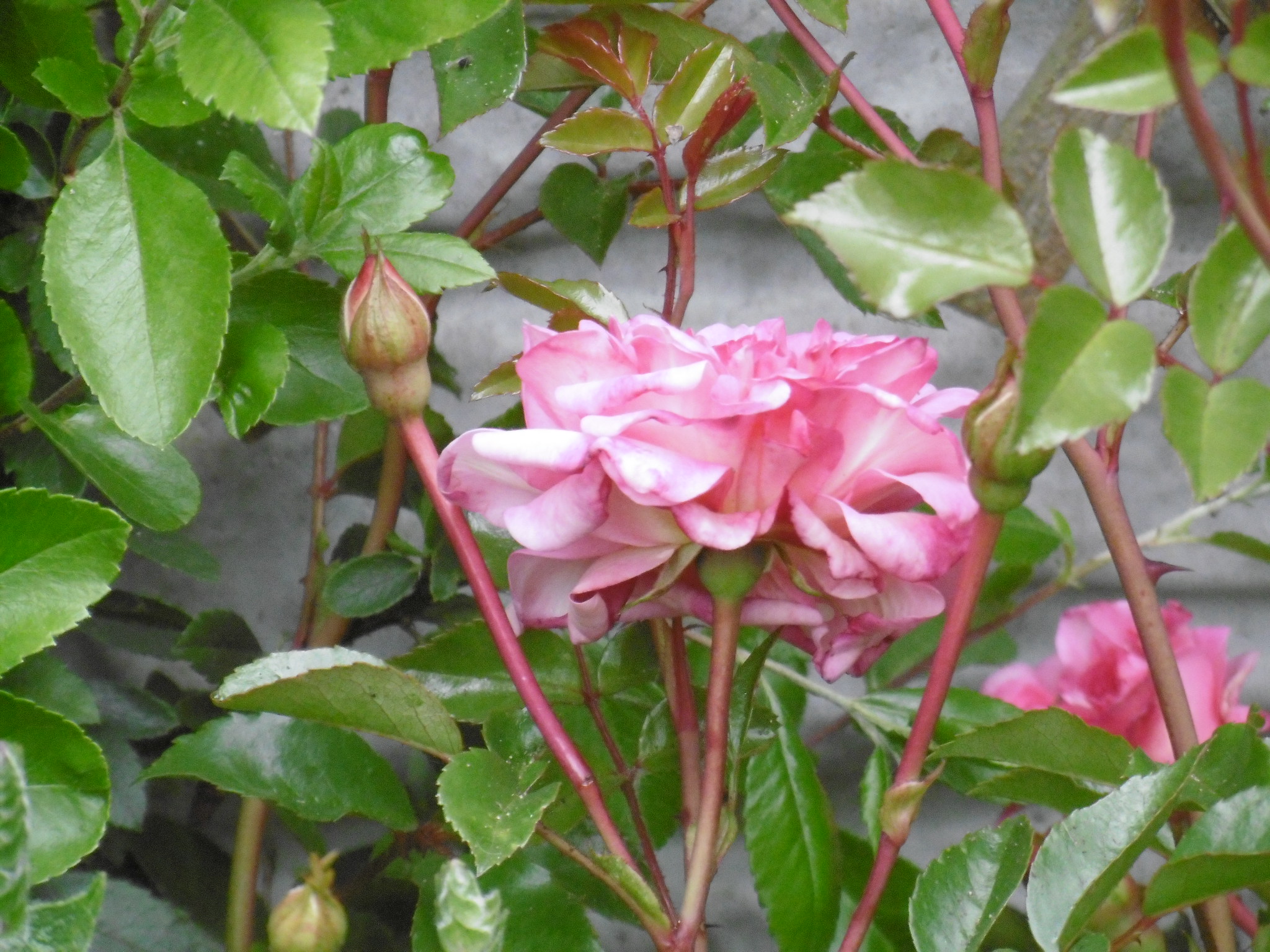
Half an hour later we’d fallen for a pert-flowered rambler with bright red stems. A subtle Rosa glauca with delicate pink blooms.

And a sensuous Dusky Maiden.

Dusky Maiden undressing

Dusky Maiden undressing

‘You can’t leave without me,’ her message oozed from every dark bloom.

I surveyed the three beauties.

‘Recalculating room in car,’ I thought, with that inner warm feeling that simple pleasure brings.

Poor little Miss Satnav.

No wonder she sounds so flat. She has no roses in her life. No sunshine, no scents, no gentle breezes.

Just a box, in car. And always travelling, to other people’s destinations.

P1020052

Dusky Maiden planted in front of a pear tree
P1020050

Our chic rambling rose, Francois Juranville


Shy Rosa Glauca not quite at home yet

Shy Rosa Rubrifolia Glauca, not quite at home yet

Posted in Art, jaunts & going out, Britain now & then | Tagged , , , , , , , , , | 7 Comments

White car woman and Smooth FM

Sunshine. Blue skies. June.

You wouldn’t think there was much to surprise a person in that combination, would you? In the northern hemisphere, anyway.

But.

Here, in northern England, the leaves are still hesitating.

‘Shall we risk it? Unfurl into that cold, windy world,’ they might be thinking, if they could think.

peony

Peonies

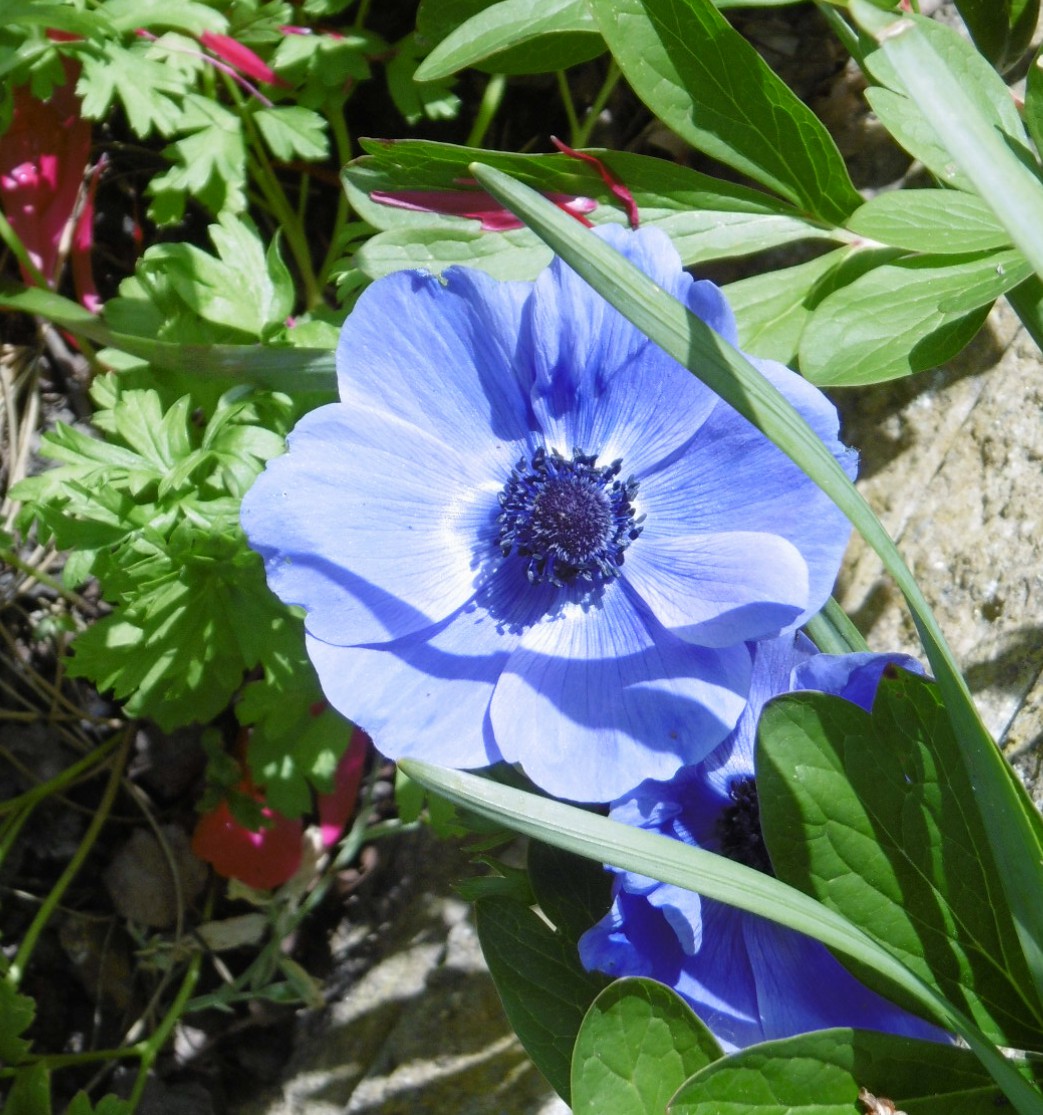
anemone

Anemone

Yes, the May blossom’s finally out on the hawthorns, but bare twigs and branches remain, obstinate, amid the fresh green foliage of many deciduous trees.

One week’s seen a major change, though.

The carmine peonies have started to shed their lush petals.The royal purple anemones are starting to fade.

Valerian and alliums, chives and thyme and forget-me-nots bloom red and purple, pink and blue.

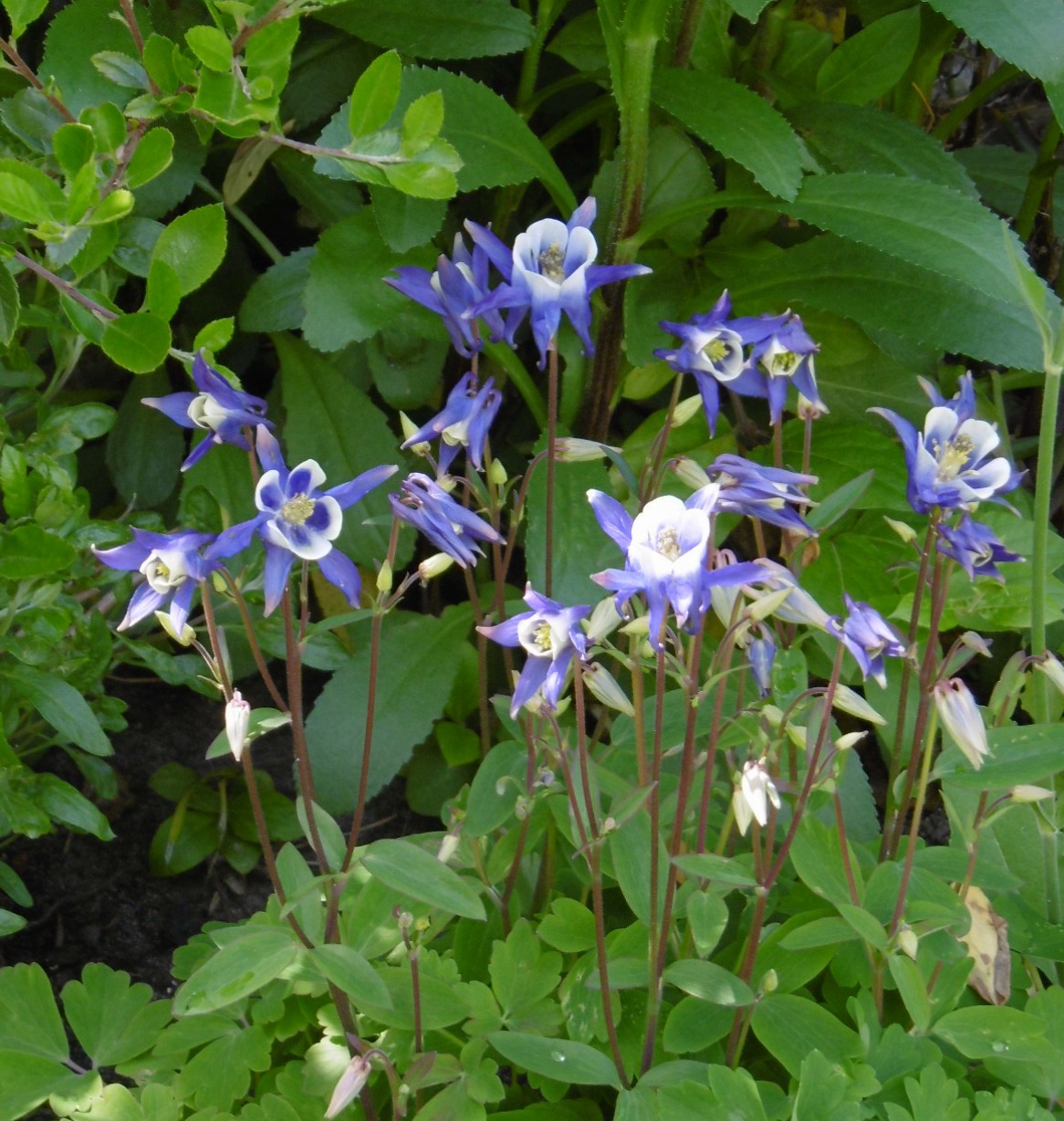
granny's bonnets

Granny’s bonnets (aquilegia)

The aquilegias nod their many-coloured Granny’s bonnets at every zephyr’s breath.

‘Lovely day,’ I greeted Brian, this morning, as he arrived.

‘Sound timing,’ he agreed.

Brian’s a carpenter. Today he’s set his trestles up outside for sawing our new, wooden doors.

Now, though, he’s drilling and hammering indoors – and I’m resorting to blogging. It’s hard to settle to more demanding brain-work when there’s noise and company around.

Earlier, before the world was fully alert (well, before I was) I went on an expedition. Brian reminded me we needed bolts for two of our doors. Silver, to go with the handles.

Cheerful, with a mission in mind, I set out in Issy, our white car, leaving Brian’s white van where normally she would be.

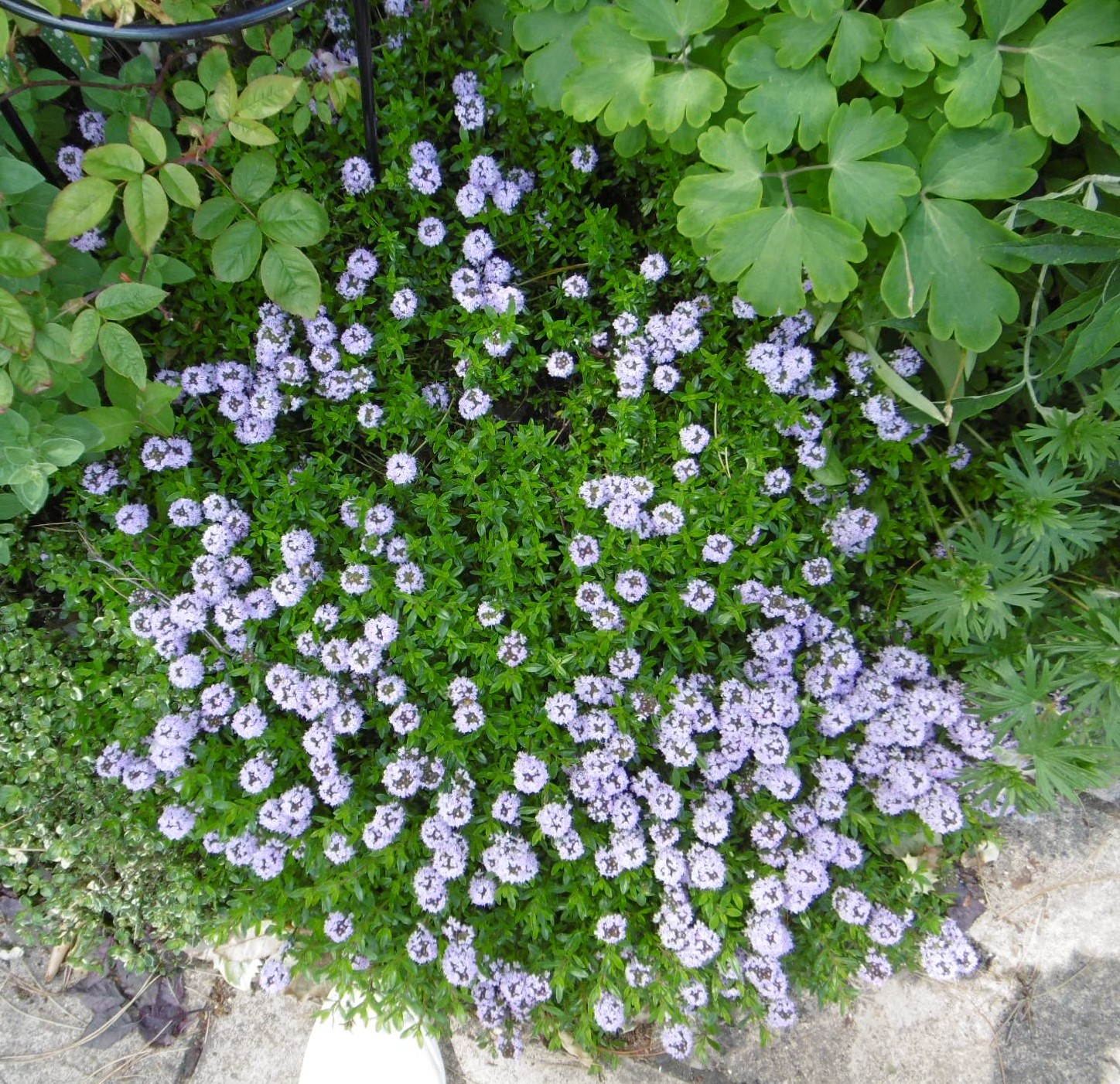
Granny’s bonnets, chives, thyme


Despite a spectacular mackerel sky and the blazing sun, despite the burgeoning hawthorn hedgerows, despite a general bounciness of demeanour, I was off on a most un-romantic errand.

‘Screwfix’ was my destination.

I have a love-hate-not-quite-sure relationship with Screwfix.

Often, when I get there, a young man is greeting people with a smile and a chat and a joke. Sometimes when he’s not it can be a bit challenging.

There’s that, ‘what’re you doing here? You’re not a tradesperson, this is our territory,’ kind of glare that some people give me. Brian tells me it’s the same for him at some of the timber merchants.

Each specialist organisation, I guess, welcomes its members – official or unofficial – more than it does mere passers-by.

granny's bonnets

More granny’s bonnets

Though an elderly man at Royal Birkdale Golf Club bade me ‘Good morning’ last week when I went in to deliver some misdirected post. So it’s plainly not always, and not universally, applicable.

Anyway.

There’s a major roundabout between here and Screwfix that always worries me – you have to speed onto it at the merest hint of a gap in the traffic.

A bit like French skipping at school – dashing into the two twirling ropes and jumping, not just with speed, but precision.

I made it through the roundabout. Made it through the correct right turn at the correct set of traffic lights – and then, as always, took the wrong turn and ended up in a cul de sac.

A several-point-turn and a right turn across heavy traffic later, I drove past Chubby’s lunch van, already dispensing steaming cuppas and bacon butties, into Screwfix’s parking bays.

Parked badly.

Re-parked.

Took the catalogue of the back seat, picked up the £5 voucher I’d received in the post – and discovered I’d left my purse at home.

I didn’t pay much attention to anything on the way back, except the speed limits. But at least now I know it’s 3.8 miles from Screwfix home. And 3.8 miles back again.

A pleasant-enough – and patient – young woman fetched a silver lock from the store to show me – after I finally found the right catalogue number. I bought two. With my £5 voucher it was only £6.98.

This time, as I opened the car door and sat behind the wheel, I noticed the world.

I contemplated stopping for a cuppa and butty. But I’d already had breakfast – and anyway, I had a feeling I might get the ‘who do you think you are’ treatment at Chubby’s.

I made it through the roundabout once more and noticed the hawthorn hedges by the hospital. The bushes were so clustered with Mayblossom that they looked as if they’d been dipped in a thick vanilla milkshake.

alliums

Alliums (allia?)

My heart was beginning to sing.

I switched the radio over to Smooth FM – the daytime choice of many a tradesperson and white van man.

Brian, though, listens to Radio 4 in the morning. We had a discussion about trickle-down economics yesterday, which is how I found out.

I’ve never listened to Smooth FM.

As I tuned in I found myself turning seventeen again, moping in my bedroom. Then eighteen, driving mum’s car to the moors on a sunshiny, holiday-day.

The summer breeze up there blowing through the jasmine in my mind.

But as I slid through the traffic lights at the final turn for home, I was another year older. In tears. A letter from my ex-boyfriend in hand.

ferns geraniums aquilegia

Fern, geraniums and a bit of Granny’s bonnet

I’d dumped him. He was heartbroken.

He’d written that every time he heard, ‘Hey, if you happen to see the most beautiful girl in the world,’ he thought of me.

Thyme flowering early

I can still see the ink spreading as a fat tear landed on it.

Even the flattery didn’t cheer me. It plainly wasn’t true. He had a veil of love before his eyes. But it was the first time I’d hurt someone badly – and it upset me, too.

Back in 2015 I arrived home.

Switched off the radio.

Looked up at the slightly more cloudy sky and then at our happy home – and sloughed off the memory.

Two new silver bolts. Ten new wooden doors.

Birch trees nearly fully clothed now, birds carrying twigs and pulling off sweet-scented young herbs for their nests.

Sunshine. Blue skies. June.

And a summer breeze, blowing jasmine memories through my mind.

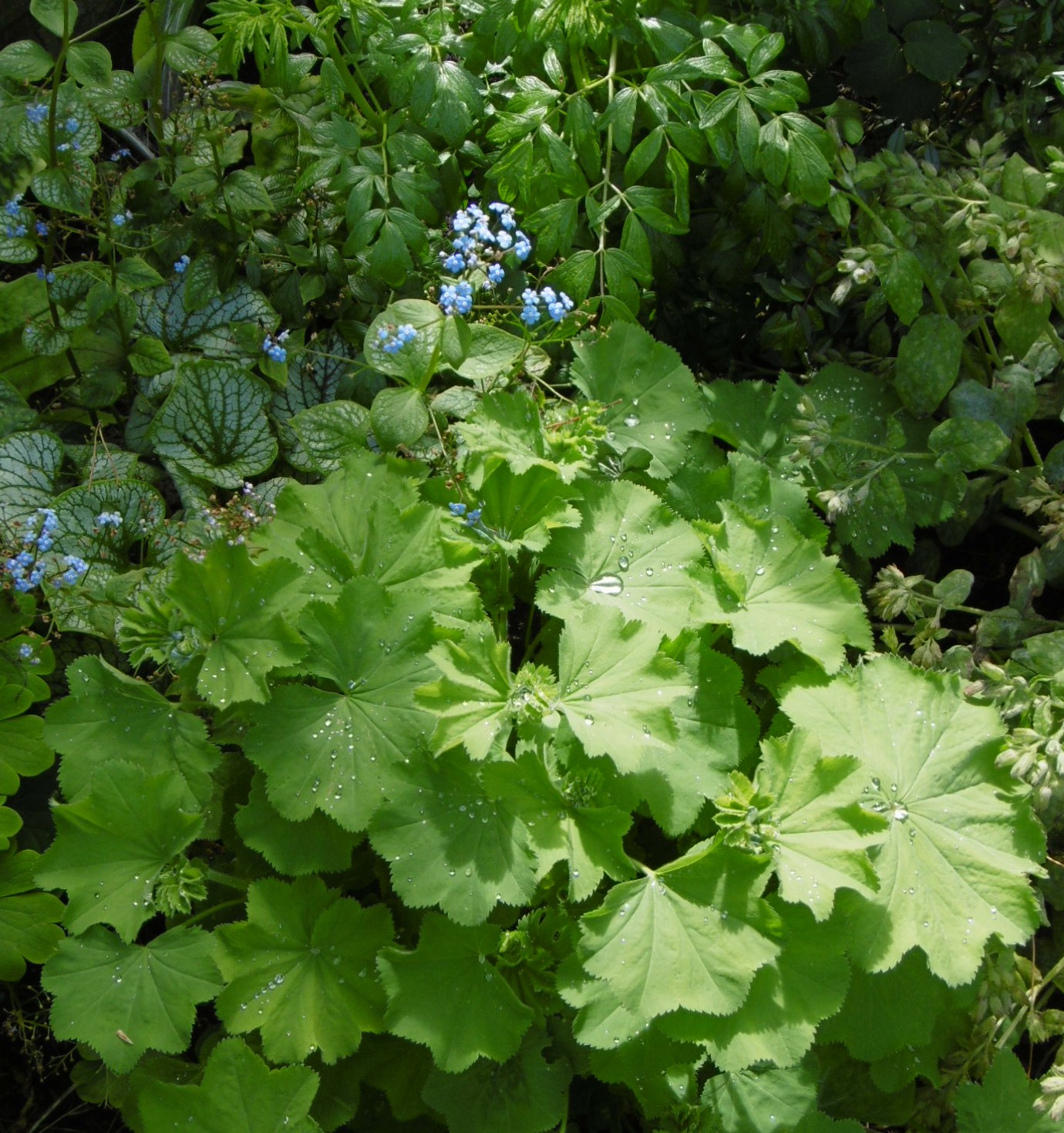
Lady’s mantle and stray forget-me-nots


Posted in Art, jaunts & going out, Lancashire & the golf coast | Tagged , , , , , , , , , , | 4 Comments

The Dark Triad and Me. And You

This post has been resting, in draft form, since 2015. I wrote it in response to a WordPress challenge but was too much of a coward to click publish. Then, just this week I saw the ‘Dark Triad’ mentioned in connection with the current Cambridge Analytica/Russia/Facebook/World-Neurotic-Conspiracy-Theory Day (I made that  up) hullabaloo. And I wondered. At the height (or depth) of the consultancy era of my career in image manipulation (PR) would I have considered doing what CA did?  Well, who knows now. But since it’s topical, I thought I’d be brave and let the captive words fly free, at last.


The Dark Triad. It sounds evil, doesn’t it?

It’s a term used by researchers in the field of psychology (there’s a definition at the end of the post) – and nowadays they don’t tend to use a term like ‘evil’. But that ‘dark’ does not, trust me, signify a bunch-of-flowers-and-a-box-of chocolates attitude to life. Unless someone wants something, in which case the chocs and carnations are all part of a plot.

But, I’m getting ahead of myself.

I heard the term ‘Dark Triad’ used by an academic of my acquaintance and, after looking it up online, felt a disturbing little rain cloud settle into my psyche.

Machiavellianism? Narcissism? Psychopathy? Well, set aside the latter, but – let me be frank – if you’ve ever been in PR at any serious level you’ve certainly played with the Prince’s methods and as for clients, I’m not saying they’re all narcissists but …

Disturbing stuff. And a classic case of the ‘give a dog a bad name’ genre of terminology.

Anyway.

It was the Dark Triad that leapt to mind a few months ago when I saw a Daily Prompt from WordPress.

It was a real temptation for a blogger, that prompt.

Because it was all about – me.

All about me?

Who, me?

Oh, yes! Let me imagine …

I’m running around a playground, in a pretty summer dress, wearing white ankle socks and red leather sandals. My arms are flailing as if I’m trying to fly.

And I’m screaming, ‘me, me, me, me me!’.

But, hang on, the challenge was to write about me as seen by – well, let’s say, you.

Hmmm. OK. Well.

If you’ve read many of my blog posts over the last three [sic] years, you’ll probably have formed an impression of me.

I’ve been emotional, glum, depressed, elated, happy, sad, cross, worried, exasperated, pompous, insecure, pedantic, questing, angry, lost, melancholic – and nostalgic. But always, I suspect, by reason of the simple fact of blogging, vain. [ha, not much change there then?]

I cringe to write that – because I don’t want to be vain. I cringe because I feel shy. I cringe because I want you to like me but don’t want you to think I want you to like me. I cringe because – oh, hell, I just hate being obvious about ME.

So what would my imaginary YOU think of the online version of me?

And why on earth am I doing this?

Shrug.

I don’t know.

She’s a little pompous, is our M, I suspect – and inclined to be self-righteous. She says she’s insecure but actually she’s very secure, or should be – you can tell she’s had a good education but she’s always playing it down.

She loves trying new things but always wants everyone else to like what she likes – I suspect she’s difficult to be around – doesn’t like it if you disagree with her. One of those people who’ll argue the opposite of whatever, just because.

Because.

Neurotic?

Definitely.

Opinionated?

Oh yes.

But quite likeable, in person, because she takes care to ask about you – and to tailor her conversation to yours, to avoid subjects that you don’t like – in other words, she tries very hard to be liked – so she is, really, quite likeable.

She makes much of her Catholic upbringing, so I suspect she has a lot of inbuilt guilt – they always do, don’t they? And I suspect she hates to have to consider other people all the time – as she does – and not be selfish. Though deep down she is very selfish.

But I can hear her arguing that everyone is selfish, it’s just that most people aren’t honest and wouldn’t admit it.

I’m not sure she’s actually narcissistic, because the definition (below) suggests that a narcissist is lacking in empathy – and I can see that she empathises with folk to a degree which she herself finds uncomfortable.

Machiavellian, now. Hmm.

She has tendencies towards it – after all that time in business as a woman, competing with men – did I say I think she’s really quite competitive? – she must have developed a degree of deviousness to help her get ahead. But I don’t think she has a ‘cynical disregard for morality’.

And if ‘the trait of agreeableness is strongly absent’ – well, unless she’s a real mega-bluffer she’s not a Dark Triad spirit.

You know, thinking about it, she’s not put her real name on the blog site, though you can find it if you want to – so maybe I’m wrong, maybe she is a little insecure. After all, if you’ve written a book and published it don’t you want to tell the world?

I wonder.

Perhaps she’s a double bluffer.

Or perhaps she just doesn’t know who she is.

Which, frankly, at her age (I’m guessing she’s not what you might call young) is sad.

Will I keep on reading her blog?

You tell me.

OK! Now stop it, that’s enough. Back to the real me.

Regular readers, don’t respond, this isn’t a fishing expedition and I really don’t want to know.

At least, I don’t think I do. Do I?


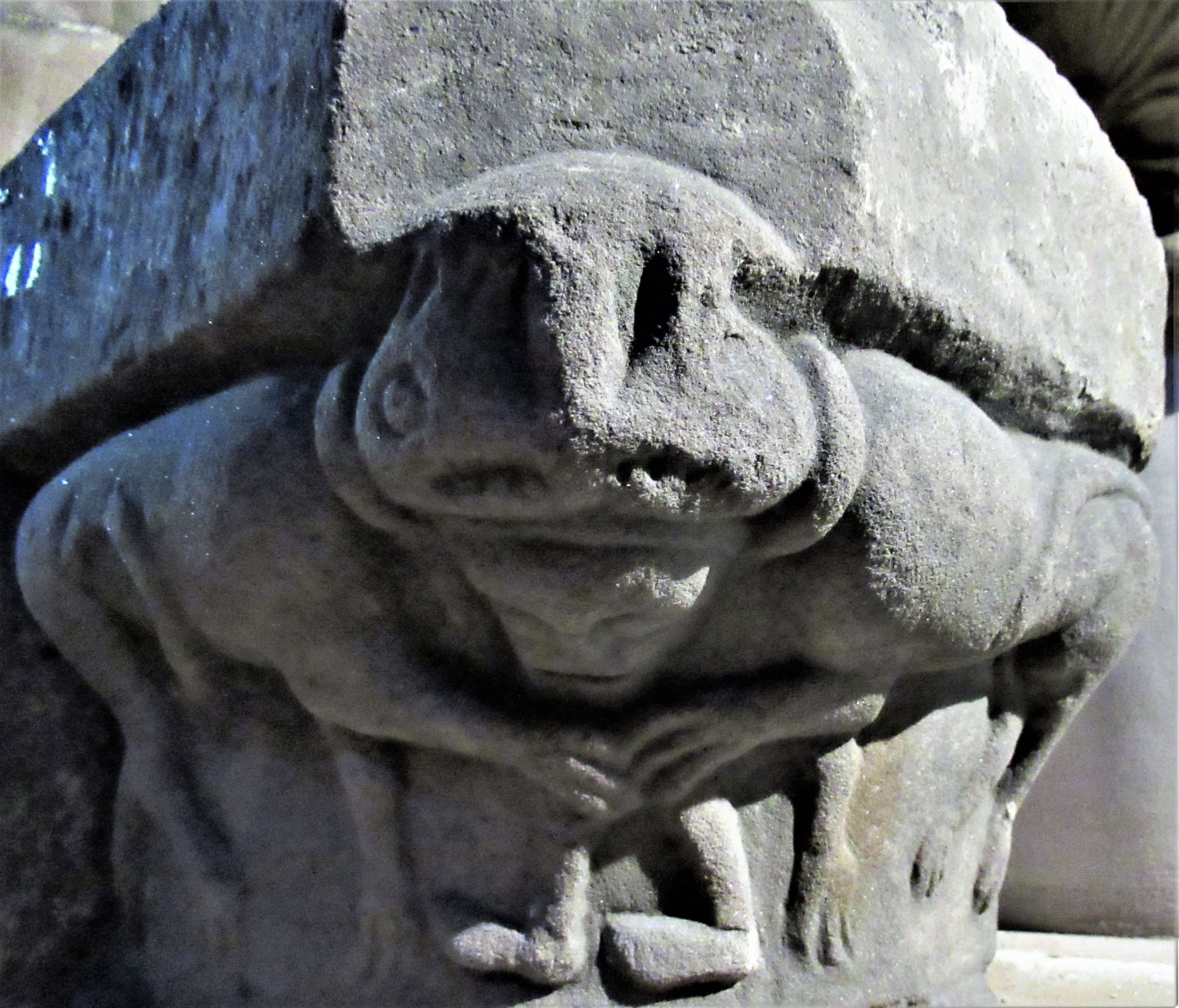
This is the basis for my header image btw, a stone beastie from the church in Kirkby Stephen where Loki also hangs out


The Dark Triad (from Wikipedia)
The dark triad is a group of three personality traits: narcissism, Machiavellianism and psychopathy. Use of the term “dark” implies that these traits have malevolent qualities:

Narcissism is characterized by grandiosity, pride, egotism, and a lack of empathy.
Machiavellianism is characterized by manipulation and exploitation of others; a cynical disregard for morality, and a focus on self-interest and deception.
Psychopathy is characterized by enduring antisocial behavior, impulsivity, selfishness, callousness, and remorselessness.

All three traits have been associated with a callous-manipulative interpersonal style.[11] A factor analysis carried out at the Glasgow Caledonian University found that among the big five personality traits, the trait of agreeableness is strongly absent in regards to the dark triad, while other traits such as neuroticism and a lack of conscientiousness were associated with some of the dark triad members.

Posted in Thinking, or ranting, or both | Tagged , , , , , , , , , | 19 Comments

My mum and Aunty Maureen. By way of being a paean to a very special supermarket

Every now and again I travel twelve miles to a supermarket. A long way to go, given there are two perfectly acceptable ones within two miles. And both morally acceptable places for me to shop – for reasons that range from running their own farms to operating on co-operative principles.

But this one’s by way of being a treat.

No, really, a treat.

Mention the name of this shop to most of my friends and if they don’t live near one they’ll probably sigh. If they do, you’re likely to see a smug smile and maybe a mock-blasé remark about golden beetroot or the excellent local ham on the cooked meat counter.

A husband of a friend even suggested they might move house to be near a new branch of this shop.

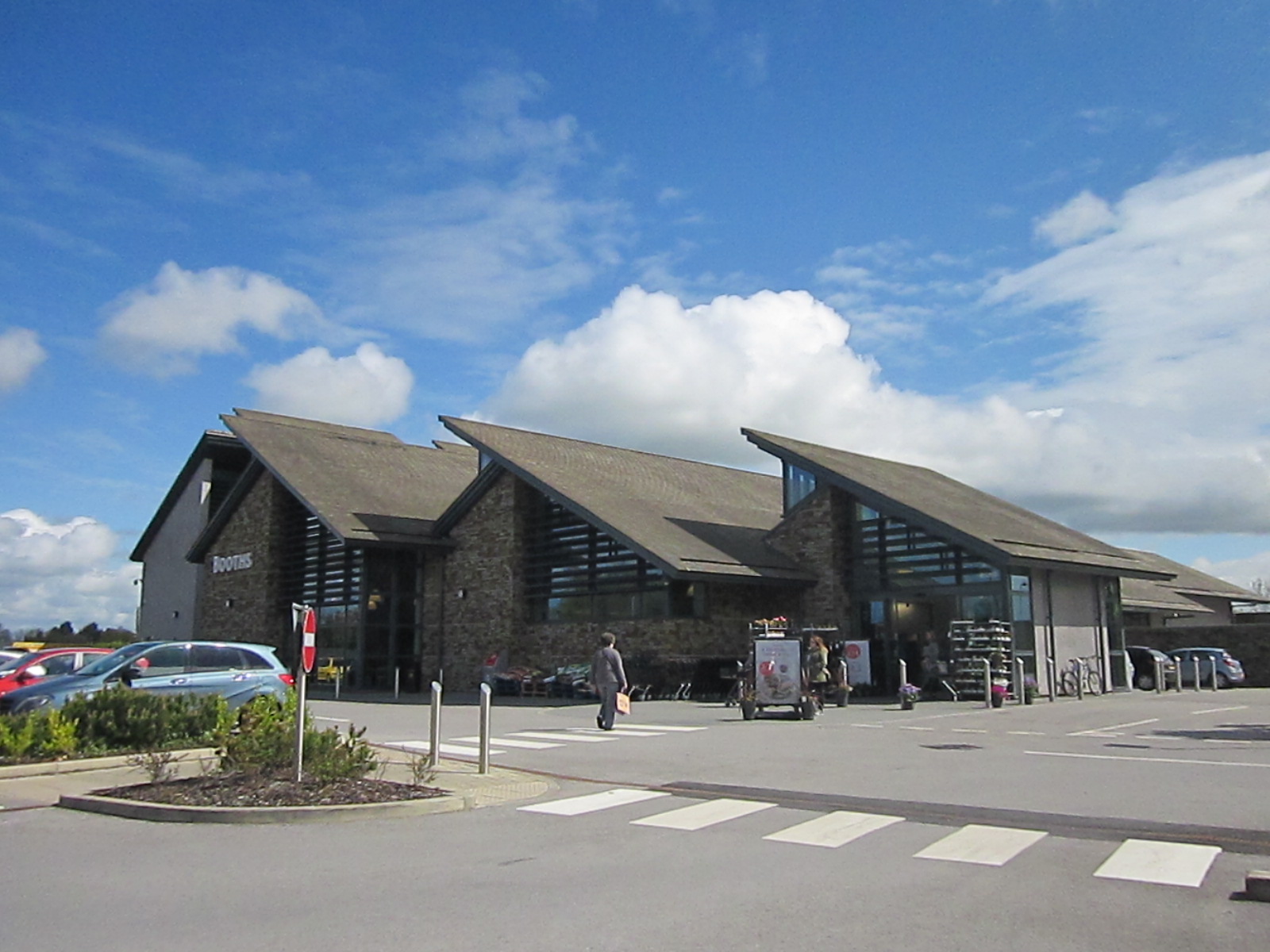
Hesketh Bank Booths

Hesketh Bank Booths

The chain’s of moderate length, restricted to four counties in the north of England : Cumbria, Cheshire, Lancashire and – horrors for some who take pride in its Lancashire pedigree – Yorkshire.

Some might even argue whether Cheshire is really north.

But set that aside.

When my family moved from Lancashire, across the Pennines to (gulp) Yorkshire, the Ripon branch of Booths was still a twinkle in Mr Booth’s eye. But in Lancashire, a new one was being built near where my Aunty Maureen lived. (That’s the northern style of aunty, a family friend, not a relative.)

Aunty Maureen, a physiotherapist, was always there, somewhere, in my life. She became less familiar when we moved, no longer picked me up from school with tasty orange sweets that were actually chewable vitamin C tablets.

But we often went to stay with her when her own parents were away. They had a smart house opposite a park in a genteel part of suburban Blackpool.

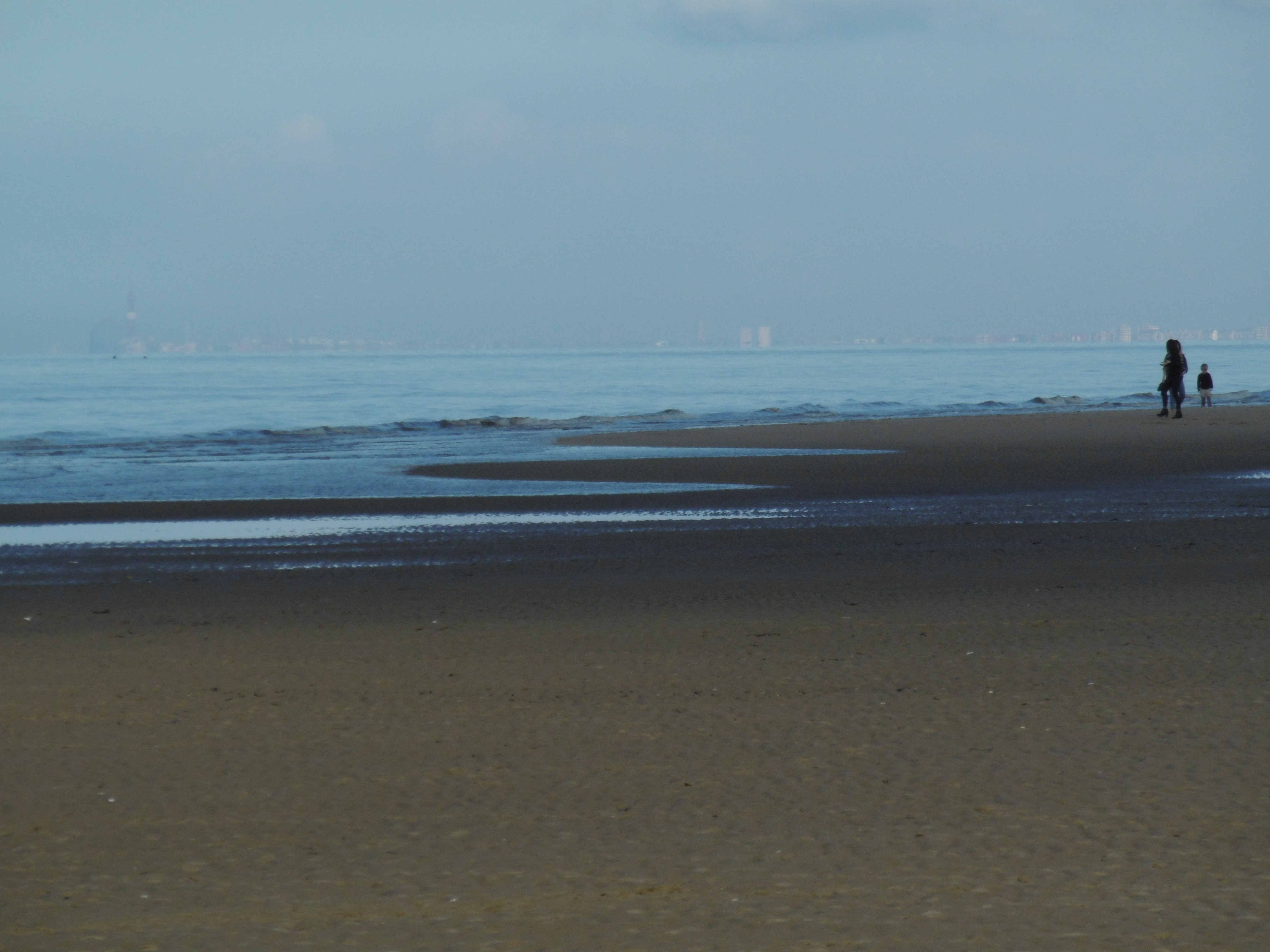
Blackpool is in the distance - you can see the famous tower on the left - a replica of the Eiffel tower

Blackpool is in the distance – you can just make out the famous replica of the Eiffel tower on the left

Blackpool was always a popular seaside resort, filling up with workers during the annual week or two when the mills shut down – until the advent of cheap package holidays. Now it has a reputation for being down at heel – and yet it’s still an exciting place. But not exactly sought after.

Aunty M’s dad had made a lot of money from the workers, by running a shop in Blackpool.

A subdued old man with white hair by the time I met him, he was worn down, I suspect, by sharing his house in his old age with his daughter (she left her husband) and two grandchildren.

I was amazed when he told 15 year-old me that he’d been a yellow-cab driver in New York. My not-cousins looked bored when I told them how exciting I thought that was. They’d heard it many times before.

Anyway.

Aunty M remained one of the few people we kept in touch with after the big trans-Pennine removal.

But my mum and aunty Maureen had a bit of a love-hate relationship.

The love bit tended to revolve around late nights with a whisky bottle after my father had gone to bed. And shared holidays that my father was too anxious to take – to Italy and Austria and other places reached by plane.

The hate bit? Apart from the morning headaches?

Well, maybe hate’s a bit of an exaggeration but …

This is the kind of thing.

Aunty Maureen would taunt my mother on the phone.

‘I went to Booth’s in Poulton this afternoon. They have a beautiful Lancashire cheese in at the moment.’

She didn’t need to say anything else in order to render my mum snippy by the time she came off the phone.

Aunty M not only still lived in the only county worth living in, Lancashire, but had moved to a rather sought-after town, Poulton-le-Fylde, near the rather-more-genteel-than-Blackpool seaside resort of Lytham St Anne’s.

IMG_3509

Sign behind the loo door …

Booths meant pedigree. Still does. It’s a family firm and it feels like it.

The branch we travel to is small. But it’s right in the heartland of the farmers who supply the shops.IMG_3516


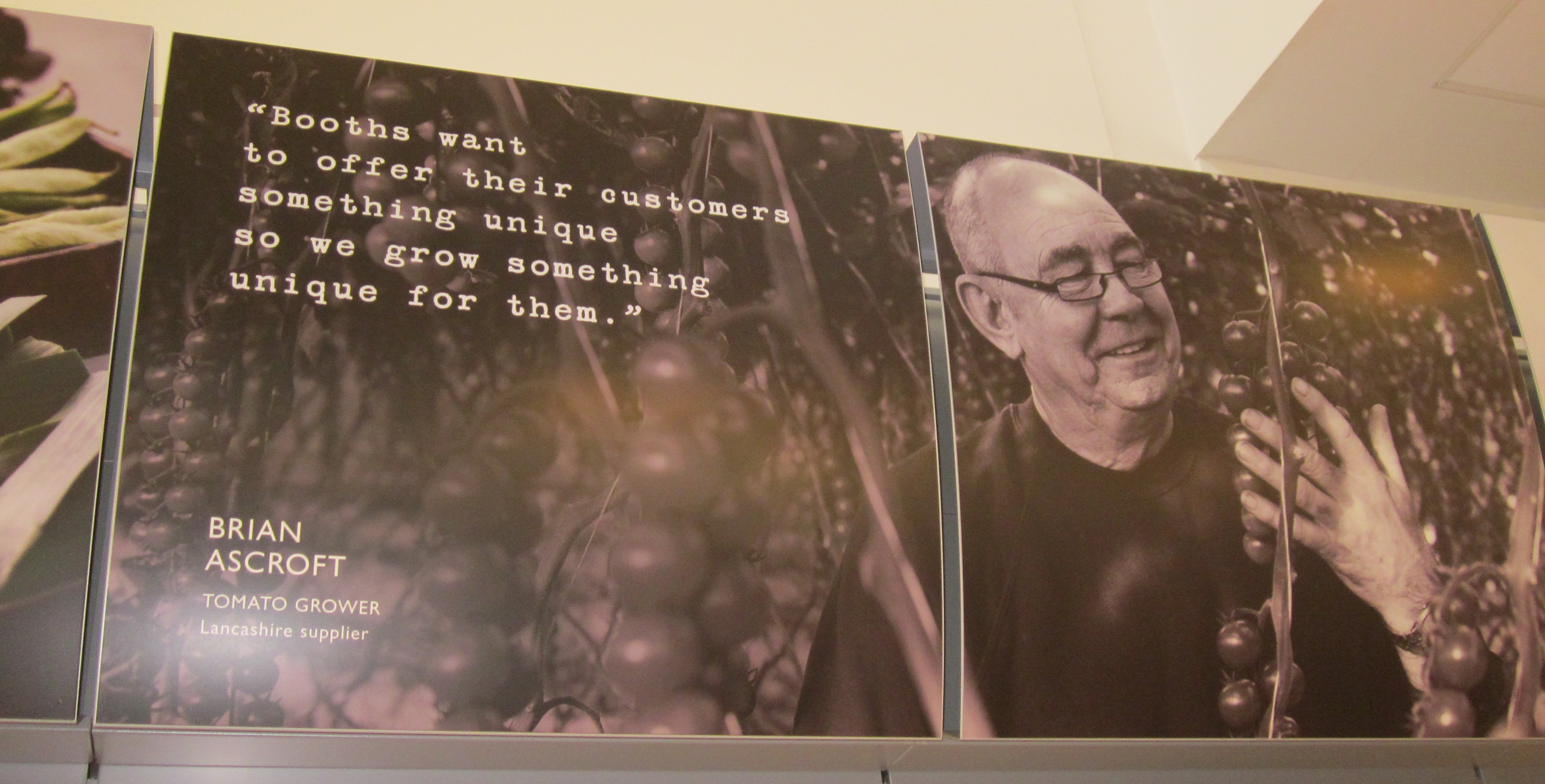
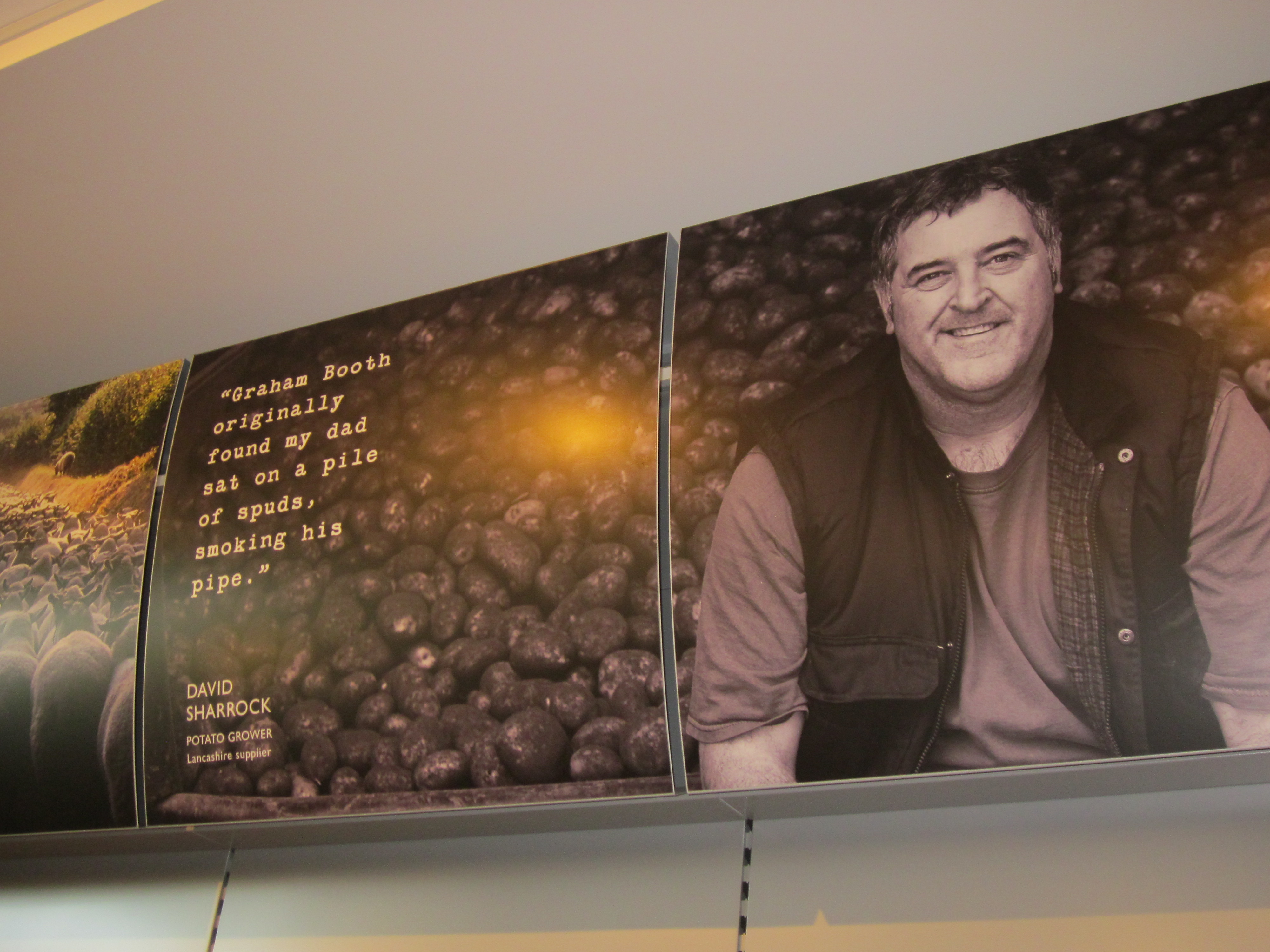
On our way we’ll drive past farmers who grow tomatoes, salads, carrots, potatoes.

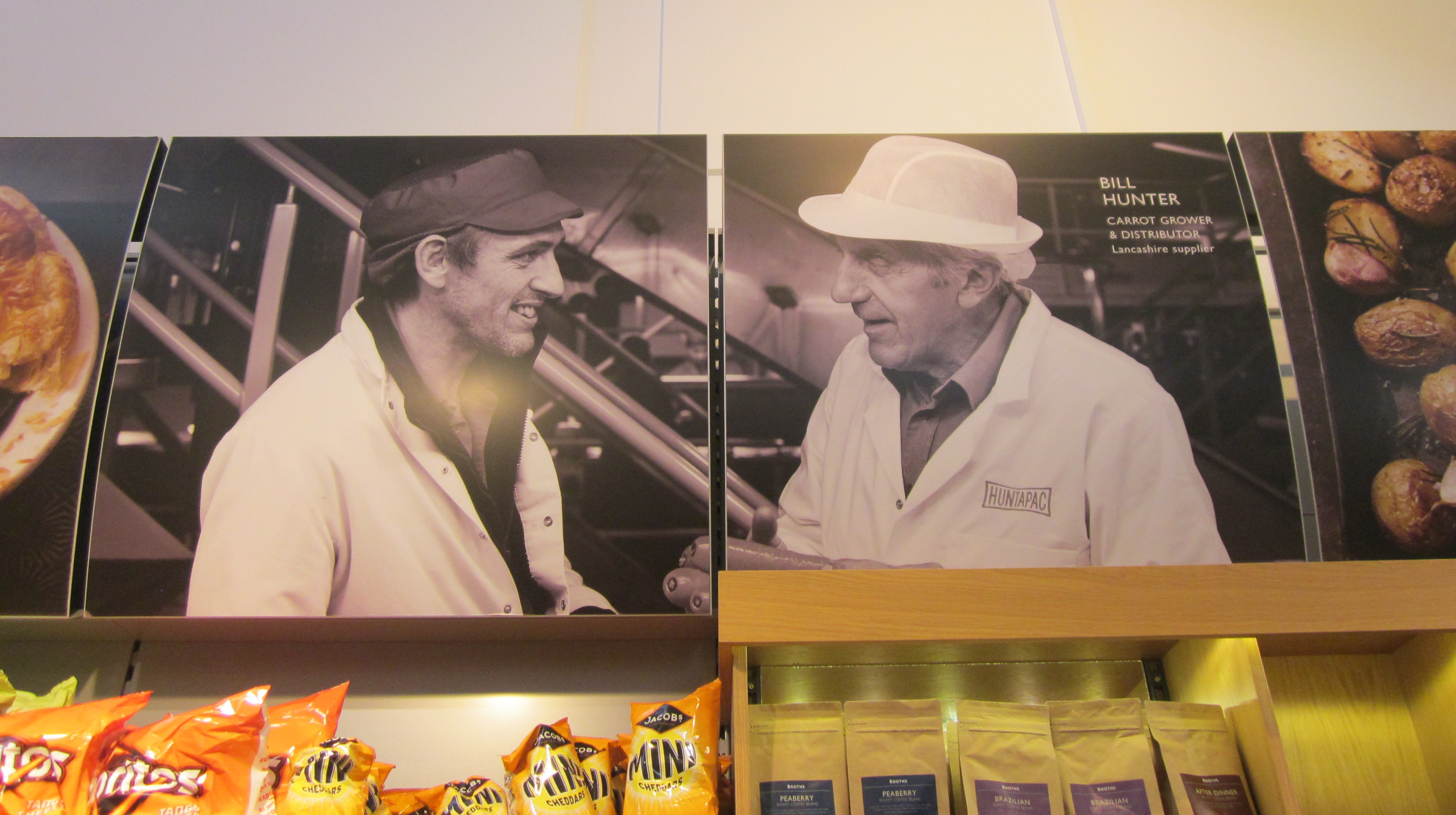
IMG_3513Their pictures hang in the shop.

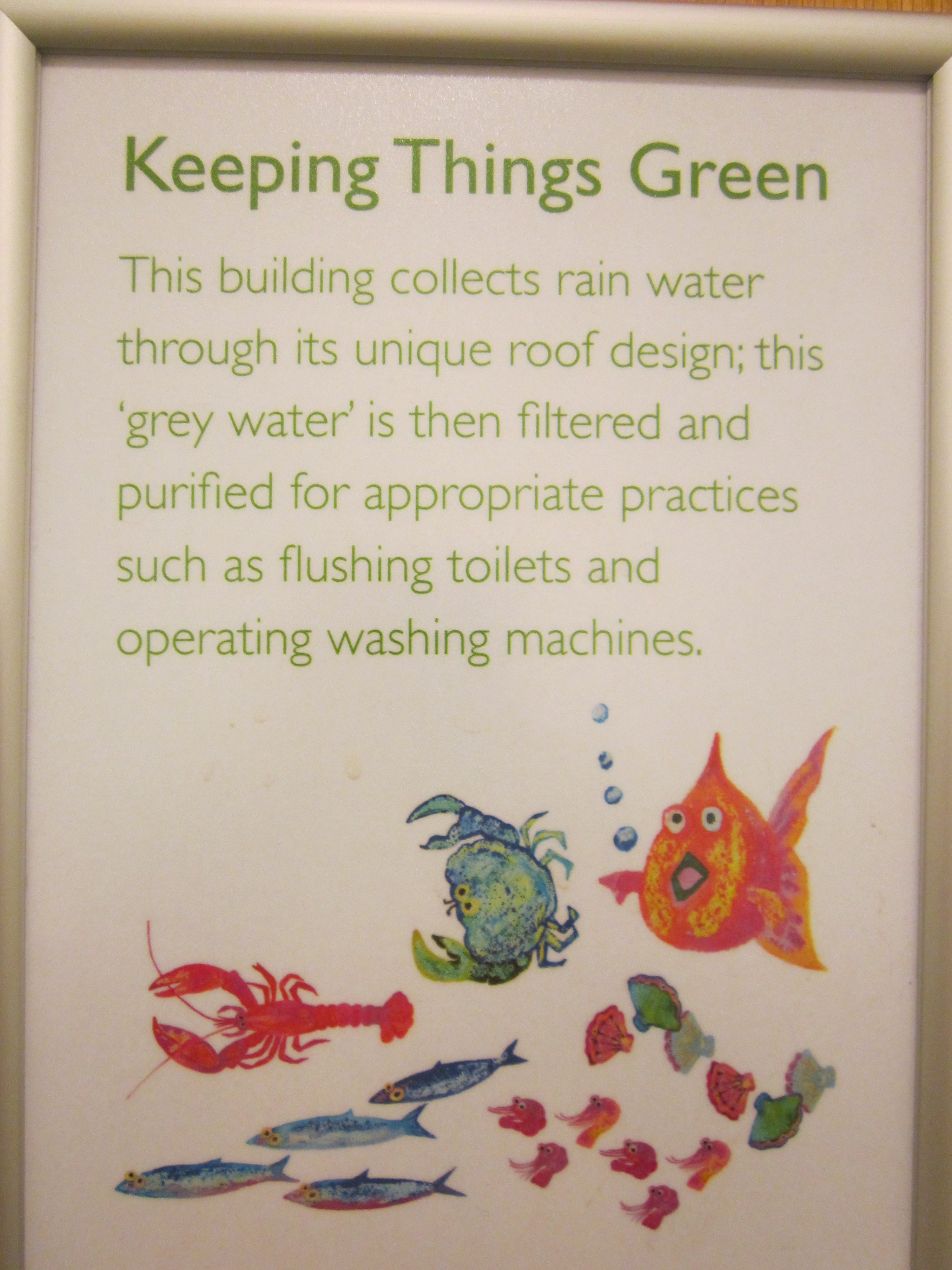
A shop built with environmentally sound features like re-using rainwater from the roof.

It’s quiet.

The lights are mellow.

Everyone’s willing to help. No one’s in too much of a hurry.

The café is limited, but it’s a well-used meeting place for local people. The notice board has posters for brass band concerts and Christian coffee mornings and flower shows.

And every time we drive towards Hesketh Bank and ‘our’ Booths, I can see Blackpool and Lytham St Anne’s across the estuary.

And I feel sad.

Just before we moved up north my Aunty M died.

And there’s a place on my wish-list of places to go that I still haven’t been: her local branch of Booths. As their website says: “Close to the medieval heart of this historic market town, opposite the parish church of St Chads”. And it says there’s a special type of chocolate now in.

My mum would be so jealous.

But if they have supermarkets in heaven you know what brand they’d be, don’t you 😉

Posted in Art, jaunts & going out, Britain now & then, Lancashire & the golf coast, Simple Food for Simple Folk (like me) | Tagged , , , , , , , , , , | 6 Comments

A phantom ship and a barbed wire fence

Eighteen years old. Standing at the window of my room in college. Staring out towards a low brick wall supporting a fence topped with barbed wire. Beyond it, the healthy green of a sports field.

Above the barbed wire, the intense summer-blue of the sky. The sun out of sight, way up high, shining fit to bust.

There’s a narrow path between the building and the fence. One of the disadvantages of a ground floor room.

After midnight, if your light’s on, you’re liable to hear a knock on the window. A friend with a man who’s scaled the locked gates is begging you to open the window and let him climb in. Then they’ll scurry from your room as quickly as they can. After checking the corridor for spies.

But it’s far from midnight and the day is full of promise.

I’m listening to a record I borrowed from a friend, on a record player borrowed from the girl next door.

Beneath my bare feet the grey floor is smooth and hard but not cold. The door to the little cupboard hiding my washbasin is ajar. An orange chair sits by the bookshelves. A single bed stretches along the wall that I share with the kitchen.

That was long ago and far away, but there’s something that always transports me back there – always.

It’s Sibelius’ fifth symphony.

I’d never heard a Sibelius symphony before I met Janet, a friend I see to this day. I was so impressed when she said, ‘listen to the tympani’ that I did. Again and again.

So many friends with so much knowledge to share – as well as records. And dresses. And books. We shared almost everything.

Or did I just borrow?

Possibly.

Anyway. For years I’ve listened to that symphony. I have two different recordings – one my own copy of that same record I borrowed.

Every time I hear it I’m whisked straight back to that room. To that sunny day, that barbed wire fence. To the dreams and hopes of eighteen year-old me.

As the music reaches a crescendo I’m standing on the deck of an imaginary sailing ship, cresting billowing waves. Salt spray flying. Wind in my hair. A thick rope grasped in my hand, keeping me safe.

Imagination – isn’t it wonderful?

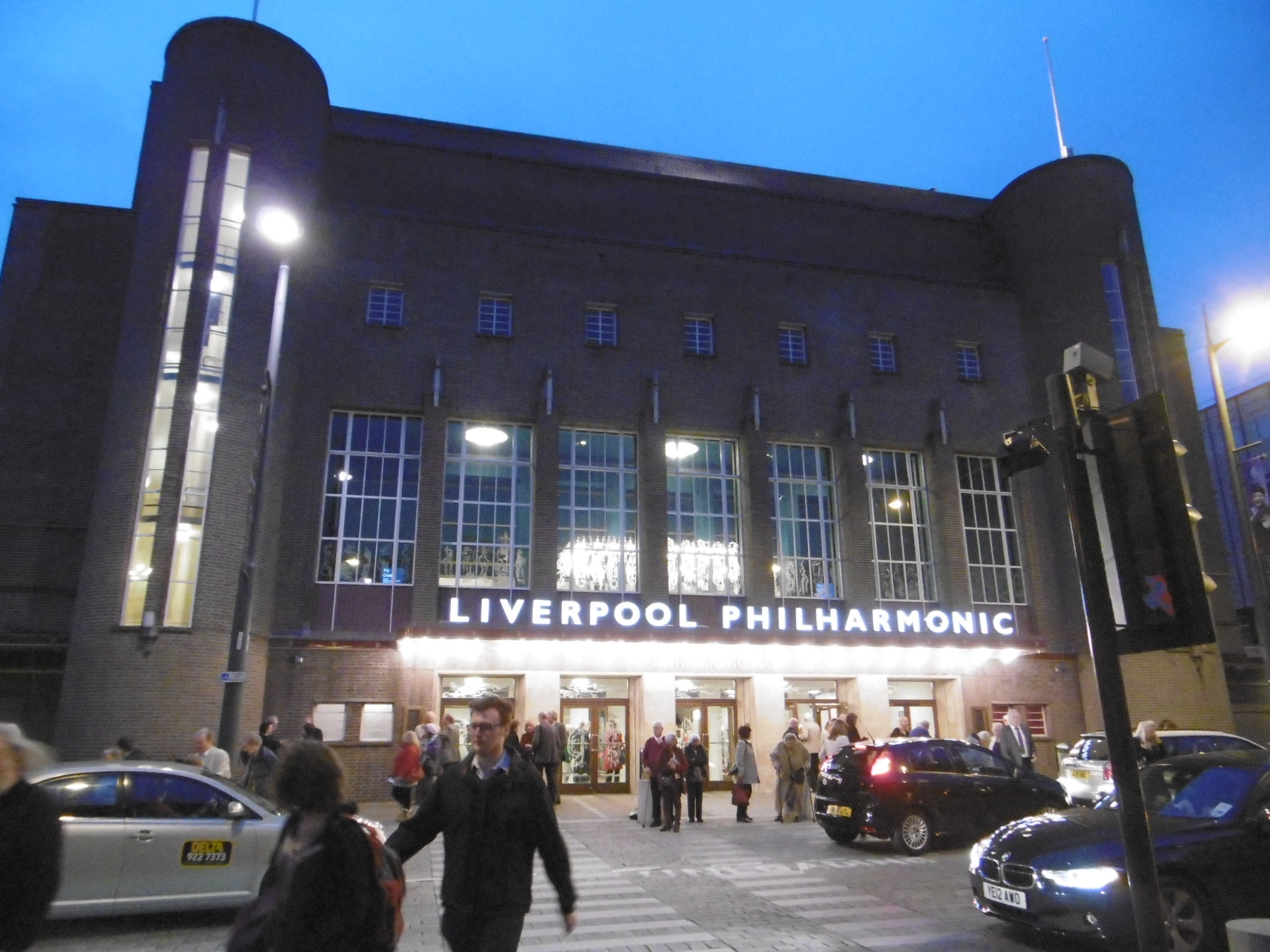
P1010930But last night I sat in a concert hall, hearing the symphony as if for the first time.
And something amazing happened. Something I have never experienced before.

At the point where I would usually be swept away by my phantom of a sailing ship, I lost my sense of time and place.

I was no longer anywhere.

I was swirling inside the music, conscious only of the movement and the sound. As if I was inside a ball of joyfulness – but also peace. Seeing nothing.

I can’t find adequate words to describe it. But it was – magical.

The conductor wore an unusual black jacket that, when he bent, as he often did, dipping and diving with the rise and fall of the orchestration, made him look like the Hunchback of Notre Dame.

Not one of your cool calm and collected types, he threw himself into it, body and – I suspect – soul.

Now and again he clasped the rail around the back of his podium to steady himself, as if he was about to collapse, or teeter off the edge.

The interval came too soon and I wondered if we should leave – how could the rest live up to what had gone before?

But we stayed, for more Sibelius. For his sixth and seventh symphonies. I didn’t know these – but at times the strings took off like the musical equivalent of a murmuration of starlings, or a vast flutter of butterflies. Soft wings were everywhere – well, mostly inside my head.

As the orchestra prepared for the seventh symphony the stage crew came on and took away the harp – and then, the conductor’s music stand. He conducted the last piece from memory.

It’s possible the concert was made all the more exhilarating for me by the fact that I had walked to our local station, caught the train and walked up the hill to the concert hall. Not a crutch of mine in sight.

But I don’t think so.

Yes, it was a special evening.

A classic Liverpool pavement - gum, not art

A classic Liverpool pavement – gum, not art

Yes, Liverpool was abuzz – and even the middle aged woman, out of her mind, whom we swerved to avoid, couldn’t detract from its magnetism. Its energy.

Yes, the beggars and the rough sleepers were in evidence, too much evidence – but it was, at least, a warm night for desperation.

And we had plenty of change to dispense.

The bombed out church - a war memorial beloved of the city and much used

The bombed out church – a war memorial beloved of the city and much used

The other end of the bombed out church

The other end of the bombed out church


Yes, the bombed out church looked even more evocative of the spirit of survival than ever – and the two cathedrals soared.

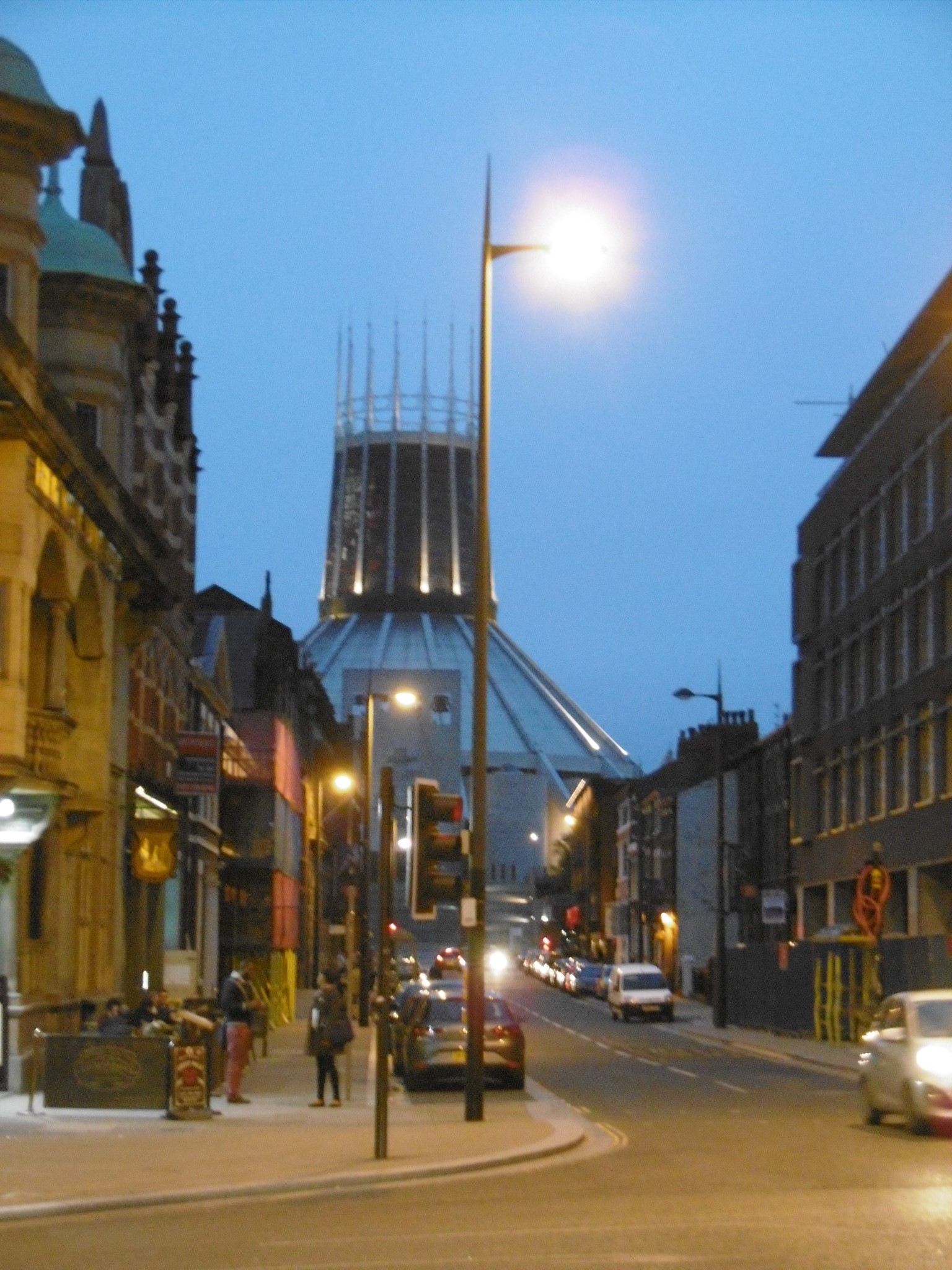
The Metropolitan (Catholic) cathedral at one end of Hope Street

The Metropolitan (Catholic) cathedral at one end of Hope Street

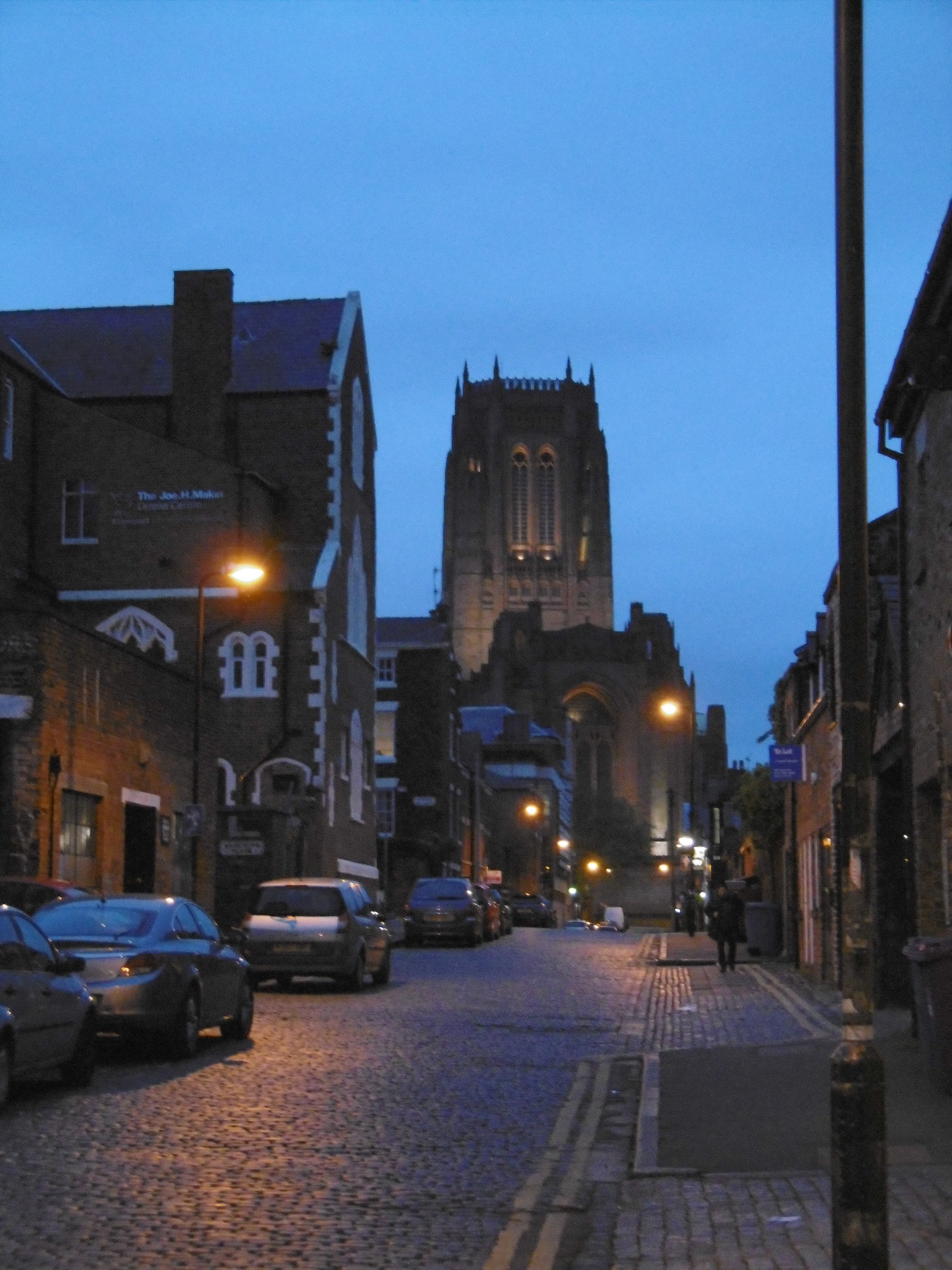
The Anglican cathedral at the other end of Hope street but seen from a classic old cobbled city centre street

The Anglican cathedral at the other end of Hope Street but seen from a classic old cobbled city centre street


But.

Life-affirming though the city was, it was the music that kept me awake all night.

Today I’m tired. But happy.

I recommend Sibelius’ fifth. If you don’t like it the first time try it again – and again. There will come a point at which you get it. And you’ll be hooked. Forever.

No need for a barbed wire fence – but a blue sky and a sunny day? An openness to hope and a willingness to dream?

Perhaps.

Posted in Art, jaunts & going out, Liverpool | Tagged , , , , , , , , | 8 Comments

There and back. A post-industrial journey, with cake

I used to love seeing labels that said ‘Empire Made’ – engraved on an old pair of scissors or a battered decorative tin.

Such a feeling of immensity in that one word, ‘empire’. But I was a little girl then and didn’t know what empire meant. It sounded like the stuff of fairy tales – the kind with happy endings.

Those days are long gone. Yes, a few tiny patches of empire-territories-pink remain on the world map – and there’s still the Commonwealth. But the sun has long since set on the British Empire.

And I think that’s a jolly good thing. Empires bring subjugation and unfairness. A Commonwealth, now – that sounds like an ideal world. The whole world should be one. But it isn’t.

Anyway, let’s not go there, I’m avoiding idealism for a few days.

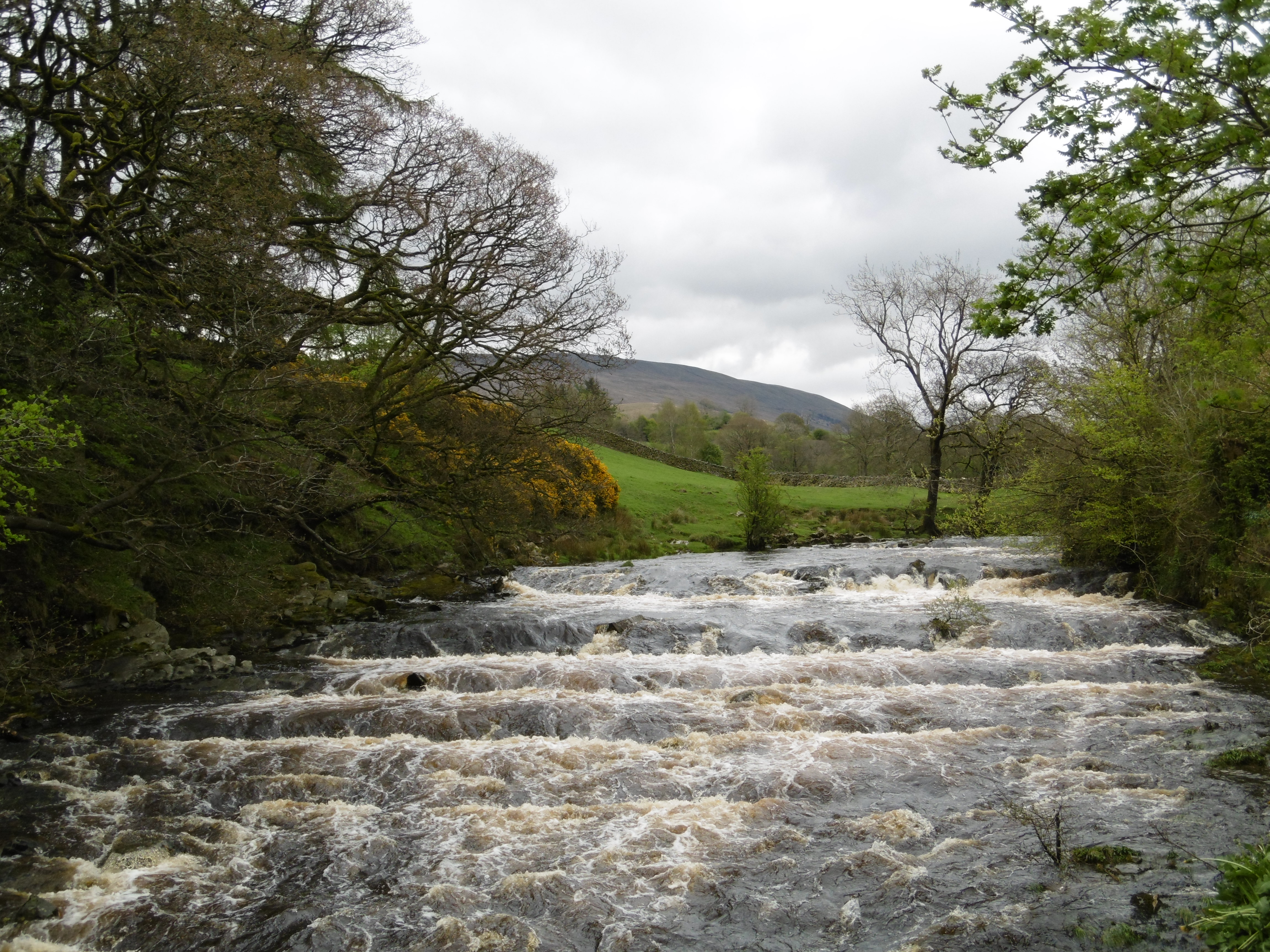
The Ribble estuary and Blackpool in the distance on the marsh flats by the sea

The Ribble estuary and Blackpool in the distance on the marsh flats by the sea

By way of distraction I’ve been getting out and about. Breathing fresh air. Walking without conscious effort. Carrying a single crutch in case I go too far and begin limping, yes, but wandering the beach or the park or a stretch of fragrant salt marsh as if I’m all mended. And I am, almost.

I never was a joyful walker. It’s a bit like a car as far as I’m concerned, walking. Fine to take you from A to B but not to be mistaken for a fulfilling pastime in its own right.

I know, how un-British.

But I love this wonderful country.

P1010893Our natural world may seem tame contrasted with the striking wildlife of Africa, the frozen north and its glaciers, the great coral reefs, but in learning to know its subtlety is great satisfaction. And in its subtlety is beauty.

It’s not just nature, though. History’s left its mark all around us. Obvious things – romantic ruins on lonely hilltops, urban monuments to civic pride, solid old manor houses, grandiose stately homes.

But then there’s our industrial heritage.

Last weekend we woke up to a miserable day, the second after our general election. The new British citizen was, if anything, feeling more dejected than I was – having cast his first vote to no avail. But his misery-busting solution was brilliant.

P1010892

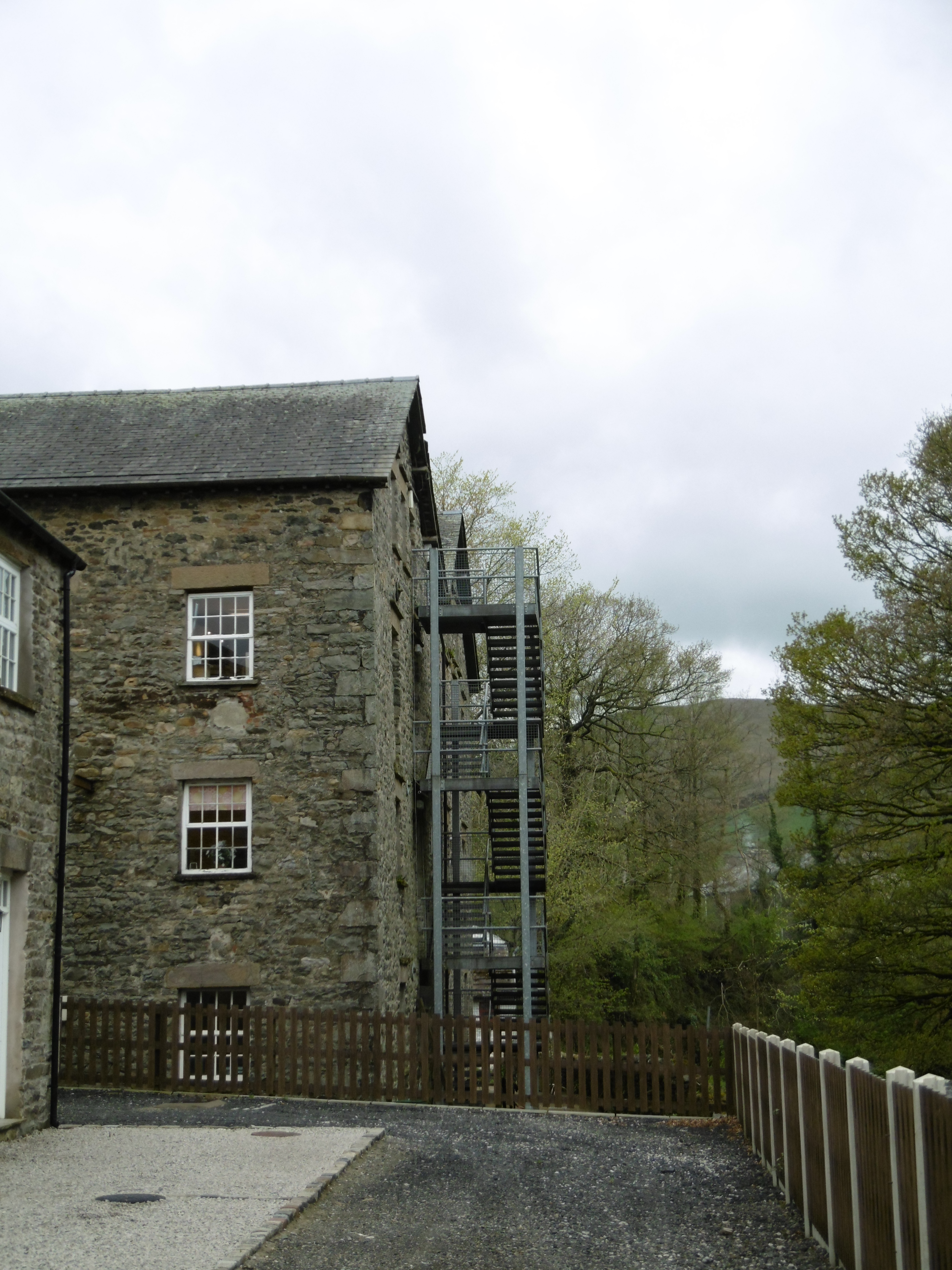
Part of the refurbished mill on the river bank

A trip to a mill.

Cake, as usual, came into it too, but the mill and its surroundings were the lure.

I find the places – and remains of places – where things were and are made fascinating. I enjoy seeing component parts becoming things, hearing the clattering machine making a woollen blanket – though I don’t have to hear it all day, or breathe in the airborne fibres, or risk life and limb with unguarded machinery.

But the mill we were heading to no long clatters and fluffs. There’s still a little weaving done, using some of the old machinery, by craft weavers, but not on the scale of the Welsh woollen mills I’ve written about before.

This mill’s in Yorkshire, on the western edge, nearing the lakes and peaks of Cumbria.
Here Yorkshire’s scenery treads a middle course between bleak and twee. Hills, not vast open moors. Not bleak, but not exactly cosy.

Cosy scenery isn’t really my thing. I love a bit of bleakness. But sometimes bleakness can be – well, too bleak. And on Saturday we weren’t in the mood for bleak.

The mill itself feels far from cosy, but nor is it entirely bleak. Partly restored, partly awaiting some TLC, it sits on the edge of a vigorous river, as most old mills did, for direct power or steam.P1010888

Stone built, it housed the new and dangerous technology that steadily drew the rural cottage weavers from their homes. That deprived them of their commanding positions as master craftsmen and made them wage slaves.

Not everyone succumbed to mechanisation straight away, there was still demand for the work of traditional weavers, but time and poverty wore most of them down in the end.

The textiles produced by northern British mill-workers – men, women and children – were shipped all over the empire from Liverpool. But imperial success was their downfall. The new textile factories of the Indian subcontinent soon undercut the Yorkshire and Lancashire weavers.

The mills and smoking chimneys of northern England were often identified with the territory, as if it grew that way. Some ill-informed folk still think it’s a land of mills and smoke. But today few red-brick, soot-blackened smoke stacks remain. Those that do stand proud, all the more noticeable for being rare. And rarity brings them value.

They’re heritage assets, not necessary evils.

This rural mill is stone built, not red-brick. It’s survived, first, through benign neglect and now by attracting craftspeople and visitors. Walkers and motor-tourists, roving around the dales in search of landscape, cake and heritage.

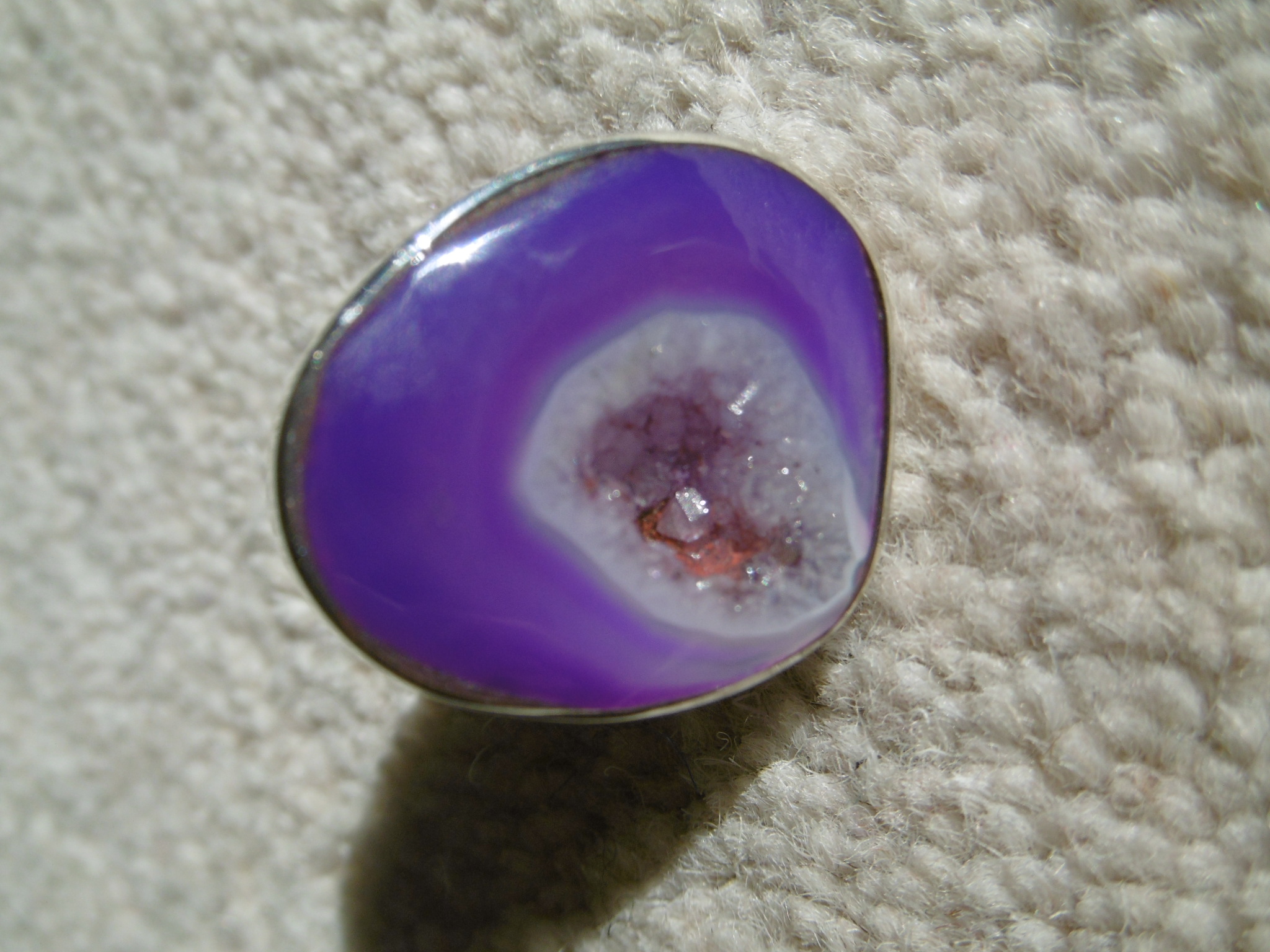
The café serves some damn fine cake. There is art, pottery, textiles. And there’s a Greek silversmith who works in the upstairs gallery. He lived in India and has a passion for stones.

That’s how I came away the richer for some fine silver jewellery.

Spoilt rotten, I know.

But I like to think we’ve helped, just a little, to keep the old mill working. Enabling craftspeople to make a living.

Turning one small wave back from the tide of industrial slavery to the freedom – albeit precarious – of self-employment. To valuing personal skill, creativity and uniqueness, in the face of cheap, mass-manufactured ‘perfection’.

Most of all, though, I like the flash of sterling silver, the bright purple stone with a core of rough crystal, flashing on my hand like some gaudy tropical butterfly.P1010929

What a great day out.

Beautiful landscapes.

Cake.

And a hand-made silver ring, with a stone of imperial purple, from a commonwealth of crafters in our post-industrial world.

P1010887

Posted in Art, jaunts & going out, Britain now & then | Tagged , , , , , , , , , , | 10 Comments

The yellow of austerity – and a purple fuzzy cushion (with a button in the middle)

Have you noticed anything about the grass verges and hedgerows?

It might depend on where in the UK you are – and whether your council has seen swingeing cuts under the government’s austerity programme or not – but there’s something different this year.

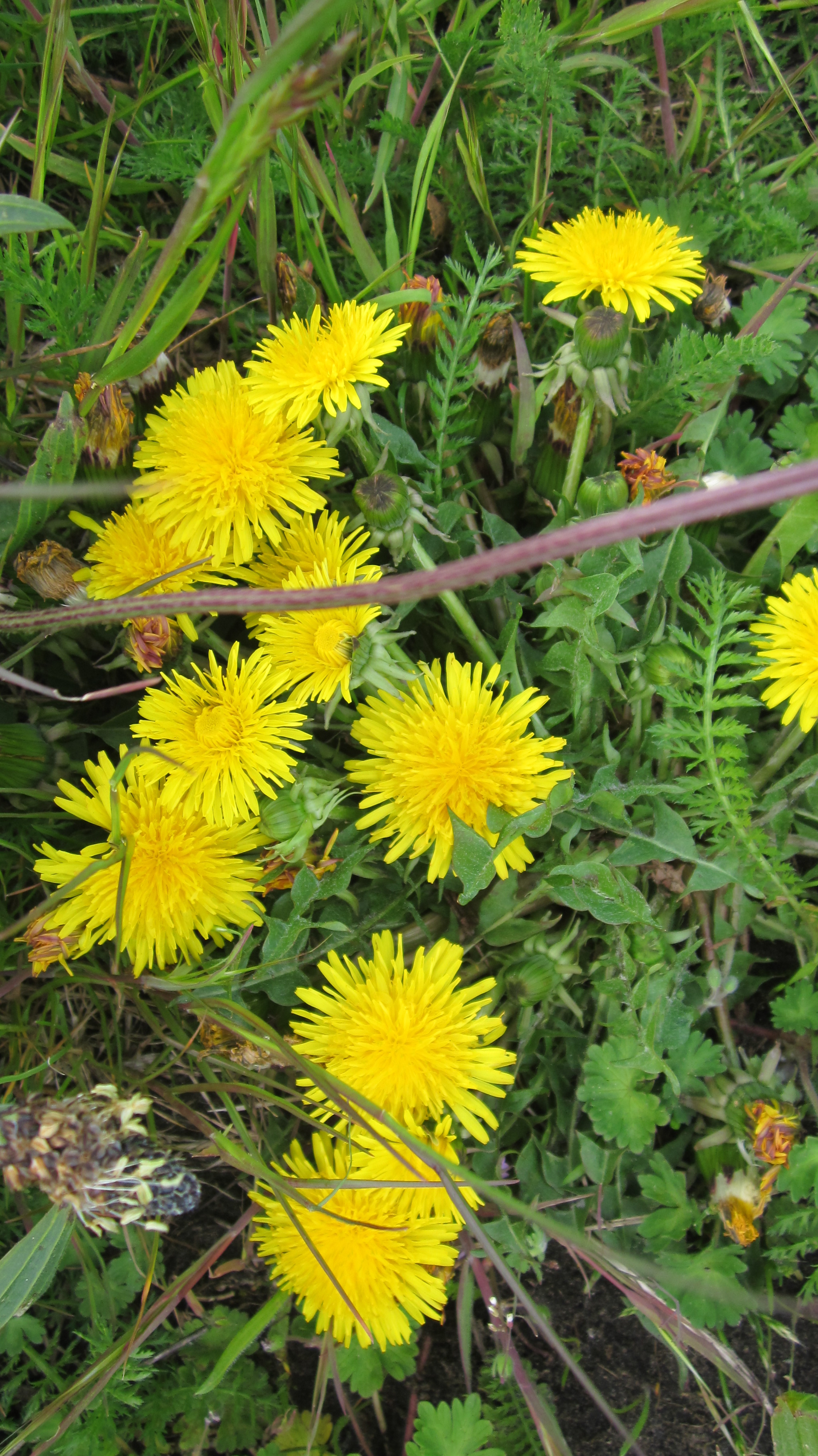
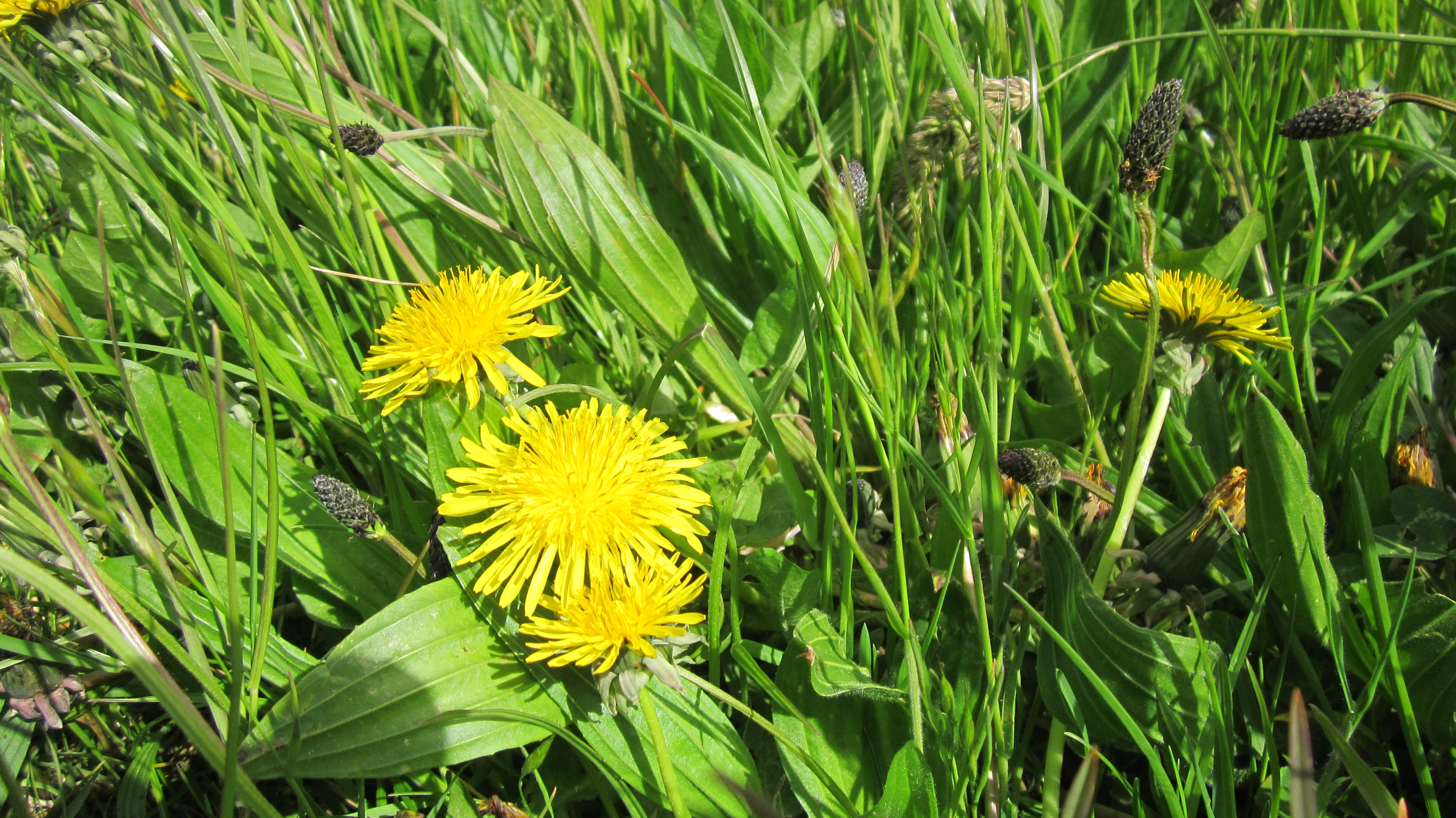
I noticed it first when we were out in the Lancashire countryside – the hedgerows were full of dandelions. Then I realised that even in town, the grass verges on most of our main roads are brightly blooming yellow.IMG_3501

Our council services have been cut back. It’s not just closing libraries and police stations or the sacking of park staff, but also, it seems, regular grass mowing.

I never thought I’d be pleased to see council cuts – but this one I relish. Spring has sprung yellow all over – and it’s almost enough to cheer me up about the world.

Almost.

I’ve been umming and ah-ing about this post. Everyone’s tired of political posturing as the election campaign here reaches its climax. The last thing anyone needs is a blog post from me on the subject.

Which is why, instead of ranting on about how much I care about who forms the next government, I’m going to tell you why a treasured purple cushion is a bit of a touchstone for me.

Scroll back the years.

I’m newly arrived at university. A knock comes on my door. Outside stand two nice people asking me to join the Conservative Association. I say yes and pay my dues.

I doubt it cost me very much – in those days I was living on an allowance that my dad misread as being ten pounds a month. It should have been ten pounds a week. There was much rejoicing at the Oxford branch of Laura Ashley when he realised his error.

Anyway, I joined the Conservative Association.

Why?

I don’t know.

My father was a Conservative – as headmaster of a boy’s grammar school he was vehemently against comprehensivisation – though I don’t know if that was his only reason. My mother, meanwhile, was Liberal by inclination – like her mandolin-playing, wholesale fruiterer father.

We lived on the edge of a big city. The green belt began behind us, with views over fields stretching as far as the eye could see.

Our road was middle class and the man next door was the managing director of a small steel importing business – and a member of the local Conservative and Unionist club. (He also had a leather-seated Rover 2000, much coveted by my mother.)

About twenty minutes’ walk down the main road was our parish church. The parish was largely made up of a big council estate, where several of my schoolfriends lived.

Our priest was a lovely, erudite Irishman whose accent I frequently found impenetrable – but one phrase he used so frequently there was no mistaking it.

‘Dear brethren.’

That was us. We were his brethren, all of us.

Father Hickey wore a beret in cold weather and drank whisky. He fried up daffodil bulbs by mistake when his housekeeper was away and was sick.

He was a frequent visitor to our house, as a member of the board of governors of my dad’s school and as parish priest.

During one election campaign he addressed the congregation from the pulpit and said it was their duty – because of the education policy – to vote Conservative.

I was too young at the time to make much of that – but now I wonder – did his largely poor, working class parishioners do his bidding?

At university I had no real political sense. Politics only impinged on me when Oxford Union elections were due and parties were given – then everyone wanted to be my friend.

One of the real friends I made there was a Labour activist. After university he joined a nationalised industry – the National Coal Board.

By the time of his early death he had been a banker, retired – filthy rich – in his thirties and gone over to what he once would have thought of as the dark side. The Conservatives.

I was still largely unaligned. I’d gone from being an accidental journalist, specialising in telecommunications, to a PR person.

Because of my telecoms background I ended up working for a de-nationalised (as we used to say) part of British Leyland. Not the cars bit. Old BL had a unique communications network and a nascent email system that relied on acoustic couplers (old fashioned phone handsets that fitted into modems on typewriter-style equipment on the desktop). And paper. No screens.

The recently privatised British Telecom plc – formerly part of the Post Office – was my next client.

By now I’d begun to think more seriously about politics and when the Social Democratic Party was formed it got my vote.

Then we moved out of London. I went from working as a consultant in telecoms and finance (a large bank was one of my clients) first to an insurance company, then to freelancing with glossy mags and a national newspaper.

We became very poor – but happy – on my erratic earnings.

Before going freelance, I’d been offered – and turned down – a major job in the pre-privatisation water industry. Poverty drove me to ask my contacts for freelance work – but instead they gave me the job. And what a job it was.

I enjoyed water and sewage – it’s down-to-earth, essential in the truest sense. But we were the most loathed businesses in the country.

Fat-cat bosses who once were local council employees were now running a vital service – and making loadsamoney.

Labour politicians poured vitriol on us.

Friends of the Earth ran a memorable campaign featuring taps running with poison. Ironic, that a campaigning environmental group was responsible for a boom in bottled water. All those plastic bottles.

I worked like stink with my in-house team and a bevy of outside agencies supporting us.

For the first time, I found myself working with men who got their hands dirty. I mean really dirty. Sewage treatment workers deserve medals.

Water and sewage workers know they do a vital job and tend to behave accordingly, with incredible commitment. I met some fantastic people and was delighted to find families working in our big, jolly, family industry – sons, fathers, mothers, brothers – and so on.

What great ambassadors for our company.

Then came my Damascene conversion.

We were forbidden to use any family stories in our endeavour to be seen as less loathsome.

The reason?

The ‘City’ – the money men – wouldn’t like it.

We were big businesses now and supposed to be rationalising.

Cutting costs.

‘Letting people go.’

Enhancing shareholder value.

I’ve always been a bit naïve. It took me quite a while to realise I was doing an impossible – for me – job.

My official duty (when I became a director) was to pursue shareholder value above all else.

We told ourselves the usual corporate fairy tales.

If we treated our staff and customers well, provided a good efficient service, blah blah, that would enhance shareholder value.

Except the usual corporate weasel words don’t work with a monopoly.

Bring in all the regulators you like – they don’t take the place of two shops selling different products, one cheaper, but poorer quality.

It was the most stressful job I’ve ever had. A twenty-four hours a day job for many of us, manual workers and office workers alike – and every single employee was at risk of being despised on admitting he or she worked for a water company.

We managed, like water dripping on stone, to change attitudes. Became the least unpopular of the corporate lepers.

But it was wearing.

I handed in my notice.

Waiting for my terms to be agreed, a stream of key directors began popping in to see me, asking me to stay.

How nice, I thought. They want me. They like me. They …

… needed me.

We were making a takeover bid.

A year later, when it failed, my voluntary redundancy terms were generous and I left with immense relief.

By then I’d seen how nasty politics could be, if not all politicians.

Our region was largely Conservative and I got on well with many of our Members of Parliament, MPs whose views were opposite to mine. But the underlying ethos, I now realised, was what mattered.

I had chances to get involved during those years – I met a group of key Labour strategists for dinner in the House of Commons one night, for example – but I had no idea how to react.

I always seem to work out how to use an opportunity after it’s gone.

Now, far too many years later, I’ve joined a political party. It’s not ideal, but has at its roots a belief that unfairness and inequality are things to fight, that capitalism – unfettered – is not the answer to all our human needs.

British politics, I know, can be confusing. One of my sisters-in-law once asked if Margaret Thatcher – the Conservative Iron Lady – was a communist. To an American that’s usually about as close to a devil on earth as you can be. So I understand her mistake.

And I understand those who feel that socialism is too close to communism for comfort.

But I’ve always felt quite comfortable with it because – wait for this – I’d be happy for everyone to have purple fuzzy cushions with a button in the middle.

You see, when I was little, I asked my father to tell me what a communist was.

I’d asked for and received a purple fuzzy cushion – with a button in the middle – for my birthday. It had pride of place on my bed. I wan’t one for lots of soft toys. And the luminous rosary was under my pillow.

I’m sure he gave a decent explanation. May have mentioned Stalin and the purges – though I don’t remember it. What stuck with me was, ‘if you can have a purple fuzzy cushion everyone has to have one’. Well, that’s how my little mind interpreted it.

And it shows you how important and misleading an analogy can be.

So, come the revolution, it’ll be purple fuzzy cushions all round, in my ideal world.

That, or perhaps more important, an end to a government that penalises the poorest for having one spare bedroom, whose fabulously wealthy chancellor claims child benefit from the supposedly impoverished state and gives tax breaks to the richest.

I think Father Hickey would have been with me on this one.

Brethren, vote for others, not for your own selfish interests.

What’s that? The economy?

Oh, don’t get me started. We’re a rich country folks, the deficit in GDP terms is not historically high – and Labour was overseeing a period of growth before the Conservatives stopped it in its tracks.

But never mind all that – we’ll cope.

As long as someone is caring for the weak.

And that surely shouldn’t be a Government that’s seen food banks spread like weeds in our rich, comfortable country.

I’ll take a risk, thanks.

And sorry for talking about politics after all.

And for going on so long.

I’m off out for some fresh air and life-affirming dandelion spotting now.

(The purple cushion, since you ask, is long, long gone.)IMG_3499

Posted in Britain now & then, Thinking, or ranting, or both | Tagged , , , , , , , , , , | 5 Comments