Come, luscious spring, come with thy mossy roots,
Thy weed-strown banks, young grass, and tender shoots
Of woods newly-plashed, sweet smells of opening blooms,
Sweet sunny mornings, and right glorious dooms
Of happiness, to seek and harbour in,
Far from the ruder world’s inglorious din.
From ‘The Robin’s Nest’
by John Clare* [1793-1864]
Friday morning. The moon slides between us and our sun, an eclipse eclipsed by clouds. And our world turns cold.
As the mis-timed dusk takes hold the birds fly hither and thither – not up, not down, but side to side, as if looking for an emergency exit. It’s odd.
Saturday dawns beautiful and bright, as if the moon’s wiped clean an unseen, misted window on the sun. The perfect day for our outing. A drive across town to a special place.
Churchtown Botanic Gardens aren’t what you might expect from the name – yes, some of the trees are labelled, but it’s more like an old-fashioned park, the kind I grew up with as a child.
Taking the scenic route, along the coast, I’m treated to a sight I’ve never seen before. The sea is in. Right in.
As a child, a trip to Southport was always a mixed pleasure. The seaside, yes. But the sea? My little legs never once carried me all the way to the sea, it was so far out.
But the moon, it seems, has filled our local bucket, as well as wiping our solar windows.
My chauffeur drops me by the Gardens’ gate and goes to park. I ply my way on crutches, gingerly, looking out for omens.
 ‘Museum’ the first sign proclaims. But it’s closed, its treasures all dispersed.
Some flowers, mostly daffodils, nod hello in the nearer reaches of the park. People sit on benches. Chatting, waiting – or simply passing time.
A band strikes up – the oompah of the brass like a great big grin on the air.
Plodding my way round to the greenhouses, the peacocks in their (soon to be closed) aviary squawk their whiney, ‘waah, waaah.’
Plants for sale sit in ranks of spring-fresh colour, but there aren’t quite as many as usual. Inside the greenhouse, potted plants too tender for our still-wintry nights keep warm beneath the glass. I spy two members of staff. Two of the three who may soon be the last, of many, to go.
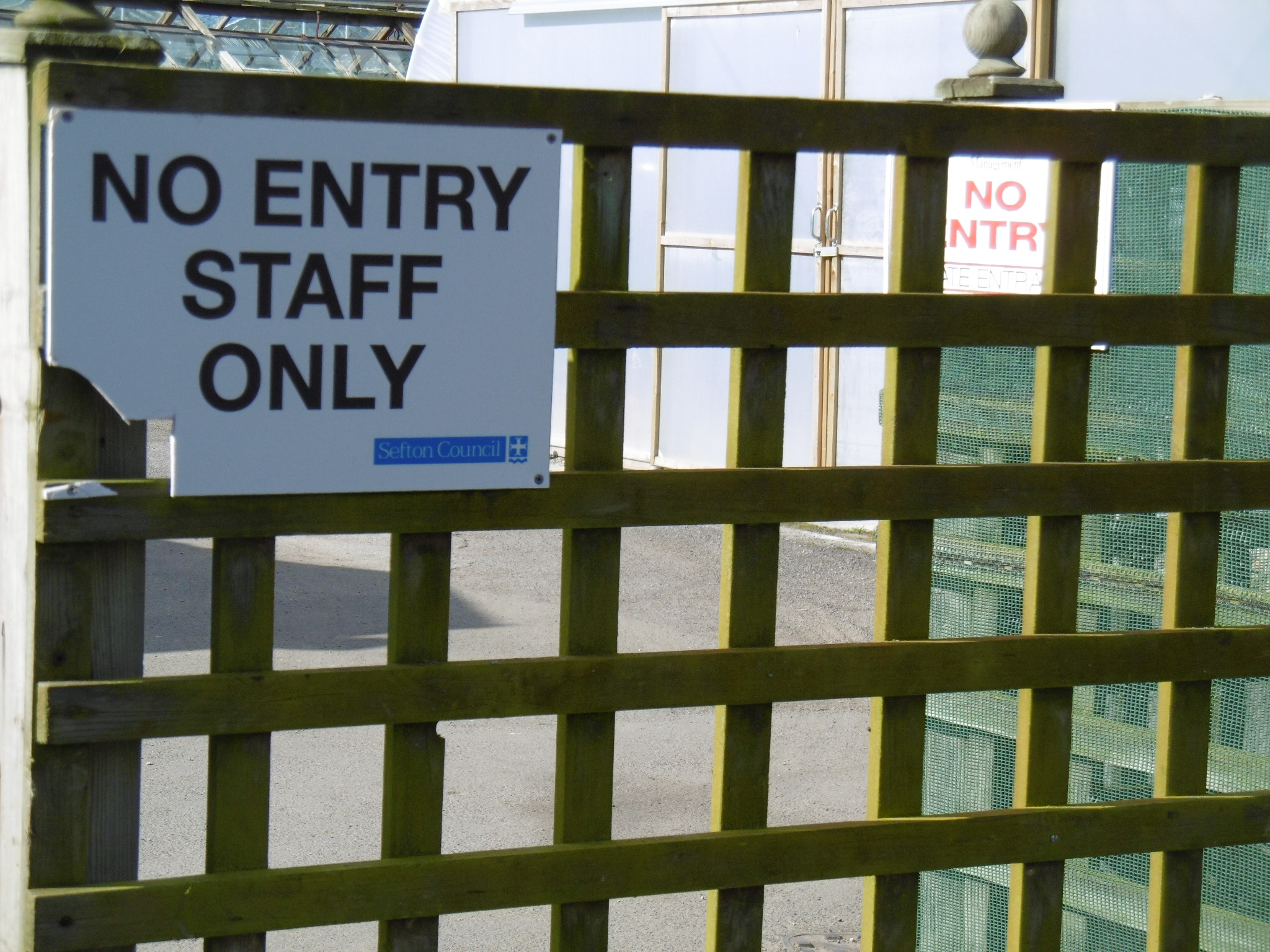 Beyond the ‘Staff only’ gate stand rows of empty glasshouses. There, council staff once grew bedding plants – and not just for the Gardens’ own famed flowerbeds.
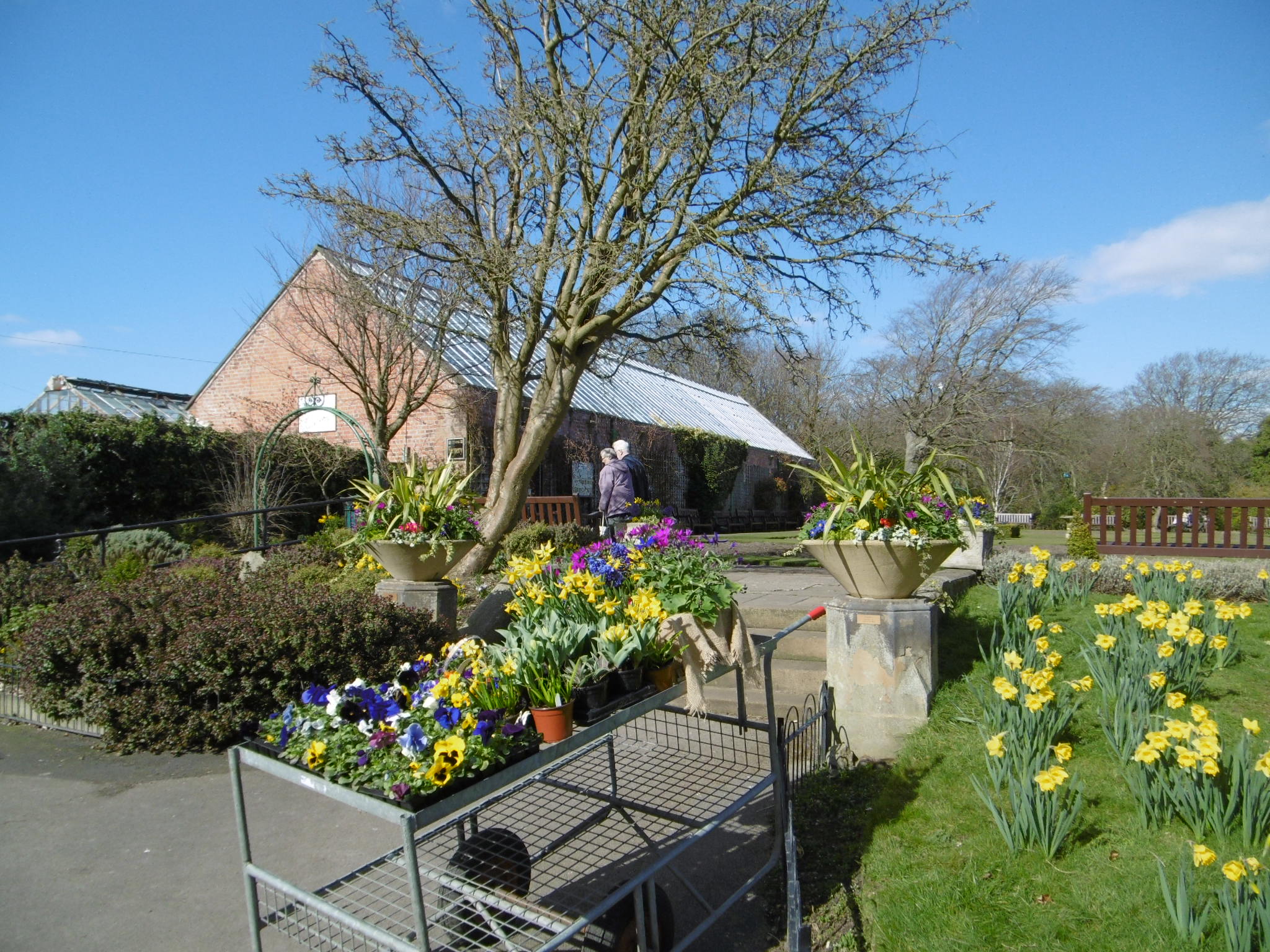
Victorian fernery in background
Back outside, steps that should lead to a stunning horticultural display instead open onto grass disfigured with gashes of bare brown earth. People sit, as usual, in the wooden benches around the edge, but their joy is gone.
The Victorian fernery – with its refurbished glass roof – looks blind and closed.
The ‘train’ that children could ride is gone.

No boats, now
The boats for hire on the water are gone.
The wild birds remain.
The trees remain.
Three members of staff remain. For now.
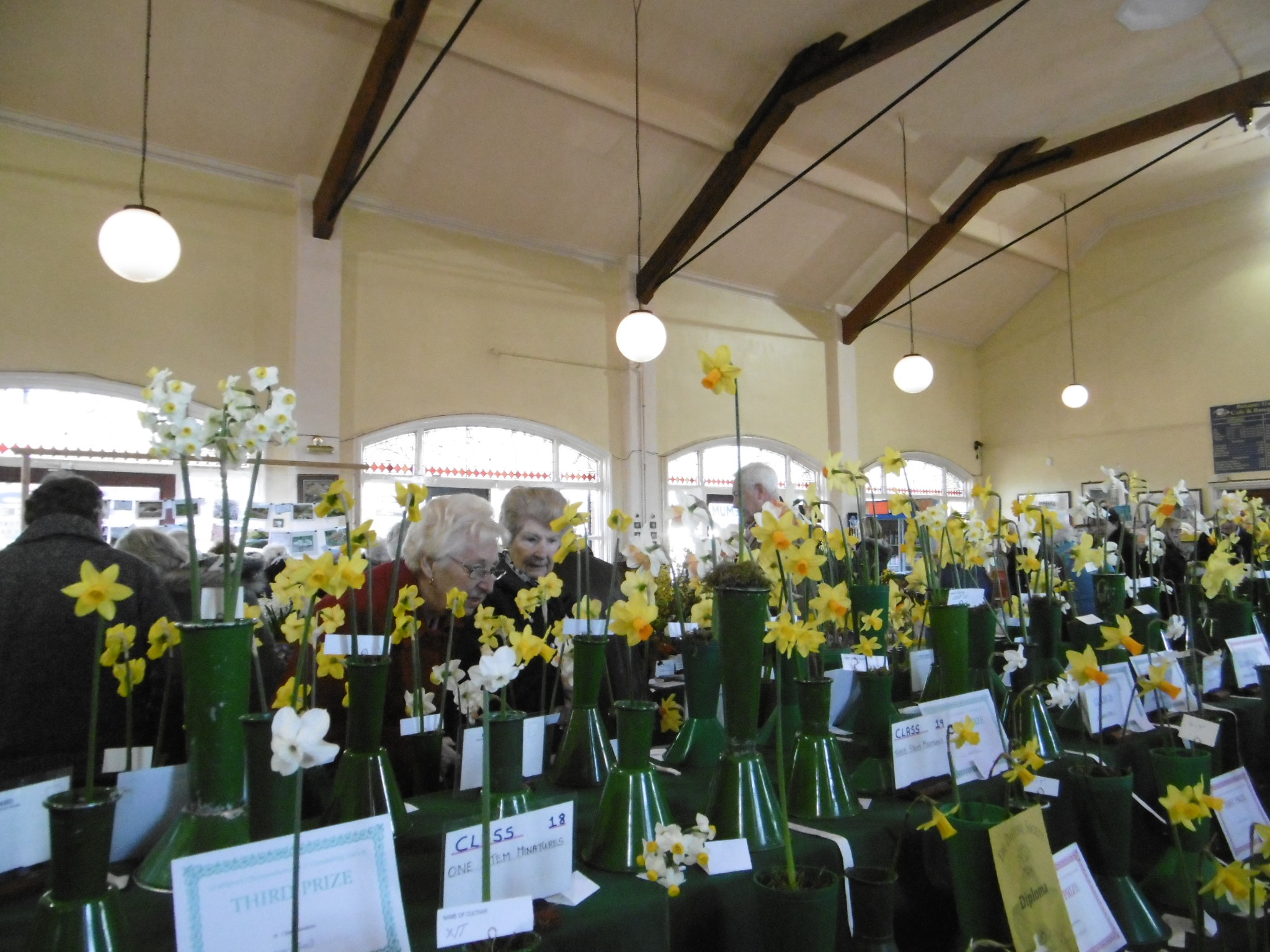 Fifty pence lets us into to the Chrysanthemum Society Show. The campaign to save the gardens has colonised one corner, I pay my dues and offer help with words.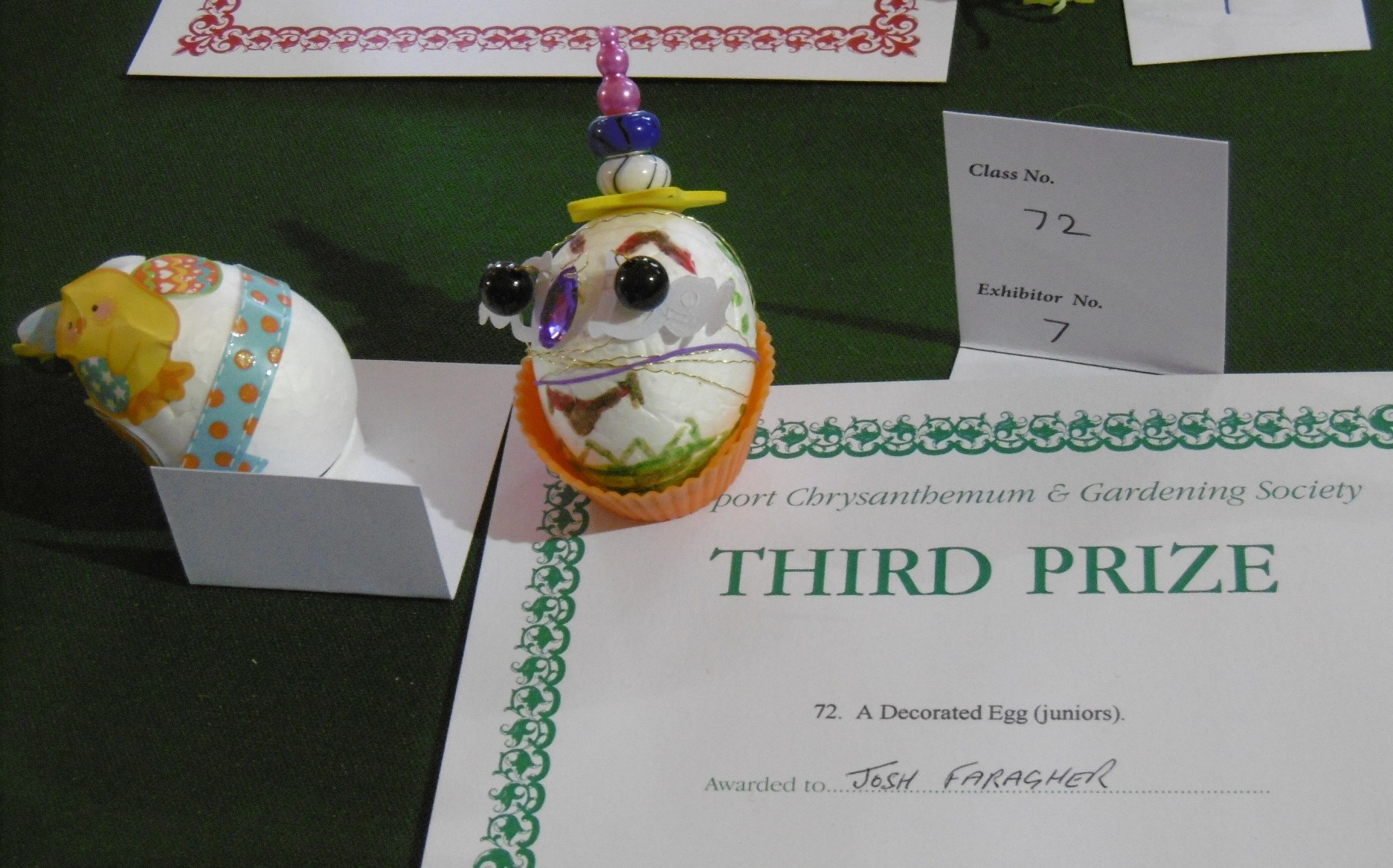

Outside, the oompah’s been replaced with a chorus of men in black. Their rendition of Alexander’s Ragtime Band is fun, but a new little pain tells me it’s time to go.

On the way home we talk about our world and how it’s being diminished.
Is it better that flowers, three gardeners and a museum are lost than something else?
What use, after all are flowers?
The morning’s lead editorial in that renowned publication, The Times (of London), tells us we have not really noticed the cuts to local government spending.
We beg to differ.
Our local council’s funding has been curtailed quite harshly. According to one measure** it’s down by 7.8%. It’s a lot, but Liverpool (10.7%) and Manchester (10.5%) fare much worse – and the worst of all, poor, disadvantaged Knowsley, bottoms the table at -10.9%.
This in a world where Tewkesbury (of the famous Abbey) has a budget up 3.2%, Cambridge (of the famed university) is up 2.3% and Winchester (with its cathedral in genteel Hampshire) is up at 1%.
 We live in the north of England, on the boundary between two communities, each of around 12,000 inhabitants. We’re just about equidistant between two buildings that, until a couple of years ago, were libraries. Both are now shut, the books all gone.
A couple of doors along from one of the libraries was a neighbourhood police station. Its doors are locked to local people.
Our borough now has two police stations officially open to the public. One in the north opens 7 days a week, one in the south six days a week.
There are many more – and arguably more serious – things, like the cuts to social services.
But I want to stay with flowers.
With gardens.
We don’t all have trees. Or gardens, or flowers, or boats to row or toy trains to ride.
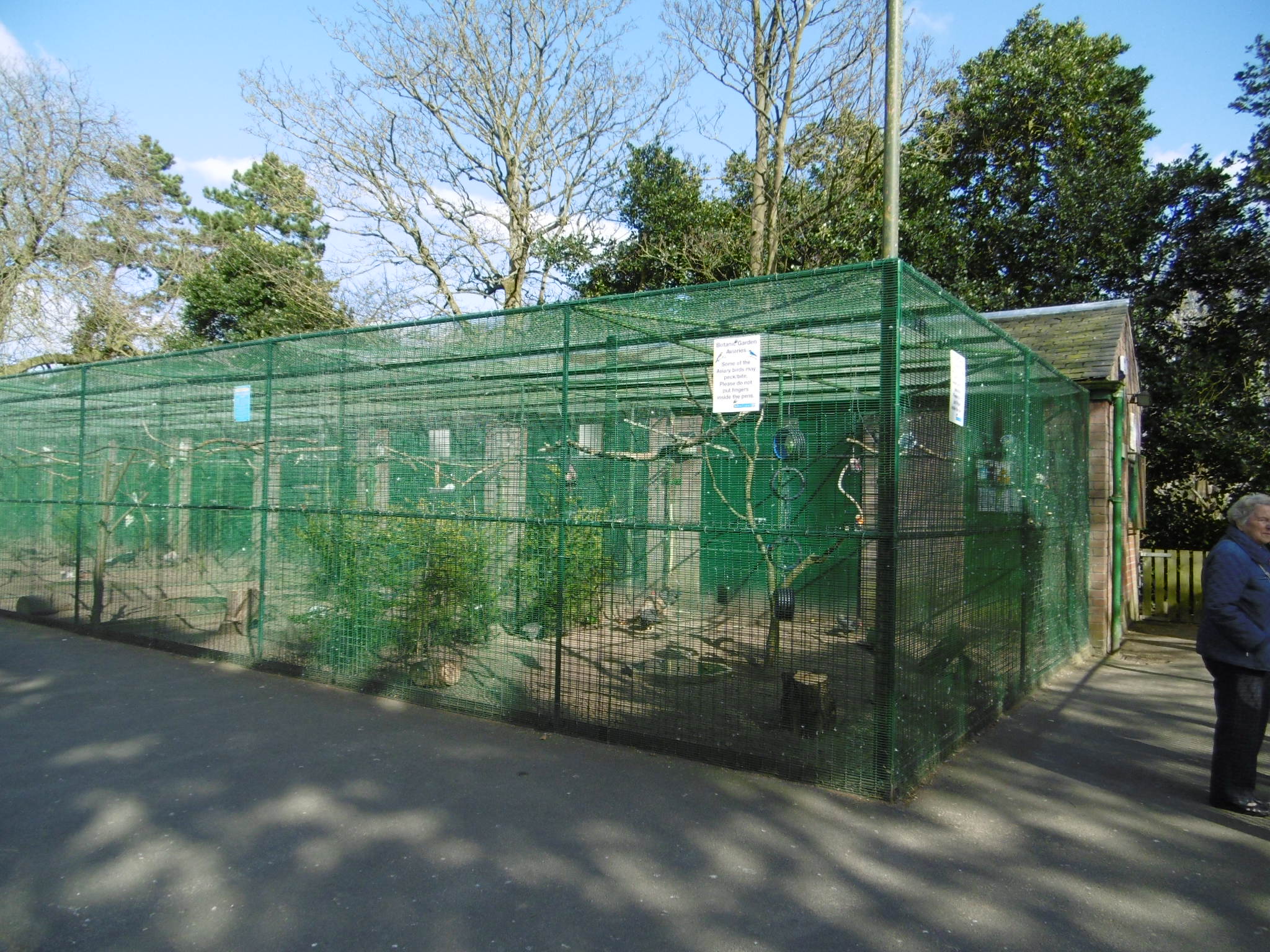
The aviary
We don’t all have acres of crocuses to carpet the floor around our feet, or peacocks to nag us, or love birds to coo for us.
So many people use that park.
People invisibly wounded, whose eyes say it all.
People finding a rare patch of peace for lunch in a stressful day.
People teaching their children how birds sing and swans swim.
People falling in love.
Should we lose all this for budget cuts?
I suppose the answer would be yes, if I felt the cuts were either fair or necessary. But it’s not just my instinct that tells me we don’t need to cut our public spending as if we were Greece. Several respected economists tell us our economy was already recovering in 2010, that swingeing cuts set it back.
And common sense tells me that if interest rates are close to zero it makes no sense to go to extremes to pay off debt.
But I’m not a politician, nor an economist. Just a citizen.
I want police and teachers, clean streets and libraries.
I want lonely people who are stuck in their homes to get more than 15 rushed minutes of a carer’s abysmally paid time each day.
I want flowers to bring joy to a miserable day.
I want a world that knows the value of everything and the price of ending up with nothing.

*John Clare died in a lumatic asylum. I saw a television programme about him when I was a teenager and could not believe such a tragic life could be the lot of the poet who wrote such delightful verses about the wonders of nature. My copy of his bird poems (a Folio Society edition) is illustrated by Thoas Bewick. Two masters in one volume. Sigh.
**Figures from Chartered Institute of Public Finance and Accountancy





 MEMOIRS OF A HUSK
No comment.
Something happened this week that makes blogging seem totally trivial. Bad news from a friend. I won’t share it, there’s enough bad news in the world without me foisting my small part of it on you.
But I’m feeling rather strange. Uncomfortable, even.
Despite a sadness that’s settled into my heart, my blog – this site – has been lurking just past the corner of my eye. Floating in the ether, saying, ‘feed me’. And feed it I must.
Or must I?
Why?
And why today, of all days?
The answer’s hard for me to fathom.
Over the last few weeks I’ve been reading about the effects of social media, online sharing and mobile phone usage on attention spans and behaviour. Stuff everyone seems to be particularly antsy about at the moment. Including me.
I even read a whole book: ‘The End of Absence. Reclaiming what we’ve lost in a world of constant connection.’ (Author, Michael Harris.)
Blogging is (ostensibly) about connecting – and over the last two years eight months, the process of blogging and following others has made me reassess what it means to know someone. To relate to other human beings.
Does it matter that it’s intangible? After all, when I was young we had penfriends – it just took longer to send and receive the messages.
But I do feel, somehow, it’s different. And it’s been perplexing me.
I’ve been asking myself, why do bloggers blog – and why do readers read?
Do ‘real’ relationships develop (I think they do, see my post about Tess Ross) – and what are they, those relationships?
Are they mostly between bloggers and non-blogging readers – like newspapers and commuters, say? Or are they mostly between member of the ‘community’ of bloggers, souls reaching out, in some individual way, to others?
I suspect that many readers – whether bloggers themselves or not – read out of simple curiosity, learning about new places, people, cultures and so on. I do.
Some have an especially serious reason for following a blog about a shared illness, or other challenge they are facing.
And then there are the ones who know the blogger in real life.
I don’t know if I’m a rarity, but I feel a tad uncomfortable following people I know in the flesh. And some people I know in ‘real’ life are the ‘followers’ who puzzle me the most.
The ones who follow, but don’t ‘follow’.
Who read but never ‘comment’.
Who don’t ever click the ‘like’ button.
People who tell me, ‘I do read your blogs, you know. I enjoy seeing what you’re up to, even if I don’t comment.’
Are they just inquisitive, plain and simple, but afraid of that great, identity-stealing, bogey-person in the ether?
Afraid of committing to a view in the full glare of – me? Other readers?
Afraid of the thought police?
The latter I’d understand. I’ve been visiting some ‘interesting’ websites lately by way of research – in fact, maybe you’d better stop reading right now if you’re paranoid.
(Thought police, if you’re reading, I’m only trying to write fiction.)
A young academic of my acquaintance has an interesting take on this type of behaviour, this anonymous blog ogling. [Bloggling?]
So much is free online, he posits, that some people feel no need to square the circle.
The content’s there for them to enjoy or not, they feel no need to pay in any way. And that dispensation from making any kind of ‘payment’ includes any acknowledgement they have read it, liked it or – just for the sake of argument – disagreed with it.
I’m glad they do read it, don’t misunderstand me – it’s reassuring that friends I don’t see very often (you know who you are) keep up with my antics – and phobias – and rants – this way. Don’t stop!
But that absence of payment is also interesting if you come at it from my perspective.
I was a journalist of sorts, on and off. Paid for writing things that people then read, in order to be better informed, or (I can’t really lump telecommunications in with snooping round glamorous houses) just amused.
Over the last couple of months there have been several occasions when I’ve written one of my thought or rant pieces only to find a ‘real’ writer saying much the same thing in a national newspaper a week or two later.
I mentioned one such to the new Brit in the house, gratified that my argument had been published by a real hack in a national newspaper.
‘See,’ I chirped, ‘that’s just what I was saying last week. So I am doing something useful.’ (Even I can see the flaw in that statement.)
Anyway, the point is, we’ve had many discussions about the usefulness or otherwise of my blogging. Other than some things being better out than in, as far as my psyche’s concerned, I mean, which is patently useful.
‘But,’ he says, ‘you don’t get paid for it.’
I restrain my innate instinct for the confessional, which wants me to say, ‘No – and on top of that, I pay for my site so that it has a proper address and doesn’t have ads. So, in effect, I’m paying people to read what I write.’
Is it worth it? Is it useful? Why do I do it?
No comment.
A recent frost, for no particular reason
Share this: