Tonight could be emotional. I grab a handful of tissues, stuff them in my bag.
Braving twenty-seven sets of traffic lights, we drive into Liverpool. Stow our car in the warm space beneath the circular cathedral. Choose seats on one of the hard wooden pews and wrap our winter coats around us against the draughts.
I’ve been anticipating this concert with a little trepidation.
Not because of ‘Death and Transfiguration,’ by Richard Strauss. Nor the Elgar cello concerto – that holds no demons for me.
No, it’s the Fauré Requiem. If you’ve read my post ‘In Paradisum,’ you’ll know this has a special, sad, place in my heart.
It’s the first time I’ve been to a live performance of the work and the auguries are not good. The lighting’s so bright that looking at the centre, where the orchestra’s arranged, is painful.
As the concert’s about to begin, two women slide in next to us – on seats clearly labelled ‘Reserved’.
‘Um, those are reserved,’ we whisper.
‘So? We’ve got tickets,’ one responds, settling in.
It takes a while to vanquish my rule-follower’s annoyance. But soon Strauss wraps me up in a wave of emotion, sweeps me off – and deposits me in a calmer space.
The cello concerto, for some reason, fails to work any magic. Perhaps the acoustics are wrong. So I turn my attention to the surroundings and focus on a, small, ethereal figure rising over the altar.
Knees bent, arms outstretched, there is no cross, just a representation of a figure that died on one.
A sliver of a man, like soap worn almost to nothing by the cleansing of many hands.
Can that be Jesus? Why no heavy cross, no tortured body, no blood?
A massive installation hangs from the roof. It’s a vehicle for lighting, but also represents a vast crown of thorns. This heavy burden hovers over the sliver of a Christ. A burden one man took upon himself, for the sake of his fellow men.
Clapping signals the end of the concerto and we mill around, chatting until the interval is over and the requiem begins.
The tears come, but not where I expect.
Not in the ‘Pie Jesu’ – beautiful, but almost too sublime. (One of the women on the reserved seats, though, dabs at her eyes. I’m ashamed I was so hostile.)
Not in the heavenly notes of the ‘In Paradisum’.
It’s the Sanctus that sets my tears free. Glorious voices raised in praise. Hosanna in excelsis! The last notes dying away, like a leaf, fluttering to the ground on a still autumn day.
And that’s how Sunday dawns.
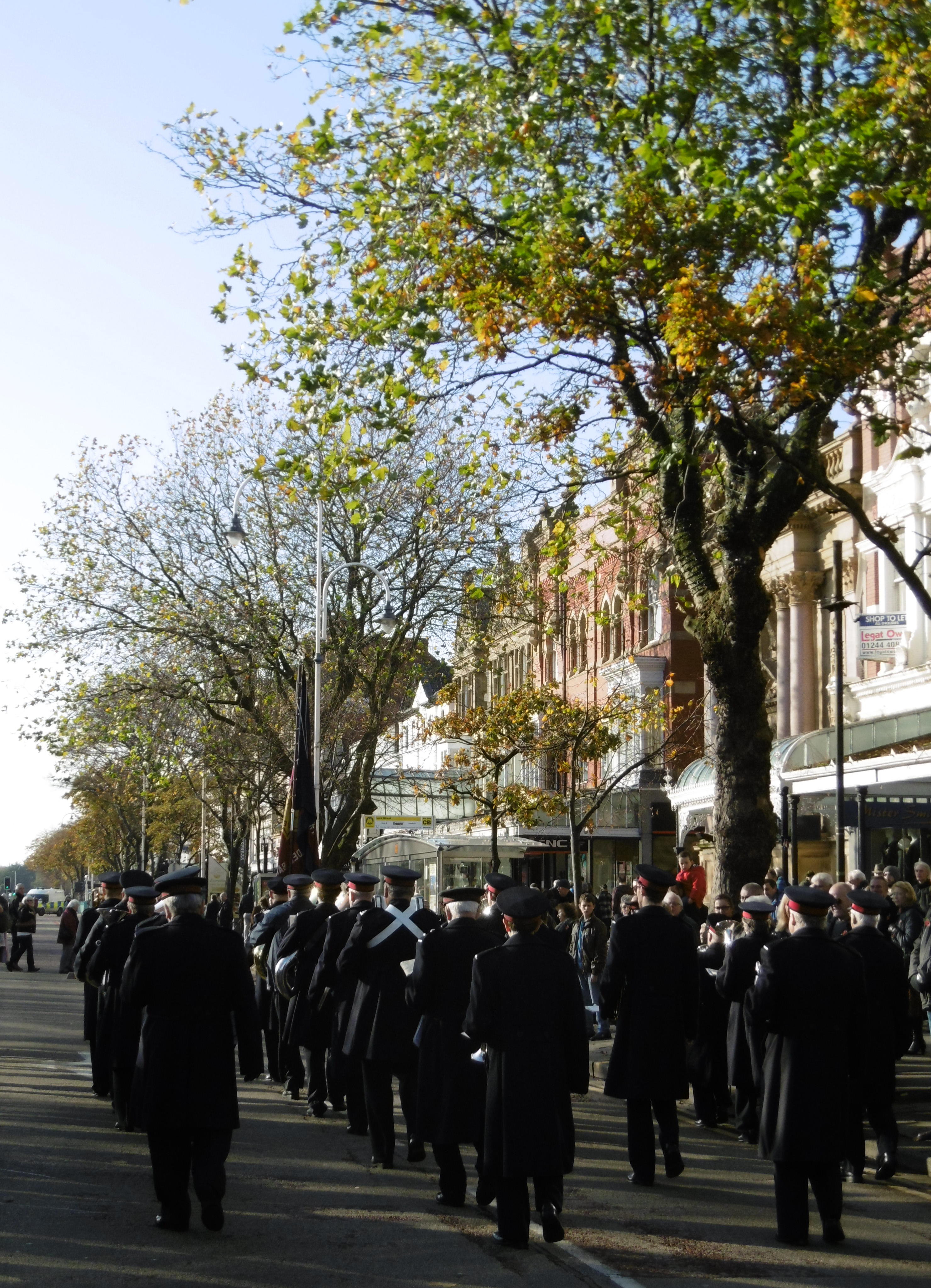
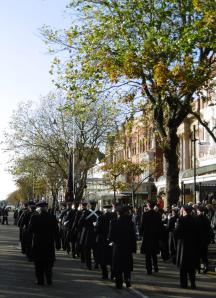 By ten to eleven we’re in our local town. Standing under cool, clear skies, basking in sunshine, singing, as the Salvation Army band plays ‘Abide with me’.
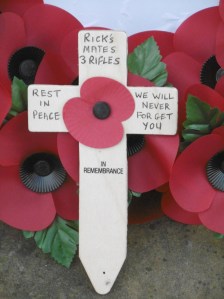
An elderly woman steps into a picture I’m trying to take. Her gloved hand clutches a small wooden cross, at its centre a poppy. On it, written in blue ink, are words I can’t decipher.
Small as a child, with hair of steely grey, she’s all alone, wearing ear muffs against the chill of this sparkling wintry day.
I rebuke myself for my moment’s irritation. The picture’s not important. We’re here for her. For her and countless other ‘hers’ who’ve waited in vain for fathers, brothers, uncles, sons – and lovers – to come safely home from the wars.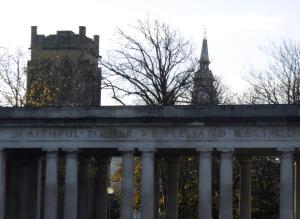
It’s not all men, of course. Sisters, mothers, wives, aunts – and lovers – their names, too, live on in the vast monument by which we congregate today.
It’s the Sunday nearest the eleventh day of the eleventh month.
We’re waiting for the eleventh hour.
The hour the madness stopped in 1918.
I think of all those couples who married one hundred years ago today. The babies who were born that year, the architects on whose buildings that date was engraved, proud and bold.
None of those people would ever tell of the year of their birth, the year of their wedding, the year of their great commission being built, without a pang of pain.
1914. The start of the Great War. Millions dead. But not forgotten.
 The road on which we’re standing – an elegant, tree lined boulevard for which this town is famed – is partially closed to traffic.
Motorists rev by, far enough away to be ignored, impatient. An extra minute or two added to their journey to the temples of mammon. Or sport.
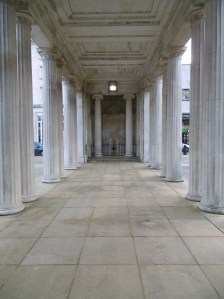
It’s always moving, Remembrance Day at local war memorials. Here, though, the monument is dedicated not to war, but peace.
I understand those who prefer the white poppy, those who feel the horror of war is masked, exalted, even, by our sentimental reaction to the scarlet ones.
But the red of the poppies says bloodshed, not just foreign fields.
 Sometimes the cause may be misguided, but that’s not the fault of those who fight.
Which is why, in two silent minutes, at eleven o’clock, we remember the dead. People who fought because they had no choice – or had a choice, but risked their all for their fellow humans.
Two minutes. A small enough gesture for those who sacrificed a life.
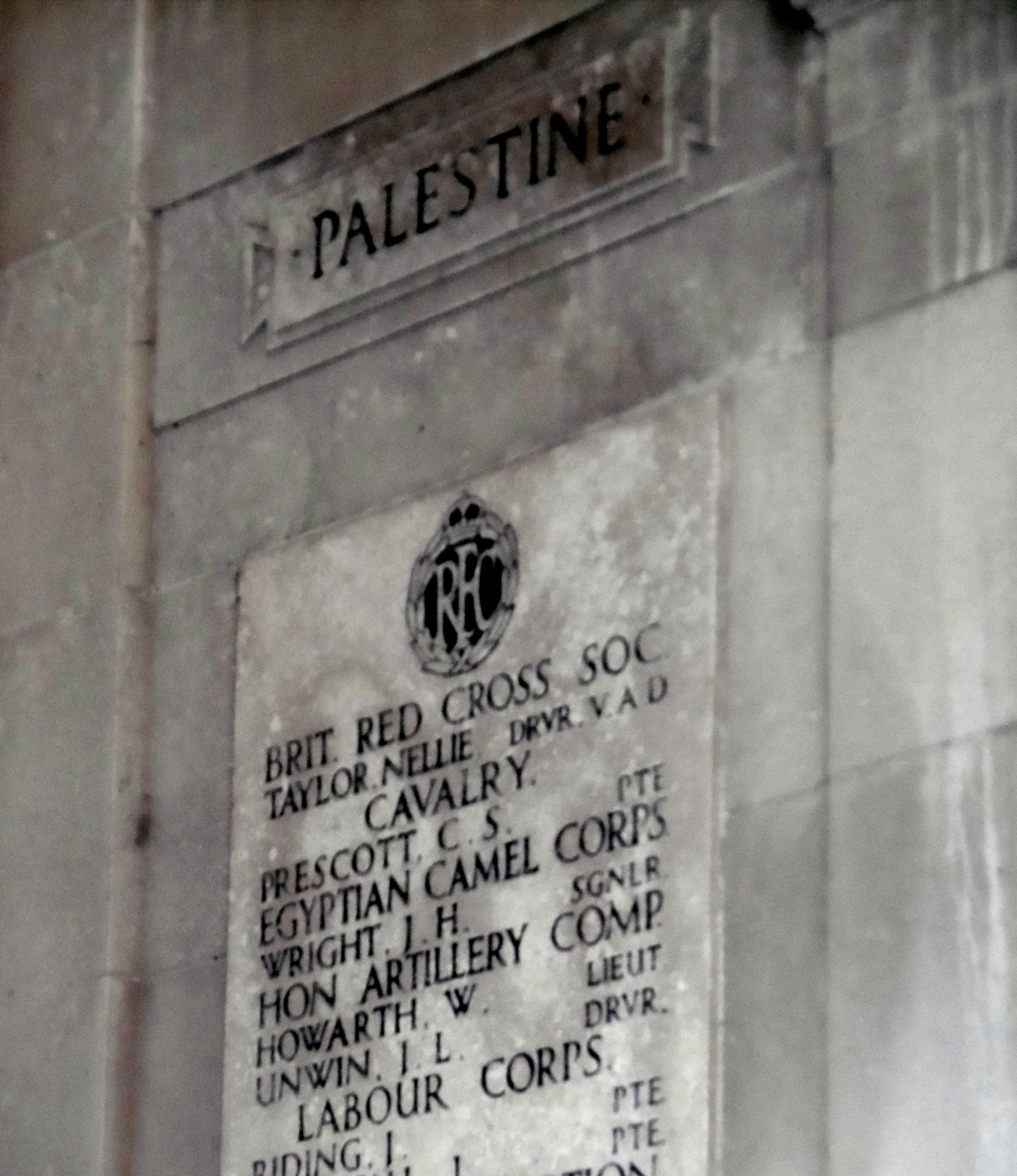
After the service we peruse the lists of the fallen.
A member of the Egyptian Camel Corps.
Men of the Polish Air Force. Merchant seamen. Salvation ArnyNurses.
Place names resonant with death.
Passchendaele. Ypres.
With the fleeting days of empire.
 Mesopotamia. Burma.
Many walls, many lists, many names chiselled again, and again.
Many families losing their young – to what? To victory, sometimes. But at such a price.
A young army man in shorts – showing his prosthetic limb – marches out to lay a wreath.
Remembrance.
The slender figure without its cross, beneath the crown of thorns.
The grand monument to the ugly deaths of so many.
We all have our memories, our painful memories.
‘We will remember them.’









 MEMOIRS OF A HUSK