Fish and kiss

Have you heard of the Wars of the Roses?

Hmm.

I think you’ll need the gist of this bit of British history if you’re to understand what follows – which is actually, I’ll be honest, more about chips (the British ones, like bigger and better French fries) than fish.

Here goes, then. The Wars of the Roses. Pay attention.

England. Middle of the fifteenth century. Plantagenets rule OK. Well, not OK, actually.

Rival factions, the houses of Lancaster (red rose) and York (white rose) fight for the English crown (let’s not get into why, or it’ll take years, like the Wars).  In 1485, Henry Tudor, for Lancaster, ends the Wars by winning the Battle of Bosworth Field, defeating the Yorkists under Richard III – who had been king for all of two turbulent years.

The new, seventh King Henry is a bit of a diplomat when it comes to marrying and chooses Elizabeth of York. He then creates a new emblem – the Tudor Rose – combining red and white.

So, there we are. King unites Houses of Lancaster and York. Tudors now rule, OK?

BUT. If you think it’s only religious wars that drive neighbours to compete – sometimes to a silly extent involving death – you haven’t grown up in Lancashire (red rose county), or Yorkshire (white rose county).

These two rival counties sit, like lungs, either side of the backbone of the Pennine hills which straggle up the centre of northern England.

Until fairly recently – let’s stab a pin in the 1980s – the north of England was a place of mills and chimneys and industry. Wool and cotton. Coal and steel.

Red Accrington brick. Pale Yorkshire stone. Black with soot from tall mill chimneys.

And then – it all died. No wool, cotton, steel or coal left to speak of, the chimneys demolished by jobbing steeplejacks.

Red brick red again, Yorkshire stone strangely clean. (It never looks right, IMHO, clean Yorkshire stone.)

The congested lungs of Lancashire and Yorkshire began to breathe more easily.

But the diet that fuelled the workers remained.

Chips. And fish.

The first chip shop opened, they say, in Oldham (in old Lancashire) in the 1860s. Notice, chip shop, not fish-and-chip shop.

Which I suspect is why, when I were a lass in Lancashire, we called the places that fried fish – and potatoes – chip shops.

My parents boasted that Lancashire chips were fried in vegetable oil. The heathen lot across the hills not only called ‘chips and fish’ ‘fish and chips’, they fried everything in lard or dripping.

Lard – as I’m sure I’ve no need to tell you – is pork fat. Dripping, in case you’re unfamiliar with the term, is the fat that drips off beef when cooking. It turns into a creamy solid layer with a layer of juicy brown jelly on top. People eat it scraped on bread – bread and dripping. But it’s the solid creamy fat that fries the chips. And fish.

I suspect most Yorkshire chippies use oil today. But lard or dripping produce a very rich taste. And very greasy fingers.

Now, as my American spouse will tell you, England is very changeable. Within just a few miles, you might find a different name for something everyday, uttered in a different accent.

One minute you’re buying a barmcake to put your burger in, up the road it’s suddenly turned into a teacake. (And yes, they’re bread ‘buns’, not cakes.)

Life was a constant source of linguistic confusion for a young lass (a term common to both counties) recently arrived from Lancashire, living in Yorkshire.

But, happily, whether you call them ‘chips and fish’ or ‘fish and chips’, everyone, everywhere, calls the purveyors of this staple of the British diet a chip shop, or chippy, for short.

So when Stephen D asked if I wanted to go to the chippy – I knew what he was talking about.

He was talking about one of the few ways of going for a walk, beyond sight of home, in the evening, that was allowed to a sixteen year old. OK, maybe 15. But don’t tell.

Stephen D.

Blonde hair. And a scooter. The Lambretta kind. No, it wasn’t the fifties, thank you, he was a reincarnation of mod – with style.

Something about him just – well, y’know.

He lived nearby on a street that you reached through a snicket (Yorkshire) – or ginnel (Lancashire). (It means a little passageway, sort of.)

Stephen had strawberry birth marks on his face, but it didn’t make any difference.

‘I’ve seen you making cow-eyes at that young man,’ said Mrs B, next door.

So of course, dreamy eyed, I said yes. To the chip shop thing.

At the end of our avenue a little path ran across the top of a field that took us to a side street off a main road. To a chippy.

We stopped outside the door. And then he kissed me.

Cue the song.

It all went wrong, of course. I had no idea what to do next. Embarrassed and shy, I gave off the wrong – as in misunderstood – vibes.

Years later, when I was home from uni for Christmas, the door bell rang one night. I opened it. There he stood. Still gorgeous. Both of us old enough, now, to go to the pub – where we’d locked eyes across a crowded bar a few days before.

I really, really wanted to say ‘no’ when he asked, ‘are you going out with anyone?’

I didn’t. It was never meant to be.

Now, I’m back in old Lancashire. Twenty five miles from the place I was born.

But you know – the best chips – and fish – I’ve ever had – were in Wales. I feel like such a traitor. And me a pink rose, too.
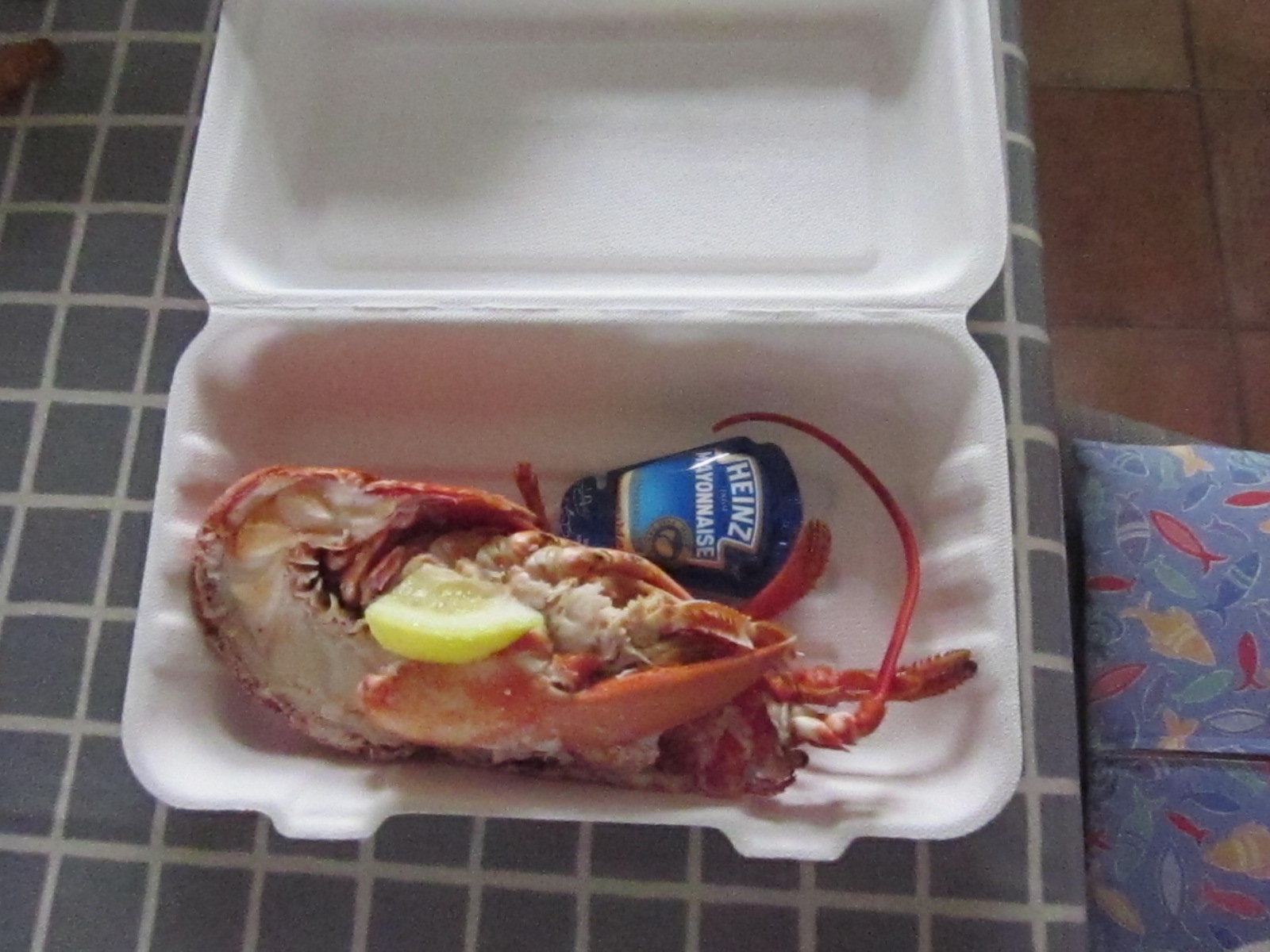
Half lobster (local) from Aberdaron

Half lobster (local) from Aberdaron

Gurnard goujons from Sblash! chippy in Aberdaron
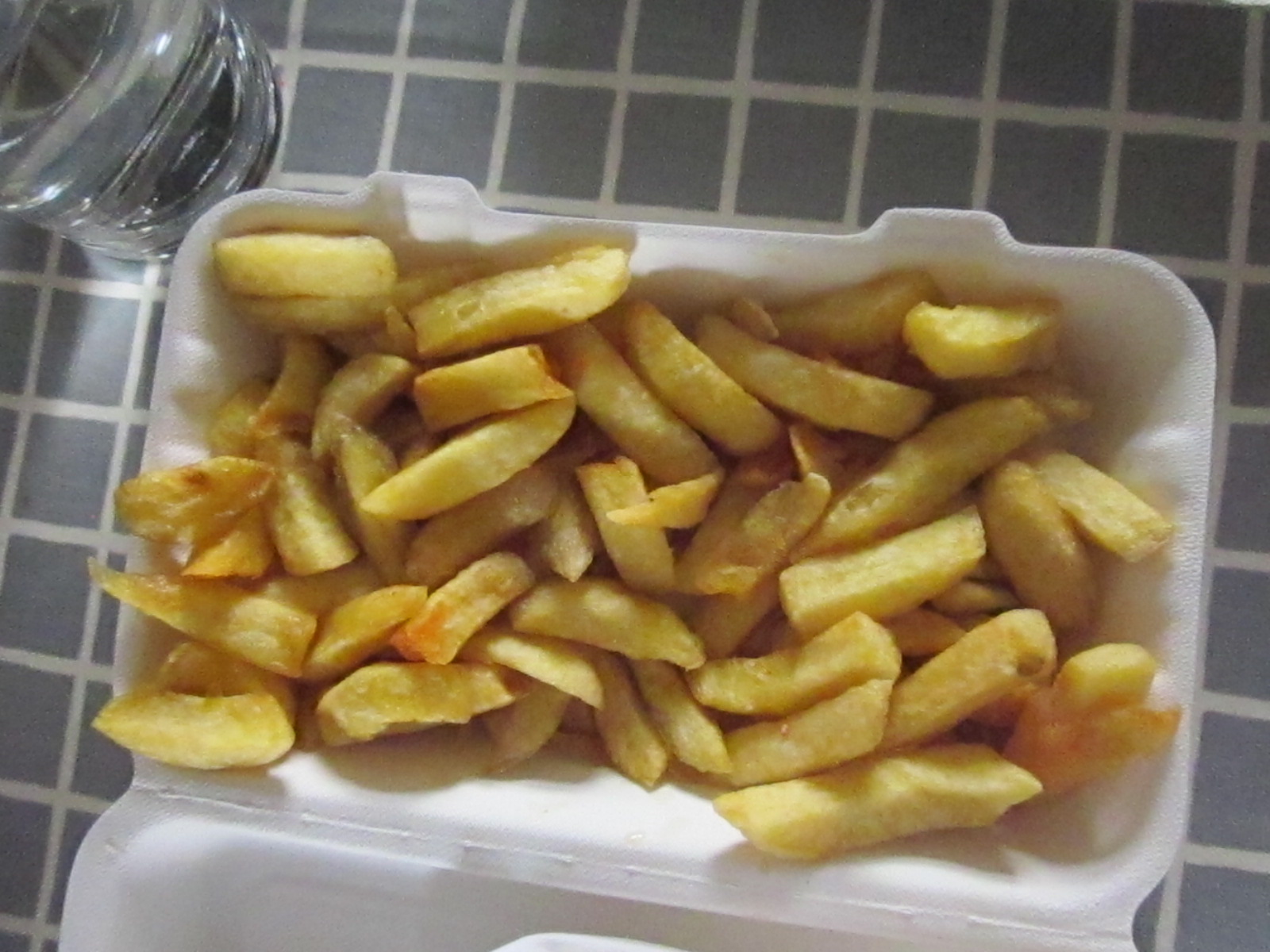
Gurnard goujons from Sblash! chippy in Aberdaron

Crisp, hot, hand cut chips with salt and vinegar - all in recyclable boxes

Crisp, hot, hand cut chips with salt and vinegar – all in recyclable boxes

Posted in Yorkshire | Tagged , , , , , , , , , , | 18 Comments

Why I spit in the eye of wedding anniversaries. A true story (with the best bit at the end).

It started off as it meant to go on, our marriage. Not quite ordinary.

Don’t get me wrong, we’re not mutants from some distant planet masquerading as earthlings. It’s just, we have trouble doing what’s expected of us. Or perhaps I should say, I have trouble …

I blame my name, Mary and that nursery rhyme – the ‘how does your garden grow’ one. Everyone smiles indulgent smiles when you’re ‘contrary,’ so you grow up thinking it’s the best way to be. It’s not. It lands you in all sorts of puddles, trust me.

But back to the marriage.

Market day in south east London. In a church. Two of us, a priest and witnesses. One extra friend who’s snuck in – and my parents, because I relented, two days ago.

Outside, stalls are selling slippers and knickers. Strawberries, cauliflowers, cheap bags and nighties. Your average Saturday market.

Promises made, it’s back to our flat for a lunch of cold salmon.

We wave farewell to the parents and friends. Head for the park where I bruise myself, badly. Seems I can’t swing from my hands any more, like when I was ten.

Anyway. Fast forward a month. To the reception.

We party on a boat. Sail by the Tower of London on a beautiful, sun-washed day. Eating mango chicken, then raspberry Pavlova. Sipping crisp fizzy wine.

New husband kidnaps some classical buskers, on their very first busk. They play all the way for a nice fat donation. Generous, my new, American pa-in-law.

The upshot of this tale of one wedding and two events? We now have two anniversaries. Two dates to remember.

I’m not good at dates. As my nephews know all too well, I have a rather random approach to birthdays. So I’m not sure whether I really feel kind of – meh – about anniversaries or whether it’s just a cover story for incompetence.

But there’s more.

I married an archaeologist. He digs up old stones in Africa – it was Swaziland then, these days it’s Zambia [though he’s heading west next year, I’m anxious to say. Ebola’s not yet in Ghana. We’ll be donating to Medecins Sans Frontieres.].

Anyway. In summer, he’s usually to be found in some inaccessible, uncomfortable but utterly intriguing place.

For many years those places were also incommunicado. A letter that looked like it had been danced on by an elephant would arrive now and then – but that was it. No email. No phone. No texts.

I learnt. If I wanted to see him – and not be deeply envious – I had to go. So I did.

But we never seemed to be together on our anniversary – neither of them – inconveniently a month apart and me with an absolute max of three weeks holiday to take.

At last, though, the day arrived. Not only were we together, but we remembered.

And here’s what happens …

Sierra Exif JPEGI’m sitting, holding a glass. Wearing dirty green army-surplus trousers, a long sleeved shirt, big heavy boots.

I’ve no idea what he’s wearing – probably much the same sort of thing.

We’ve been watching the sun set, but it’s dark now.

The night sounds are warming up.

The distant, hoarse cough of a lion.

The rustle of elephants pulling down branches.

The clatter of dishes in the tin-roofed kitchen where a fine-voiced cook is singing a hymn.

Our chairs, like old-fashioned deck chairs, are low-slung and old. Easy to slump into – hard to climb out of in a hurry.

Between us, on a solid, local wood table sits a bottle of the nearest thing to champagne the camp bar can muster. It’s white, cool-ish, has bubbles in it – and it’s sweet. But never mind.

Suddenly, spouse of 20 years yells and leaps from his chair.

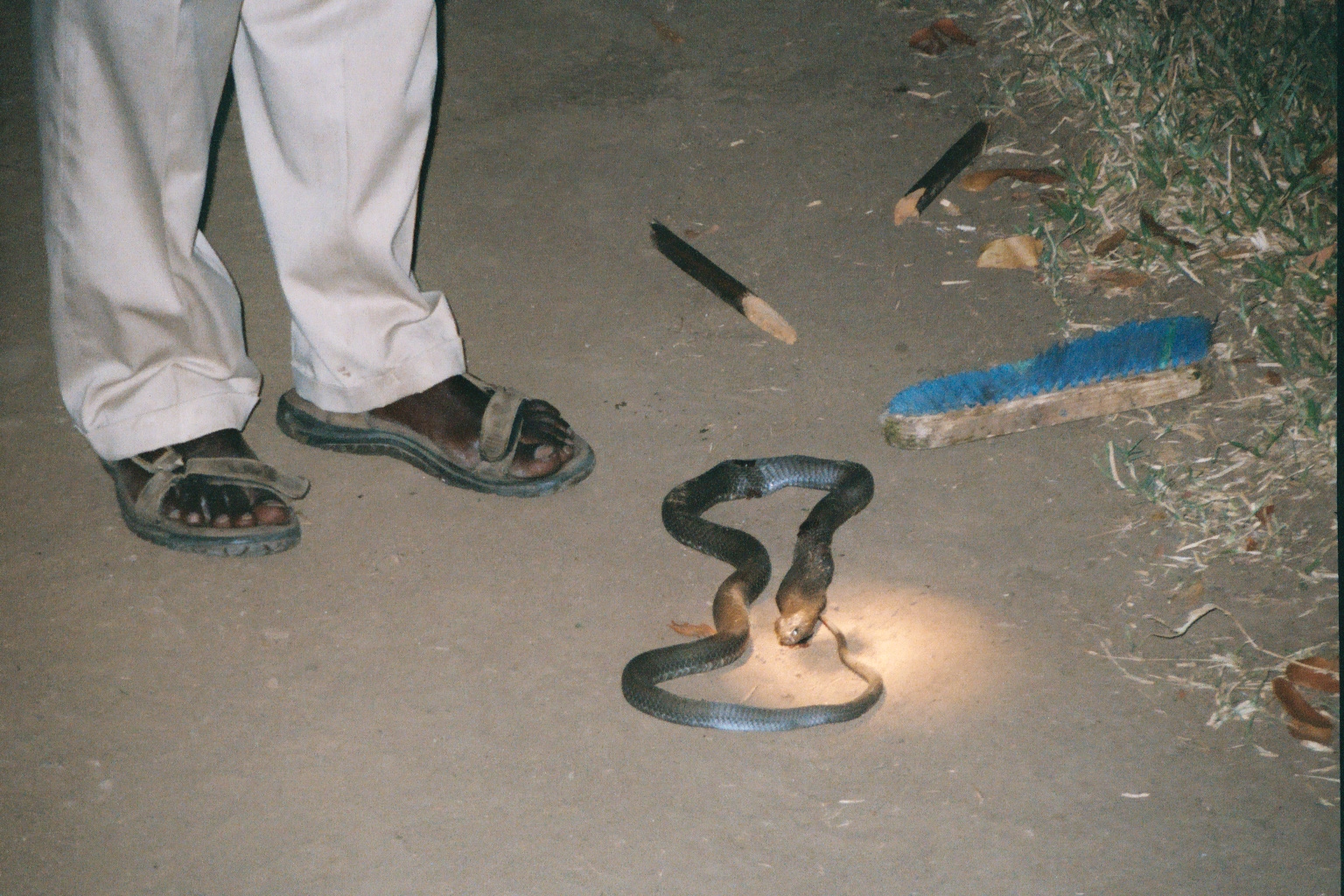
I struggle, but it’s too late, the snake is rippling across the toe of my boot. Thankfully, heading away from me.

I finally make it out of the chair and realise anniversary spouse may have left me behind, but he’s saved the wine.

‘What took you so long,’ he hisses (husband, not the snake), waving the bottle.

I’m now hyperventilating. Staring, wild-eyed at the snake. Which turns out to be quite the wrong thing to do, with this one.

Our friend from behind the bar runs out, broom in hand.

The snake seems bewildered – I almost feel sorry for it.

But not really.

It’s a spitting cobra. 031_28I was lucky it didn’t spit. Blind me. Sink its teeth into me.

Maybe it mistook me for a sack of mealie meal.

Maybe my dirty smelly boots put it off.

Anniversaries. I spit in your eye. Pah.


[Written in response to WordPress Weekly writing challenge, Memoir Madness: http://dailypost.wordpress.com/dp_writing_challenge/memoir-madness/ ]

Posted in Travelling, Zambia | Tagged , , , , , , , , , , | 24 Comments

Help! Nuclear meltdown! We’re all going to die!

Two rows of women sit either side of a small conveyor belt. I say women, but I don’t think of myself as ‘woman’ yet. I’m eighteen and a half.

On each desk is a grey telephone console with a row of switches and lights. We wear head sets. Pens and pads of special paper sit waiting for action.

The conveyor belt carries small clutches of standard sized paper, three different colours, down to the end where a man will pick them up and make things happen.

I’m probably wearing a short-sleeved, short dress over a pair of flared trousers – the red ones from the Littlewoods catalogue. The men around here tend to notice short skirts a bit too much.

And platforms, of course, for height.

For the first week or so I sat, feeling miserable, next to a normal but grumpy woman. When the phones weren’t demanding attention, winking their pesky white lights, she didn’t make conversation. Just stared into space, or flirted with one of the men.

But today I’m sitting at the top of my row, looking down the line of others. Across the conveyor belt is my boss. Which, as it turns out, is probably just as well.

Diane – it’s not her name, but that’s what I’ll call her – Diane is bleached-blonde, tall – and right Yorkshire.

Bright, but no higher education for her – just life.

She doesn’t wear a bra – and you can tell.

Her boyfriend works here, too. He’s the ex of a woman who sits behind a screen – and the screen’s behind all of us.

I don’t really know what the ex does, but she always looks grumpy. I guess that’s not surprising. Her rival in love is younger and blonder. And ‘smile’ is Diane’s default expression.

Diane’s quite something.

I answer a lot of phone calls, write out a lot of job sheets. Make appointments for gas fitters at homes without cookers or heating. Send men out to leaks. Recite the leak litany – open the windows, open the doors, don’t turn on the lights or use any electrical switches, no matches or lighters, etc.

But Diane and I find time to make friends.

Friday lunchtime we trot up the road to the pub. A hot meat pie – topped with peas, mint sauce and gravy – drowned with half a lager and lime.

Shouldn’t really waste my money.

I’m planning on using the wages I’ve earned to take me on holiday, to Greece, with him – ‘the one’. The everyone-loves-him, rowing, sailing, my dad’s chairman of a business you’ve all heard of, kind of one.

Even as I pick up my brown paper pay packets, it never feels real, that holiday. And as it turns out, it isn’t. Well, not for me.

‘You want me to be deep,’ he says, on the phone.

He’s just taken his Labradors for a walk in the Surrey woods. I’m dogless in Yorkshire. I already know – he’s told me – that walking dogs is great for meeting girls.

‘But this is all there is,’ he says.

How true.

My day at Henley, the big event for rowing, is a tipping point.

It’s raining cats and Labradors. There are fields of sodden grass. Do I wear the long, pink-sprigged, flounced-cotton Laura Ashley? End up with mud to my waist? Or the home-made midi denim skirt and checked cheesecloth blouse?

You know, don’t you, I should have worn the dress, mud or no mud.

I chose the skirt and blouse.

We were in the Steward’s Enclosure. That’s posh, far too posh for a home made denim skirt. It has rules about dress.

All too soon my heart was breaking. I knew I had to let him go. And I did.

Diane was great. More lager and lime – and a few nights out. Her beau was fine about it.

Life was probably pretty full-on, living with Diane. She told me she cooked in the nude. Had burnt her boob on an apple pie, taking it out of the oven.

Anyway.

Back at work, I flick the little triangular switch, start to say, ‘Good morning, Negas services,’ but a voice has got there before me.

I’m possibly open-mouthed, certainly open-brained and open-eyed.

It’s a recorded message. From a power station. An emergency.

And I DON’T KNOW WHAT IT SAID!

Diane sees the panic on my face. Calm, she flicks the same key, listens, nods, walks behind the screen.

I have visions of nuclear meltdown, of radiation falling in clouds. I’m thinking of sickness and cancer and …

It’s probably just a routine message. Don’t worry. It’s the power station. (That’s the coal-fired one with the back-up gas turbines.)

You can’t fault her – she can be an ice maiden when she wants.

And pretends she believes me when I take a day off ‘sick’, but actually to cry, after sluicing my crumpled heart with half a bottle of Martini.

We keep in touch for a while. I go back at Christmas – it pays better than the post. We bump into each other in a posh hotel. Then we lose contact. I forget.

Then, today – real today – I’m browsing around online and a news item catches my eye.

Ferrybridge power station is ablaze.

In an instant I’m back there, in Negas Services, panicking, with Diane.

People who smile by default are precious. I wish I knew her still.

I bet she’s not making apple pie in the nude any more. But I bet she’s still making friends.

Posted in Yorkshire | Tagged , , , , , , , , , , | 6 Comments

The poet-tramp-novelist and the dragonfly

No time to stand and stare. You know the quote, don’t you?

Or do you?

‘What is this life if, full of care/ we have not time to stand and stare?’

[A classic example of the importance of commas, btw, but that’s not what I’m writing about.]

It’s taken from a poem called ‘Leisure’, one of a series of ‘Songs of Joy’ by Welsh poet –and tramp and novelist – William Henry Davies. He died in 1940. The poem was published in 1911.

Among the vagaries of his life was an accident jumping freight trains in Canada that left him without a foot and needing a wooden leg. He came back across the waves at that point, living rough in London doss-houses, writing poetry, self-publishing at a time when it was far from easy.

Out of that experience he drew his book, ‘Autobiography of a Super-Tramp’ – which reminds me of the band of that name. Supertramp did an album, ‘Breakfast in America’ that Davies might’ve liked, being fond of the place. But I’m meandering.

I didn’t know any of this odd, informational spice before today. I discovered it when I looked up the quote in my large, heavy, cardboard-and-paper Oxford Dictionary of Quotations.

You see, I’d been thinking of writing a piece about butterflies (yes, the picture’s a butterfly not a dragonfly). About foxes and squirrels and birds. About trees and wind and clouds and – then I thought, why?

The thoughts wouldn’t blend into a coherent whole. It was as if the fairy dust falling from butterflies’ wings had seeped into my brain, turning it into sherbert. Fizzy and sharp and tasty – but not much use. And not for sharing.

Then I read a blog-post by Jennie Saia. I’ll give you the link at the end. She writes some very thought provoking pieces, Jennie. Sometimes I don’t have a clue what she’s saying. That storm-tossed Atlantic can thrash our separate versions of English to a pulp that makes us truly foreigners.

But on this one I was right there with her.

Reading about a world where women – ladies – feel they don’t need feminism because they like to cook, or want their pickle jars opening, or their refrigerators lifting, took me back to the butterfly.

What does it matter if I’ve seen a luscious, orange-brown Silver Washed Fritillary? Seen the Burnet Moth’s wings, red-splashed black? A shiny-furred chestnut fox with a white-tipped tail, or a blue jay mastering a peanut feeder?

What does it matter if a wasp drank from the side of the bird bowl? If a long-eared owl hooted a muted hoot from a perch in the nearest pine tree – in the daylight hours? If a peacock butterfly hesitated long enough for me to take its picture?

That’s why I couldn’t write it.

What does any of it matter?

I thought it mattered that I’d learnt to see and recognise and know these wonders of nature. I suppose it doesn’t.

It matters that they are there. That I had the time to stand and stare.

But you don’t need to know.

Anyway.

One jewel of the world around us was missing from my inventory of joyous nature – the dragonfly. Despite the water, fast evaporating in the decoratively-rusting steel bowl, no rainbow-fluttering, iridescent-winged creature had visited.

Then it did – and I missed it. Someone else saw it.

It doesn’t matter. The dragonfly is there, was there, somewhere.

That poet-tramp-novelist, WH Davies, knew the value of the beauty of things, could tell them in a way I can’t. I still feel, ‘well, so what?’

But, the trail was leading me somewhere.

No such thing as coincidence, of course, but, trudging around the internet, following Davies’ tracks, I wound up with Fleetwood Mac. Listen …

The Dragonfly.

Davies’ words. Fleetwood Mac’s music. Now there’s a reason to sit and stare. To swoon.

It doesn’t matter if I can’t find a way to share my nature-fest with you – because someone else has done it better. Like Vaughan Williams’ Lark Ascending. John Clare’s bird poems. Thomas Hardy’s Dorset hedgerows.

But it matters that I could, if I wanted. That people like Jennie (and I) can stand and stare at our world, think thoughts, lay them out for others to use as inspiration or incitement. Or dismiss.

Today the world is cool and grey. The double-helix-dancing butterflies are in hiding. And my brain is working. Indoors, where it belongs.

Too much sun doesn’t suit a British native, after all.

[Tip of my tongue blog by Jennie Saia]


Posted in Thinking, or ranting, or both | Tagged , , , , , , , , , , , | 18 Comments

I wanna hold your hand (but you wouldn’t want to hold mine)

I’m out, driving, on chore-related business. The radio, as usual, is on. Tuned – also as usual – to BBC radio middle-middle-class. No, not the classical one. No, not the middle-of-the-road music one.

The talking one.

Crikey, even radio’s becoming difficult to pin down these days.

Anyway, as I tune in mentally I hear a person talking about holding someone’s hand and prepare to switch off – but hesitate. And before I can indulge in second thoughts a different voice is speaking and I’m hooked. Tears welling up.

Four tiny fingers and one tiny thumb, curled around one of a grown-up.

Best friends holding hands as they skip to the park.

A small hand safe in big sister’s as she crosses the road.

Young, first-loves, aware of each heightened beat of their pulses, turning to look at each other – shy, excited, hand-in-hand.

Italian sailors fresh off the ship in crisp clean uniforms holding hands.

Zambian men laughing and swinging their hands, held in friendship as they chat.

A stranger pulled to safety by a gripping hand as a boat rocks and tips.

A lonely, sick person, imprisoned in bed, hand enveloped in that of a kind stranger as life ebbs away.

Possession, friendship, reassurance, love, fear – so many reasons and times and excuses for holding hands.

I begin to notice people walking down the street holding hands. Older couples, mostly, I’m surprised to see. I’d never have noticed that if I hadn’t been listening. And I think about my own hands.

When I was still a child, not yet heading for my teens, they were quite nice, really – a good shape, reasonably long fingers – except for one thing. Three fingers on each hand and the palm of one were covered in sores.

The skin was tight on my fingers. It was hard to open them out fully without breaking open the small wounds. A jewel of blood, like a pomegranate seed, would seep out. Not much, but it was still blood.

Often I went to school with one, or sometimes two fingers swathed in a bandage called Tubegauz – its application an art well-mistressed, by the age of 12 or so, by me. I could manage it single-handed with the plastic applicator and a pair of scissors to help, the cut ends tied around my wrist to keep it on. Sometimes – if appearances were important – a leather or plastic sheath over it to keep it clean.

At night I often wore white cotton gloves to stop the ointment from marking the sheets and – probably more important, to keep it on my hands.

I was never a fan of netball, but the dry ravines of cuts where the skin had split would erupt with blood as I caught the wretched ball – how I hated it. The smarting. The shame.

And then there was formation dancing. Who wants to hold hands with someone who’s doing a passable imitation of leprosy? (Children don’t hold back on these things.)

And so to adolescence.

Imagine it – holding hands and sneaking a kiss. Magical. Except you’re terrified your sweaty, scabby hands will put him off. (Perspiration or ‘glowing’ it really is not.)

Well, the good news is, it began to subside as I passed sixteen and by the time I was eighteen it was nearly gone.

And I think about friends. One with callipers on her legs, recovered from polio only to limp through life. One with a fatal disease that filled his lungs with water. One recovering from leukaemia. And I know how lucky I was. I do, really, I do.

My hands still bug me a bit – because I still have sweaty hands – that bit of my affliction never stopped. A rather unpleasant (rich, white) man in Zambia comes to mind – ostentatiously wiping his hand on his trousers after shaking hands with me. He made no attempt to hide it.

I know, this isn’t a nice thing to write about, but this is – in parts – a memoir. Sometimes it won’t be pleasant. Because sometimes life’s not pleasant, or I’m not pleasant, or someone’s not pleasant to me.

You don’t have to be here, to be reading this, but if you are – and have made it through my eczema – thank you. No more of that, I promise.

I wrote about it because it hurt. And I don’t mean the sores.

Posted in Yorkshire | Tagged , , , , , | 8 Comments

A shrine, a power station and three (female) astrophysicists

I’m doing a little trip, on my own. Archaeo-man’s off to Africa, archaeo-ing. Me – I’m making a pilgrimage.

It begins well.

A leisurely start – mug of tea, dipping a biscuit. Gazing out of the window at the birds and trees.

No emails, not today, I’m showing them who’s mistress. Taking a slow, gentle, saunter into reality.

I switch on the radio for the news, like I always do the morning after he flies. There hasn’t been a plane crash on his route – so I know he’s reached Africa safely.

Then the phone rings. The connecting flight left without him. Airlines are being difficult. The trip was booked by the university’s travel agents, only they can sort it out.

Catapulted into frenzy, my morning speeds by in a blur. Contact the university, sort out the flights. Rearrange the meeting with the Heritage Commission in Lusaka. Contact Pioneer Camp, change the airport pick-up.

But his ancient phone’s not set for international – I’m blocked. And stumped.

I decide to abandon my jaunt. I’m feeling too stressed, now, to undertake a pilgrimage. I ring the place I’m staying to cancel – but there’s no reply.

An hour later a text breaks through from South Africa, ‘On my way!’

And I change my mind. I won’t be in time to bathe in the healing waters today, but, hey.

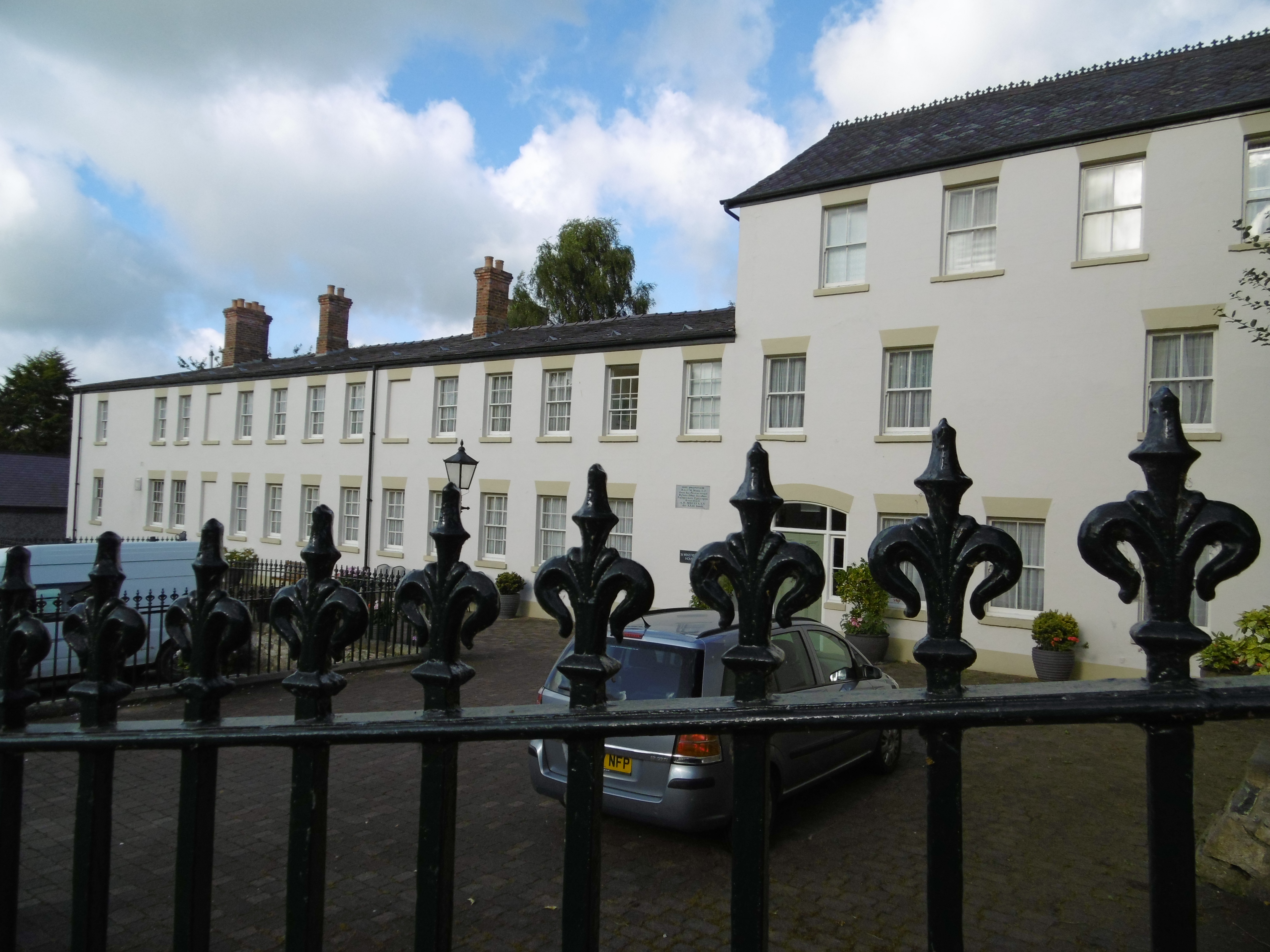
The drive’s going well till I take a wrong turn, end up stuck in a small town, its centre blocked off by police. Stifling my curiosity – it’s later than I’d like – I ask for directions, finally reaching Holywell as the clock says half past four.

I head straight for the well, just to say hello. I’ll visit properly tomorrow.

The shrine looks grey, sad. A little dishevelled. The faces of the people in the shop are blank, like posters faded in the sun – still there but saying nothing.

This isn’t how it was meant to be.

holywell 010Back up the steep hill I pull into the convent guest house. Ring the bell. Sister Josanna appears a few minutes later with keys.

I’ve interrupted their prayers.


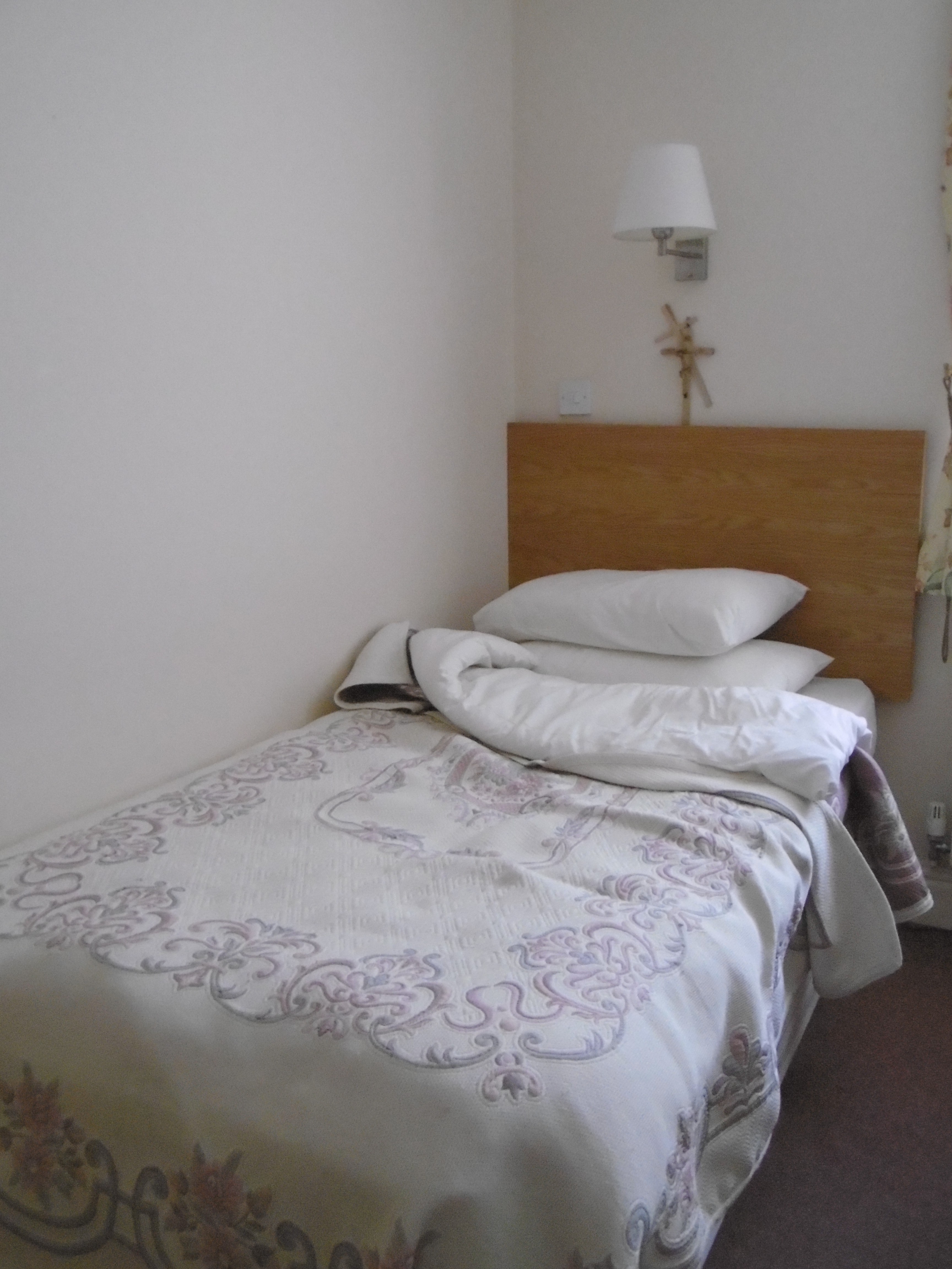
holywell 015My room is small, above the single bed a crucifix and palm cross.

Peaceful.

It might still come right.

At 7 pm I sit down, alone, for dinner.

On my table is a single red rose. Each windowsill holds a Christmas cactus in a copper pot.

The sound of nuns giggling filters through a set of double doors. It seems they’re amused at a priest’s singing. I feel like a worldly, jaded soul.

It’s been a long time since I had oxtail soup. Pork chop, cabbage, roast potatoes next. Then a slice of yellow ice cream. The meal served and cooked by Sister Mary, from India.

Breakfast’s at 8.30, she says. I smile.

Mass is at 7.30, will I be attending? Of course, I nod.

Ah well.

I retire to the lounge with a slim book about the Bridgettine nuns and the sanctuary they gave to Jews in Rome during World War II. By nine o’clock it’s finished and I’m ready to sleep. But I can’t.

I switch off the alarm at four. Rise at six.

Showered, dressed, but not in the mood for holiness, I make my way to the chapel.

Peeking out of an upstairs window I see pastel-coloured knickers and little white bras hanging on a line and feel ashamed, an intruder in a private world.

The chapel is small and intimate, the paucity of nuns poignant. They all seem to be from far flung places – the young priest, too. There’s much singing, but the intonation of the Indian-accented voice leading us is so different, it makes the familiar strange.

At last it’s my time for the shrine.

holywellToo early to bathe. Can’t stay for the noon-time service or to view the relic – a bit of Saint Winefride’s finger.

The people in the shop – also of far Eastern origin – are smiling. Recovered from the 200 schoolchildren who wore them out.

My disappointment ebbs away.

The water in the bathing pool reminds me of the waste-water lagoon of a factory I once lived near. Quite a pretty shade of turquoise. But I doubt I would have bathed.

Two of the Byzantine-looking tents I admired last time have lost their coverings and stand forlorn.

A spring reputedly sprang up when St Winefride’s head was severed from her body (then miraculously re-joined) when she refused a would-be rapist

holywell 032But the bubbling spring, the statues, the  flowers and  sad entreaties from the troubled in mind and body, they work their magic.

holywell candles

I light a candle for a sick friend – and one for Atheist-man in Africa – and leave. Nothing resolved, but no longer disappointed.

I take the low road home. It feels desolate, poor, a lost world.

Then it happens.

A vast, steaming power station rises on my left and a pulse of sheer excitement ripples through me.

I want to laugh – feel I could shout for joy.

It’s strange and I really don’t understand it.

Later, turning on the radio, I find myself listening to three women academics – astrophysicists – discussing the sun.

Mutually respectful, they applaud each other’s views, air their own confidently but humbly. Like academic nuns.

They tell me the sun’s a mass of gas, dust and energy. That sound moves through it in waves. As if it’s breathing.

And I get that feeling again.

The sound of the sun.

I can’t fathom it.

Dust and gas and magnetism – yes – but where did it come from?

Where is it?

And – where are we?

It’s a mystery.

And so, yet again, I set my mental compass to questing. Science can take me so far, but then …


Posted in Britain now & then, Religious for a year: Atheist-man's experiment | Tagged , , , , , , , , , , | 5 Comments

The button box, the relic and global obsolescence

I took my button box out of the cupboard a couple of weeks ago. Ever since then I’ve found myself wandering over to look at it, or gazing at it when I’m sitting nearby. I don’t know exactly why. Am I remembering times past? Family life? My childhood?

Perhaps.

Or perhaps it’s simply an affectionate fascination with the old toffee tin – yes, a tin not a box – and its contents. Which are not only buttons – and not only useful.

Buttons are in the majority – there was an amazing variety but at some stage I decided to make a necklace using the best. And where’s that necklace now? Ah, well. There are still plenty to remind me of my mother’s old coats – big, bold buttons that are so 1950s, that speak of three quarter sleeves, fur cuffs and long leather gloves.

P1000223Other odds and ends bring back uncomfortable memories of girly adolescence. Contraptions of plastic, elastic and metal for holding up stockings. The bits that would eventually tear away from the suspender belt. We had spare ones in the button box for mending.

And, forget sexy, by the way. Thick, ribbed, grey school stockings were not remotely sexy. Nor were the suspender belts that held them up.

Worse were the flesh-coloured elastic belts that restrained the bulky pads we resorted to once a month. I always found it slightly creepy, that flesh-coloured elastic. A remnant of it lurks within the tin.

A younger friend asked me what a button box was for – her family has one, too, and she’d never thought to ask. Like many family things, it’s just there – rarely used, these days.  I suspect that sewing-on buttons and mending are chores that have gone with the wind – or with Primark and its ilk, more like.

But back to the box.

Inside – perhaps one of the reasons it was always so enticing – was a small, very dark blue rectangle. It was made of two pieces of tough fabric sewn together tightly, by hand, around all the edges.

This rectangle contained a holy relic. I’m sure someone told me whose and what – I used to hope it wasn’t a piece of skin – but I forgot long ago. I’m guessing it was from one of the Forty Martyrs of England and Wales.

But now, whenever I look at the tin, along with the affection and urge to scrabble through its contents, comes an uncomfortable feeling of guilt.

I took the relic out. And now I have no idea where it is.

In the old days, anything that had been blessed and was to be disposed of had to be burnt. Imagine what you had to do to a relic! If you had the temerity to rid yourself of it in the first place.

I didn’t want to rid myself of it, but I didn’t think it was the ideal location for something holy.

What did I know?

If I’d left well alone, it would still be there, where it rested for tens of years, untroubled except by amber glass beads and mother-of-pearl buttons.

But now I’m beginning to see the button box as something bigger even than a receptacle for a holy relic.

A symbol of a different world.

A world where my mother’s dressmaking scissors are still my favourites – sharp, heavy, a perfect ergonomic design – after who knows how many years. Where the crimson, satin-edged, Witney wool blankets that warmed the night for my parents still grace my bed today.

Where if something worked, you carried on using it. And if it broke – and if you could – you mended it.

I still use a mobile phone I bought more than ten years ago. It doesn’t do email or movies or take photos. I don’t need it to do that.

But the commercial world’s conspiring against me.

One day I’ll have to buy something that does all the things the PC and laptop I have at home – where I work, where I spend most of my time – do. I’ll end up either being inconvenienced or disadvantaged – or both – if I don’t acquire a ‘smarter’ phone. It feels like a conspiracy. Like Microsoft giving up on XP felt.

Think conspiracy’s too strong?

The BBC (with the Open University) has just begun running ‘The Men Who Made us Spend’ on TV. Watch it if you can. It’s on iPlayer. It proves what we all really know – the commercial world does conspire to make us spend, or, more specifically, to make us buy – and buy again. Built-in obsolescence, that’s the thing.

It gives a classic example. Way back when, light bulb manufacturers, led by Osram, got together and decided to reduce the length of time their bulbs would carry on working.  To make us buy more. That’s a conspiracy, in my book. (And, yes, I know the thickness of the filament makes a difference to the brightness as well as the life of the bulb – but their profits increased, I rest my case.)

Whether you could call the incessant launching of new, slightly different, annoyingly revamped phones, tablets, computers and software every five minutes a conspiracy is a moot point. I guess it can only be such if you accept that consumers willingly collude in a conspiracy that ultimately makes them spend.

Whatever it is, I’m tired of it.

And one day, when the earth is covered by waste metals and plastics, polluted by chemicals that damage our very existence, maybe someone will hold the lead conspirators to account. And not just by taking their money to fix it (if it’s not too late).

Paying their fair share of taxes would be a good start for some of them, don’t you think?


Posted in Thinking, or ranting, or both | Tagged , , , , , , , , , , , | 8 Comments