The Swedish train was impressive.
We’d flown into Stockholm from Manchester – after another early taxi thanks to untimely rail strikes – with carry-on luggage only, for a (slightly) cheaper ticket.
In no time at all we were standing, somewhat awed, on the railway station platform.
As the escalator bore us deep below ground, the cosy ambience of Scandi wood and lighting gave way to Metropolis-like grimness. Steel treads underfoot. Industrial-scale lighting above. Behind it, roughly-hewn rock with a dark grey coating.
It felt as if we were descending to an underworld, where the fires had been smoking.
The station was eerily empty. The mellowness on the platform offset by the bleakness stretching into the tunnels.

The train had several two-tier carriages, a new experience for me, so on we got… and did I struggle?
My intuitive (ha) grasp of Swedish was unable to cope with an instruction to wave my hand in the right place to open the interior doors. But eventually we made it – upstairs – to our seats.
Just over twenty minutes later we pulled into Uppsala station and a short walk took us to our wonderful hotel.
The ‘moderate’ (less expensive than ‘standard’) room wouldn’t be to everyone’s taste. The bedroom and bathroom were mighty small – but we’d been warned. And it was quiet and warmly minimalist in black, white and bamboo.
But, there was no rest for the newly-arrived. And off we set for the university.
Yes, it was a holiday. But the Prof was also on a mission.
A precious plastic bag in his backpack, we toiled up the hill towards his goal. Both of us. I met his colleagues last time and we’d stressed this was both holiday and work.
And I was nosy, of course.
We passed the Cathedral and then, dotted around the university park – wow! Standing stones with clearly marked runes.

“Mule had this stone erected in memory of Svarthövde, his brother. Åsmund, Ingjald, Mule and … they had this stone erected in memory of Svarthövde at Soderby”
The inscription is carved by Rune Master Åsmund in the 11th century AD

11th century AD
“…had this stone erected for Önd’s (?) soul. He was dead in white clothes in Denmark. Öpir saw to the runes.”
White clothes may be the baptismal robes worn by a convert for the ceremony and for a week afterwards – poor old Önd may have been baptised on his deathbed.

11th century AD
“Täng and Gunnar had this stone erected in memory of Väder their brother”
The caption on the sign with this rune stone says the ‘triquetra in the middle is interpreted as a symbol of the trinity’. Hmmm…

11th century AD “Forkun and Brune had the memorial made in memory of Igulfast, their father” The inscription is cut by the rune master Öpir
We wanted to gawp and ponder at the rune masters’ works, but time was not on our side.
On we went, finally arriving outside the building where the ‘ancient DNA’ lab lives.

The lab is in this complex of buildings
Walking through stone-floored, warmly-lit corridors, our host, Matthias, pointed out the laboratory’s airlock.
‘Can I look?’ I asked, cheekily.
He opened the door to a white world. Gowns like deflated humans hung off the walls. The windows into the lab were opaque.

An air lock. I’d love to hear it work. I think I’m harking back to 2001 A Space Odyssey 😉
I asked what the lab itself was like, but Matthias hadn’t been inside.
He’s human. And we are all contaminants.
I find that quite appropriate, these days. But, set that aside. Back to the visit.
I felt as if I’d stepped, mistakenly, into an episode of a television drama. Something Scandi-noir.
I tried to be unobtrusive. Watching, listening.
Matthias and the Prof represented the males of the species, but the three vocal experts were women.
All dressed in dark shades, mostly black.
All good looking in that expert-TV–female-scientist kind of way.
All supremely articulate, utterly professional – and charming.
Perhaps it was a production – I just didn’t know it? 😉
Anyway, these fascinating women (and Matthias) discussed the new samples the Prof had brought and the stuff they’d been working on for the last year.
I sat and marvelled.
Extraordinary scientists, extraordinary science. Unravelling the secrets of ancient DNA.
Modern day rune master and mistresses?
But there are more than just the scientific aspects to their work.
The results of DNA studies can alter a people’s perceptions of its role in a nation state, for example.
What happens if the ones who believe they’re indigenous aren’t after all? If the ones who are derided and marginalised are the real ‘owners’ of the ‘native’ epithet?
And how is the academic world of scientific research affected by the way the system works today?
This team has a major grant from the Swedish government – and the luxury of being able to choose how to spend it.
They take pride in leaving no stone unturned, even if it takes a long, long time. In DNA (no doubt I will get this not-quite-right) this means looking at short bits of the codes that switch on aspects of our human lives – even bits that we don’t recognise because they aren’t similar to our DNA today.
Now, if you compare ancient specimens with just the variants we have today, you certainly get results, you see variations, you see similarities. You get results quickly and papers in the big journals.
And papers mean prizes, folks. Yes, be ruthless, beat your fellows to the post and money will flow in.
But. Take a lot longer, investigate further – and you find codes of human life that are new, that haven’t been seen before. That can’t be compared or seen as variants.
So, do you choose the lab at the famous university across the pond, get your results super-fast and your paper in Science before the others? Or take your time? Discover new and exciting things – or not (the other side of the research coin)?
Well, I know which lab I’d choose. Not just for the science. They’re lovely people too – which is great news for the Prof. I’m glad he’s working with this bunch.
But, fascinating though they are (and tasty though my spicy rooibos tea is) the time comes when we must leave them to their work.
And we head back down the hill.
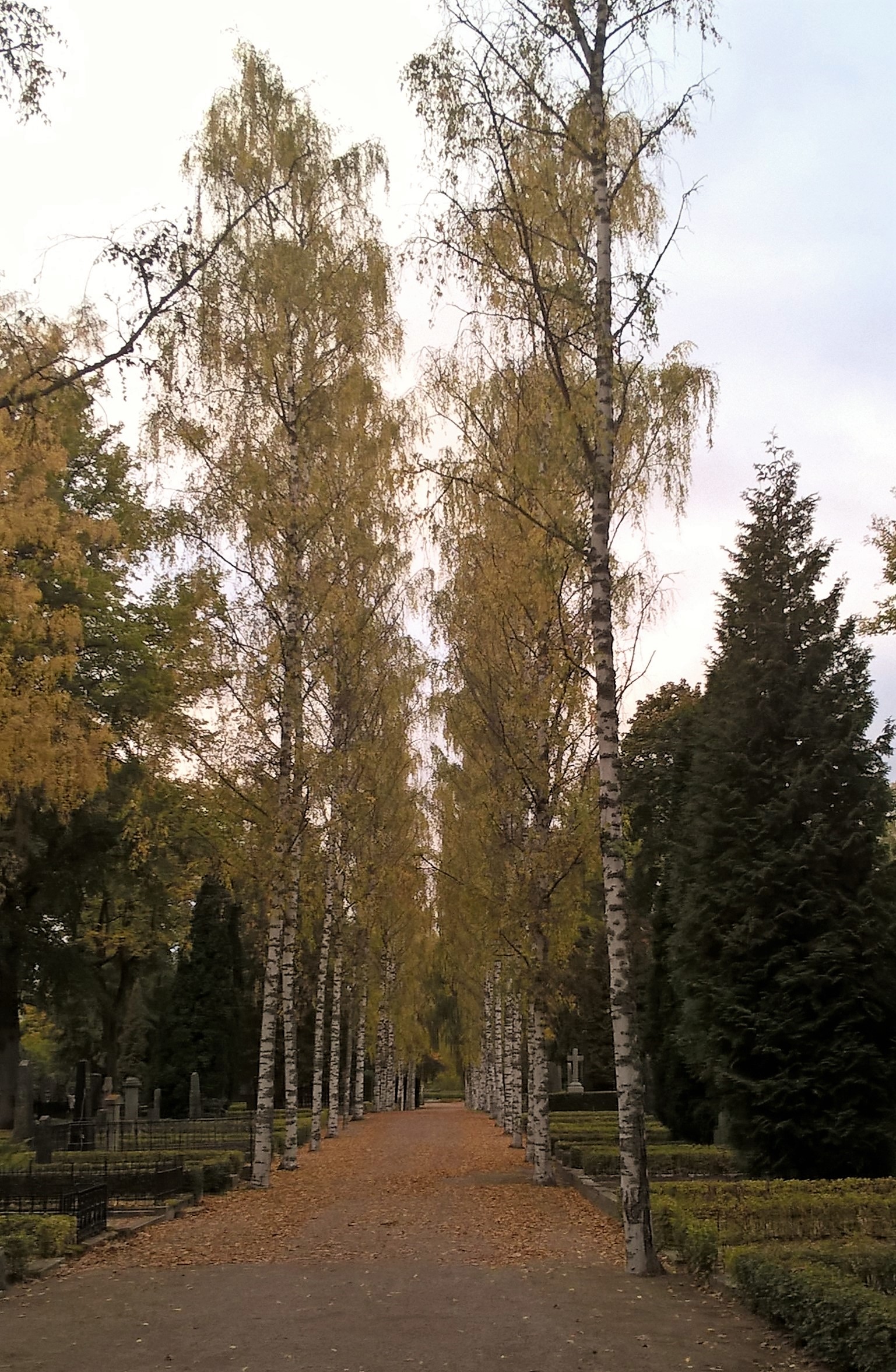
This time, remembering my wanderings from the last trip, I take us a different route – and we end up in the graveyard.
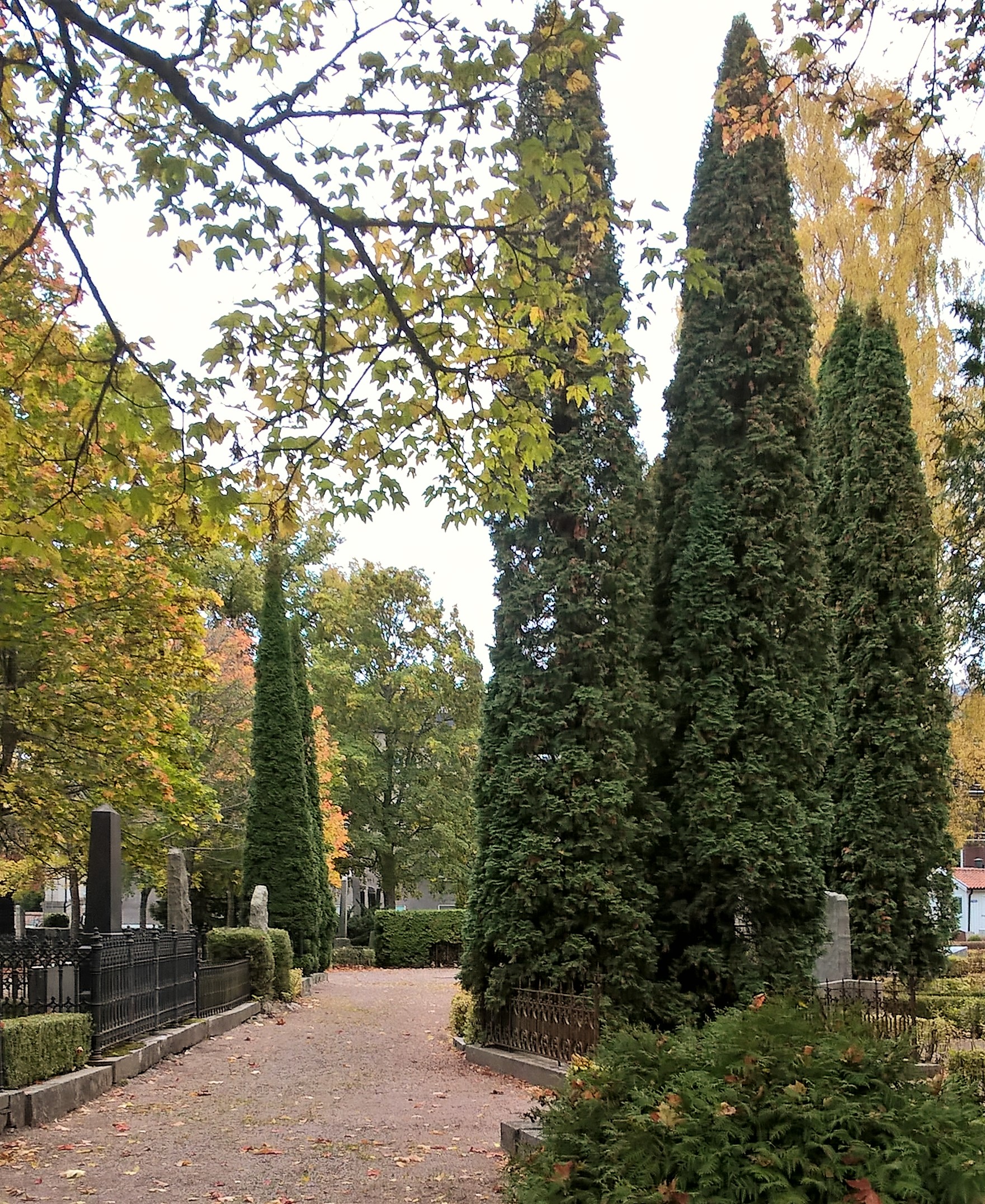 Where a new grave is being dug.

I draw the line at photographing gravediggers at work, so here is a picture of the tools we saw in this and other cemeteries we saw as well as in an exhibition about … death and burial
Yes, human life as we know it ends with death. Even if DNA survives.
But we’re always looking for more, aren’t we?
The runes, chinks of light shining on an older world’s attempts to explain our existence.
The lab, discovering what makes our bodies and our minds do what they do.
The graveyard, a reminder it all ends this way.
Well, there’s more death to come – with Vikings, churches, mounds and graves.
Till then,
Hejdå,
Adjö,
Farväl


























 MEMOIRS OF A HUSK