Uncle Joe’s Mint Balls. Two gold llamas. And, Chopin woz ‘ere

Do you think northern England's railway system need some investment?

Do you think northern England’s railway system need some investment?

We went by train – 35 miles or so as the crow flies. More than an hour and a half, on a Sunday.

An interesting journey, chugging past lonely chimneys, their factories long gone. Well, mostly.

‘Uncle Joe’s mint balls keep you all aglow,’ proclaims the slogan on one near Wigan station. Still hand-made, over gas fires, as they have been for over a century.

Still chimneys in Manchester - this one on the way to our hotel

Still chimneys in Manchester – this one on the way to our hotel

Eventually we’re in Manchester, checking in at a luxury hotel. The Radisson Blu Edwardian.

Ascending in the lift, serenaded by Pan Pipes, I’m half expecting jungle vines to start curling down around me.

The room’s serene and minimalist. Devoid of clutter such as printed matter. Except for door labels and laundry lists from The Radisson Edwardian London.

Yes, London.

Pity the disoriented international traveller. Well only if he has no idea where he is or how much breakfast round here costs.

£18.95 – for breakfast?

DSCN0714Anyway, as the red plaque on the outside of the building tells anyone who walks past and looks up, this is – was – the old Free Trade Hall. The hotel now rises like a tall, sharp, shiny alien behind its remnant facade.

The Hall, built between 1853 and 1856 in the ‘palazzo’ style, stood on the site of the Peterloo Massacre. Funded by public subscription, it celebrated the repeal of the Corn Laws which had caused such hardship to working people.
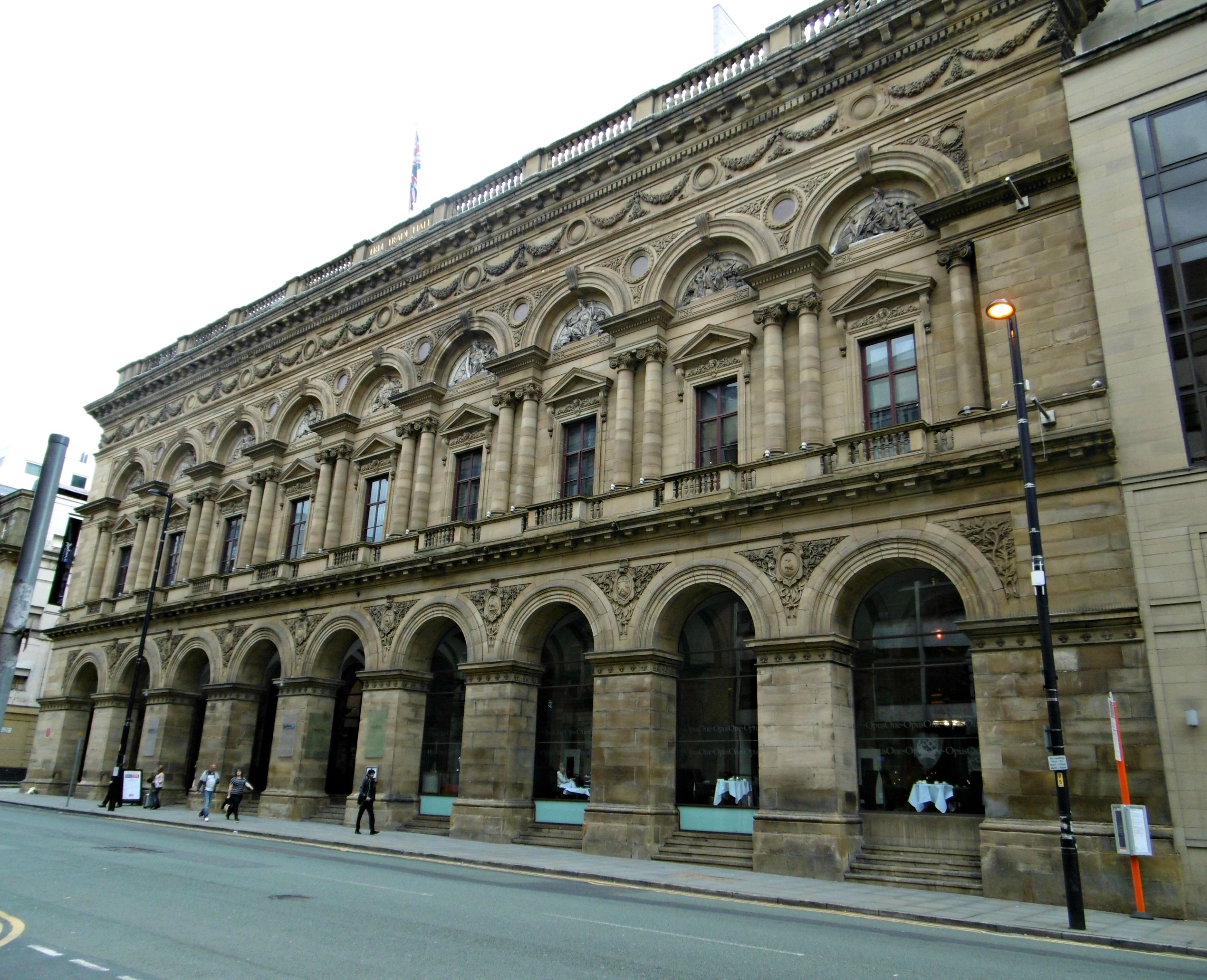
Facade of the old Free Trade Hall

Facade of the old Free Trade Hall after the sun went in!

It was damaged in World War II. Manchester, hub of the world cotton trade until the 1960s, suffered heavily. My mum and dad talked of standing on a hill in Blackburn (just over 20 miles away), watching, horrified, as Manchester burned.

Rebuilt in the early 1950s, the Hall’s civic life was terminated in 1997 when the city sold it to a developer.

In 2004 the hotel opened.

As well as the façade, they kept a series of stone statues that was added during the 1950s rebuilding – but they’re not anywhere obvious.

Obvious is left to the décor: two gold llamas, a giant oriental head, three wooden monkeys. Relevant and appropriate artefacts? Hmm.PicMonkey rdisson Collage

I ask the young woman behind reception about the statues.

Seems they’re in the stairwell down to the spa.

Right.

So we descend, only to find they’re in pairs going way, way up to the top of the building.

PicMonkey CollageAfter climbing three floors for three better views, it becomes more difficult. We give up and leave – because it’s time for our guided walk.

Down a side street the new British citizen reckons a crowd is gathering. I pooh-pooh that – obviously it’s a queue at a bus stop.

But some forty minutes later, our walk reaches the very same spot. And it’s a crowd.

A few men are wearing red bobble hats – ‘Liberty bonnets’.

Socialist banners lean against walls.

Spot the red 'liberty bonnets'

Spot the red ‘liberty bonnets’

Singers, guitars, dogs, people bask in the warm sunshine – or is it the celebrity afterglow?

We missed two well-known actors, orating.

Never mind.

We’re now standing on what was St Peter’s Field. I peer around seeking a memorial. In vain.

William Bradshaw was killed at Peterloo by a shot from a military musket

William Bradshaw was killed at Peterloo by a shot from a military musket

So far all we’ve seen is some small red stars commemorating victims’ names, in the floor linking the central library to its extension.

Next we reach the red plaque on the wall of our hotel and gather – uncomfortably – around a seated beggar who soon moves on. Us? Or the policeman heading our way?

In a smart shopping street tents are pitched. Demonstrating against homelessness. Or demonstrating homelessness? Whatever, demonstrating.

Protesting about homelessness in the heart of the smart shopping districts

Protesting about homelessness in the heart of the smart shopping districts

The guide points out the wall of the Friends’ Meeting House, there when Peterloo happened.

A few minutes later we reach a whole building that was there – now a pub, supposedly haunted by victims.

A developer wants to develop it.

Is the building protected?

No.

Is there any memorial on it?

No.

There’s a pattern developing here, Manchester.

Our guide recites the last few verses of Shelley’s poem, The Mask of Anarchy, as the Town Hall bells toll. Ending,

Rise like Lions after slumber
In unvanquishable number–
Shake your chains to earth like dew
Which in sleep had fallen on you–
Ye are many — they are few.

The Sir Ralph Abercrombie pub, supposedly haunted & under threat from developers

The Sir Ralph Abercrombie pub, supposedly haunted & under threat from developers

And we adjourn to the pub.

Support it while we can.

Over a half of Cheshire pale ale our guide recommends the People’s History Museum – and we leave for an evening of Italian food and wine happy in the knowledge that Monday will bring another new experience.

Monday.

Sunshine.

Two rain-free days in Manchester.

The spirits of the radicals must be smiling on us.

For this is the rainy city where Marx and Engels met, the city of which de Toqueviille and Mrs Gaskell wrote.

We trudge the wrong way down a main street, past a statue of Chopin (he played here, once) then have to ask directions.

The People's History Museum, Manchester

The People’s History Museum, Manchester

Among the many signs directing tourists, it seems none point to the People’s History Museum.

Eventually we arrive. We’re given a map, told what’s on and – oh, by the way, one of the Labour leadership election hopefuls is talking right now.

We sneak in, stand at the back.

I can’t say the atmosphere’s electric, as it was in Liverpool for Jeremy Corbyn.

Andy Burnham seems smaller in real life. Gives the impression of being made-up (I mean with make-up, not imagined, or just chuffed).

Andy Burnham speaking in the People's Histoyr Museum

Andy Burnham speaking in the People’s History Museum

He tells us he agrees with Jeremy about lots of things – but would be better at uniting the party. And he gets a (mostly) standing ovation.

I sympathise, but don’t think he’s the man for the job.

Upstairs I peer into the gloom – created by sombre lighting – and suppress a groan.

Lots of text.

Lots of pictures.

Lots of ‘open this’ exhortations.

I’m not sure I can take it.

But, a considerable time later I’m sorry to reach the exit.

The tea room and a warm scone win out over an exhibition on the miner’s strike and we leave Manchester with minds and waistbands stretched.

And some puzzlement.

A sense that ‘the great and the good’ who run Manchester don’t think that their proud, long radical history is good for … well, business.

Never have, since Peterloo.

Chopin, however ….


Addenda:

Let’s hope the city produces a memorial before the 200th anniversary of Peterloo in 2019. There’s a campaign group you might want to support if you’re interested: 

http://peterloomassacre.org/campaign.html

I’ve also checked the Radisson Hotel website. After an exchange of emails with them I can see they have already added some historical details to their home page. Well done Radisson! A new leaflet next? 

Posted in Art, jaunts & going out, Britain now & then | Tagged , , , , , , , , , , | 17 Comments

“Fildes, – . Infant. Rode over by the cavalry.”

He was the first person to die. Knocked from his mother’s arms and trampled as the horsemen rode in, freshly-sharpened sabres slashing.

It was Monday, 16 August 1819. A sunny day in Manchester.

Why did a blameless young child die that day?

Well, it’s a long story, but I’ll try and condense it.

In 1815, victory at Waterloo ended the Napoleonic wars. For years they’d been a drain on the British economy. But when the war ended life didn’t become any easier for the poor.

The price of bread was often beyond them, kept high by the infamous Corn Laws. They’d been introduced to protect the income of farmers and landed gentry when, with the new-found peace, cheap imports threatened to flood in from abroad.

There was no-one to represent directly the interests of the poor, of the workers. Almost certainly not a Member of Parliament – even if they lived in a place that had one.

Manchester, already a booming city of new, industrial England, had not a single MP to represent it.

Yet, elsewhere in the country, a rich man might ‘own’ a ‘pocket borough’ that returned a man to parliament on his behalf.

A ‘rotten borough’ might return two MPs – the choice of the local landowner – for a mere handful of inhabitants.

Very few men and no women had the vote. There was no secret ballot – landowners and other manipulators of the system could easily impose their choices on voters.

The system was highly corrupt and far from democratic.

Henry Hunt was a campaigner for parliamentary reform and a popular orator. On 16 August he was to address the crowds gathered on St Peter’s Field, Manchester.

Banners flew. Red ‘Liberty Bonnets’ adorned tall staffs.

Picnics were brought.

Some of the women – members of the Manchester Female Reform Union – wore white dresses.

Some of the men wore top hats.

Later, a commentator remarked on the ‘impudence’ of the working men who wore top hats that day. But worse things happened than the uppity wearing of the wrong kind of hat.

Local magistrates were anxious. Despite the fact that the gathering was peaceful. Despite that fact that the field had been cleared of stones and sticks. Despite the families dressed in their Sunday best, hardly suggesting a rabble ready to be roused. And despite Henry Hunt’s exhortation to people to come,

“armed with no other weapon than that of a self-approving conscience”.

To be fair, it was a huge crowd.

An eye witness agreed with the Times reporter’s estimate that 80,000 men, women and children had assembled to hear Hunt speak. The Manchester Observer, more scientifically, worked out likely numbers per square yard – the field was 14,000 square yards (11,700 sq m) – to arrive at an estimate of 153,000.

And, it was a meeting about reform – a word guaranteed to strike terror into establishment hearts. It wasn’t long, after all, since the French Revolution had turned the tables on France’s established order. One banner in the crowd even read ‘Liberty and fraternity’.

But local officials had taken no chances – they’d prepared for the worst.

Several hundred infantrymen, 600 Hussars, an artillery unit with two six-pounder guns, 400 men of the Cheshire cavalry and 400 special constables were on hand to keep the peace.

When Hunt arrived, to the crowd’s obvious delight, the chairman of the magistrates decided it was time to arrest him – and sent in the local yeomanry.

Mounted on horseback, armed with cutlasses and clubs, they rode into the crowd.

That’s when it all went horribly wrong.

The way through the crowd was narrow and the yeomen began hacking. Some said many yeomen were drunk.

The magistrates, reportedly under the impression the crowd was attacking the yeomen, sent in the Hussars.

As the horsemen slashed and hacked an officer of the 15th Hussars called out:

“For shame! For shame! Gentlemen: forbear, forbear!

The people cannot get away!”

The dead died of sabre wounds and of beatings with truncheons. One woman died when she was thrown into a cellar and suffocated, another ‘rode over’ by the cavalry.

One man was ‘inwardly crushed’. Another, struck by a sabre, owed his life to the bread and cheese he had tucked in his hat.

To modern ears a massacre is a thing of many deaths, we’ve become so blasé about mass killings. Only 15 – and I write that sadly – died on that day. Or so the best estimates have it.

But more than 600 were injured. It’s probable that many others hid their injuries to avoid losing their livelihood – or worse.

Some doctors refused to treat the victims.

Soon after the event the term ’Peterloo’ was coined. The reference was clear, an inglorious twin to the glorious victory of Wellington at Waterloo.

John Lees, who died of his wounds on 9th of September, had been at Waterloo. Before he died he said of Peterloo,

“At Waterloo there was man to man but thereit was downright murder”.

Henry Hunt was imprisoned. Next day he wrote, appealing against his arrest and defending the crowd:

‘”by far the greatest number I ever witnessed together, and the least disposed to commit any breach of the peace. “

He was not released. Three days later he wrote to the Manchester magistrates:

“ …  the real murderers are endeavouring to wipe the bloody stain from their remorseless, guilty souls, by casting imputations and suspicions upon others that they know had no hand, directly or indirectly, in the foul and cowardly deed …. The eye of the whole country will shortly be fixed with a scrutinizing penetration upon every step you take in this bloody affair. – I am, Gentlemen, your Prisoner, Henry Hunt.”

He was incarcerated for two more years, but he was right about the eye of the country.

Peterloo itself did not change anything immediately, except that most important thing – public opinion.

A crackdown on reform followed. By the end of the year the ‘Six Acts’ were passed, suppressing radical meetings and publications. Working class radicals were imprisoned. Journalists arrested. Newspapers went out of business.

But the wave of public opinion was rolling. And even kings, as Canute discovered centuries before, can’t stop the tide from coming in.

Posted in Britain now & then | Tagged , , , , , , , , , , , | 6 Comments

“Nothing is perfect. There are lumps in it”

I was going to use the first bit of that quotation:

“Finality is death. Perfection is finality.”

but I thought it was a bit depressing.

It comes from, ‘The Crock of Gold’, written in 1912 by Irish poet, novelist and short-story writer, James Stephens. I admit, I don’t know his work at all. I found it in a dictionary of quotations when looking for something to express my views on perfection.

Nothing really did.

I could have said, perfection is dull. Or, perfection is unattainable. Or, perfection is worth pursuing as long as you know you won’t get there. But I wanted something – perfect.

I was thinking about this recently when we went to visit a potter in north Wales.

We like pots. We have some fine examples of what is known as ‘studio pottery’.  And lots of handmade plates and bowls, cups and saucers, jugs and mugs – vast quantities of mugs.

Two mugs, by David Leach

Two mugs, by David Leach

We’re mugs for mugs.

Some of my favourite pots, though, are ones that tried but failed.

Or did they? Is it all a bit subjective, this perfection thing?

Long ago (the 1990s) and far away – 300 miles down south, in Devon – we went to visit another potter, David Leach.

He was suffering from an affliction that, mercifully for him, was not permanent.

He had no feeling in his hands.

David Leach, son of that grand old man of British Studio Pottery, Bernard Leach, was then nearer to his ninetieth year than his eightieth. A lovely, unassuming, quiet man. At least, in our brief encounter he was – he might’ve been suppressing a rage that only surfaced at parties, but I doubt it.

He showed us his big, plain potter’s hands. Showed us his pale palms. His blunt, solid, digits and thumbs. Unable to feel the clay forming shapes beneath them.

Plainly unhappy and struggling to come to terms with it, he was hoping it would become better, one day. Worrying about the outcome an operation might have.

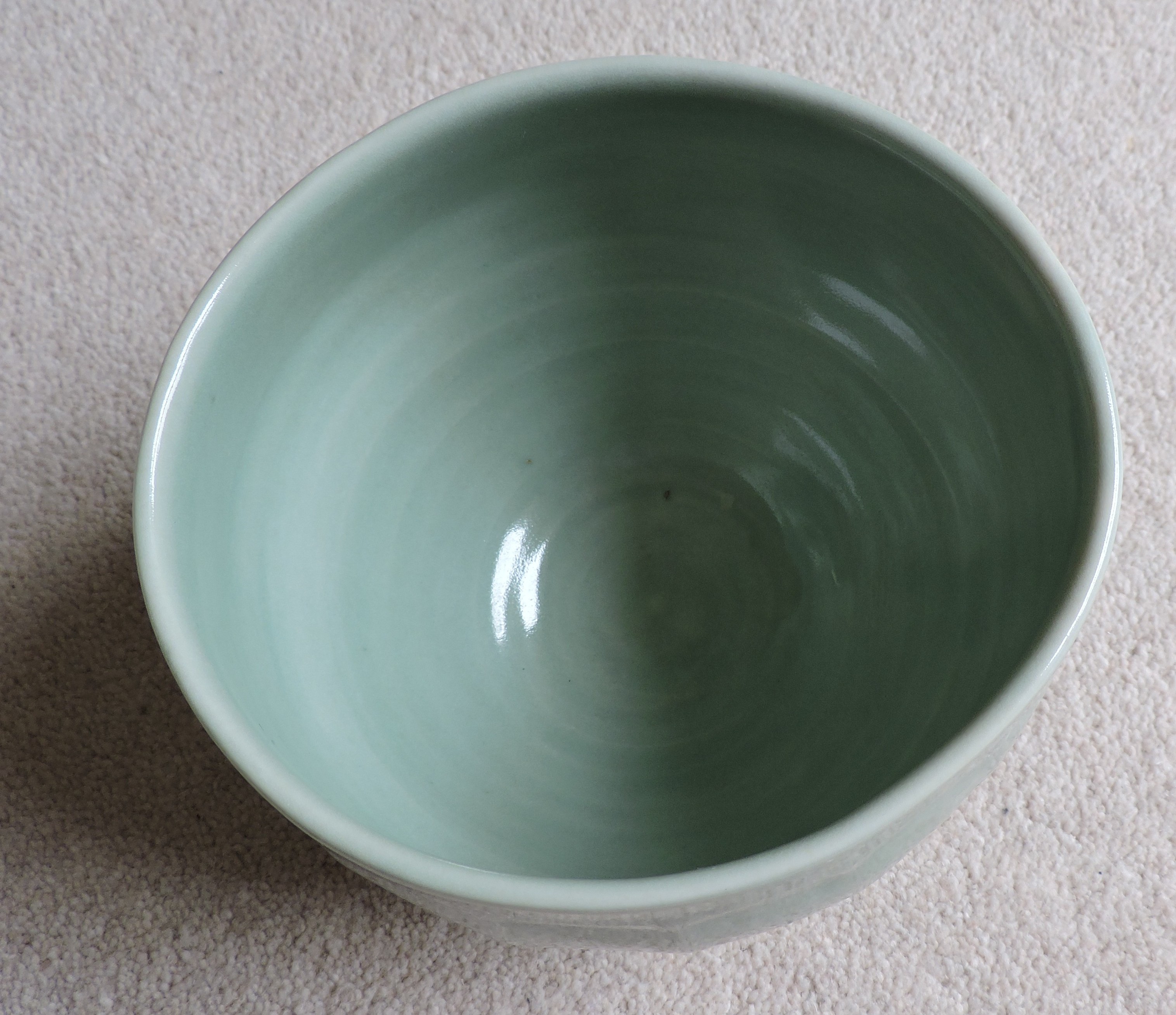
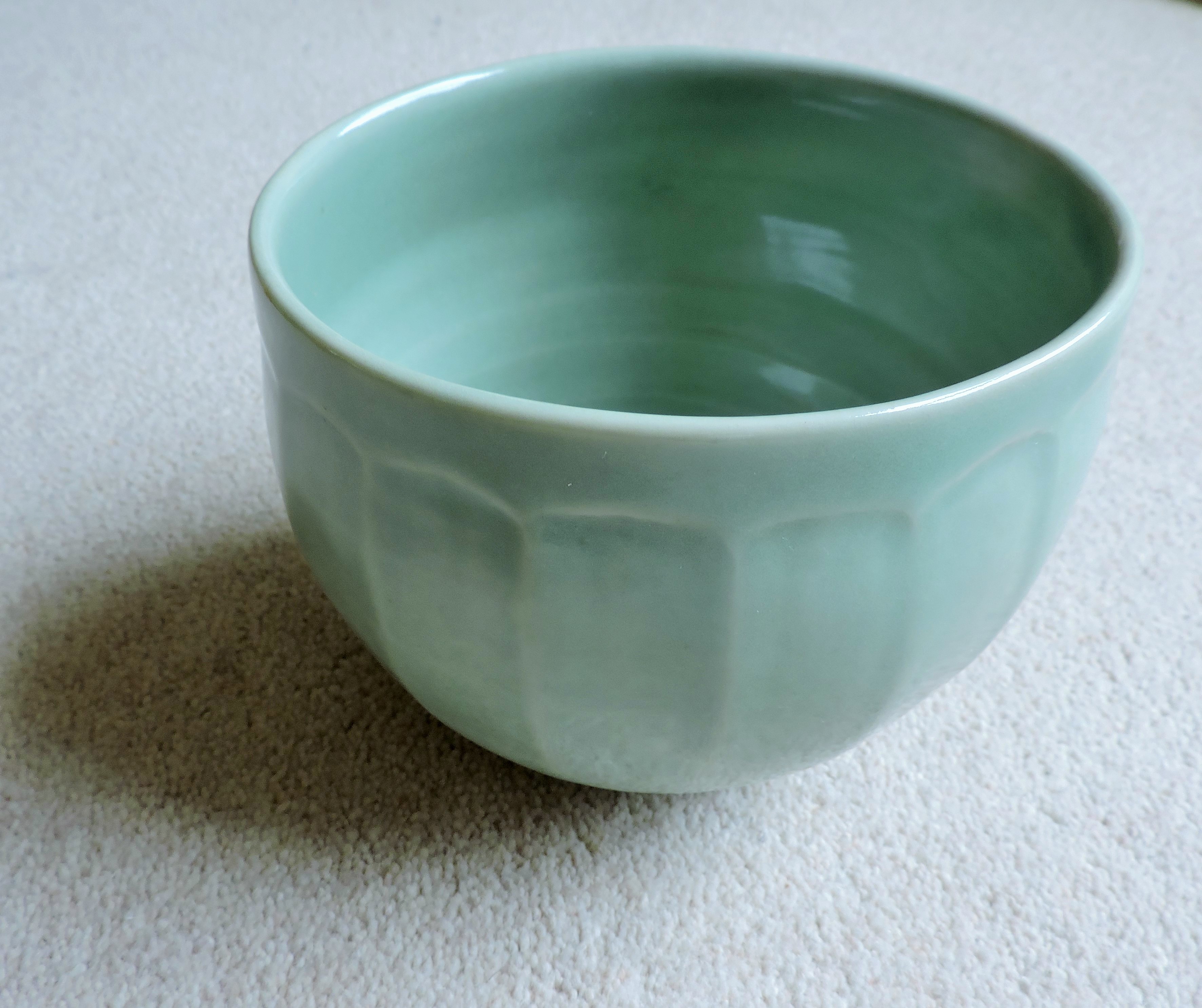
We looked at his pots and fell in love with a bowl with a celadon glaze – a beautiful, pale jade green (created by firing with a glaze containing iron).

A classic style and shape.DSCN0703 DSCN0706 (3)

And wonky.

Of course we bought it, at an ‘ouch’ of a price. David Leach’s work was by then commanding very high prices.

We felt like we’d bought a bit of the man himself. A deeply personal diary entry, written in a celadon bowl.

A piece that spoke of the man nearing his ninetieth year, whose expertise was oh-so-close to perfection, but betrayed by his own body. His oh-so-experienced hands.

Later,  we received an invitation in the post to a viewing in a gallery in London – but we couldn’t go.

And now Mr Leach is himself long gone.


Oldrich Asenbryl, however, remains. In north Wales. Which is where we went to see him just the other day.

In 1968 Oldrich came to Britain from Czechoslovakia.

1968. The year of the Prague Spring – and the Russian invasion that quashed it.

One of the effects of the liberalisation early in that year was more freedom for people to travel.

People like Oldrich.

He was here when the Russians marched in – and has been here ever since.

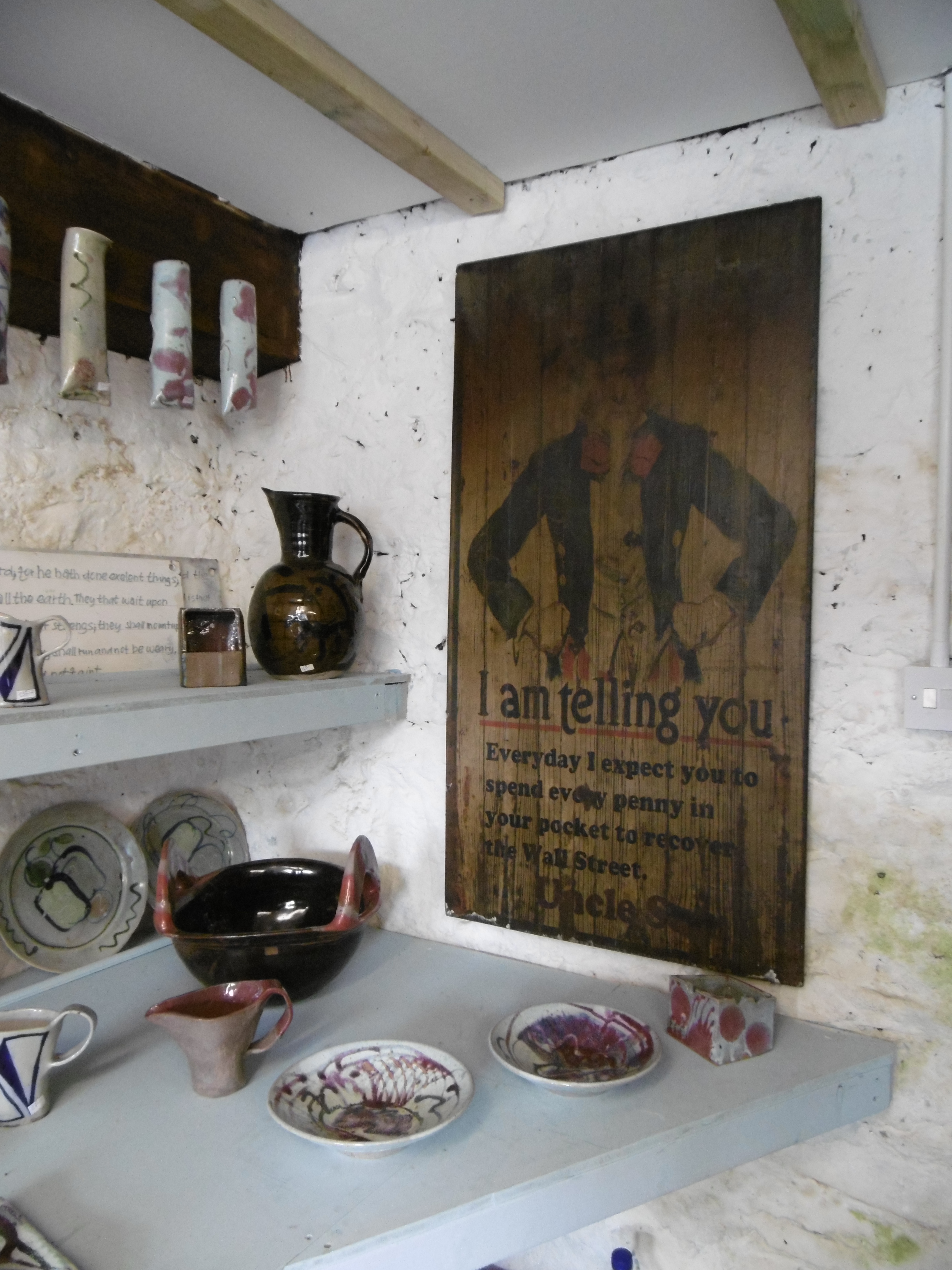
One side of Sarn Pottery's display

One side of Sarn Pottery’s display

For two years he worked in Aldermaston pottery (under well-known potter Alan Caiger-Smith), then set up on his own in Wiltshire before moving, in 1973, to Wales.

So far so good.

But then, in 1993, calamity.

A stroke deprived him of movement in his left arm.

His affliction is, barring miracles, permanent. He’s 72 now. Still a potter, with one fully-functioning arm.

Just imagine it.

Throwing a great slab of clay, plonking it on the wheel and bringing it up to create a thing of use or beauty. Or, preferably, both, fully satisfying William Morris:

‘Have nothing in your houses that you do not know to be useful, or believe to be beautiful.’

How could anyone make beautiful, useful pots with only one working arm?

It’s a mystery.

Anyway.

Oldrich asenbryl outside his shop in Sarn

Oldrich asenbryl outside his shop in Sarn

When we arrive he’s sitting in a deck chair in the rare north Wales sunshine.

I notice that the sign, ‘Parking for Czechs only’ is gone from the window. But don’t know what that absence portends.

The man’s struggle to rise has us worried, but not for long. Deck chairs are notoriously difficult to escape, even with two working arms.

Soon he’s on top form. Quipping . Relating stories. Telling us to look around then stopping us by telling another story. Like a dentist asking you questions mid-filling. Remembering us – well, remembering the man, but mis-remembering me.

I tell myself he’s confusing me with a rich woman, from a famous family, who used to buy his seconds. Though she also used to be a ballet dancer, so it’s rather unlikely.

Outside, we admire the bright new paint job. Inside the lighter, airier displays.

Then he points to the cuttings on the wall. The pictures of the aftermath of the fire. The fire that could have killed him had he and his grandchildren not been out for the night.

Uncle Sam's message has been a bit charred

Uncle Sam’s message has been a bit charred

The fire that destroyed all his stock – except for his ‘insurance policies’ in a separate building.

Will he make more pots. I ask?

A grimace is his reply. He hasn’t worked for ages.

Is this the end, I wonder? (To myself.)

Then he shrugs.

Seems the kiln’s broken, has been for months. He’s in a queue. It’s a rare thing, the skill needed to mend his kiln.

I shouldn’t be surprised at this man.

A wonky bowl

A wonky bowl for wonky fruit, perhaps?


This man who puts his faith in God. Who decorates his shop with handwritten extracts from the Bible.

Who despite a stroke can make beautiful, wonky pots with his one good arm.

This man perseveres. Or as ‘The Dude’ – The Big Lebowski – might say, abides.

Even if he’s ‘humbled’, as his handwritten sign proclaims.

Or, ‘humbeled’, actually.

Which proves perfection’s unnecessary.

We know exactly what he means.

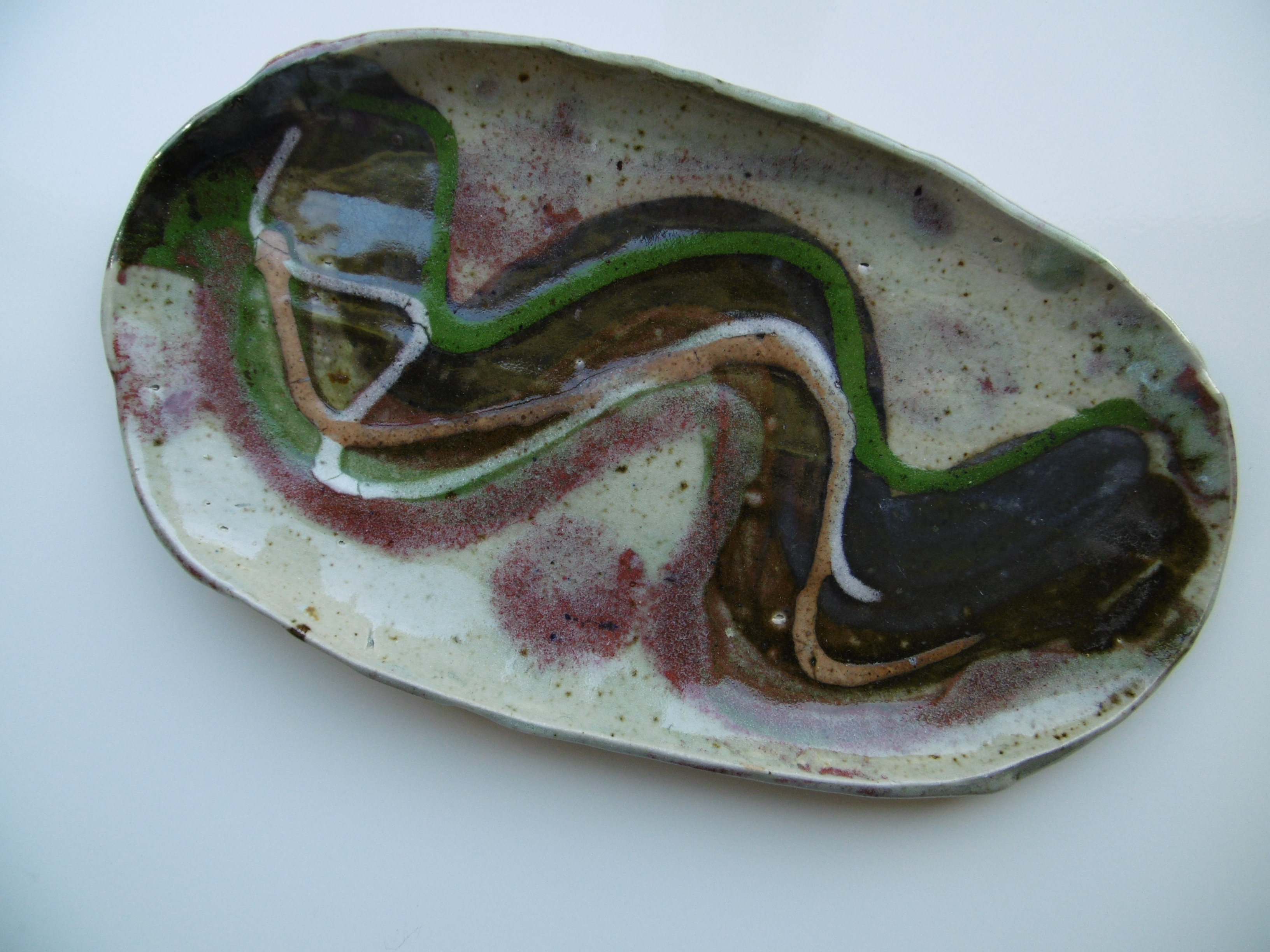
A wonky platter with a beautiful glaze

A wonky platter (with a beautiful glaze) for asymmetric hors d’oeuvres?

Posted in Art, jaunts & going out, Llyn Peninsula | Tagged , , , , , , , , , , | 10 Comments

Fairies and minnows, Codlins and scones

‘Did you wish?’ I say.

He didn’t. He caught the fairies, let them go – and didn’t even wish.

P1030060We’re walking along the canal near Rufford Old Hall in Lancashire. The clump of conjoined fairies – aka fuzzy, aerodynamically perfected seedheads – was floating towards the surface of the canal when it changed its collective mind and headed for the fields.

He who is with me caught them for a tantalisingly brief moment.

We will never know, now, what would have happened had he made that wish. Perhaps it’s for the best. Wishes granted can be disruptive, I suspect.

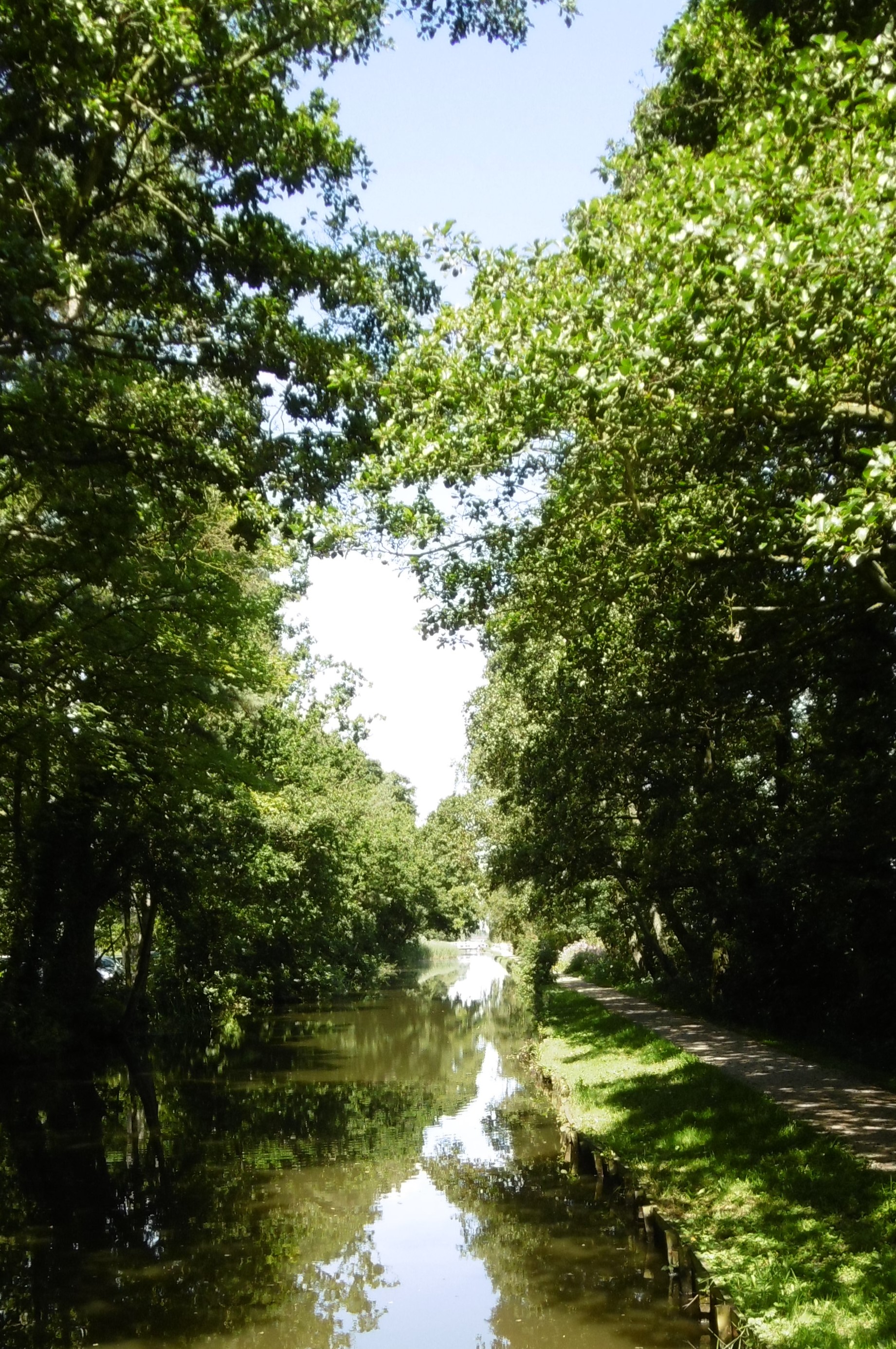
The day is what you might expect from summer but hasn’t actually happened so far this year.

A sky that if it were yellow would be buttery (but it’s blue), pasture just on the point of turning straw-coloured, fields of crops well into the golden stage – and sheep well beyond the lamb stage.

Plus cows, of course, lying lazy in the heat.

And a fickleness of fairies, flying.

P1030056 (2)And, just beneath the surface of the murky brown canal water, minnows darting.

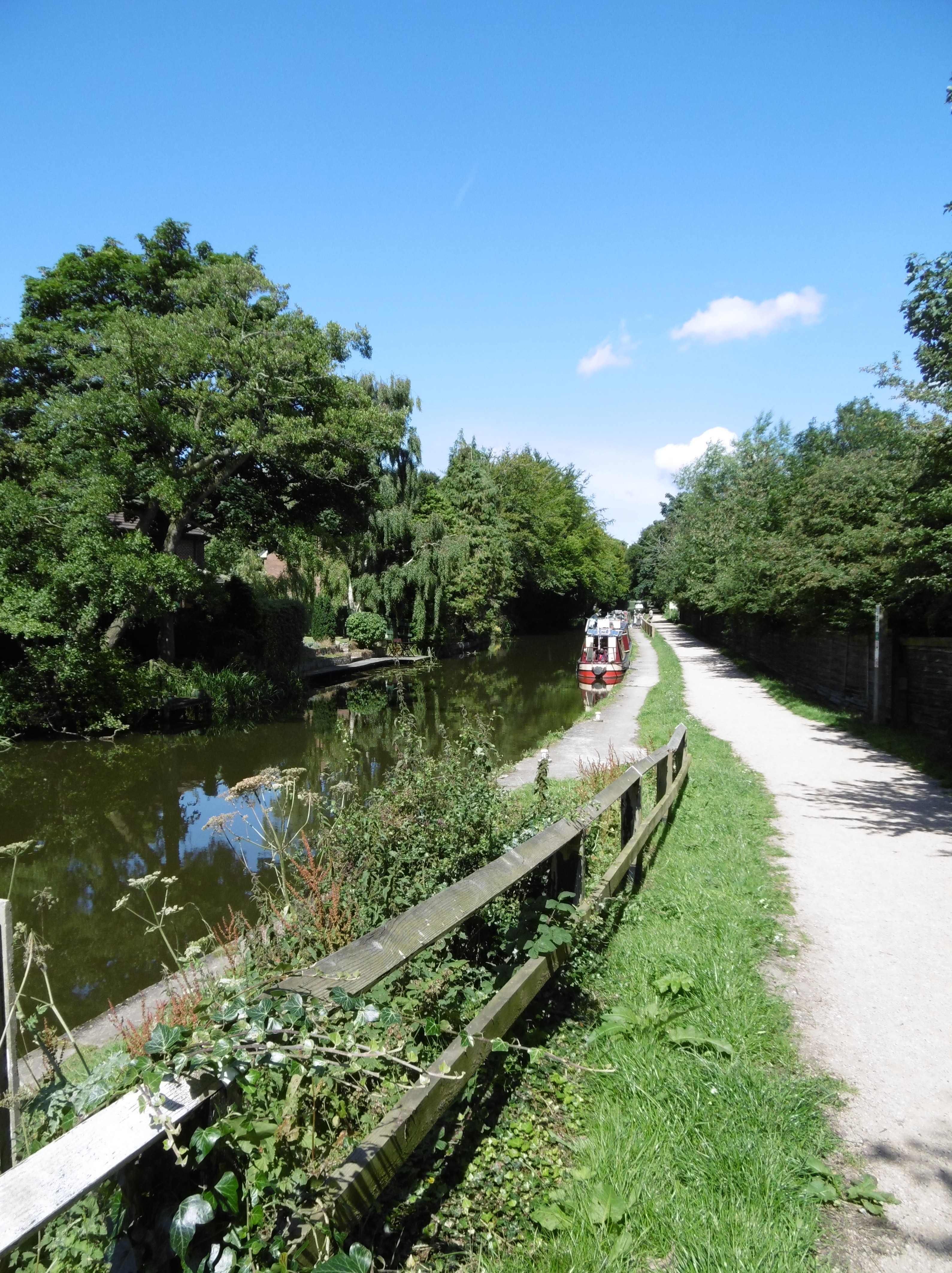
Under the dappling shade of the trees lining each bank, owners of narrow green canal boats are hanging out their washing, mending their stove pipes, cleaning their decks or just sitting, mug of tea to one side, reading the latest issue of that most renowned newspaper, Towpath Talk.

Folk walk by and say hello, or hi – or even ‘ow do, in the old Lancashire way.P1030054

Across the water, the not quite stately home of Rufford Old Hall has a tent of reptiles to tempt the small people who are visiting with the big ones. And some big ones, too, of course. One six foot three, in fact, and Texan.

Rufford Old Hall

Rufford Old Hall


In the gardens, two sizeable birds of prey soar way above us, too high up for identification.

A couple is braving the croquet, despite our warnings of likely marital disharmony.

Pear trees, espaliered against walls are bursting with fruit.

Pears - the sun has gone behind a cloud

Pears – the sun has gone behind a cloud

The trees in the apple orchard, wizened with age, seem at first sight a little less fecund, but perhaps they’re just a bit slower, without the reassuring warmth of the old stone walls to lean on.

Little green apples with unusual names are ripening on many of the gnarled branches. I’ve never heard of Codlins, but there’s a version from Keswick, one from Carlisle. A pedigree northern apple, then, the Codlin?

Through the Carlisle Codlin tree towards the other side of the hall, just visible

Through the Carlisle Codlin tree towards the other side of the hall, just visible

It’s obligatory, for us, to have tea when we’re here. Lancashire tea – with cheese scones, fruit cake and Lancashire cheese.

The cheese is meant – in my opinion, being a Lancashire lass – for eating with the fruitcake, but my dearly beloved eats his with the scone. Ah well, it takes all sorts to make a world.


I notice a little girl eating a huge ham sandwich. Each time her mouth heads for the bread her little feet turn upwards where they dangle beneath the chair.

And I wonder.

I do, it must be admitted, have a tendency to wangle off my shoes when I start to eat. Could it be a girlie thing?

I know, a rather tenuous connection. But she does have pretty pink shoes.

The café’s run by the National Trust and we’ve been here several times.

A busy-busy woman scurries around, making sure all is well, wiping tables, taking orders – and calling most people, ‘lovely’. As in, ‘Is that all right for you, lovely?’

Ah.

It makes me smile, being called lovely. I hope it makes lots of other people smile.

In a world where so many people are impatient, stressed and just plain insensitive, how nice to be called lovely.No matter how rude or grumpy or demanding or just plain haughty we are.

Not us, I mean – that was a generic sort of ‘we’.

Because we’re lovelies. The nice woman says so.
P1030090 (2)

Posted in Art, jaunts & going out, Lancashire & the golf coast | Tagged , , , , , , , , , | 6 Comments

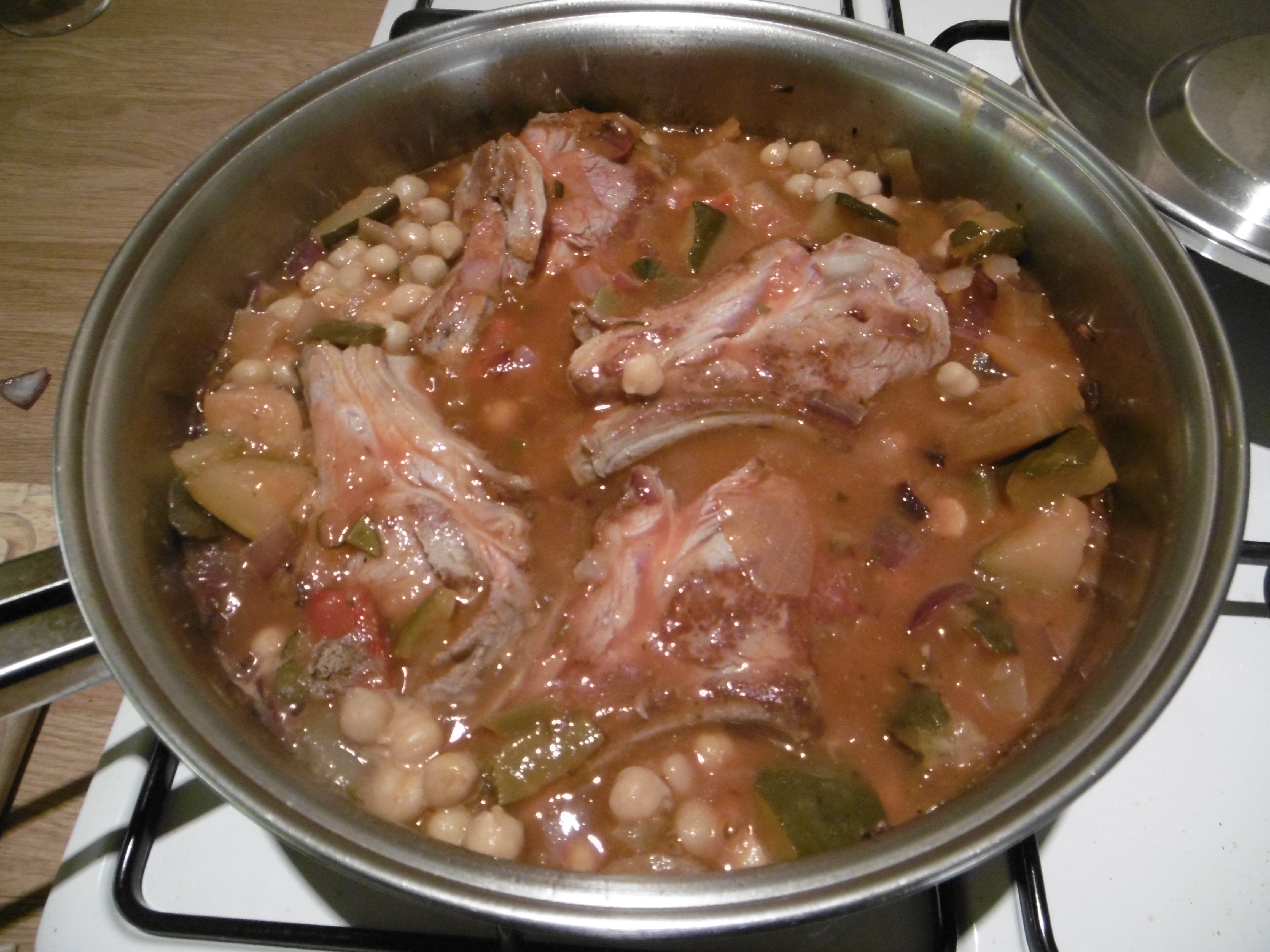
Welsh North African Lamb

Aberdaron from the beach at sunset

How do I love north Wales? Let me count the ways …

Especially Aberdaron. And, yes, I’ve written about it before. Once or twice.

One end of the long beach in Aberdaron

One end of the long beach in Aberdaron

That endless sea, bound by a long bay that keeps it from being melancholy.

Swallows’ nests in the cliffs.

Seals that I’m certain pop out only when I’m not looking.

Memories of the poet-priest, RS Thomas, lingering in the wind-lashed chapel – and living in books on sale in the Post Office.

I love it for the peace that a visitor like me finds there, knowing I can’t go any further unless it’s by boat.

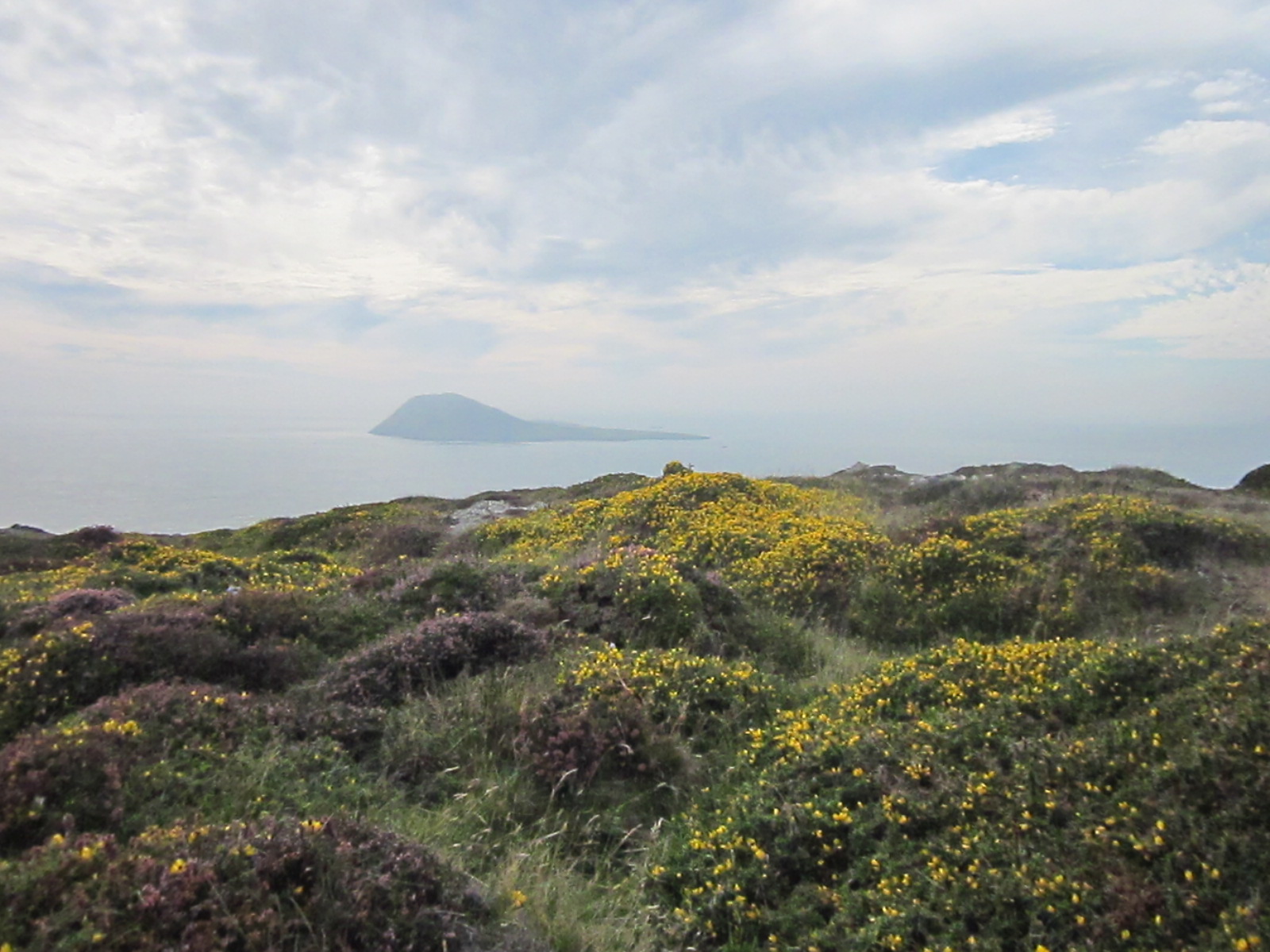
Bardsey Island, place of pilgrimage

Bardsey Island, place of pilgrimage

And taking that boat to Bardsey, to commune with its countless saints.

Oh, yes, I love Aberdaron.

So why did a post from Elladee on her needs-must, creative response to a kitchen equipment failure inspire me to write this post?
Well, we’ve had plenty of good things to eat in the village.

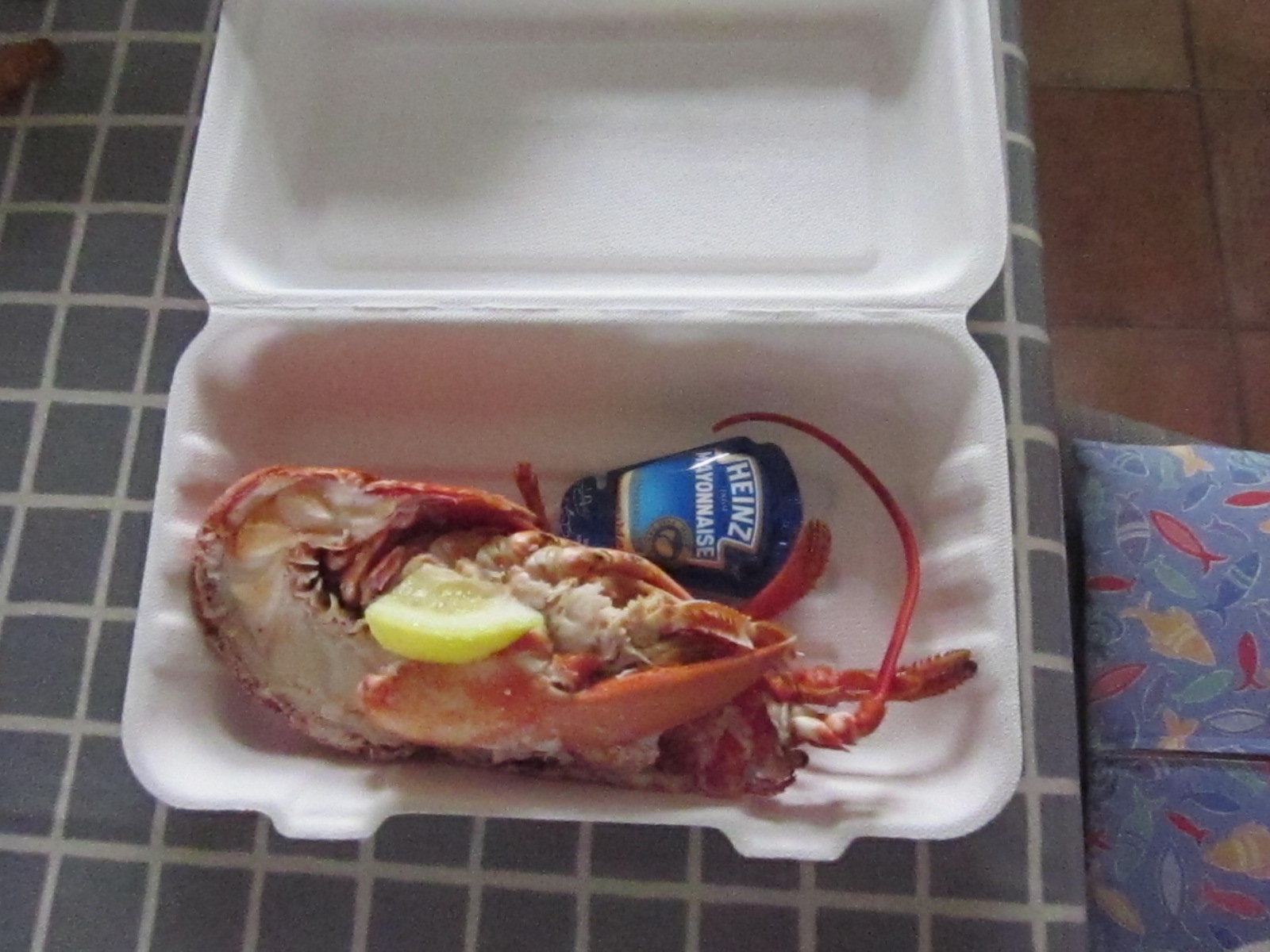
Half lobster (local) from Aberdaron

Half a local lobster

Gurnard goujons from Sblash! chippy in Aberdaron

Gurnard goujons from Sblash!

Lobster halves and gurnard goujons from the chippy.

Delicious, ever-reliable (in our experience) meals at the Ship Hotel.

Family enterprises, both.

If you’re self-catering, though, and imagine you’ll find a greengrocer and butcher, you’re going to be disappointed. The village food shops are not – last time we were there, anyway – a gourmet’s dream.

But the bakery’s always been worth a visit (their cakes are far too appetising).

And the bigger convenience shop in the village sells good quality meat and a decent range of fresh vegetables. Which is (ahem) convenient.

Because when we stay there, to keep costs down, we mostly cook for ourselves and try to buy our ingredients from the local shops. And that can require ingenuity. A needs-must approach.

On the penultimate night on one of our stays we felt the urge to eat Welsh lamb. The shop had chops. We bought four tiny ones. Each not more, really, than a chunky mouthful of meat and a slick of tasty lamb fat.

Yes, fat. I know, it’s bad for you.

But lamb fat tastes so good when it’s browned and sticky. Just nibble a teeny-weeny bit and you won’t go to hell for it, honest.

When I was little, as well as sneaking titbits of lamb fat, I used to stick my little finger into the lamb leg bone when no-one was looking and scoop out a morsel of marrow – mmm!

Anyway. So far so good. We had lamb. Now, what to eat with it?
We had a bag of couscous. That sounded like a good combination.

The shop had red onions and I bought two, plus a huge bunch of parsley and one of mint. It had tinned ratatouille, tinned chick peas, tinned peaches in juice – I bought one of each.

We’d brought ground coriander, hot smoked paprika and cinnamon with us.

Sorted.

It was quick to make and really delicious – I say this with an element of surprise as some of the things I make up on the hoof are interesting but not experiences I’d wish to repeat.

A year later the handwritten list of ingredients is one of the most food-stained recipes in my ring binder – I heartily recommend it. (It’s a casual recipe – interpret as you see fit.)

Simple foodAberdaron couscous serves 2
4 lamb chops
1 tin ratatouille
1 small tin chick peas or half a 400 g one
2 small-ish red onions either halved and sliced or chopped
Ground cinnamon, coriander, hot smoked paprika – or sweet smoked paprika & Tabasco
Chopped parsley (not essential)
Couscous (portion size up to you)
1 small tin of sliced peaches or halved apricots in juice
Small amount of chopped mint (not essential)

P1010236Fry the sliced/chopped red onions. Shove them off to the side of the pan or put them on a plate temporarily.

Fry the lamb chops for a minute or two either side to brown them then put the onions back in the pan, or stir them back into the mainstream, depending on what you did with them.

Add the ratatouille.

Add the drained and rinsed chick peas.

Add the seasonings, to taste (I use a teaspoon of coriander, half a teaspoon of hot smoked paprika, half a teaspoon of cinnamon and sometimes a bit of Tabasco too). If you feel it’s necessary (I do) add boiling hot water to thin it out.

Cover the pan and simmer.

While the lamb cooks make up the couscous according to the instructions on the packet of the variety you buy. Chop some peach or apricot and a little fresh mint and stir into the couscous before you serve it.

Stir as much chopped parsley as you fancy (or none – it’s optional) into the lamb mix after about fifteen minutes, cook two or three minutes longer and then serve.


If you try this I hope you enjoy it – wherever you are. Here’s the view we love to see as we eat it, as night falls, in a rented cottage in Aberdaron:IMG_2389

Thanks to Elladee for reminding me that the joy (mostly) of cooking is a great thing to share.


Posted in Llyn Peninsula, Simple Food for Simple Folk (like me) | Tagged , , , , , , , , , , | 6 Comments

Two-stepping Stetsons and a bear with no face

Saturday night in Dripping Springs, Texas.

It’s not, as you might think, named after the effect of high-summer heat and humidity on the human body.

No. It’s Dripping Springs because of the fresh water that attracted the first settlers. Well, first after the Native Americans they displaced, that is.

But back to tonight.

There’s no let-up as dusk shimmies into evening. It’s probably not 100˚F any more, but idling around the 97 mark, even though the sun’s gone down. I still feel as if I’m walking through curtains of hot, damp, translucent suede.

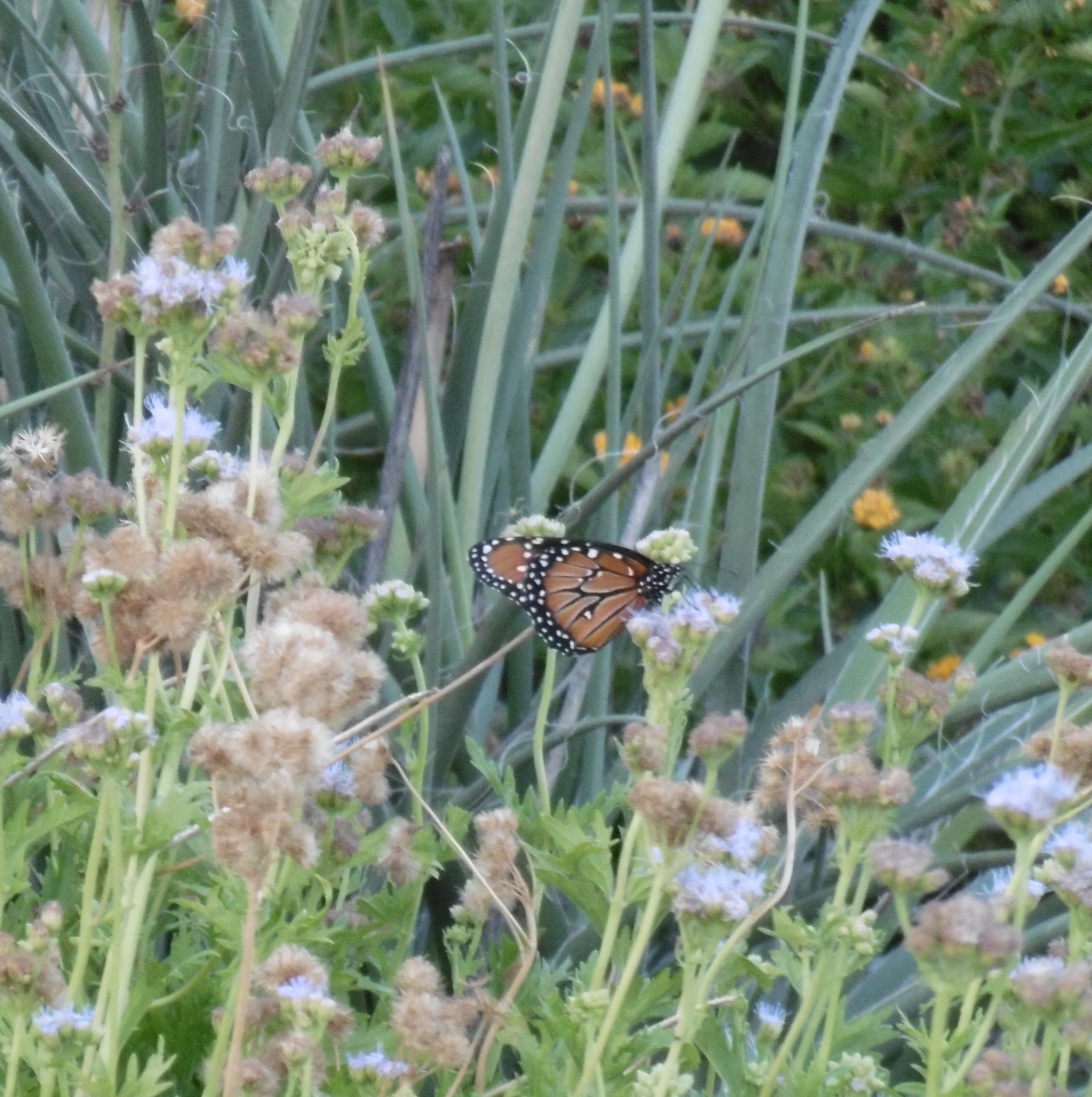
P1020920In the sultry gap between the footpath and the silent banks and cafes, tired, dusty bushes are alive with butterflies. Fritillaries flickering orange in the glow of après-sunset.

Burnt orange. The University of Texas American football team colour. About the only resemblance imaginable between the dainty winged ones and those incredible hulks.

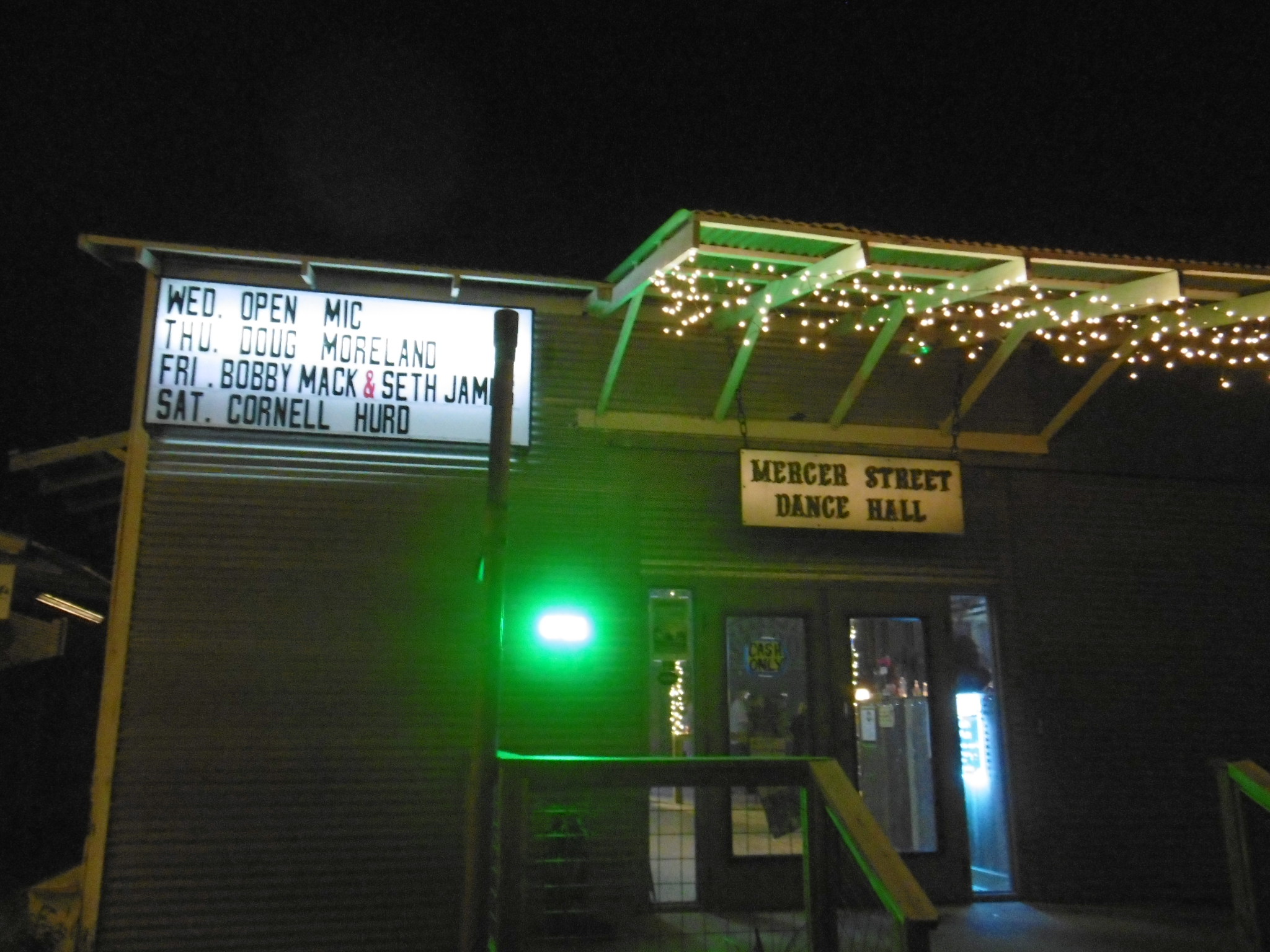
We’re heading for a plain, rural-industrial looking building, set back off the street. Seven of us. Four siblings, the rest in-laws.

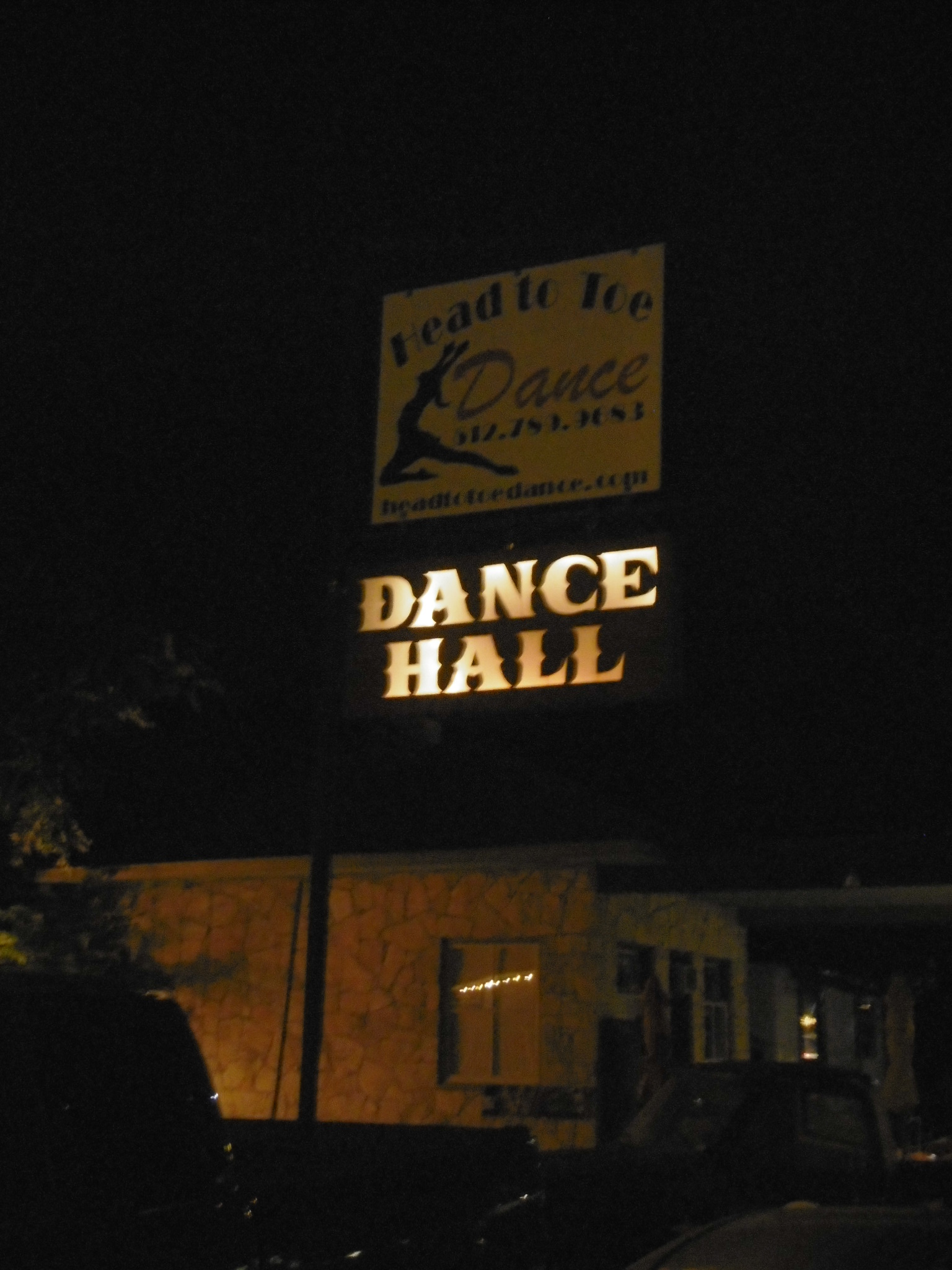
For $8 each we get a blue wristband and entry to the Mercer Street Dance Hall.

Outside, a large van’s disgorging men and their musical instruments. The Cornell Hurd Band arriving. Unlikely to start by 8.30 …

Taken when leaving after darkness has won

Taken when leaving after darkness has won

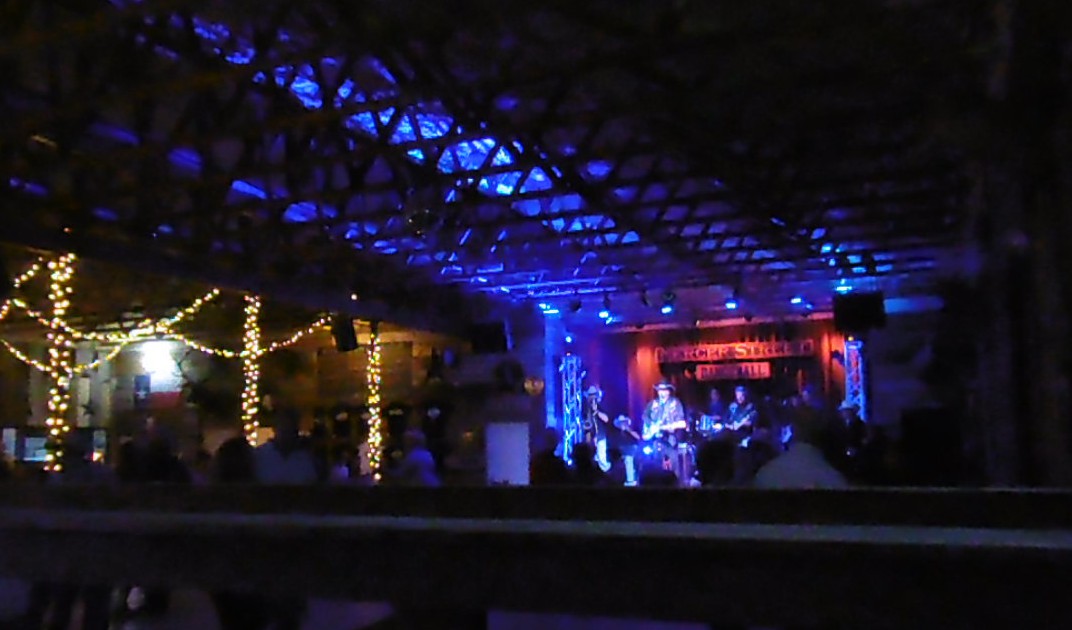
It’s cavernous inside. Dark but strung with bright lights. A party in the making, awaiting the spark of the live band to set the spirit alight.

On the square dance-floor that fronts the stage several couples are taking advantage of a group dancing lesson. We, meanwhile, head for a corner table that’s big enough to fit us all and afford a mighty fine view of the action.

P1020931

Trust me, it’s hard to take a decent pic of a dance hall – even before the band starts!


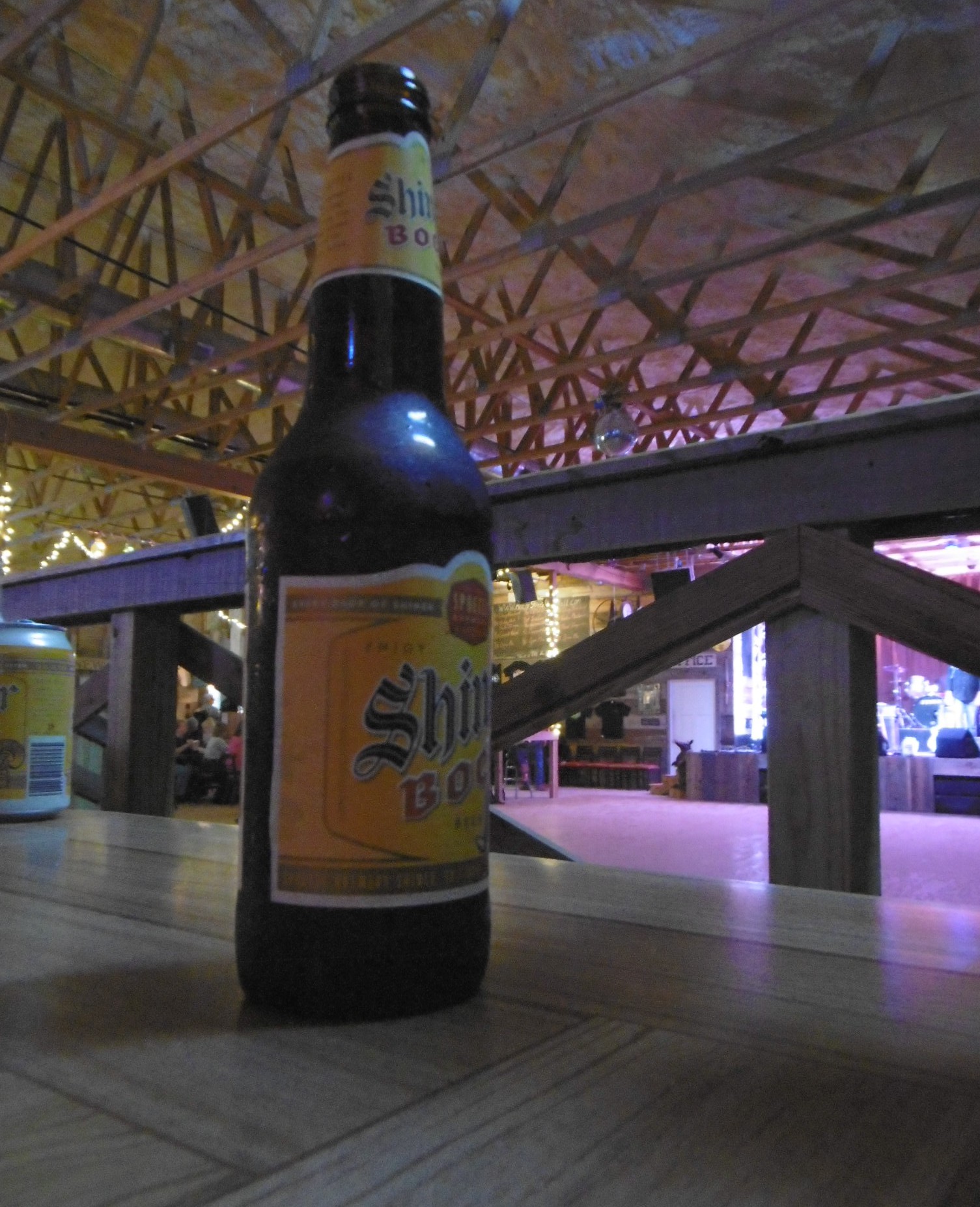
There’s a full bar in the far corner – but this ain’t a glass of wine evening.P1020933

Shiner Bock. Hot weather beer.

We’re served the last two bottles – nothing but cans left now. And no-one wants cans. But tough. It’s still beer.

Dancing lesson over, much twirling accomplished, our band takes to the stage in a storm-cloud of black. There’s a crowd of them.

Seven gui-tars (one slide), a saxophone and drums.

Men topped country style by hats. Black hats. White hats.

A swagger of Stetsons.

I suspect there isn’t an official collective noun for them – but ‘swagger’ feels kinda right.

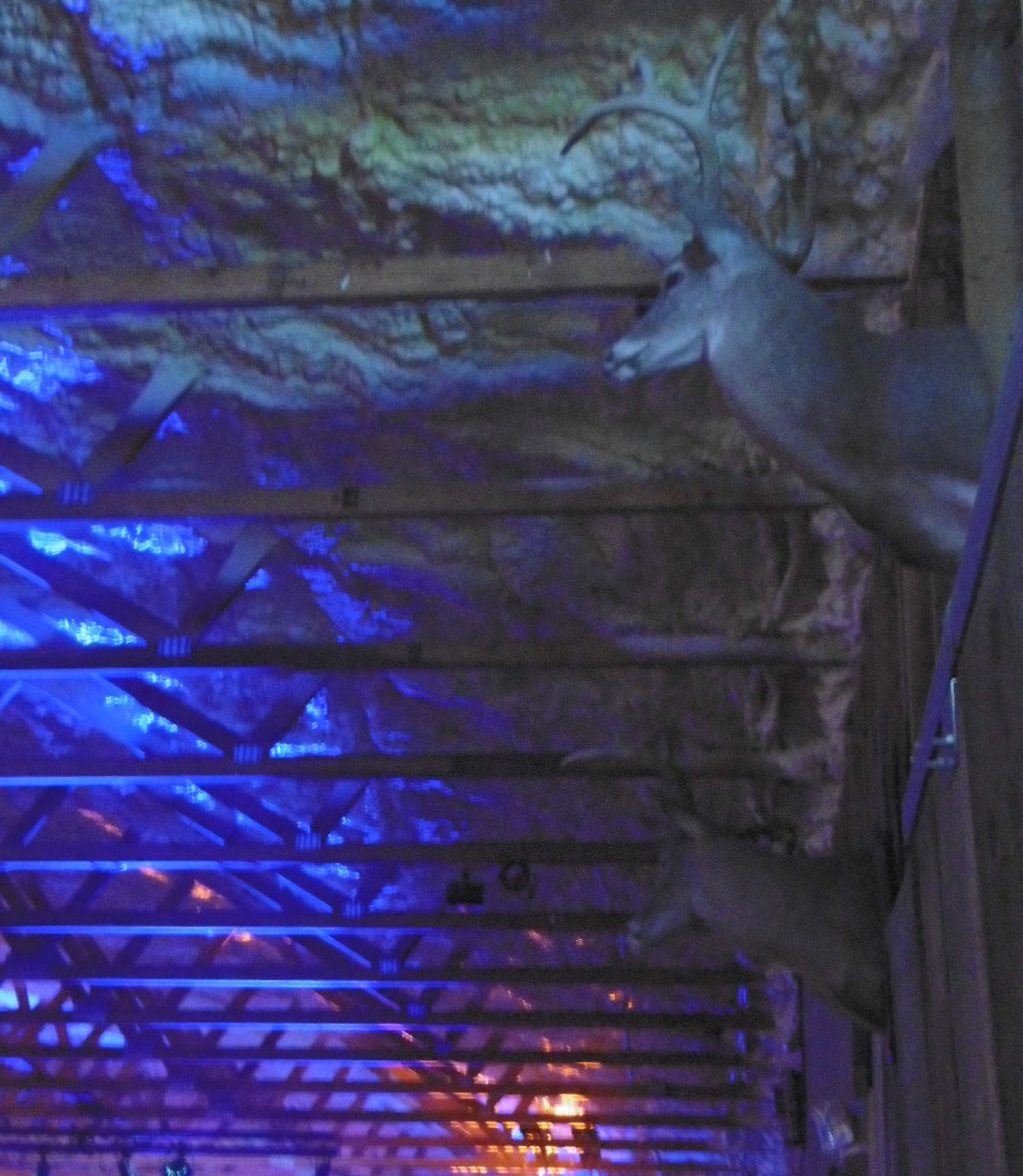
Trophies supervising the dancing

Trophies supervising the dancing

Chords of country and western instantly perk up the vibe – but the empty square makes me feel uncomfortable.

Where’s the audience?

Is the band going to bomb?

Doh. My slow-witted (jet-lag no excuse by now) mind joins the dots.

It’s a dance-hall. There will be dancing.

Around the edges people of all ages – except local teens, who’d have to pay more to enter because they can’t buy beer till they’re twenty one – sit waiting.

Patient and eager. Primed for the Texas Two Step.

The band’s well-known in these circles. It’s been around the block more than a few times.

Cornell Hurd band in action

Cornell Hurd band in action

‘People come from Japan to hear this stuff,’ growls the lead singer, ‘we don’t go to Japan to hear their stuff.’

By the time he’s said it three times we’ve got the joke – so old he’s losing his marbles. Making the most of his longstanding career and getting a good laugh each time for his growing-old pains.

The dance-floor’s sparsely strewn with couples for the first number. But as the main man reminds the crowd, this is ‘Texas, where we never quit dancing with our women’.

And they dance.

Bobbing heads under gleaming white Stetsons spin like tops, a respectful country distance from their women folk.

Some of the younger females wear dainty little cowboy boots on short-skirted legs.

Not me. Sloppy sandals unfit for dancing. But I manage a waltz. Sort of.

There’s a fine cast of characters for the people watcher (me).

See over there? That man’s the spit of the guy at the bowling-alley bar in The Big Lebowksi.

The one who says ‘Sometimes you eat the bar, sometimes the bar eats you.’ But it sounds like bear not bar. That confused me for ages. Until I watched it about the fiftieth time 😉

A long white moustache droops down his face under the camouflage of the obligatory white Stetson. His partner snuggles up most un-country close. So close, with her own large Stetson blending into his chest, her body draped in a voluminous sequinned top, that no face is visible.

Is he dancing with a teddy bear, I ask?

‘Does she have leprosy?’ responds a relative – who shall remain nameless.

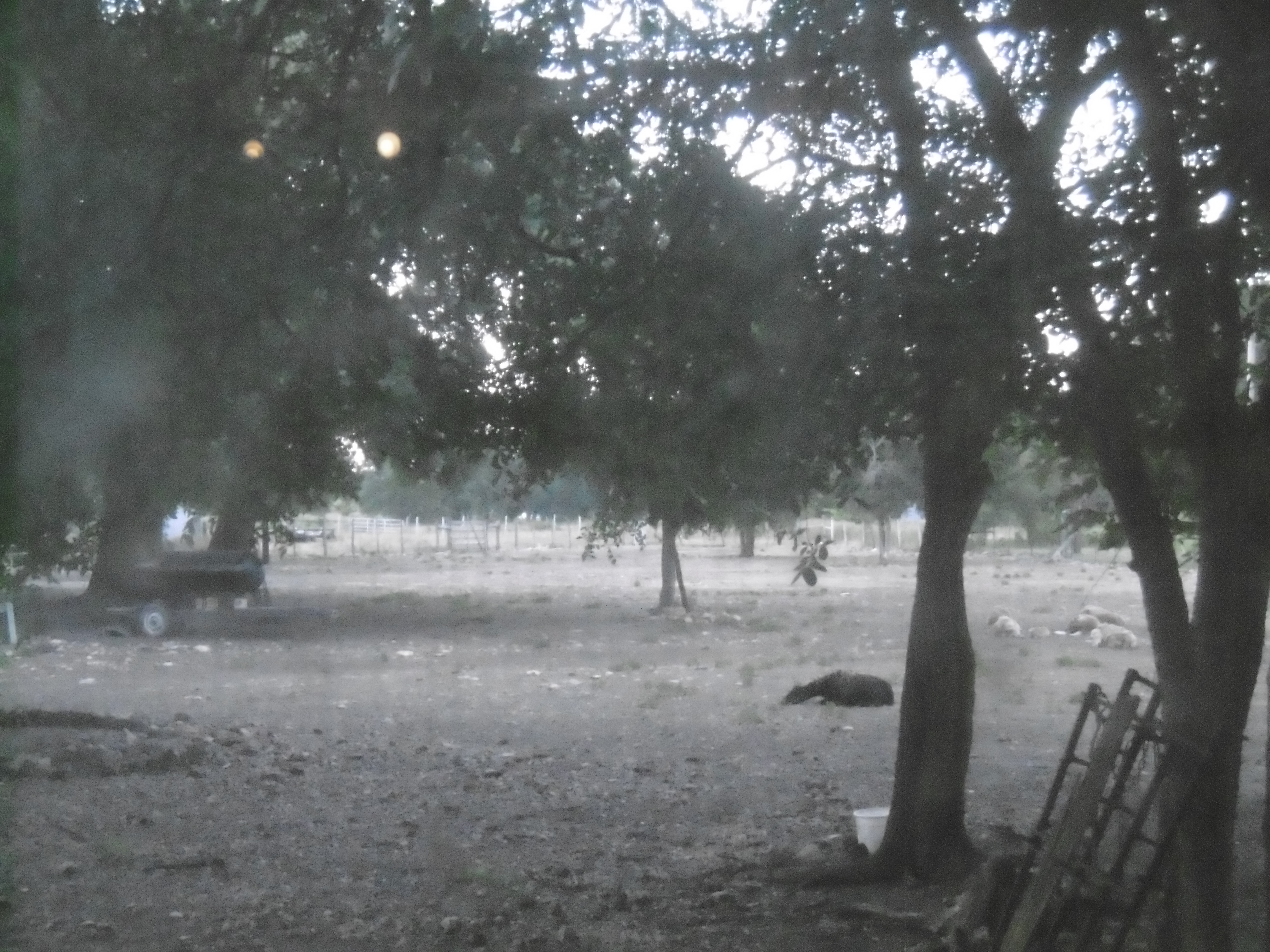
When the band takes a short break I notice the window behind me is just wire mesh, like mosquito mesh in Zambia. Peering through it, into the greyness that at last signifies night  falling, I can see dark lumps lying here and there on the ground.

Texas sheep look different. And this was not shot in black and white ...

Texas sheep look different. And this was not shot in black and white …

Sheep.

Yes, sheep. Lying there, motionless, log-like.

As the crowd grows bigger and part of our table’s purloined – politely – by a big group in  party mood, we move, reluctant but still jet-lag tired, towards the door.

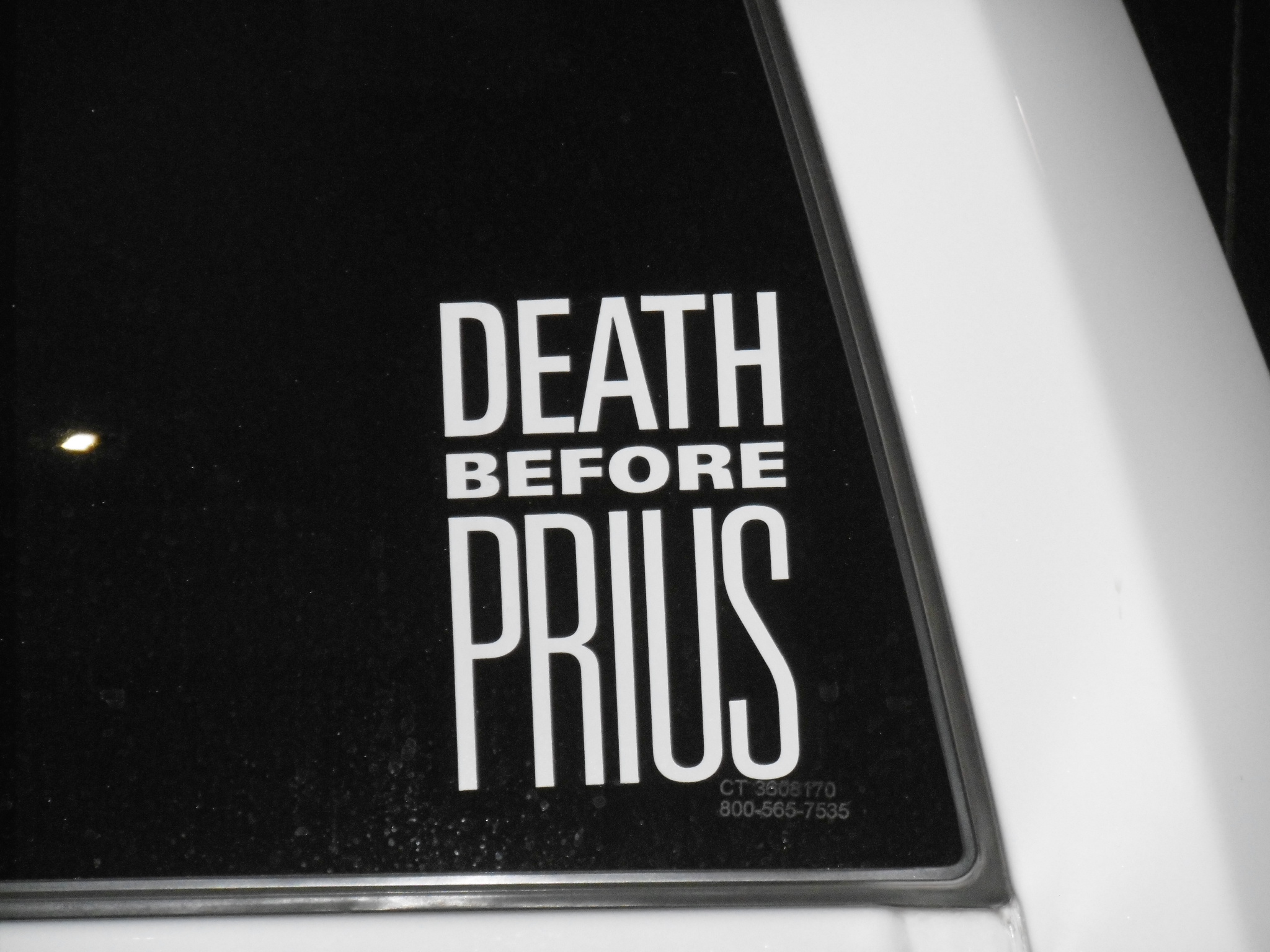
Outside a big white pick-up truck bears a sticker that says a lot about this part of the world – well, some of its denizens.

‘Death before Prius.’

P1020958Yes, the land where some people would have you prise the guns out of their cold, dead hands rather than give them up, has a bit of a love affair with these gas-guzzling beauties.

And I can see why, if I’m honest. They’re fun. I’d be tempted too*

Guns are a different matter.

Today, shopping in ‘Cowgirls and Lace’ (just research, of course) my sister-in-law pointed out a beautiful, smooth leather case. Embroidered and closed with a zip. Turquoise – my favourite colour.

It wasn’t a handbag – or purse. It wasn’t for make-up, or manicure implements, or any such frivolity. This was a girlie case for your feminine pistol.

Gotta love lots of things about Texas. And the USA. But guns ain’t one of them.

Music, however, is.

And dancing.

I mean, how romantic. To ‘Waltz Across Texas’, for ‘a story book ending with you in my arms.’

Aww.

P1020955

Heading home, fuzzily, into the heat of the Texas night


*But I wouldn’t give in. I care for the environment, honest.

Posted in Art, jaunts & going out, Texas, Travelling | Tagged , , , , , , , , , , | 10 Comments

‘Liebchen – sweetness – what watch?’ ‘Ten watch.’ ‘Such watch?’

Casablanca. That sweet German couple sitting in Rick’s. Drinking farewell brandies. Speaking English. Practising for America. Flying via Lisbon, no doubt. Where we’re heading next.

By train.

Trains run to timetables. Hours and minutes are important. Clocks (and watches) are important.

Trains also, sometimes, run late.

Between Vigo and Porto ours sits in a station while the minutes die, never to return.

Eventually a train coming in the opposite direction crosses the one-track bridge.

We resume our journey.

It’s well after ten watch now. Too much after ten watch for comfort.

We’re changing trains at Porto and it looks like we won’t make it. We’re running really, really late.

It’s distracting. Before, we were landscape-watching. Glimpsing rural churches, guessing what small towns were like as we clickety-clacked past.

But now we’re feeling twitchy.

Less of the, ‘oh, look at that,’ more, ‘there must be several trains a day to Lisbon, mustn’t there?’.

This chimney is in Lisbon but typical - they're all over the place

This chimney is in Lisbon but typical – they’re all over the place

But as we whizz through yet another small station, past another red-brick chimney, another defunct ceramics factory with an elaborate façade but a roof falling in, another olive grove, another vineyard, the observant one says,

‘Did you see that station clock?’

I didn’t – but keep alert for the next one.

The landscape changes with Portugal. Small-scale, self-sufficient-sized farms give way to larger, commercial fields of crops – and a few new ceramics factories.

‘Yes!’ I hiss as I catch sight of the next clock-watch.

We’ve stepped back in time.

Over an hour ago we were anticipating ten watch, now – it’s ten watch all over again.

We’ve become younger by one hour.

And so we relax. Change at Porto. Make it to Lisbon.

Lisboa Oriente station is magnificent. There’s an Olympic-sized leap to reach the platform, but then – look up. Wow!

You can just see the glass brick lift

You can just see the glass brick lift

A soaring vaulted roof, a glass brick lift for those prepared to wait. And below the tracks, flying concrete arches, shops, a book fair – yet another, they’ve been everywhere in Galicia – and our taxi.

It was unfair to leave Lisbon till last.

Only one full day.

And we’re approaching a state of tourism stupor. Lovely. Fab. Let’s have a siesta.

Our tour company upgraded us to a 5* hotel – and it’s oh-so-soothing. Right in the heart of things, but with a welcome breezy roof terrace in this overheated city. And such perfect service it makes the world feel good.

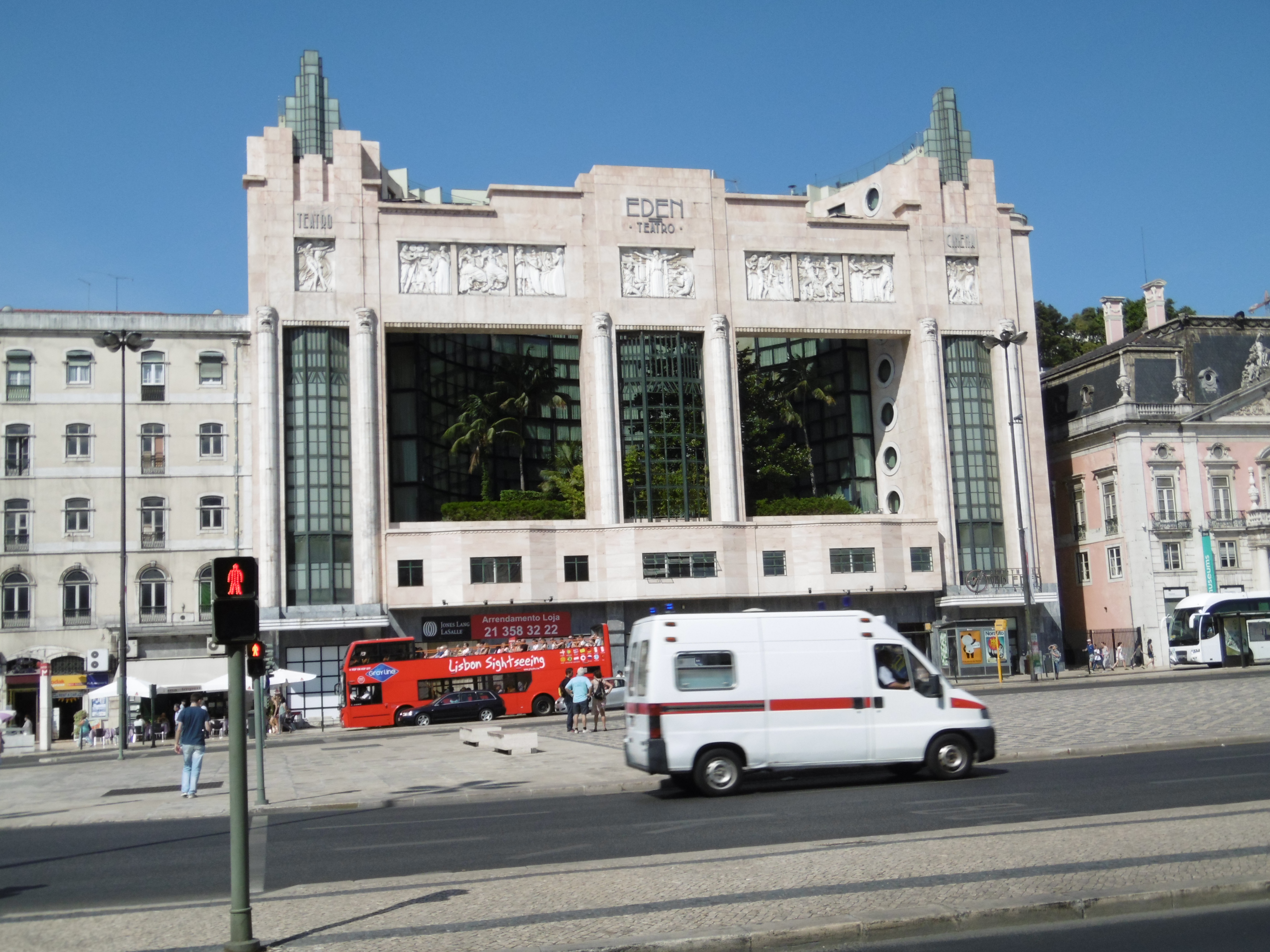
We gawp at the Metro station across the road. At a nearby former theatre, now an apartment block with a swimming pool on top and a forest growing from its middle.

Metro station

Metro station


The former theatre

The former theatre

We discover the beautiful tessellated pavements are slippery as ice.

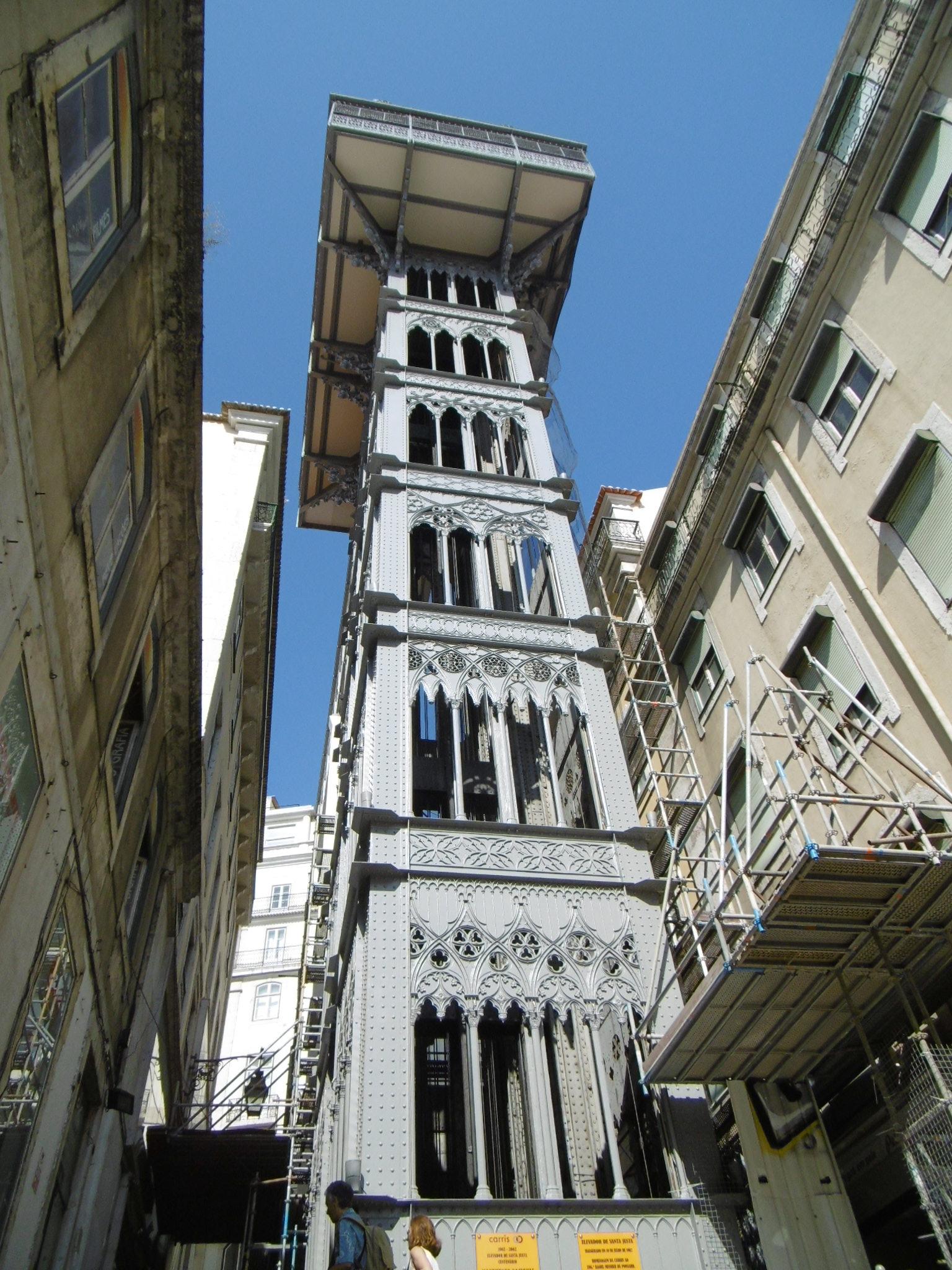
Scorched by the day – and the wait for a tram that never comes – we still notice a few odd things, like the grand lift that rises up amid the shops.

But the heat calls for strong measures. We sit with a cold beer gazing on the castle we never quite visit. The sum of our tourist endeavour for the night.

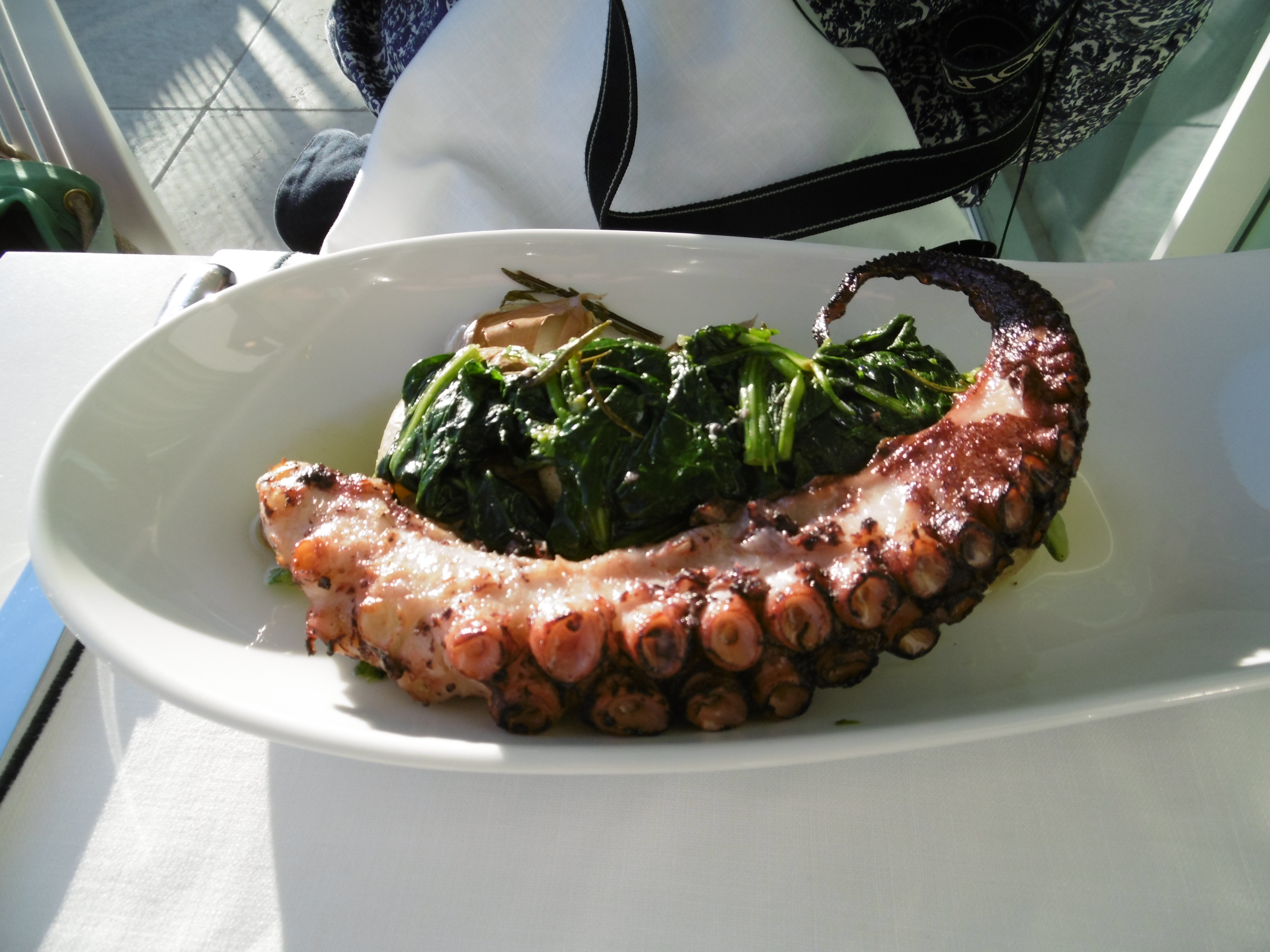
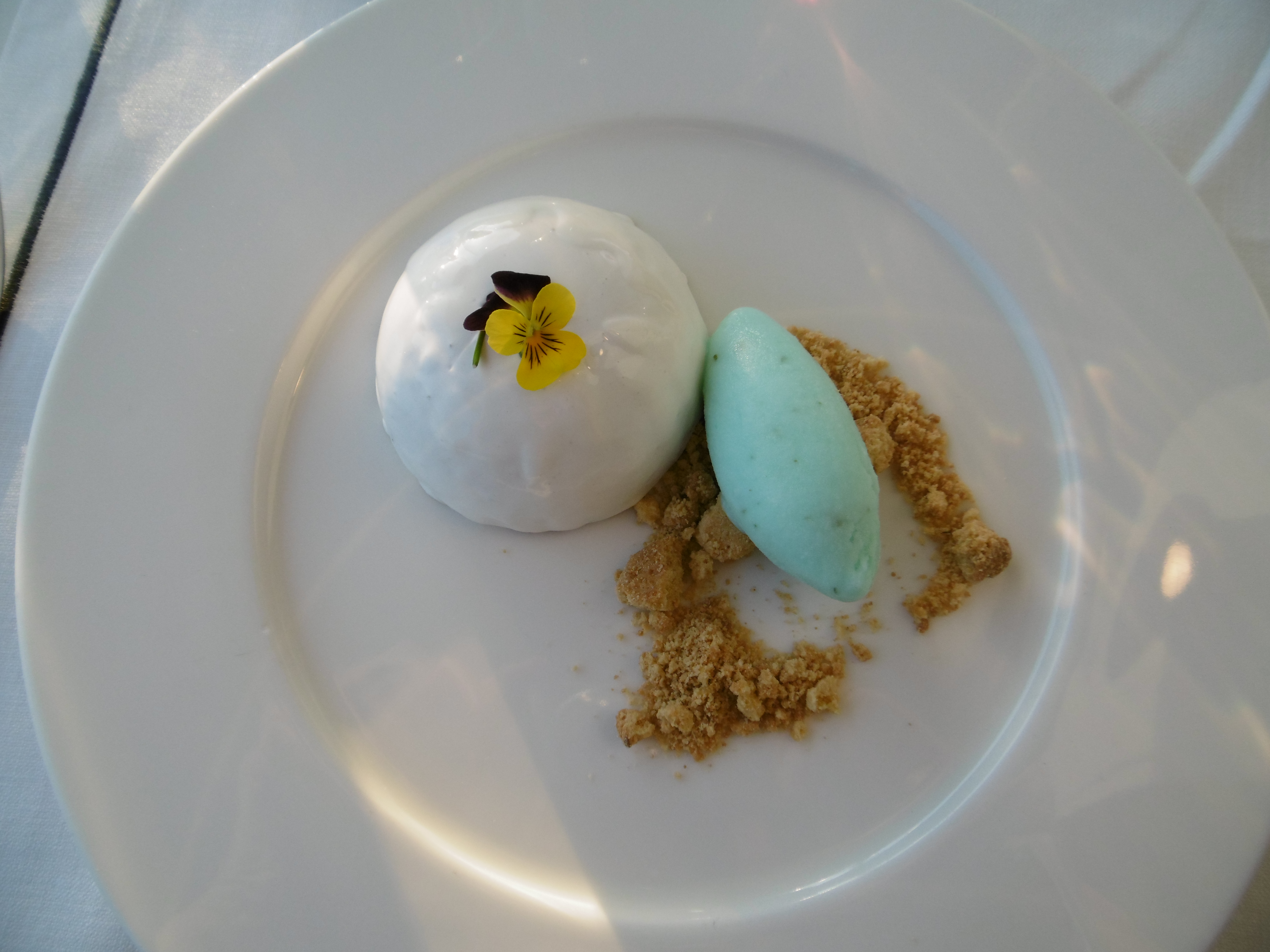
Dinner isn’t cheap. But it’s beautiful. Not, to be fair, my favourite meal of the trip, good though it is. Was that the hake at the beach? Or the pulpo in A Coruña? The calamari in Vigo? Or just the cheeses and hams in Pontevedra?

Peach soup with floral garnish

Peach soup with floral garnish

Octopus - as if you couldn't guess

Octopus – as if you couldn’t guess

Heaven. The blue stuff is lemon and basil sorbet

Heaven. The blue stuff is lemon and basil sorbet


Whatever. It’s a work of culinary art.

The waiter couldn’t be more sensitive to our needs – with the exception of the regional wine he selects – delicious, yes, but 14.5% alcohol.

We succumb – and sleep a little restlessly for it. Or was it the basil and lemon ice cream with the … never mind, it was all delicious.

The usual enticing buffet breakfast awaits, fruit slices galore – and today’s new treat – muesli Portuguese style, soaked in milk – plus the famous custard tartlets.

P1020799P1020796P1020794The day starts well. A relaxed walk towards our only goal – the museum of natural science. Walking beneath rustling trees which muffle the traffic.

We miss our turn.

Retracing our steps we still can’t find it.

Hot, thirsty, grumpy (that’s me) we finally seek help and a kind man directs us.

P1020814

Atop the first flight of steps – check out the graffiti 😉

I knew it would be up that hill. And probably up those steps. But there’s another set of steps beyond that. Terrific.

We’ve just passed a picture of Mother Teresa when, on reaching the first set of steps, a sad sight greets us. A young man tries to rouse a figure lying shrouded in a blanket, a pair of crutches by ‘its’ side (we can’t tell whether it’s male or female). His partner phones for an ambulance.

Modern Portuguese tile art (the 2nd set of steps)

Modern Portuguese tile art on the wall – the house above is tiled too (the 2nd set of steps)

We leave them doing what they can while the painter busy covering-up graffiti returns to his endless labours.

And finally reach the museum.

Was it worth the trouble? Not entirely. It turns out there’s none of the geology someone was seeking. There’s a separate geology museum, down such a steep hill lined with slippery marble that we abandon all geological aspirations.

Lunch makes up for it.

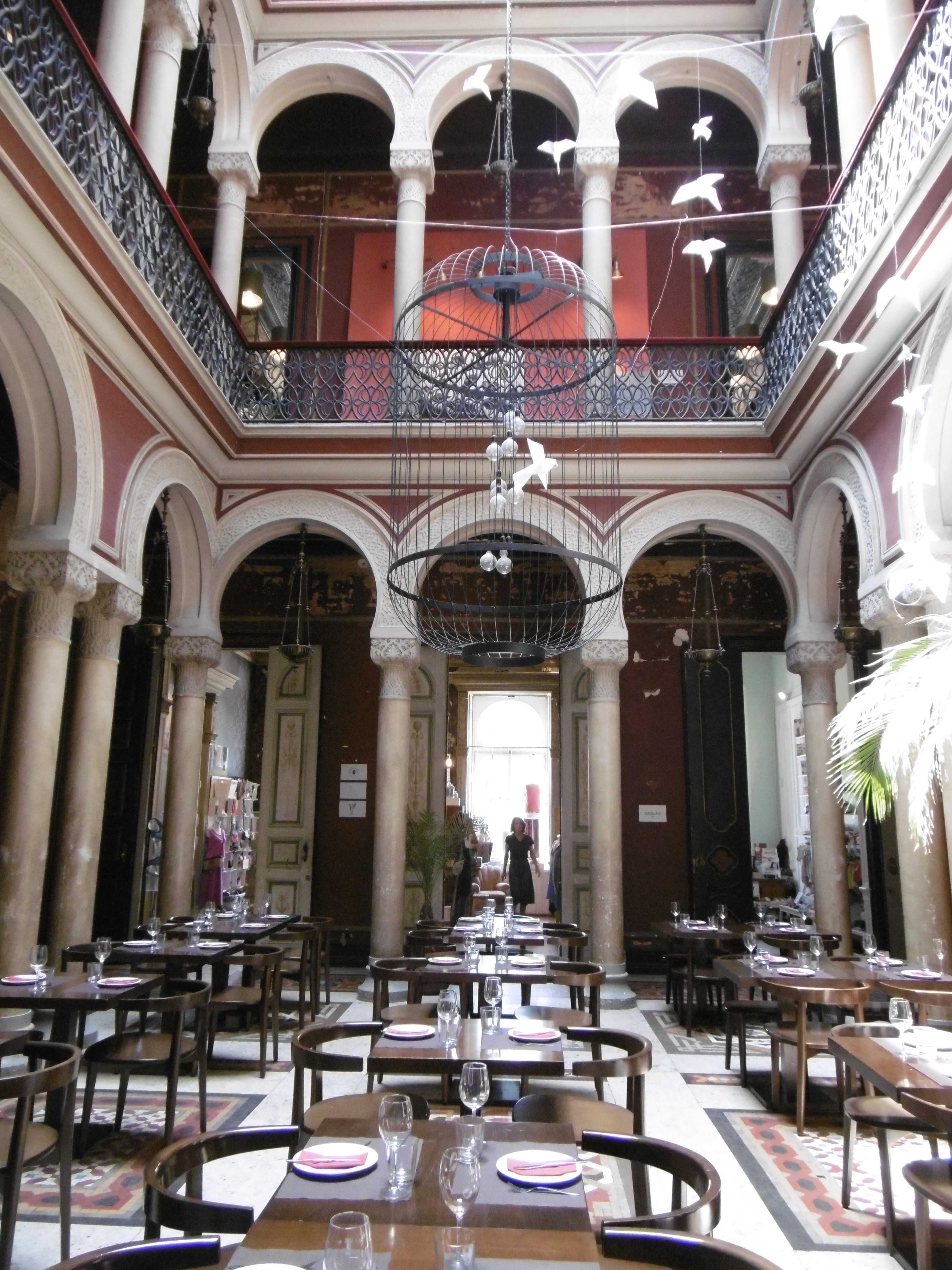
In a breezy, north-African style building – a former palace I’ve read – now an arty shopping gallery and haven for meat lovers.

Not where we had lunch

Not where we had lunch

Where we had lunch

Where we had lunch

At the bottom of this staircase

At the bottom of this staircase

Beside this window

Beside this window

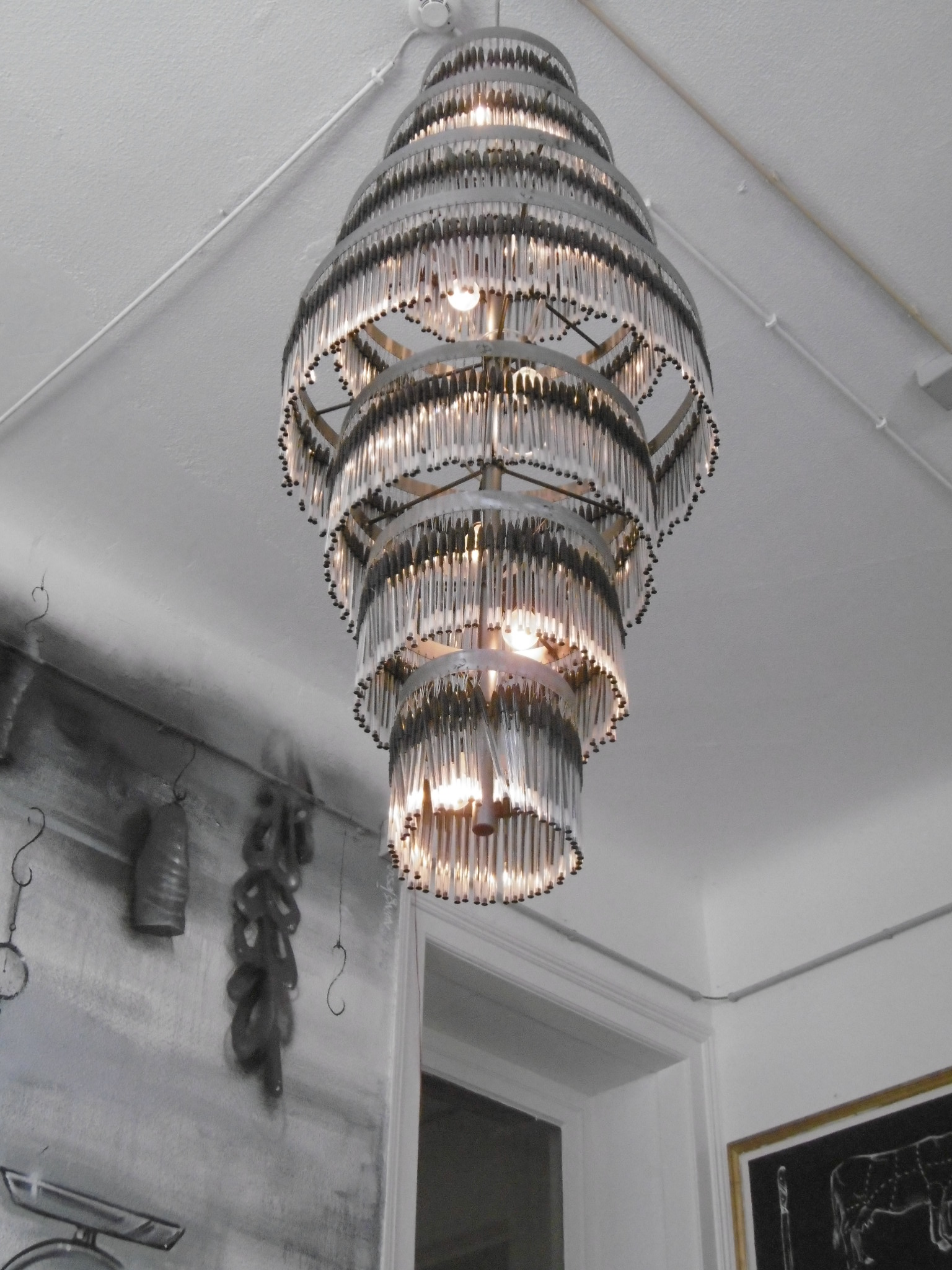
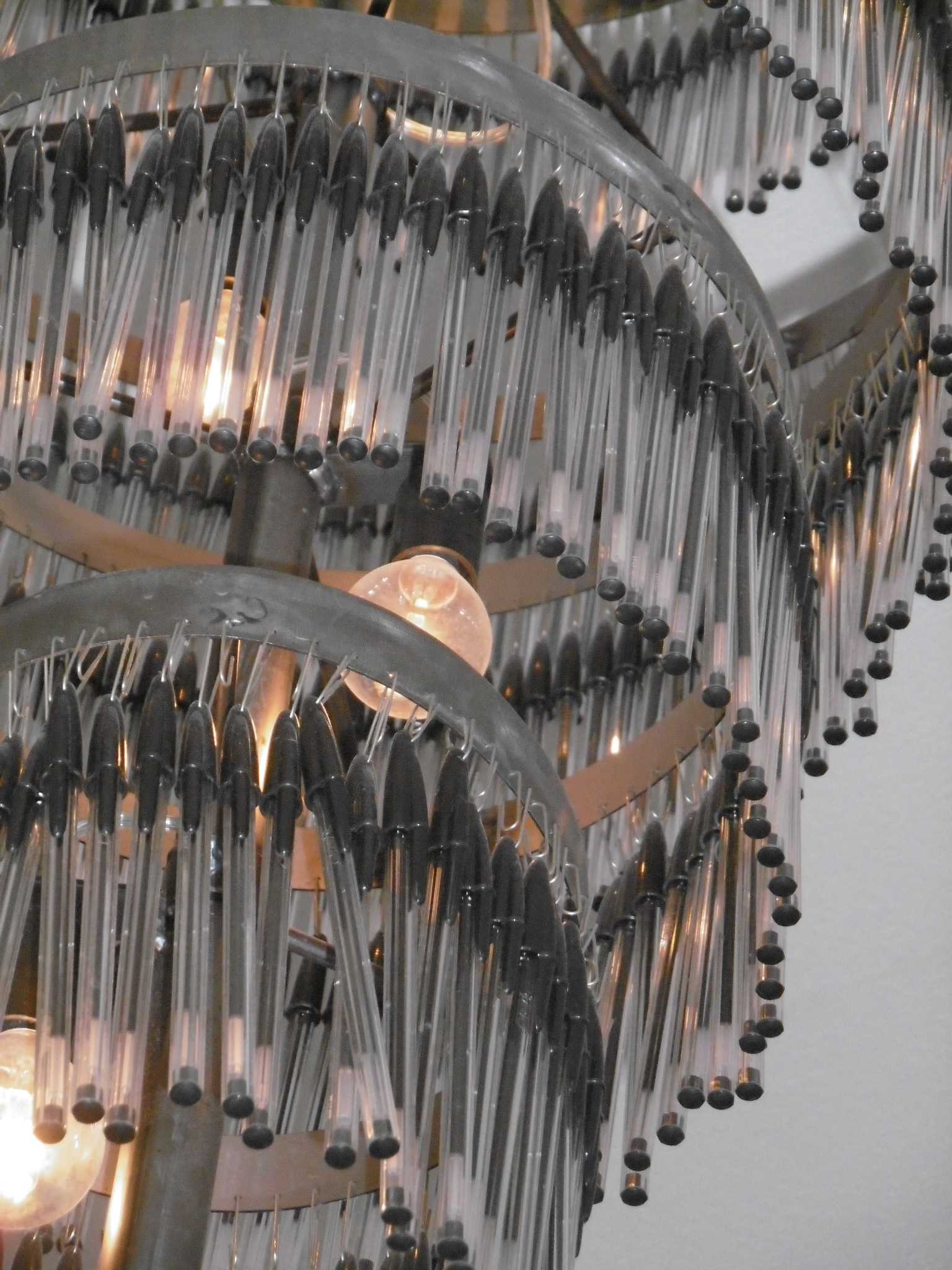
Under this chandelier made of ...

Under this chandelier made of …

biros!

biros!


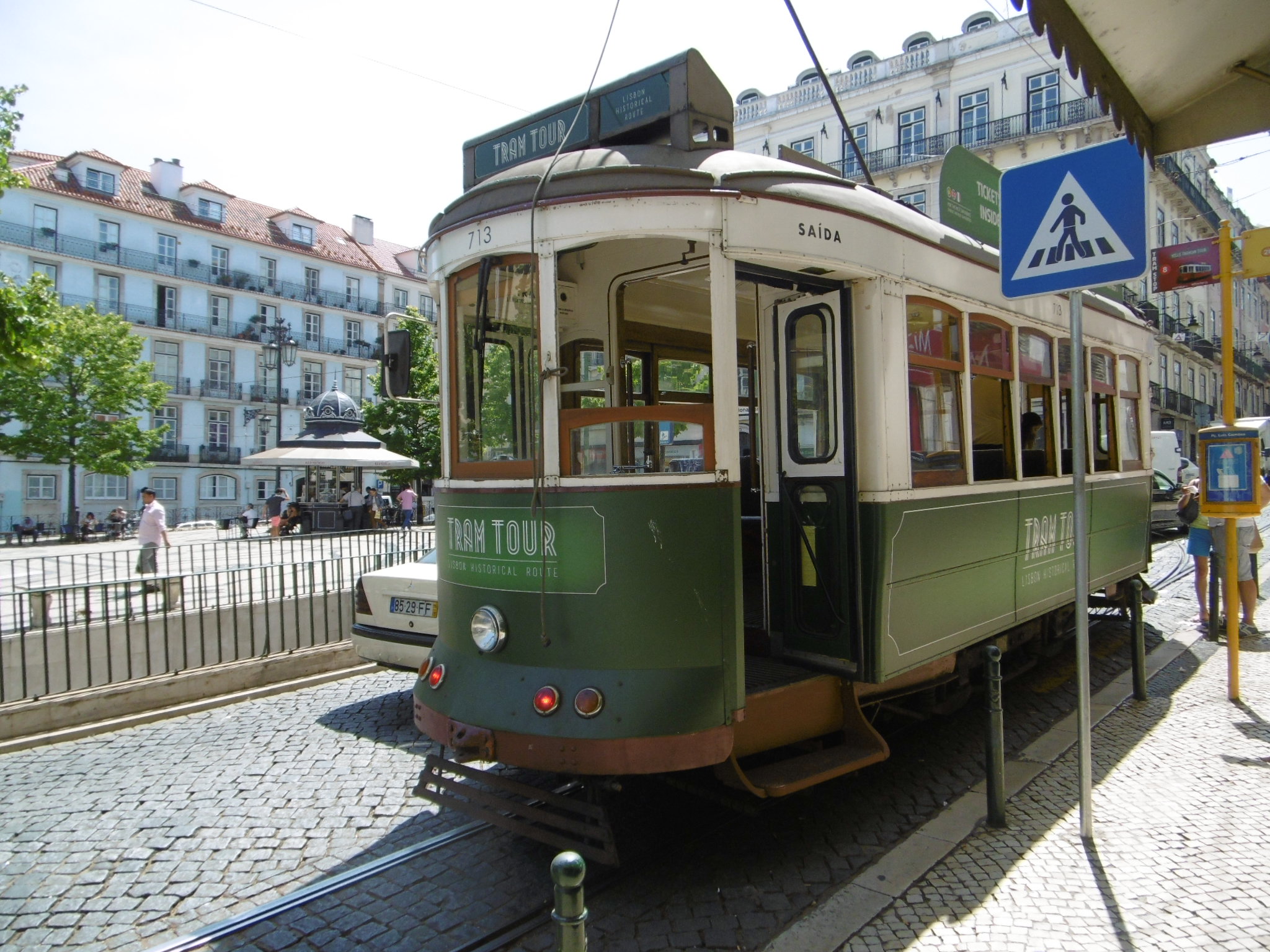
We catch a tram – at last – back to town and buy expensive tickets for the red one that tours the city sights.

We wait. And wait. And wait. Even in the shade the heat is meltingly strong. And of course, the tram comes – full.

Not the right tram :-(

Not the right tram 😦

Defeat.

A cheaper evening meal of cheese and breads behind us, we sleep fitfully – a sense of failure lurking – in my mind at least.

Rising early, I peer out of our window.

‘Let’s go take the lift’ I say, spur-of-the-moment energetic.

Beneath the lift

Beneath the lift


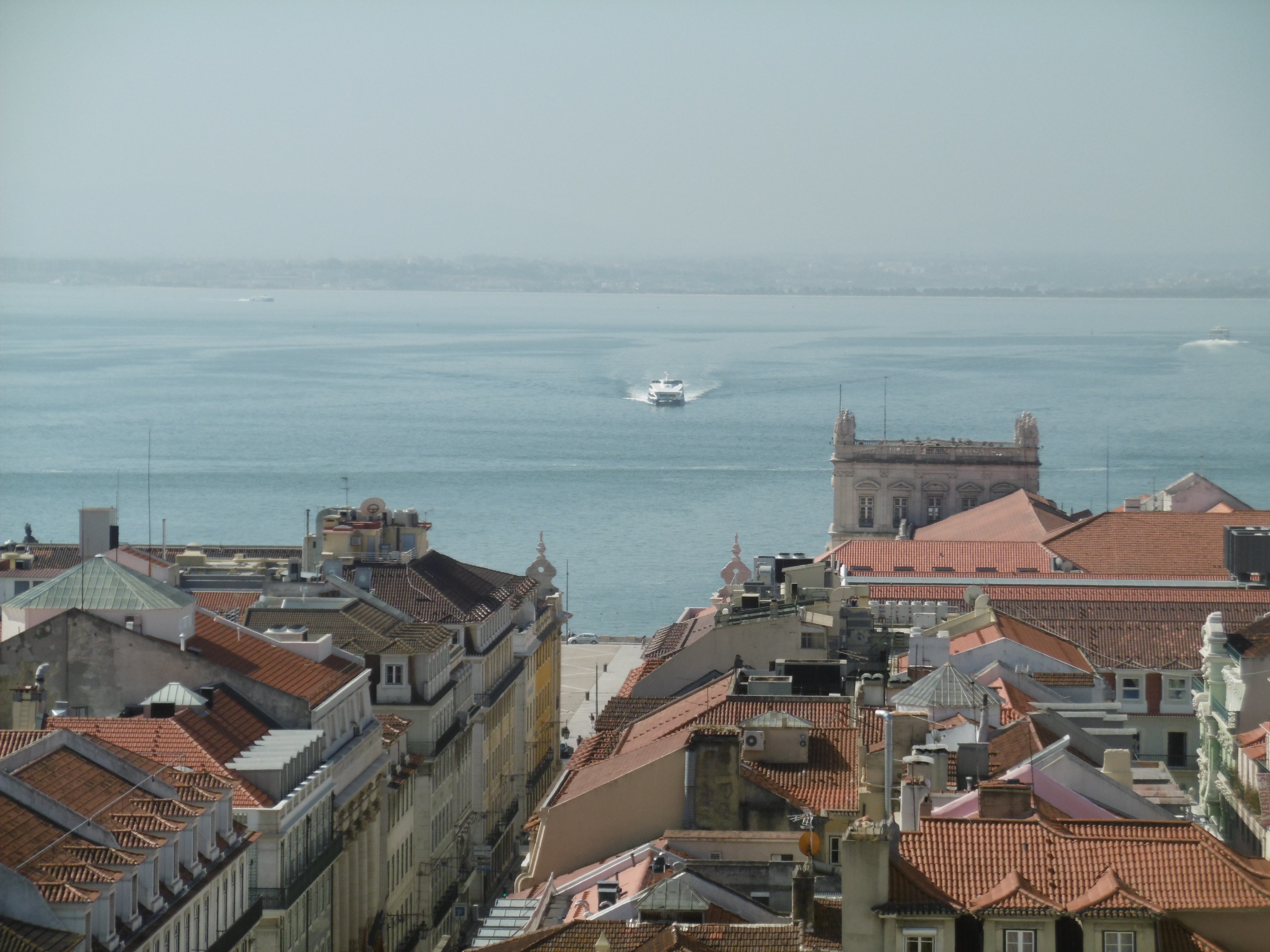
And so before we leave stunning, entrancing Lisbon, we rise above the city. Watch the boats on the Tagus River and the planes landing at the airport, barely skimming the tops of the buildings.

P1020851P1020853P1020862P1020863P1020864

And with another wonderful breakfast in our full holiday tums, we say end our first real holiday since 1997.

I could make a habit of this …

Posted in Travelling | Tagged , , , , , , , , , , | 6 Comments